
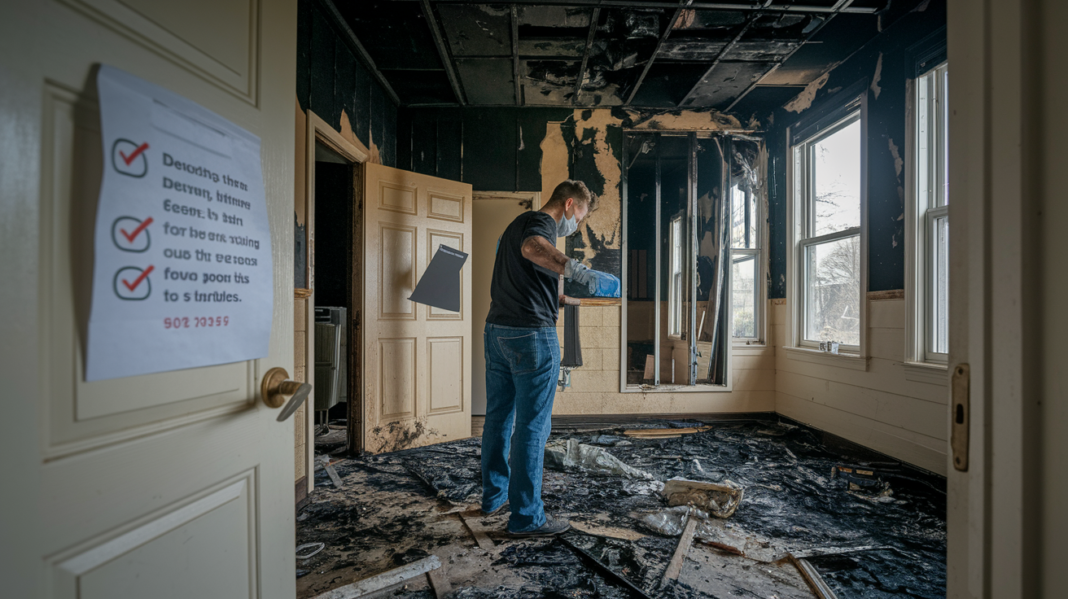

Think you can wait to call your insurer after a fire?
Waiting can cost you your claim and let hidden damage—smoke inside walls, soaked insulation, warped framing—get worse.
This post tells you exactly what to do now: the safety steps in the first hours, the paperwork and photos insurers expect, how to work with adjusters, and how claims are valued so you don’t get shorted.
Read on to act fast, stop more damage, and start the repair and rebuild the right way.
Immediate Actions After Fire Damage

The first hours after fire damage set the pace for your entire recovery. Insurers expect you to report what happened and stop any additional damage as soon as it’s safe to go back. Wait too long and you risk claim denials or coverage gaps that cost you later.
Most homeowners’ policies give you 24 to 72 hours to notify the company after a fire. Some let you call it in. Others want both a phone report and something in writing. Don’t hold off until you’ve cleaned up or gotten repair quotes. Call right away, even if you can’t see the full extent of what’s damaged yet.
Don’t step back inside until fire officials or building inspectors tell you it’s safe. Collapsed walls, toxic soot, live wires, and smoldering debris can still be there days after the flames are out.
Once you’re cleared to return, knock out these six things immediately:
- Make sure everyone (family, pets, anyone living there) is safe and accounted for.
- Get a copy of the fire department incident report. You’ll need it for the claim.
- Call your insurance company’s claims line, report the loss, and grab a claim number plus the adjuster’s contact info.
- Start taking photos and video of everything that’s damaged, inside and outside, before you move or throw anything out.
- Stop further damage by boarding up windows, tarping holes in the roof, shutting off utilities if you’re told to, and keeping weather and trespassers out.
- Line up temporary housing if the home isn’t livable. Save every receipt for hotels, food, and anything else you spend because of the fire.
Required Documentation for a Fire Damage Claim

Insurers decide what to pay based on what you can prove. Missing or incomplete documentation is one of the biggest reasons claims get delayed, cut down, or denied outright. Your job is to show what you owned, what it was worth, and what got wrecked.
Start with a room by room inventory that lists every item hit by fire, smoke, heat, or the water they used to put it out. For each thing, write down the description, brand, model, when you bought it (roughly), what it cost if you remember, and what shape it was in before the fire. Attach photos, receipts, credit card statements, warranties, manuals, anything you’ve got. If you don’t have receipts, detailed descriptions and photos still matter.
Pull together these seven documents as fast as you can:
- Photos and video of all damaged areas, walls, ceilings, floors, and everything you owned
- The official fire department or fire marshal report
- A written inventory of destroyed or damaged stuff, broken down by room
- Purchase receipts, bank statements, or credit card records for expensive items and recent buys
- Independent contractor estimates for repair or rebuild costs
- Documentation of all emergency repairs and cleanup work, including invoices and photos
- A copy of your complete insurance policy, the declarations page, and any endorsements
Step-by-Step Guide to Filing a Fire Insurance Claim

Filing a fire claim isn’t one phone call. It’s a process with specific paperwork and deadlines that change depending on your insurer and where you live. Miss a step or a deadline and you can stall your payout or shrink what you get back.
Your insurer assigns a claim number and an adjuster shortly after you report the fire. The adjuster schedules an inspection, usually within a few days to two weeks depending on how big and messy the loss is. Before that visit, gather as much documentation as you can so you’re ready to walk the adjuster through the damage with proof in hand.
Most policies require you to submit a formal “proof of loss” document within 30 to 60 days of the fire. The proof of loss is a sworn statement listing all damaged property, estimated values, and what caused the loss. Your insurer provides the form. Fill it out carefully, attach your inventory and receipts, and keep copies of everything you send in.
After the inspection, the adjuster prepares an estimate and submits it for review. Depending on how your insurer works, you might get an initial advance payment and a final payment after repairs are documented. Big claims can take weeks or months to settle, especially if there are fights over what’s covered, how much things are worth, or what needs fixing.
Follow these eight steps to file your claim the right way:
- Report the fire to your insurer right away and get a claim number.
- Secure the property from more damage and document all cleanup work with photos and receipts.
- Request and save the fire department incident report as official proof of what happened.
- Take detailed photos and video of all damage before cleanup or repairs start.
- Prepare a written inventory of all damaged or destroyed property with descriptions, quantities, and estimated values.
- Collect supporting documents like receipts, credit statements, warranties, serial numbers, contractor estimates.
- Complete and submit the proof of loss form within the insurer’s deadline, usually 30 to 60 days.
- Cooperate with the adjuster’s inspection, hand over requested documents quickly, and follow up in writing to confirm next steps.
Working With the Insurance Adjuster

The insurance adjuster’s job is to inspect the damage, verify your losses, and estimate repair costs for the insurer. The adjuster doesn’t work for you. They work for the insurance company. Understanding that relationship helps you prepare and protect yourself during the inspection.
Adjusters look for proof that damage came from the fire and not from problems that were already there, neglect, or things your policy doesn’t cover. They check structural parts, take photos, measure affected areas, and ask questions about what happened. Stick to the facts and what you know. Don’t guess about causes or give opinions on coverage. Answer questions directly, point out all visible damage, and mention areas you think have hidden damage like smoke inside walls or water from firefighting.
Get your documentation ready before the adjuster shows up. Bring copies of your inventory, receipts, photos, contractor estimates, and the fire report. Walk through the property together and take notes during the visit. If the adjuster’s estimate seems low or incomplete, ask for clarification and request a line by line breakdown. You’re allowed to get independent contractor estimates and submit them for review. If there are big differences in valuation, ask the adjuster to explain their math and give you written justification. You can request a second inspection or a second opinion if needed.
How Fire Damage Claims Are Valued

Insurers calculate fire damage payouts two ways: Actual Cash Value and Replacement Cost Value. The difference changes how much money you get and when you get it.
Actual Cash Value means the insurer subtracts depreciation from the cost to repair or replace damaged property. A ten year old roof or appliance gets valued at what it was worth the day before the fire, not what it costs to buy new. Replacement Cost Value pays the full cost to rebuild or replace with new materials of similar kind and quality, without taking off anything for age or wear. Many policies pay an initial advance at ACV, then reimburse the depreciation amount after you finish repairs and submit invoices.
Most homeowners’ policies have separate limits for structure coverage and personal property coverage. The dwelling coverage limit applies to the house and attached structures. Personal property limits apply to contents. High value items like jewelry, art, collectibles, or electronics often have sub limits unless you bought additional scheduled coverage. Check your declarations page to confirm your limits and valuation method.
| Category | ACV Example | Replacement Cost Example |
|---|---|---|
| Structure (roof) | $8,000 replacement cost − $3,000 depreciation = $5,000 advance | $8,000 paid after repairs completed and invoiced |
| Contents (sofa) | $1,200 new cost − $600 depreciation = $600 advance | $1,200 reimbursed with receipt for replacement sofa |
| Appliances (refrigerator) | $900 new − $400 depreciation = $500 advance | $900 paid after purchase receipt submitted |
| Personal items (laptop) | $1,000 new − $500 depreciation = $500 advance | $1,000 reimbursed with replacement receipt |
Timelines and Expectations During the Claim Process

Most states require insurers to acknowledge your claim within 7 to 15 days of getting notice. The insurer must send claim forms and instructions within a similar window, often 15 to 30 days depending on state law.
After you submit your proof of loss and supporting documents, insurers typically have 30 to 60 days to review the claim, finish inspections, and issue a coverage decision or settlement offer. Complex claims involving structural assessments, engineering reports, or coverage fights can take longer. Regular contact is normal. If weeks go by without updates, follow up in writing and ask for a status summary.
Delays beyond reasonable timelines may mean there are disputes over valuation, coverage questions, or insurer tactics. Document every contact, save emails and letters, and write down dates and names of everyone you talk to. Unexplained delays can support bad faith complaints or legal action if the insurer fails to meet what the law requires.
Common Reasons Fire Damage Claims Get Denied
Insurers deny fire claims for specific, documented reasons. Knowing these reasons helps you avoid mistakes that put your payout at risk.
The most common denial causes are not enough documentation, late reporting, failure to stop further damage, suspected arson or intentional fire, and policy exclusions like vacant home clauses or unpaid premiums. If the insurer thinks the fire was set on purpose by you or someone working with you, the claim will be delayed pending investigation and denied if intent is proven. Cooperate fully with investigations, give truthful answers, and save all communications.
Six common reasons fire damage claims get denied:
- Not enough or missing documentation, like no inventory, no receipts, or incomplete proof of loss
- Late reporting beyond the policy’s required notice period
- Failure to prevent more damage after the fire, like leaving a tarped roof unsecured in a storm
- Suspected arson or fraud based on investigation findings or inconsistencies in what you said
- Policy exclusions, including fires caused by intentional acts, certain perils, or property left vacant beyond the policy’s vacancy clause
- Lapsed coverage due to unpaid premiums or policy cancellation before the fire happened
Coverage for Temporary Living Expenses

If fire damage makes your home unlivable, most homeowners’ policies include Additional Living Expenses coverage, often called ALE or Loss of Use. This pays for reasonable costs above your normal living expenses while the home is being repaired or rebuilt.
ALE typically covers hotel or temporary rental housing, meals that cost more than you’d normally spend at home, laundry and cleaning services, storage for salvaged belongings, and transportation if you’re displaced far from work or school. Coverage has dollar limits and time limits written into your policy. Some policies cap ALE at a percentage of your dwelling coverage limit. Others set a fixed dollar amount or a time period like 12 or 24 months.
Keep every receipt and write down the reason for each expense. Insurers will compare your temporary costs to your normal household budget and reimburse the difference. A daily log or spreadsheet showing dates, vendors, amounts, and categories helps smooth out ALE claims and avoids disputes.
Common ALE expenses that are usually covered:
- Hotel, motel, or short term rental housing costs
- Increased meal expenses beyond typical grocery spending
- Laundry, dry cleaning, and related services if you can’t use your washer
- Storage unit fees for furniture and belongings removed from the home
When to Hire a Public Adjuster or Attorney

Public adjusters and attorneys do different things, but both can help when your claim is complex, disputed, or denied. Knowing when to bring in help keeps you from accepting a low settlement or missing deadlines to challenge the insurer’s decision.
Public adjusters are licensed professionals who represent policyholders, not insurers. They prepare inventories, estimate losses, and negotiate with the insurance company on your behalf. Public adjusters typically charge a percentage of the final recovery, usually 5 to 15 percent. Consider hiring one for large or complicated claims, when the insurer’s offer seems way too low, or when you don’t have time or expertise to document and value losses yourself. Attorneys handle disputes, bad faith claims, and lawsuits. They can file suits, enforce policy terms, and go after damages beyond the policy limits if the insurer acts in bad faith. Legal fees vary. Some attorneys work on contingency, others charge by the hour.
Hire professional help in these five situations:
- The insurer denies your claim or offers a settlement far below documented losses and independent estimates
- You suspect bad faith, like unreasonable delays, failure to respond, or ignoring evidence you gave them
- The claim involves big dollar amounts, complicated valuation issues, or fights over covered versus excluded damage
- You’re overwhelmed by the documentation and negotiation process and can’t put in the time needed
- The fire involved commercial property, business interruption, or potential third party liability such as utility caused fires
Final Words
First, shut off hazards, document the damage, and call your insurer, because quick action limits further loss and protects your claim.
We covered what to gather — photos, receipts, the fire department report, inventories, and contractor estimates — plus how to file the claim, work with the adjuster, and understand valuation and timelines.
Don’t let delays or missing paperwork sink a property damage claim fire damage. If it gets complicated, bring in a public adjuster or attorney. You’ll stabilize, document, and rebuild—and get back home sooner.
FAQ
Q: What is the average settlement for property damage?
A: The average settlement for property damage varies widely depending on damage size, policy limits, and location. Small claims often run from a few hundred to several thousand dollars; major structural losses can reach tens to hundreds of thousands.
Q: Can insurance deny a house fire claim?
A: Insurance can deny a house fire claim for reasons like suspected arson, late reporting, policy exclusions, insufficient evidence, or failure to mitigate further damage. Document everything and report quickly to lower denial risk.
Q: What are common examples of property damage?
A: Common examples of property damage include fire and smoke damage, water from burst pipes or storms, wind or roof damage, vandalism, broken windows, and ruined flooring, cabinets, or personal items from leaks.
Q: What does $25,000 property damage coverage mean?
A: A $25,000 property damage coverage means the insurer will pay up to $25,000 for covered repairs or replacements, minus your deductible. If repair costs exceed that limit, you’re responsible for the remainder.