
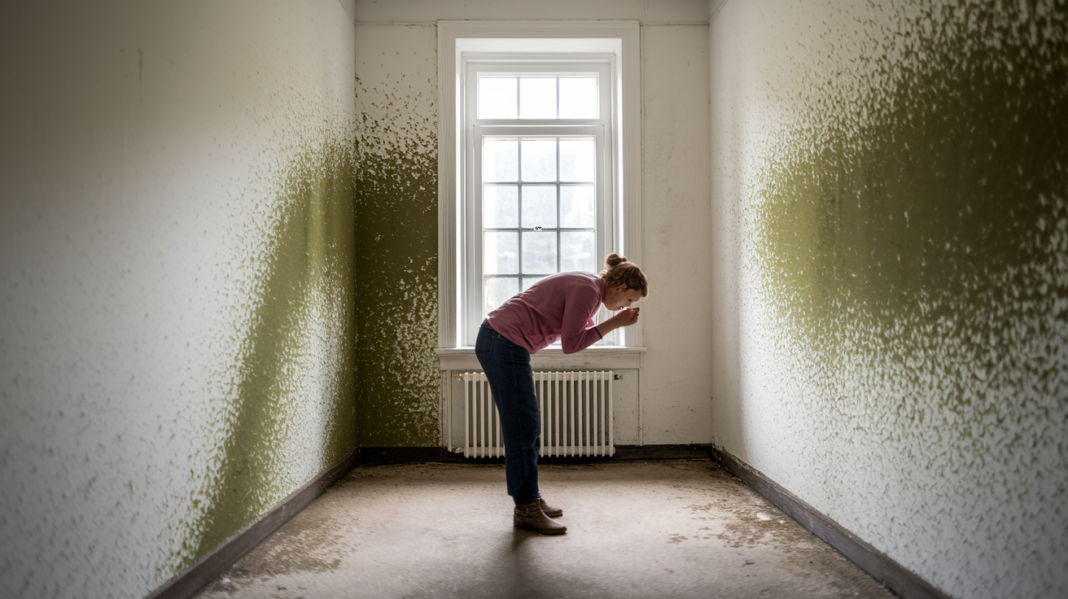

What if your “allergies” are actually black mold making you sick?
Symptoms often look like a cold or seasonal allergies, so many people miss the real cause.
The clue that matters is timing: if you feel better within 48 to 72 hours after leaving the building and worsen when you return, mold exposure is likely.
This post walks you through the top symptoms, simple home signs like musty smells and water stains, how to test, and the first steps to limit damage and get care.
Key Symptoms That Help You Tell If Black Mold Is Making You Sick

Symptoms from black mold exposure can show up within hours or days after you start breathing spores, but here’s the tricky part. They look just like seasonal allergies, a regular cold, or even stress. You assume you caught something or need better allergy meds. You wait for things to improve, except they don’t. Not as long as you keep walking back into that same room or building.
The most common signs? Respiratory trouble and allergic reactions. You might get a cough that won’t respond to cough syrup, a tight chest, wheezing when you breathe, or sinus pressure that just lingers for weeks. Your eyes water or feel gritty. Your nose runs nonstop or stays stuffed up. Some people develop headaches that refuse to quit, a bone deep fatigue that sleep doesn’t touch, or skin rashes that show up without any obvious cause.
Here are 10 key symptoms to watch for if you think black mold is making you sick:
- Persistent coughing, dry or with phlegm
- Wheezing or chest tightness
- Sinus pressure, congestion, or infections that keep coming back
- Frequent or severe headaches
- Chronic fatigue or weakness that rest doesn’t fix
- Itchy, watery, or red eyes
- Brain fog, trouble focusing, memory issues
- Dizziness or feeling unsteady
- Skin rash, hives, or itchy skin for no clear reason
- Worsening asthma symptoms or new breathing trouble that feels like asthma
The clearest timing clue is this. If your symptoms improve within 48 to 72 hours after leaving your home or office, then return when you go back, mold exposure is likely involved. That pattern points directly to something in the building.
How Black Mold Affects the Body and Creates Health Symptoms

When you breathe in mold spores, they land in your nose, throat, and lungs. Your immune system sees them as invaders and triggers inflammation. Swelling, mucus production, coughing. Your body tries to clear them out. That’s where the allergy-like symptoms come from.
Some people also react to mycotoxins, chemical compounds released by certain mold species including Stachybotrys chartarum (black mold). These mycotoxins can cross into your bloodstream and affect your nervous system. Headaches, dizziness, brain fog, trouble concentrating. Not everyone reacts the same way. Some people’s bodies flush out mycotoxins quickly, while others recycle and reabsorb them due to genetic differences in detoxification pathways. That explains why one person in a household gets very sick while another just sniffles.
Children, older adults, pregnant people, anyone with asthma or chronic lung disease, and people with weakened immune systems (from HIV, chemotherapy, organ transplants, or autoimmune conditions) are at much higher risk for severe or prolonged reactions. Their bodies have less reserve to fight off the inflammation. Small exposures can trigger big symptoms. If you or someone in your home fits into one of these groups and you suspect mold, treat the situation as higher priority and move faster on testing and cleanup.
Visual and Smell-Based Signs of Black Mold in Your Home

The most reliable early warning sign of black mold is a musty, earthy smell that doesn’t go away even after you clean. If a room smells like damp soil, old books, or wet towels left too long in a pile, mold is growing somewhere nearby. Visible discoloration confirms it. Dark spots, streaks, or fuzzy patches on walls, ceilings, or around window frames.
Mold hides in six common places:
- Behind drywall or wallpaper, especially if there was a leak or flood
- Under sinks and around plumbing fixtures where slow drips go unnoticed
- In basements, crawl spaces, and other areas with high humidity and poor airflow
- Around windows where condensation builds up or seals have failed
- In showers, tubs, and tile grout in bathrooms with poor ventilation
- Inside HVAC ducts and air handlers, where it spreads spores throughout the house
Mold needs moisture to grow, and it can start spreading within 24 to 48 hours after materials get wet. A burst pipe, roof leak, overflowing toilet, or even prolonged high humidity (above 50 to 60 percent) gives mold everything it needs. Once the surface dries, the mold may look inactive, but spores are still there. New growth starts again the next time moisture returns. That’s why fixing the water source is the only way to stop mold permanently. Leaking pipes, condensation, roof damage. Fix those and you cut off the supply.
Self-Assessment Checklist to Link Mold Exposure to Health Symptoms

Tracking when and where your symptoms appear helps you figure out whether mold is the cause or if something else is going on. Patterns matter more than individual bad days, especially because mold symptoms overlap with dozens of other conditions. Seasonal allergies, viral infections, chronic fatigue syndrome.
Ask yourself these eight questions:
- When did your symptoms start, and do you remember any water damage, leaks, or flooding around that time?
- Do your symptoms improve within two to three days when you leave your home or workplace?
- Do you notice a musty or earthy smell in certain rooms, even faintly?
- Are other people in the same building also experiencing similar respiratory, sinus, or headache symptoms?
- Have you had recurring sinus infections or respiratory issues that don’t fully resolve with medication?
- Do your symptoms get worse in humid weather or in rooms with poor ventilation?
- Can you see any visible discoloration, water stains, or dark spots on walls, ceilings, or around windows?
- Have you tried allergy medications or decongestants without much improvement?
If you answered yes to three or more of these questions, mold exposure is a reasonable possibility. You should inspect your home more carefully and consider environmental testing.
Testing Methods for Confirming Black Mold Exposure

DIY mold test kits are widely available at hardware stores and online for around $15 to $50. They typically include a swab or petri dish that you expose to the air or press against a surface, then mail to a lab for analysis. They can confirm that mold is present, but they often can’t tell you the species, the spore concentration in the air, or whether the levels are high enough to explain your symptoms. Accuracy varies. Results require interpretation.
Professional mold inspection is more thorough and typically costs between $200 and $800 depending on the size of your home and the number of samples collected. Inspectors use air sampling pumps to measure airborne spore counts, surface swabs to identify growth on walls or furniture, and dust analysis to check for spores that have settled throughout the house. They also use moisture meters to find hidden water intrusion behind walls or under floors.
Lab results will list spore types and concentrations, but there are no federally mandated safe limits for indoor mold. High spore counts of certain species, especially Stachybotrys, Aspergillus, or Penicillium, are red flags. But even moderate counts can cause symptoms in sensitive people. A qualified inspector or environmental consultant can compare your indoor sample to outdoor baseline samples and help you understand whether remediation is needed. If you can see mold or smell it, you don’t need to wait for test results to start cleanup.
| Method | What It Detects | Typical Cost |
|---|---|---|
| DIY surface or air kit | Presence of mold; sometimes species ID | $15–$50 |
| Professional air sampling | Airborne spore counts and species identification | $200–$800 (inspection + lab) |
| Surface swab or tape lift | Mold growth on visible surfaces; species ID | Included in professional inspection |
When Black Mold Exposure Requires Medical Attention

Get emergency medical care immediately if you experience difficulty breathing, chest pain, fainting, rapid heartbeat, hives spreading across your body, or swelling in your throat or face. These are signs of a severe allergic reaction or respiratory crisis that requires urgent treatment.
Watch for these five urgent red-flag symptoms:
- Severe wheezing or shortness of breath that doesn’t improve with rest
- Chest pain or pressure
- High fever (above 100.4°F or 38°C) with cough or sinus pain
- Coughing up blood or blood-streaked mucus
- Sudden confusion, severe dizziness, or trouble staying awake
Even if your symptoms aren’t life threatening, you should see a doctor if they persist for more than two weeks despite removing yourself from the moldy environment. Or if you develop recurrent sinus or lung infections, if your asthma becomes harder to control, or if you experience unexplained weight loss or night sweats. A primary care provider can order baseline tests. Pulmonary function tests (spirometry), chest X-rays, allergy testing for mold-specific antibodies (skin prick or blood IgE tests), and blood work to check for signs of infection or inflammation. If symptoms are severe or unusual, you may be referred to a pulmonologist, allergist, or infectious disease specialist for further evaluation and targeted treatment.
Safe Immediate Actions if You Suspect Black Mold Is Making You Sick
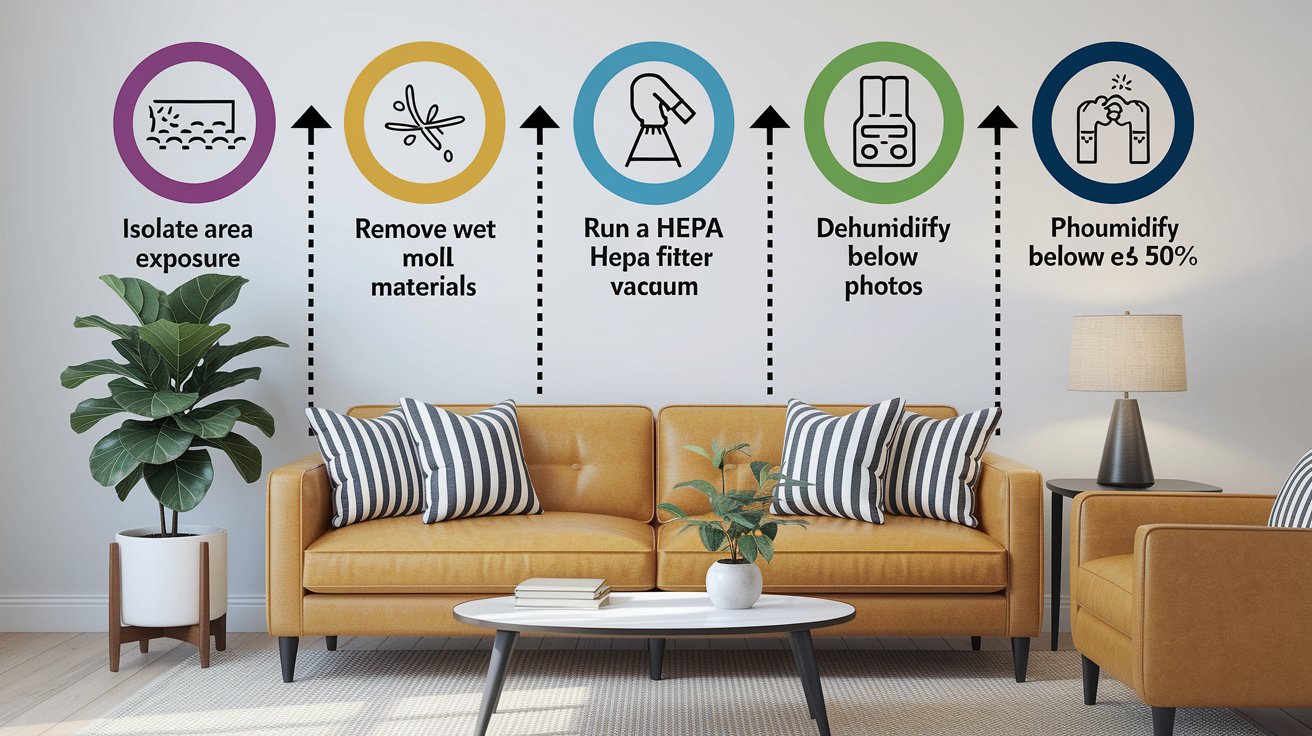
First, minimize your exposure. If you can identify the room or area with visible mold or the strongest musty smell, stop using that space and keep the door closed. Turn off your forced air HVAC system if you suspect mold has spread into ducts. Running the system will blow spores throughout the house. Open windows in unaffected rooms to increase ventilation and dilute spore concentrations.
Take these six immediate steps:
- Isolate the contaminated area by closing doors and sealing gaps with plastic sheeting and tape if the problem is large
- Remove and discard wet or visibly moldy porous materials like carpet padding, ceiling tiles, or cardboard within 24 to 48 hours
- Dry remaining wet materials completely using fans, dehumidifiers, or open windows within 24 to 48 hours to stop new growth
- Use a HEPA vacuum on hard surfaces after they’re dry to capture settled spores (never vacuum wet mold, it spreads spores into the air)
- Run a dehumidifier to bring indoor humidity below 50 percent
- Photograph the damage and document dates, locations, and symptoms for insurance or contractor records
If you need to clean a small area yourself, less than about 10 square feet, roughly a 3 foot by 3 foot section, wear a NIOSH rated N95 respirator, chemical resistant rubber gloves, and eye protection (goggles, not just glasses). For non-porous surfaces like tile or metal, you can use a solution of 1 cup (8 fluid ounces) of household bleach mixed into 1 gallon (128 fluid ounces) of water. Never mix bleach with ammonia or other cleaners. Scrub the surface, let it air dry, then HEPA vacuum. Do not attempt cleanup if you have asthma, a mold allergy, or a weakened immune system. Ask someone without those conditions to do it, or hire professionals. And if the mold covers more than 10 square feet, is inside your HVAC system, is on porous materials like drywall or insulation, or keeps coming back after cleaning, stop and call a remediation company.
When to Hire Mold Remediation Professionals
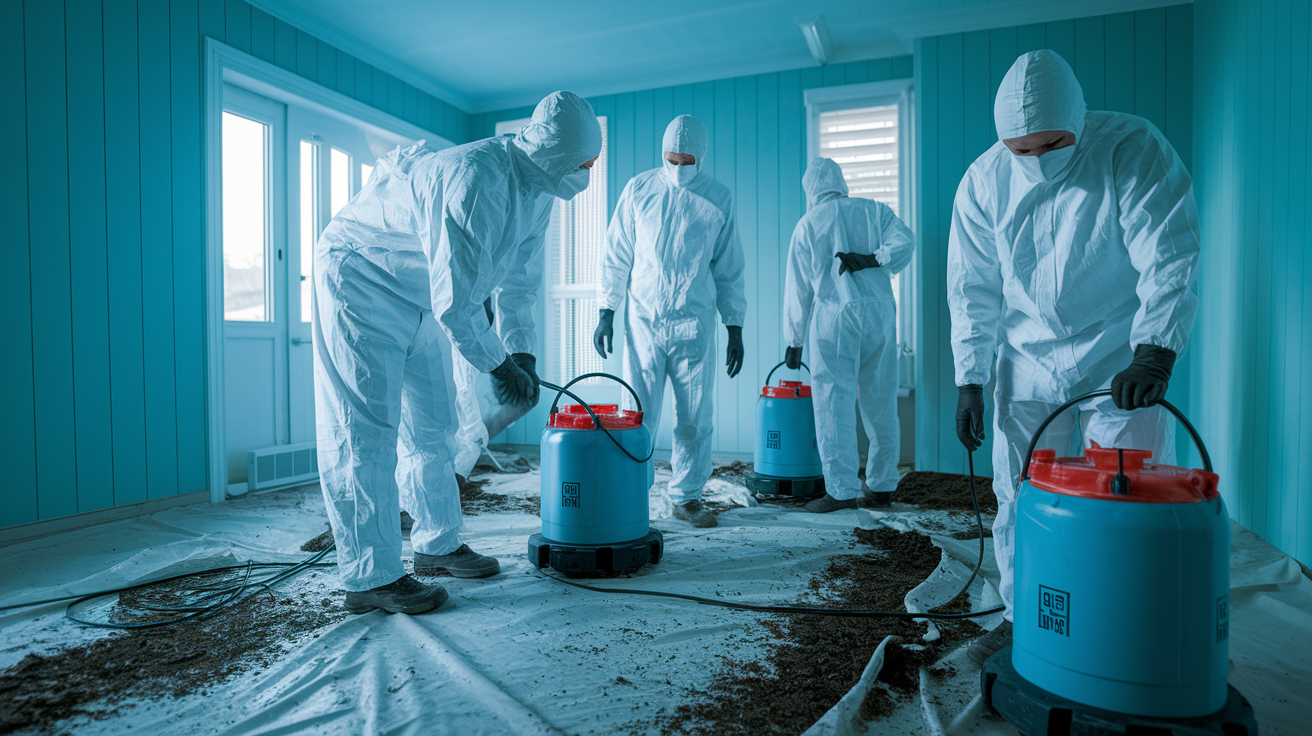
Professional mold remediation contractors use containment barriers and negative air pressure to prevent spores from spreading during removal. They run HEPA filtered air scrubbers that pull spores out of the air. They use moisture meters and thermal imaging cameras to find hidden wet spots behind walls, under floors, and in ceilings. They don’t just clean the surface. They remove and replace contaminated porous materials like drywall, insulation, carpet, and subflooring. Then they dry the structure completely and verify moisture levels before closing it back up.
You need professional help when the contaminated area is larger than 10 square feet, when mold has grown inside your HVAC ducts or air handler, when the source is a structural leak that requires repair work (roof damage, foundation cracks, plumbing inside walls), or when mold keeps returning even after you’ve cleaned it. You also need professionals if anyone in the household is immunocompromised, has severe asthma, or has already developed significant respiratory or neurological symptoms. DIY cleanup in those cases risks making the exposure worse.
Remediation commonly involves cutting out and replacing sections of drywall, tearing up flooring, replacing insulation, and repairing wood framing that’s started to rot from prolonged moisture. Small, localized jobs often run between $500 and $1,500. Moderate to large remediations, especially those requiring structural repairs, HVAC cleaning, or work in multiple rooms, typically cost $2,000 to $10,000 or more depending on the extent of the damage and the materials that need replacement. Professionals will also document the work with photos and moisture readings, which helps with insurance claims and gives you proof that the problem was fixed correctly.
Final Words
You wake with a scratchy throat, a musty smell in the house, and your head feels foggy. That’s the action moment—you want clear steps.
We covered fast-onset symptoms, common respiratory and brain-fog signs, where mold hides, testing options, and when to see a clinician. Track symptoms, take photos, and use PPE for small cleanups.
If you’re asking how to tell if black mold is making you sick, watch whether symptoms ease away from home, test or call a pro if they persist, and know we’ll help stop the exposure and restore your home so you can breathe easier.
FAQ
Q: What are the symptoms of black mold poisoning?
A: The symptoms of black mold poisoning include coughing, wheezing, sinus pressure, headaches, chronic fatigue, itchy or watery eyes, brain fog, dizziness, skin rash, and worsening asthma.
Q: Is it safe to stay in a house with black mold?
A: Staying in a house with black mold is unsafe if growth is large, you have breathing problems, are pregnant, elderly, or symptoms worsen; leave, limit exposure, and arrange inspection and cleanup.
Q: How to check yourself for mold poisoning?
A: You check yourself for mold poisoning by tracking when symptoms occur and whether they improve away from home, seeing a clinician, and getting tests like spirometry, allergy or blood tests, and documentation.
Q: How quickly can black mold make you sick?
A: Black mold can make you sick within hours to days after exposure; symptoms often appear quickly and may improve within 48–72 hours away from the environment, though some people react longer.