
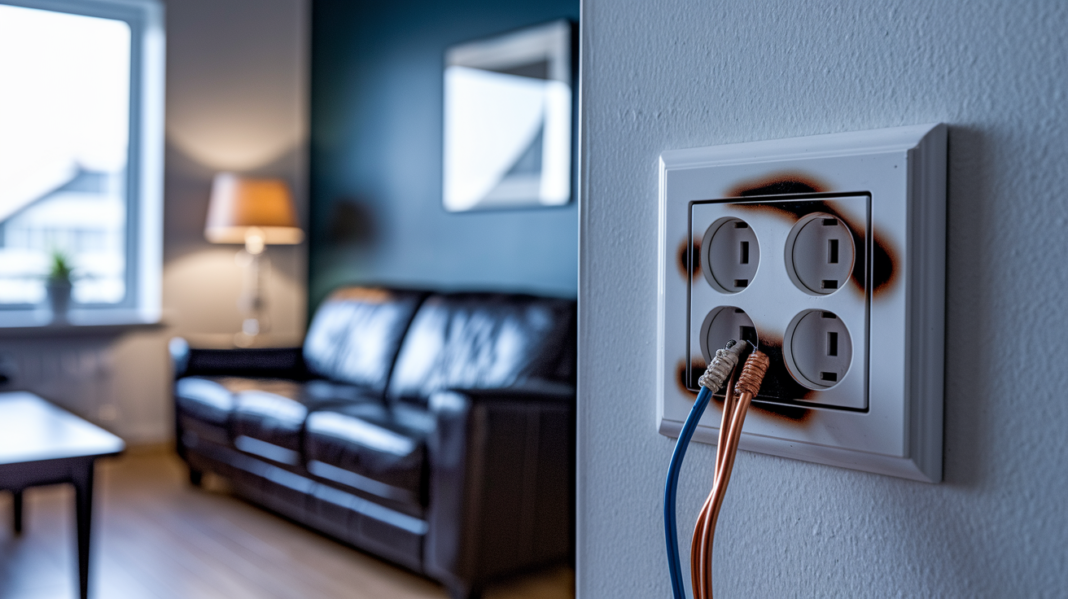

Could the wires inside your walls be about to start a fire and you’d never know?
Electrical failures cause an average of 440 deaths, 1,250 injuries, and about 1.3 billion dollars in home damage each year, so this isn’t a small risk.
Wiring can fail quietly, with arcing, overheating, or melted insulation, and often gives early clues like buzzing outlets, warm faceplates, or a faint burning smell.
This post lays out the warning signs to spot fast, what to do first, and how professionals stop the damage and repair what’s been harmed.
Understanding How Faulty Wiring Becomes a Fire Hazard

Between 2012 and 2016, the National Fire Protection Association tracked an annual average of 440 civilian deaths, 1,250 civilian injuries, and about $1.3 billion in direct property damage from home fires involving electrical failure or malfunction. These fires started because wiring, outlets, switches, or circuit components broke down in ways homeowners usually can’t see. The electrical system hidden inside your walls, junction boxes, and breaker panels runs continuously. When connections degrade, three primary failure modes turn everyday current into ignition sources for surrounding wood, drywall, and insulation: arcing, overheating, and insulation breakdown.
Arcing happens when electricity jumps across a gap created by a loose connection, damaged conductor, or corroded terminal. Each arc generates a burst of heat intense enough to melt metal and ignite nearby combustible materials. Overheating occurs when resistance builds up at a poor connection or when circuits carry more load than they’re designed for. This causes wires and terminals to heat until they glow, char insulation, and set fire to wood framing or paper-backed drywall. Insulation failure exposes live conductors, allowing them to touch grounded metal, other wires, or flammable materials. That completes a fault circuit that draws high current, heats rapidly, and ignites before the breaker can trip.
These mechanisms don’t announce themselves with alarms. A circuit breaker that trips occasionally is normal protection. But when trips occur multiple times a month or more, the breaker’s signaling that something deeper is wrong. Either the circuit is chronically overloaded or a fault inside the wiring is drawing unsafe current. At that frequency, the wiring problem is actively stressing connections and insulation, building heat and mechanical wear that move the system closer to ignition. The fire starts when one of those invisible, worn connections finally arcs or overheats past the point where surrounding materials can dissipate the heat.
Recognizing Early Warning Signs of a Wiring Fire Hazard
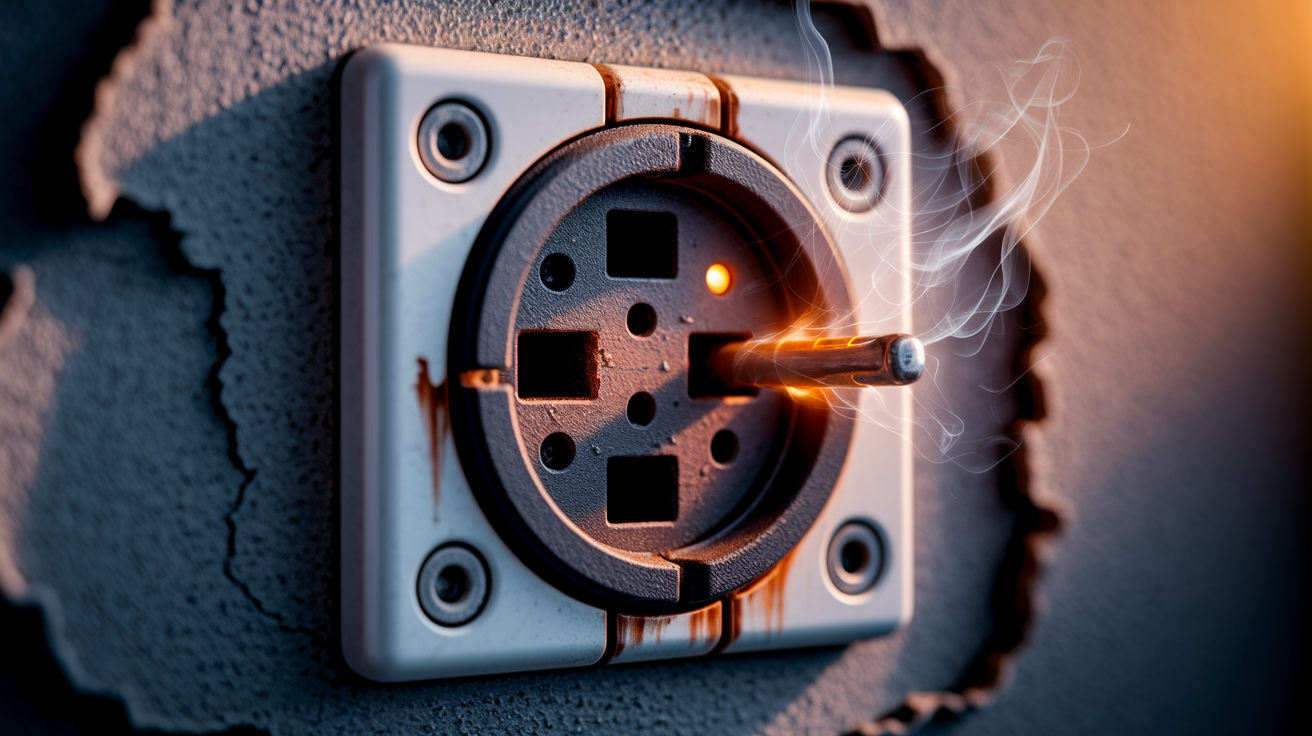
The smell of burning plastic from an outlet or switch isn’t a future warning. It means insulation is melting or has already melted, and the heat source is active right now. Discolored outlet faceplates (brown, black, or heat-warped plastic) show that the wiring behind the plate has been hot enough to scorch surrounding materials. The problem has been building for days or weeks. Warm outlets that feel noticeably hot to the back of your hand without touching internal contacts indicate loose or damaged connections generating heat continuously. Outlets that vibrate or buzz signal arcing or poor mechanical contact that’s cycling heat and sparks inside the box.
Flickering or dimming lights, especially when another appliance turns on, suggest that voltage is dropping because connections are resistive or circuits are overloaded. Shared wiring is being forced to carry more current than it was designed for. Buzzing or crackling sounds at switches, outlets, or inside walls are the audible signature of arcing. That’s the sound of electricity jumping gaps and vaporizing small amounts of metal with each cycle. Frayed wiring insulation, chew marks from rodents or pets, and exposed copper strands present immediate shock and fire danger. Those conductors can touch grounded metal or each other at any moment, completing a fault that draws high current and ignites insulation or nearby wood.
Six specific warning signs that require professional inspection:
| Warning Sign | What It Means |
|---|---|
| Frequent circuit breaker trips | Trips that happen multiple times per month or repeat immediately after resetting indicate an overloaded circuit or a fault condition inside the wiring that the breaker is working to interrupt. |
| Flickering, buzzing, or dimming lights | Lights that buzz when you flip the switch, flicker randomly, or dim noticeably when other devices run signal aged or damaged wiring, poor connections, or circuits that are carrying too much load. |
| Frayed or chewed wiring | Visible insulation damage, exposed copper conductors, bite marks, or abraded wire jackets from rodents, pets, or amateur repairs create direct paths for arcing, shorts, and ignition. |
| Discoloration, scorching, or smoke at outlets | Outlet faceplates or surrounding drywall with brown or black heat marks, melted plastic, or smoke residue mean wiring has been overheating and represents an active fire hazard. |
| Warm or vibrating wall outlets | Outlets that feel warm to the touch without contact with internal wiring, or that vibrate when devices are plugged in, indicate loose or damaged connections generating heat and mechanical instability. |
| Burning or odd electrical odors | Any burning, smoky, or unusual chemical smell near outlets, switches, or breaker panels can mean fire damage is already occurring inside the wall. Treat this as urgent and contact a licensed electrician immediately, or call emergency services if smoke or flame is visible. |
Final Words
Right in the action, we explained how arcing, overheating, and failing insulation can light nearby materials and start a fire.
We leaned on NFPA numbers — about 440 deaths, 1,250 injuries, and $1.3B in yearly damage from electrical failure — and walked through the main warning signs and what they mean.
If you see issues, act fast: stop more damage, call a licensed electrician, and document for your insurer. With quick steps and proper repairs, you can prevent a faulty wiring fire hazard and get your home safe again.
FAQ
Q: Is faulty electrical wiring a fire hazard and what type of hazard is it?
A: Faulty electrical wiring is a serious fire hazard and electrical shock hazard. Arcing, overheating, and insulation failure can ignite nearby materials, causing structural fires and putting occupants at risk.
Q: How many house fires are caused by faulty electrical wiring?
A: Faulty electrical wiring is linked to many home fires; NFPA (2012–2016) reports an average yearly 440 civilian deaths, 1,250 injuries, and $1.3 billion in property damage from electrical failure or malfunction.
Q: How will you put out a fire caused by faulty wiring?
A: Putting out a fire caused by faulty wiring means first cutting power, then using a Class C-rated extinguisher (CO2 or dry chemical). If the fire is larger or power isn’t off, evacuate and call emergency services.