
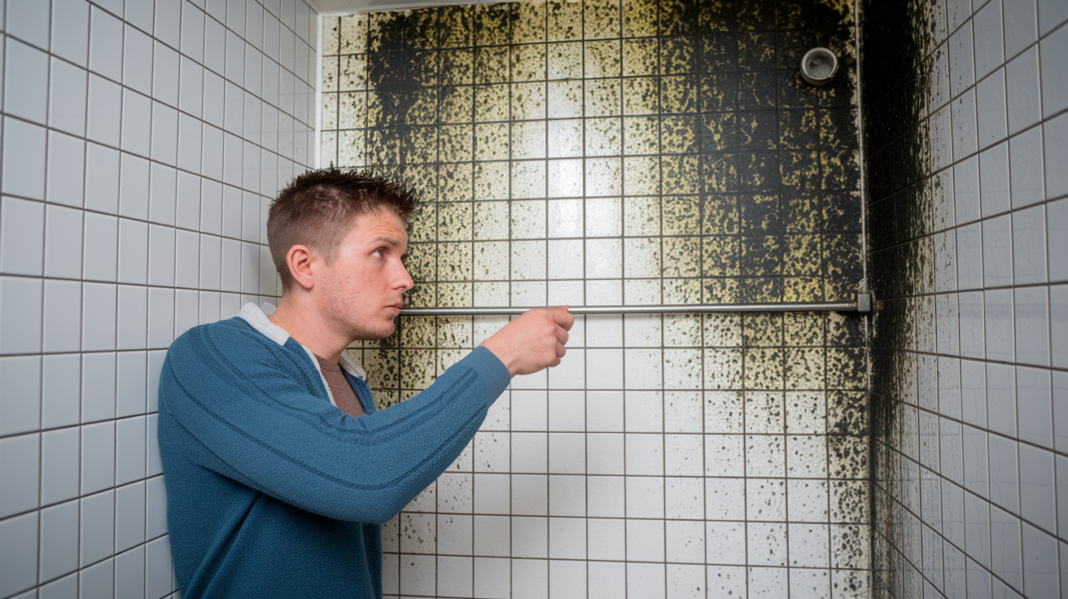

Think that dark spot on your wall is just dirt?
It might be black mold, and the sooner you know, the less repair you’ll need.
This post walks you through the clear signs of black mold in house: what it looks like, the musty smells, common hiding spots, and health clues to watch for.
You’ll learn which tests help confirm it and the safety steps to take before you disturb anything.
Read on so you can spot trouble fast, stop more damage, and plan the right repairs.
Key Visual and Sensory Indicators to Identify Black Mold Indoors

Black mold typically appears as dark green to black patches that look fuzzy when they’re dry or slimy when moisture’s present. The colonies spread in irregular shapes or circular patterns, and you’ll often see the surface underneath starting to suffer. Drywall stains, ceiling tiles peel, wood trim warps. Pull back wallpaper or lift a corner of wet carpet and you might find dark discoloration with a soft, almost velvety texture. That’s a strong visual sign.
You’ll usually spot these patches in rooms where moisture sticks around. Bathrooms, basements, crawl spaces, areas near leaky pipes. Black mold needs steady dampness to grow, so any place that stays wet for more than a day or two can become a breeding ground. Check around shower surrounds, under sinks, behind washing machines, along basement walls where condensation pools.
The smell often hits you first, before you even see anything. Black mold releases a strong, musty odor that people describe as earthy, damp, or like rotting wood. That smell comes from microbial volatile organic compounds, and it gets worse in humid or poorly ventilated rooms. Walk into a space and immediately notice that smell? Start looking for moisture and discoloration.
Specific indicators to watch for:
Dark green, black, or deep brown patches that may appear fuzzy, slimy, or powdery depending on moisture level. Circular or irregular growth patterns spreading outward from a wet spot or leak. Staining, bubbling, or peeling paint and wallpaper near the colony. Warped or soft drywall, baseboards, or ceiling tiles in the same area. Persistent condensation on windows, pipes, or walls close to the growth. Water stains, rust marks, or discolored grout that signal ongoing moisture problems.
Common Household Areas Where Black Mold Thrives
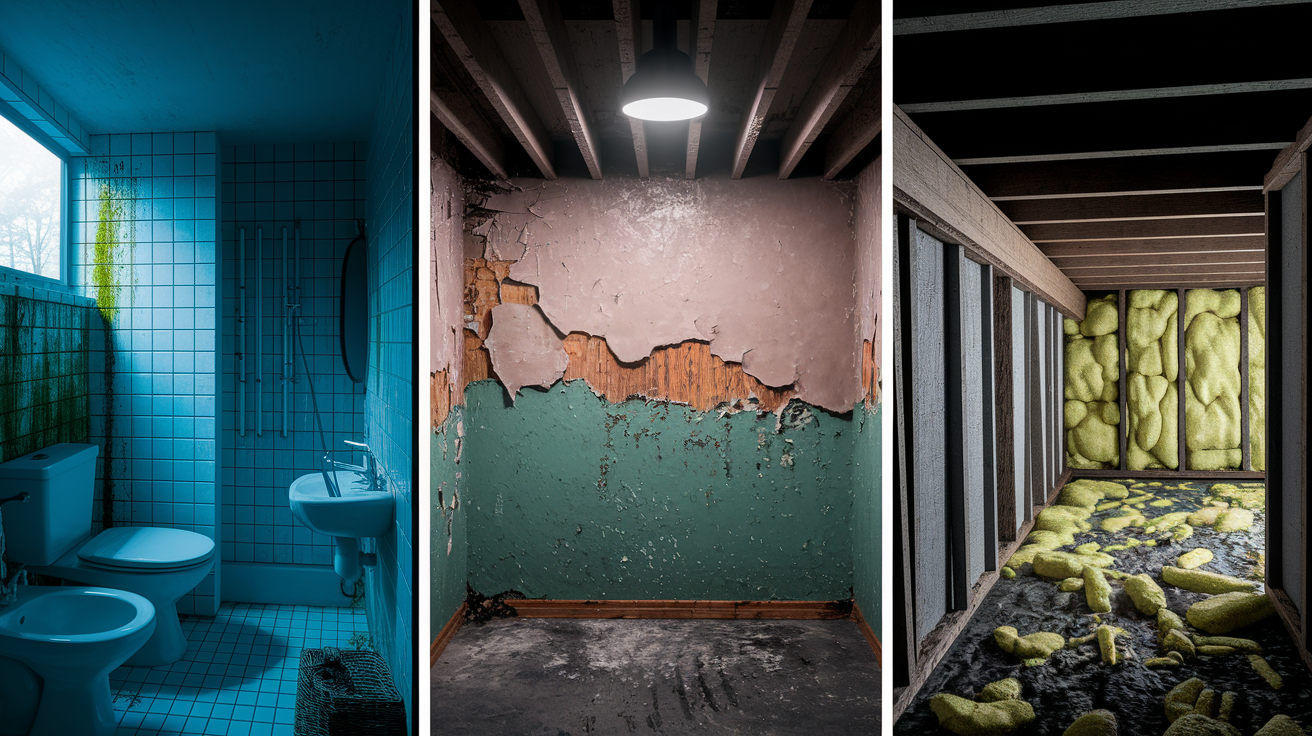
Bathrooms see constant humidity from showers and baths, so mold often takes hold around tubs, behind tiles, along caulk lines, inside poorly ventilated exhaust vents. If your bathroom doesn’t have a working fan or a window you can open, moisture just sits in the air and soaks into grout, drywall, and wood. Check around the toilet base and under the sink cabinet, especially if there’s been a slow leak.
Basements and crawl spaces are natural targets. They’re cooler, damper, and often have poor air circulation. Water can seep through foundation cracks, collect from high groundwater, or drip from overhead pipes. Mold grows on exposed wood joists, insulation, cardboard boxes, any porous material that stays damp. Attics can develop the same problem if roof leaks or condensation from temperature swings create wet spots on rafters and sheathing.
Highest risk household zones:
Bathrooms with limited ventilation or recurring steam and splash zones. Basements, especially unfinished spaces with concrete walls and minimal airflow. Crawl spaces with dirt floors, standing water, or inadequate vapor barriers. Kitchens near sinks, dishwashers, and refrigerator water lines. Around windows and exterior walls where condensation forms during temperature shifts.
Health Symptoms That Suggest Possible Exposure

Respiratory symptoms are the most common reaction. You might notice persistent coughing, sneezing, a runny or stuffy nose, wheezing, or throat irritation that doesn’t go away even when you’re not sick. Some people feel tightness in the chest or have trouble catching their breath, especially if they already deal with asthma. These symptoms often get worse when you’re home and improve when you’re away for a few hours or overnight.
Chronic or recurring issues can include sinus infections that keep coming back, headaches that feel worse in certain rooms, ongoing fatigue, itchy or watery eyes. You might also see skin rashes or irritation in areas exposed to spores. If you clean a moldy spot without proper protection and then feel suddenly worse (more congestion, sharper headache, nausea), that’s a sign you disturbed the colony and released spores into the air.
Children, elderly individuals, pregnant people, and anyone with a weakened immune system or existing respiratory condition face higher risk. Infants and young kids are closer to the floor where spores settle, and their lungs are still developing. Older adults and people with asthma, allergies, or chronic obstructive pulmonary disease may experience severe reactions even from low level exposure. If someone in your household has these symptoms and you can’t find another cause, check for hidden mold near their bedroom or common areas.
Distinguishing Black Mold From Other Types of Mold
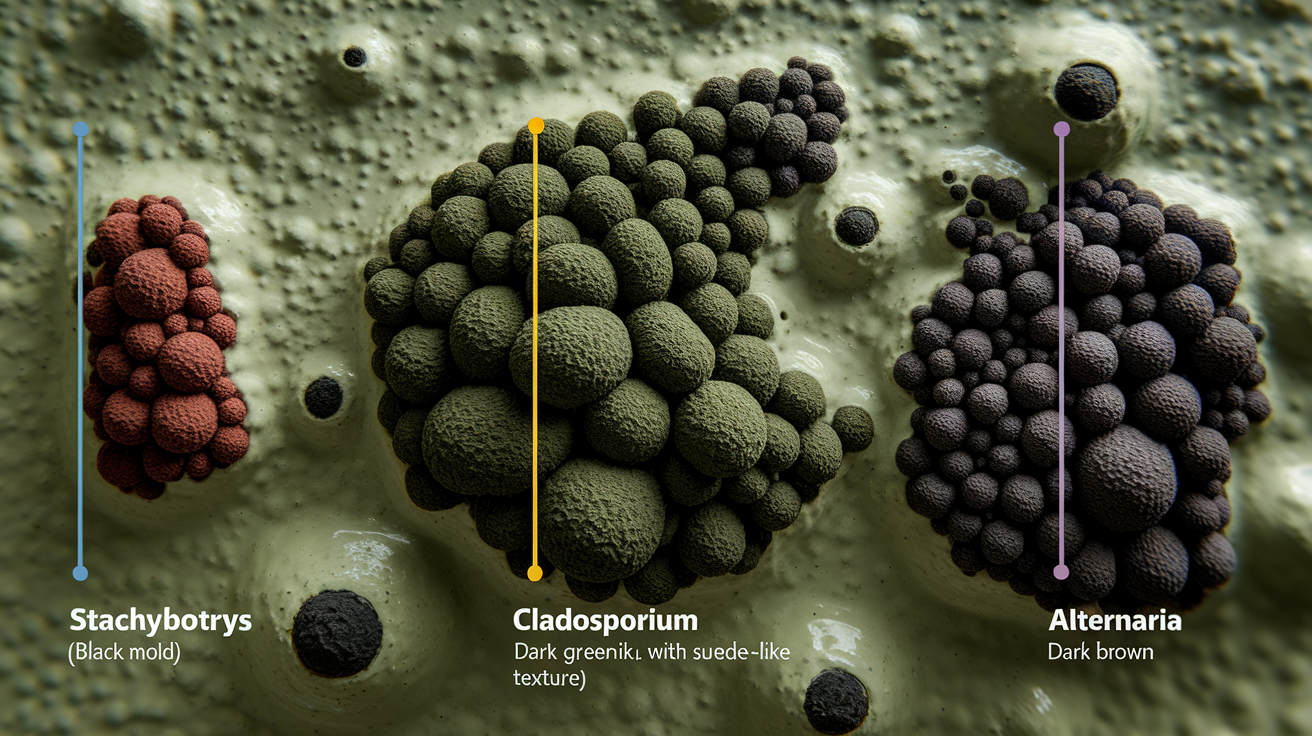
Many household molds share dark colors, so you can’t rely on appearance alone to confirm you’re dealing with toxic black mold. Cladosporium often looks dark green or black and grows on damp windowsills, bathroom tile, and fabrics. Alternaria can appear black or dark brown and tends to show up in showers, around leaks, on water damaged materials. Both are common, and both can cause allergic reactions, but they don’t produce the same mycotoxins as Stachybotrys chartarum.
Texture and growth pattern help narrow it down. Black mold usually feels slimy when wet and develops a more velvety or powdery surface when it dries out. It spreads in irregular patches or concentric rings and often leaves a greenish black stain on the surface underneath. Cladosporium tends to grow in smaller, more defined spots with a suede like texture. Alternaria can look fuzzy or hair like and spreads more evenly across damp surfaces.
Environmental behavior is another clue. Black mold needs continuous moisture and cellulose rich materials like drywall, wood, or ceiling tile. If the mold keeps coming back even after you dry the area or scrub it down, and it’s growing on paper backed drywall or inside a wall cavity near a leak, that increases the chance it’s Stachybotrys. Other molds may tolerate slightly less moisture or grow on different materials like concrete or plastic.
| Mold Type | Typical Color | Growth Traits |
|---|---|---|
| Stachybotrys chartarum (black mold) | Dark green to black, may appear slimy or velvety | Requires continuous moisture; grows on cellulose materials; produces mycotoxins |
| Cladosporium | Dark green, brown, or black; suede like texture | Tolerates cooler temperatures; common on fabrics, wood, tile |
| Alternaria | Dark brown to black; fuzzy or hair like appearance | Grows quickly in damp areas; common in showers and on water damaged materials |
Testing Methods to Confirm Black Mold

If you see mold and you know you have a moisture problem, testing usually won’t change what you need to do. Remove the mold and fix the leak. But if you smell that musty odor and can’t find the source, or if someone in the house is having unexplained health symptoms, testing can confirm hidden growth and tell you how widespread the problem is.
Professional Mold Inspection
A certified inspector will do a visual walk through and use moisture meters to check walls, floors, and ceilings for hidden dampness. They’ll take air samples to measure airborne spore counts and surface samples from suspected colonies. The samples go to a lab for species identification, and you get a report showing what types of mold are present and at what concentration. This option works best when you suspect mold inside walls, in ductwork, or in spaces you can’t easily access. Inspections typically run $300 to $800 depending on your area and the size of your home.
Laboratory Surface Sampling
If you can see the mold, you can collect a sample yourself using clear tape or a sterile swab, then send it to a lab for analysis. The lab will identify the species and sometimes provide spore counts. Turnaround is usually a few days to a week. Each sample typically costs $75 to $200 to process. Surface sampling is useful when you want to confirm the exact type of mold before deciding on remediation, especially if you’re dealing with insurance or need documentation for a landlord.
DIY Mold Test Kits
Home test kits include a petri dish or swab that you expose to the air or press against a surface, then mail to a lab or read yourself using an included guide. They’re inexpensive, usually $10 to $50, and can give you peace of mind if you’re worried about air quality. The downside is accuracy. Some kits detect any mold spores in the air, which every house has to some degree, and they don’t tell you if what you found is actually a problem or just normal background levels. If the kit shows positive, you’ll still need professional confirmation to know the species and concentration.
Safety Precautions Before Inspecting or Disturbing Mold

Touching or scraping mold can release thousands of spores into the air, and those spores can travel through your HVAC system or settle on furniture, clothing, and other surfaces. Once airborne, they’re easy to inhale, and that’s when respiratory symptoms and allergic reactions start. Even if you’re just pulling back a piece of trim or lifting a corner of carpet to check for growth, you’re disturbing the colony.
Before you start poking around, put on basic protective gear. An N95 respirator will filter out most mold spores. Nitrile or rubber gloves keep spores off your skin, and safety goggles protect your eyes from irritation. Wear long sleeves and pants you can wash or throw away afterward. If you’re cutting into drywall or pulling up flooring, consider sealing off the room with plastic sheeting and running a fan to vent air outside through a window. Don’t run your central air or heat while you’re working. You’ll just spread spores to other rooms.
Essential protective gear:
N95 respirator or P100 mask for filtering airborne mold spores. Nitrile or heavy rubber gloves to avoid direct skin contact. Safety goggles or a face shield to protect eyes from spore release. Long sleeve shirt, long pants, and closed toe shoes; discard or launder immediately after inspection.
When to Contact a Professional Remediation Service

If the moldy area is larger than about 10 square feet (roughly a 3 by 3 foot patch), you’re usually better off calling a professional. At that size, the colony is well established, and trying to scrub it yourself can release a lot of spores and make the contamination worse. Professionals use containment barriers, negative air pressure, and HEPA filtration to keep spores from spreading while they remove damaged materials and treat surfaces.
Structural issues require expert help. If mold is growing inside wall cavities, on ceiling joists, in your HVAC system, or anywhere you need to cut open drywall or pull up flooring to reach it, that’s beyond a DIY job. The same goes for mold that appeared after a major flood, sewage backup, or roof leak that soaked insulation and framing. These situations often involve hidden damage, and you need someone who can assess moisture levels behind surfaces and verify everything is dry before closing it back up.
Recurring mold is a strong signal that the moisture source isn’t fixed. You can clean visible growth, but if it comes back in the same spot a few weeks later, there’s an underlying leak, condensation problem, or ventilation issue that you haven’t solved. A remediation specialist will trace the moisture, recommend repairs, and confirm the area is dry and treated so the mold doesn’t return. That’s especially important if you’ve already tried cleaning it yourself and the problem persists.
Final Words
If you spot dark, green-black patches or smell a strong musty odor, act fast. Check bathrooms, basements, ceilings, and areas near leaks. Use protective gear and don’t disturb large patches.
This post covered visual cues, common hotspots, health signals, testing options, safety steps, and when to call a pro. Take photos and record moisture readings for documentation.
If you notice signs of black mold in house, get it checked or tested right away, because quick steps stop the spread and cut repair time. You’ll get this fixed and back to normal.
FAQ
Q: What are the 10 warning signs of mold toxicity?
A: The 10 warning signs of mold toxicity include coughing, sneezing, sinus congestion, watery eyes, headaches, fatigue, skin rashes, wheezing, brain fog, and a persistent musty odor.
Q: How do you know if mold is making you sick?
A: You know mold is making you sick if symptoms like cough, congestion, eye irritation, headaches, or fatigue start or worsen at home and improve when you leave, or if several household members share them.
Q: Is it okay to be in a house with black mold?
A: Being in a house with black mold is not safe for long exposures, especially for kids, elderly, or people with breathing issues. Avoid prolonged contact, stop the moisture, and clean or call pros for large growth.
Q: What kills 100% of black mold?
A: Nothing household or DIY reliably kills 100% of black mold; full removal, fixing the moisture source, and replacing affected porous materials or hiring pros is required. Bleach only cleans surface spores.