

Think your floor looks fine? Your feet and nose often know before your eyes do.
Water can hide under good-looking flooring and quietly soften the boards, feed mold, and warp trim.
Most subfloor problems start with small cues: a spongy spot when you step, a musty smell, new squeaks, or a dark stain that won’t go away.
Read on to learn the first signs to check, what each one means, and the quick actions that stop more damage and cut repair costs.
Key Subfloor Water Damage Signs You Should Check First
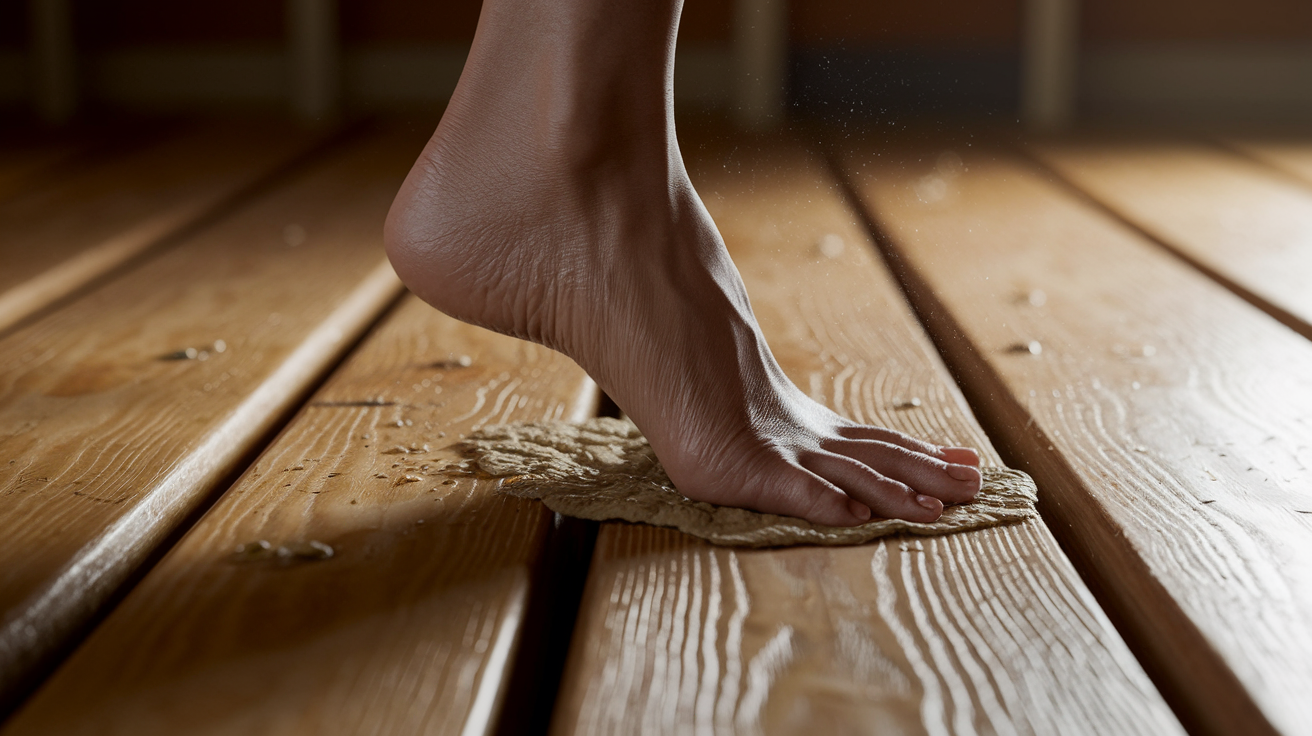
The first clues come through your senses. Your feet pick up problems before you ever see them. Most subfloor water damage shows up as changes you can feel when walking, smells that stick around, sounds that weren’t there last week, or surfaces that just look wrong once you stop and stare.
Walk through bathrooms, kitchens, and laundry rooms slowly. Bare feet or socks work best. Press down gently every few steps. Soft spots or a spongy give under your weight are clear warnings. If it feels like the floor’s absorbing you instead of holding you up, there’s moisture in the wood below. Your nose knows too. That musty, earthy smell that won’t quit, especially near fixtures or appliances, almost always means mold is growing somewhere hidden. Pay attention to sound. New squeaks, worse creaking, or a faint squish when you step on carpet all point to trapped water or movement happening underneath.
Then check what you can see. Warping in wood planks. Buckling near edges. Dark stains between boards or damp patches on carpet that stay wet for days. Cracked tile, lifting laminate corners, peeling paint on baseboards. White or grayish water lines on hardwood. Sagging sections anywhere. These are signs water’s been there long enough to start changing things.
Early signs you don’t want to ignore:
- Soft, spongy, or bouncy feeling when you walk
- Musty or moldy smell that keeps coming back
- Warping, buckling, or cupping in wood floors
- Dark or wet looking spots on carpet, stains on hardwood
- Squeaks, creaks, or squishing sounds that are new
- Cracked tiles, bubbling laminate, gaps between planks
Physical Subfloor Water Damage Indicators and Flooring Deformities
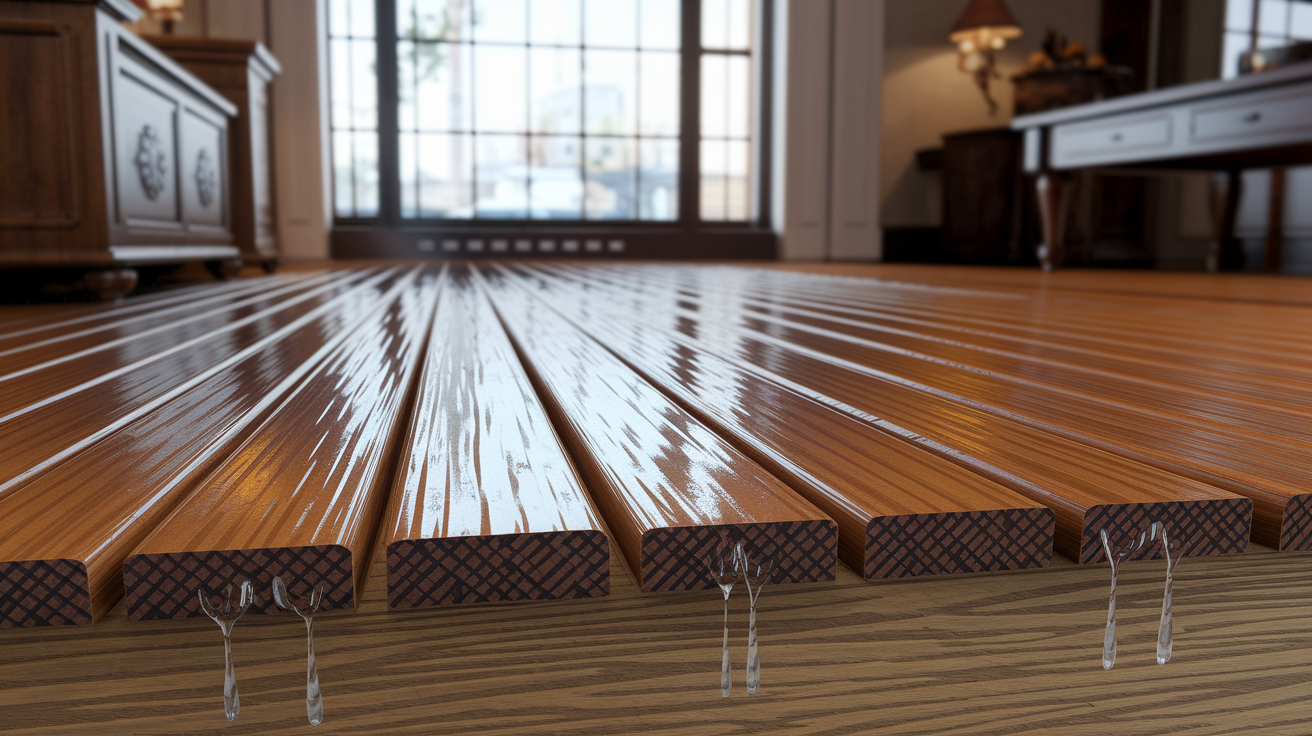
Water underneath flooring changes the shape of what’s on top. Wood swells when it soaks up moisture, and that expansion shows up in visible ways. Cupping is when the edges of a wood plank rise higher than the center, making a shallow U shape along the board. Crowning does the opposite. The center swells and peaks above the edges. Both mean moisture’s gotten into the wood layers underneath. Buckling is worse. The floor lifts noticeably away from the subfloor, sometimes creating gaps you can actually see or feel. When buckling happens, water’s been sitting there long enough to force the material to move.
Laminate and luxury vinyl plank react differently, but they still show damage. These materials don’t absorb water like wood does, but they can crack, bubble, or pull apart at the seams when moisture gets underneath. Tile floors might stay flat, but grout between tiles can crack or darken. Individual tiles can loosen or rock when you press them. Any kind of persistent warping usually means the subfloor itself is wet or starting to rot.
What different flooring types do when wet:
- Hardwood: cupping, crowning, buckling, visible gaps between boards
- Laminate and LVP: bubbling, cracking, edges lifting, seams separating
- Carpet: rippling, bunching, uneven texture, backing gets dark or smells
- Tile: loose tiles, cracked or discolored grout, movement when you walk
Tactile and Sound Based Signs of Subfloor Moisture Damage

Your hands and feet catch problems your eyes can miss. Soft or spongy spots are the clearest sign that water’s soaked the subfloor and started breaking down the wood. When you press down and the floor gives a little, or when you feel a slight bounce as you walk, the structure underneath isn’t solid anymore. In bad cases, the floor might sag visibly or feel uneven across the room. These changes mean the plywood or OSB subfloor has absorbed enough water to weaken.
Sound changes tell you the subfloor is shifting. Squeaks that show up suddenly or get worse over time usually mean fasteners are loosening as the wood swells and contracts. Creaking that follows your steps can mean movement between the subfloor and the joists below. If you walk on carpet and hear a faint squishing noise, water’s likely trapped in the padding or subfloor underneath. These sounds aren’t normal wear. They’re signs of structural movement caused by moisture.
Simple Tests You Can Do at Home
Walk slowly through suspect rooms in socks. The thinner barrier between your feet and the floor makes it easier to feel small changes. Stop every few steps and press down with your full weight, then shift side to side. Notice any areas that flex, give, or feel different from the rest of the room. You can also try the marble test. Place a small marble or ball on the floor and see if it rolls toward a low spot, which might mean sagging caused by water damage.
Odor and Humidity Changes That Reveal Hidden Subfloor Damage

A musty smell that won’t go away is one of the most dependable signs of hidden water damage. If you walk into a room and catch a stale, earthy, or moldy odor, especially one that gets stronger near the floor, mold’s probably growing somewhere beneath the surface. Mold needs moisture to live, and a smell that lingers means the conditions have been right for days or weeks. The odor often sticks around even after you air out the room or clean what you can see.
Higher humidity is another clue. If you notice condensation forming on windows, walls, or even the floor itself, moisture levels in the room are too high. Bathrooms and basements are common trouble spots, but condensation in other rooms can signal that water’s evaporating from the subfloor into the air. Poor indoor air quality, stuffiness, or a damp feeling in a room that should be dry all point to trapped moisture below.
Common smell situations connected to subfloor moisture:
- Persistent musty or moldy smell concentrated near the floor or in corners
- Earthy or damp odor that gets stronger after running a shower, washing machine, or dishwasher
- Stale smell in a closed room that returns quickly after you open windows
Visual Clues: Stains, Discoloration, and Changes in Adjacent Structures

Water leaves marks. On hardwood floors, stains can show up white or gray when moisture first gets through the finish, or they might darken to brown or black if water’s been there long enough to affect the wood itself. Dark patches between planks often mean mold growing in the gaps or on the subfloor below. Carpet shows water damage as darker, damp areas that feel cool to the touch and don’t dry even after days. The carpet backing might darken or start separating from the fibers.
Walls and baseboards near the floor also reveal subfloor water problems. Look for peeling paint, bubbling, or discoloration along the bottom edge of drywall. Baseboards can swell, warp, or pull away from the wall. White or gray water lines on trim are classic signs of past flooding or leaks. If you see these patterns, the water probably moved sideways from the floor into the wall materials. Caulk around tubs, showers, and sinks might crack or pull away, letting water seep into the floor structure.
Ceilings below the damaged floor tell their own story. Water rings, sagging drywall, peeling paint, or visible drips all mean moisture has traveled through the subfloor and into the space underneath. Where ceiling stains appear can help you trace the leak back to its source, whether it’s a bathroom fixture, washing machine supply line, or roof penetration above.
Inspecting Crawlspaces and Basements for Hidden Subfloor Water Damage
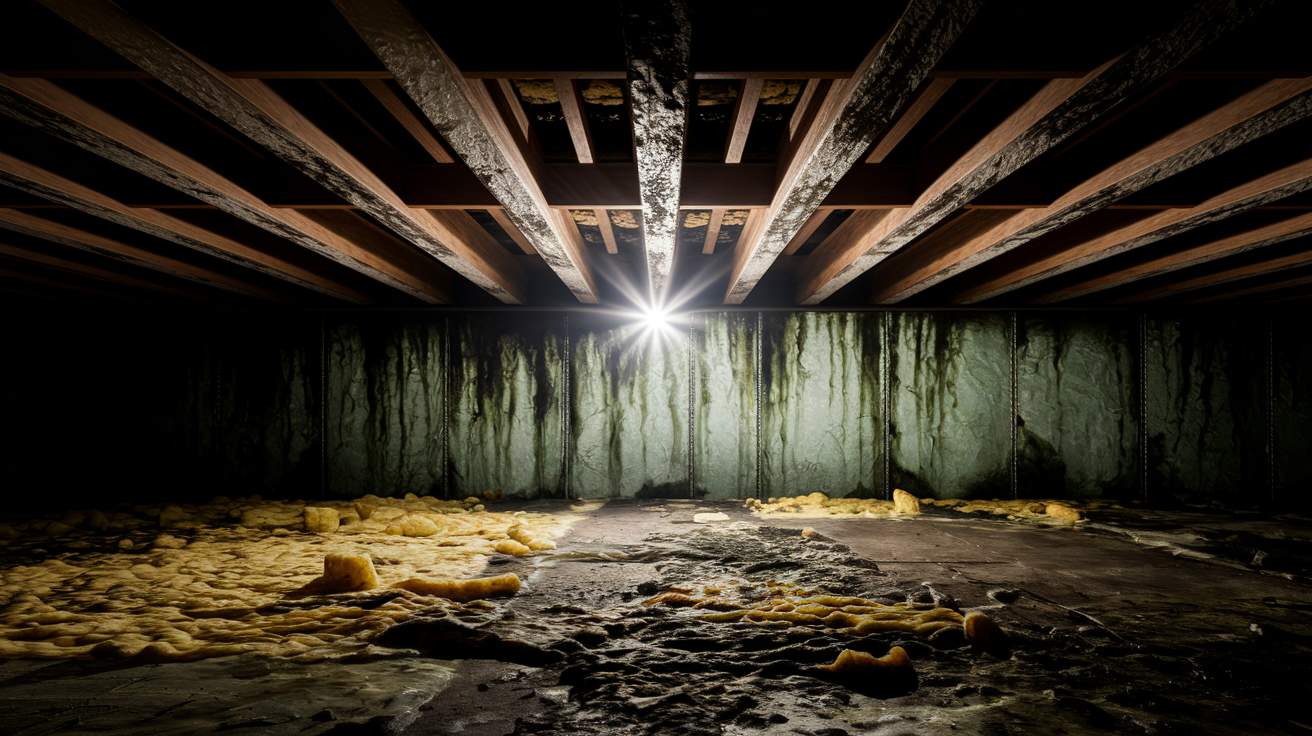
The underside of your floor often shows damage before the top does. Crawlspaces are especially revealing. Use a bright flashlight and look for dark stains on the underside of the plywood or OSB subfloor. Check for rusted nails or screws, which mean long term moisture exposure. Inspect the wooden joists that support the subfloor. Dark wood, soft or crumbling sections, and mold growth are all signs of rot. Soggy or compressed insulation between joists means water’s been dripping or condensing there.
Basements need a similar approach. Seepage through foundation walls or slab floors can pull moisture upward into the subfloor above. Look for efflorescence, those white chalky deposits on concrete, which signal water moving through the foundation. A failing sump pump, clogged floor drains, or high water tables during heavy rain can all raise moisture levels enough to damage the floor structure. Persistent dampness in a basement almost always affects the flooring above it.
| Area | What to Check | Typical Issues |
|---|---|---|
| Crawlspace | Underside of subfloor, fasteners, joists, insulation | Dark stains, rusted screws, crumbling wood, mold, soggy insulation |
| Basement | Ceiling joists, foundation walls, slab, sump pump area | Efflorescence, damp spots, mold, seepage, dripping pipes |
| Joists | Color, texture, firmness, fastener condition | Darkened wood, soft spots, visible cracks, rusted nails |
| Insulation | Compression, moisture, odor, visible mold | Sagging, wet or heavy feel, musty smell, dark discoloration |
Tools and Methods to Detect Moisture in Subfloors

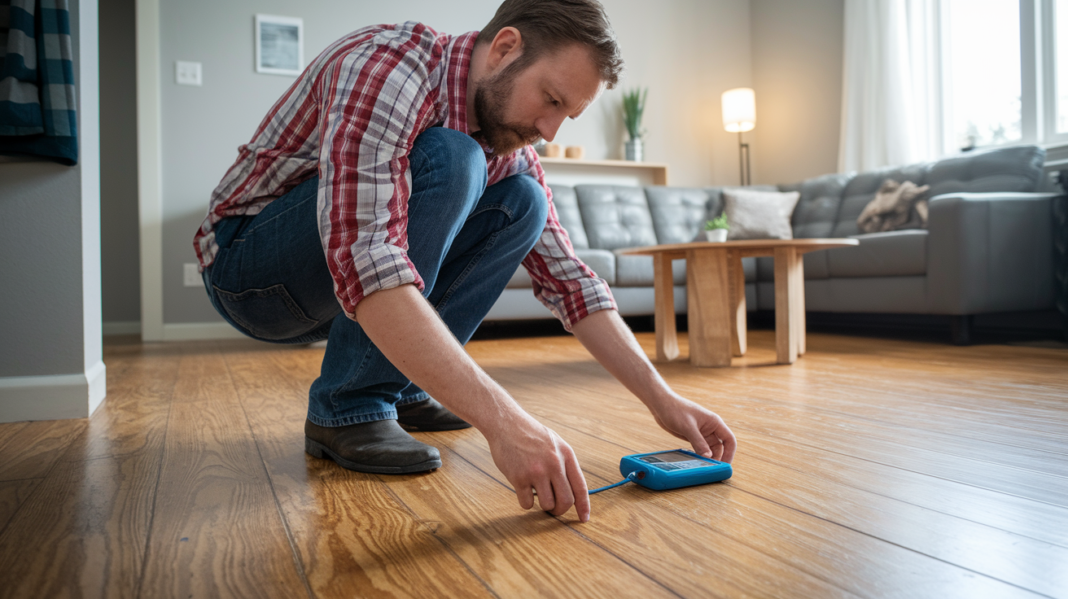
Moisture meters give you numbers instead of guesses. Two types are common for flooring inspections. Pin type meters use metal probes that you push into the wood to measure electrical resistance, which changes with moisture content. Pinless meters use a flat sensor you press against the surface. They read moisture levels without leaving holes. Both work well, but pin meters are more accurate for checking deep into thick subfloors or joists. Take readings in several spots. Compare suspect areas to clearly dry zones in the same room or an adjacent room. Wood moisture levels consistently above 16 to 20 percent create conditions where mold can grow and rot can start.
Infrared cameras reveal moisture patterns you can’t see. They detect temperature differences on surfaces. Wet areas appear cooler than dry ones. This tool’s especially useful for scanning large rooms or tracking water paths from a known leak to hidden damage. Homeowners can also lift carpet edges, remove vent covers, or pull up a small section of flooring in a closet to inspect what’s below. Shine a flashlight on the subfloor and padding, check for dampness with your hand, smell for mustiness. Small access points let you confirm suspicions before committing to larger repairs.
Document what you find. Mark soft spots or high moisture zones with painter’s tape so you can track changes over time. Take photos with your phone and note the date. If you’re using a moisture meter, write down the readings and locations. This record helps you see whether conditions are improving after you run fans and dehumidifiers, and it gives you evidence for insurance claims or contractor estimates.
Interpreting Moisture Meter Readings
Dry wood typically reads between 6 and 12 percent moisture content in most climates. Readings from 12 to 16 percent are borderline. Monitor them closely and check again in a few days. Anything above 16 percent is a concern, and levels above 20 percent strongly suggest active moisture intrusion or poor drying conditions. Always compare readings across multiple locations. A single high reading might be a fluke, but a cluster of elevated readings in one area confirms a problem. If your baseline reading in a dry hallway is 9 percent and a bathroom subfloor reads 22 percent, the bathroom floor is wet and needs attention.
Signs Subfloor Water Damage Has Become Structural

When rot reaches the joists, the damage isn’t cosmetic anymore. Joists are the horizontal beams that support the subfloor, and if they fail, the entire floor can collapse. Inspect joists from below with a flashlight. Dark stains, especially near plumbing or exterior walls, are early warnings. Soft or crumbling wood means the rot is advanced. If you press a screwdriver into a joist and the wood yields easily or crumbles, that section has lost its strength.
Widespread sagging is another red flag. A single soft spot may be limited to a small area of subfloor, but if the floor sags across an entire room or between multiple rooms, the structural support underneath is failing. You might also see gaps forming between the floor and the baseboards, or doors and cabinets near wet rooms may go out of alignment as the floor shifts.
Structural danger signs that need immediate professional help:
- Visible sagging or unevenness across large sections of floor
- Soft, crumbling, or darkly stained joists when inspected from below
- Multiple rooms showing simultaneous warping, bouncing, or soft spots
Mold Growth Under Floors and Why It Matters

Mold thrives in dark, damp, enclosed spaces, making the area beneath flooring perfect when moisture is present. You might see black, green, or white fuzzy growth along the edges of baseboards, under lifted carpet, or on the underside of subfloor panels. Often you’ll smell mold before you see it. That persistent musty odor comes from microbial volatile organic compounds released as mold colonies grow. Once mold establishes itself, it keeps spreading as long as moisture remains.
Health effects vary by individual, but mold exposure commonly triggers respiratory irritation, coughing, sneezing, and worsened asthma or allergy symptoms. People with compromised immune systems or chronic lung conditions are especially vulnerable. Indoor air quality declines as spores circulate through heating and cooling systems. Even if you don’t see mold, the presence of a strong musty smell is enough reason to investigate further and consider remediation.
Mold types and warning signs under floors:
- Black mold (Stachybotrys): dark, slimy appearance, often found on water damaged drywall, wood, or paper backing
- Green or blue green mold (Penicillium, Aspergillus): powdery or fuzzy texture, common on damp wood and organic materials
- White mold: may look like efflorescence but feels fuzzy, often early stage growth on damp subfloors
Immediate Steps to Take When You Discover Subfloor Water Damage

Stop the water source first. If a pipe is leaking, turn off the supply valve or the main water shutoff. If an appliance is flooding, unplug it and close the supply line. If the ceiling is dripping, place buckets and move anything valuable out of the area. Until you stop the flow, damage will keep spreading.
Ventilate and dry the space as quickly as possible. Open windows if weather permits. Run fans to move air across wet surfaces. Place a dehumidifier in the room to pull moisture from the air. Keep these running for 24 to 72 hours, checking progress with a moisture meter or by feel. Lift area rugs and move furniture off affected zones so air can reach the floor from all sides. Don’t walk on soft or spongy areas. Your weight can worsen subfloor damage or cause injury if the structure is compromised.
Document everything. Take clear photos of visible damage, including stains, warping, mold, and any equipment you’re using to dry the area. Write down the date and time you discovered the problem, what you did to stop it, and any conversations with plumbers, contractors, or your insurance company. This record protects you if a claim is disputed or if hidden damage appears later during repairs.
Immediate actions when you find subfloor water damage:
- Stop the water source. Shut off valves, unplug appliances, or call a plumber for active leaks.
- Ventilate and dry. Open windows, run fans and dehumidifiers, remove wet materials where safe.
- Move valuables and limit foot traffic on soft or damaged sections.
- Take photos and document damage, source, and timeline.
- Contact your insurance company to report the damage and ask about coverage.
Repairing, Replacing, and Drying Subfloors After Water Damage
Drying comes before repairs. Even after you stop the leak, moisture can stay trapped in the subfloor for days. Use air movers positioned to blow across the floor surface and a dehumidifier to lower humidity levels in the room. Check moisture readings daily. When readings stabilize in the normal range (below 12 to 16 percent) and match baseline readings in dry areas, you can move forward with repairs. Rushing this step traps moisture inside, leading to mold and continued rot.
Laminate and luxury vinyl plank are easier to remove and replace. These materials usually install as floating floors with click together edges, so you can pull up damaged planks without disturbing the rest of the room. Inspect the subfloor underneath, clean and dry it thoroughly, then reinstall new planks. Carpet is more involved. You’ll need to remove the carpet, padding, and tack strips, dry or replace the padding, treat or replace affected subfloor sections, then reinstall everything. Hardwood repairs require skill. You may need to sand, stain, and refinish boards, or replace sections and blend them into the existing floor.
Professional help is necessary when rot extends to the joists, when mold growth is widespread, or when large sections of subfloor need replacement. Structural repairs require tools, knowledge of load bearing systems, and often building permits. If you’re unsure how far the damage extends, or if moisture readings stay high after several days of drying, bring in a licensed contractor or water damage restoration specialist.
How to Judge if a Subfloor Can Be Saved
If the plywood or OSB feels firm after drying, shows no visible mold, and returns moisture readings below 14 percent, you can probably save it. Sand away minor surface stains and treat the wood with a mold inhibiting primer if needed. If the subfloor is soft, spongy, or crumbles when probed with a screwdriver, it needs to be replaced. Visible mold growth, a persistent musty smell even after drying, or delamination (layers separating) are also signs that replacement is the safer option. When in doubt, expose a small test section to check the condition before committing to a repair plan.
Costs, Insurance, and Documentation for Subfloor Water Damage Repairs
The cost to replace water damaged flooring averages around $3,150, with most homeowners paying between $1,500 and $4,900. Actual costs depend on the flooring material, square footage, and extent of structural damage. Replacing carpet or laminate is less expensive per square foot than hardwood, stone, or tile. If subfloor or joist replacement is required, costs rise significantly because of labor, materials, and possible permit fees.
Insurance coverage depends on the cause of the damage and the specifics of your policy. Sudden events like a burst pipe, appliance malfunction, or storm related roof leak are often covered under standard homeowner’s policies. Flood damage requires separate flood insurance, which may cover water entering from outside during heavy rain or rising water. Claims are frequently denied when the damage results from long term neglect, deferred maintenance, or slow leaks that went unnoticed for months. Read your policy carefully and ask your agent to clarify what is and isn’t covered before filing a claim.
Required documentation for a successful water damage claim:
- Photos and videos showing the extent of damage, including floors, walls, ceilings, and equipment
- Written timeline describing when you discovered the problem, what caused it, and what you did immediately
- Receipts for emergency services, equipment rentals (fans, dehumidifiers), and temporary repairs
Preventing Future Subfloor Water Intrusion and Moisture Problems
Prevention starts outside. Poor grading around your foundation can direct rainwater toward your home instead of away from it. Check that soil slopes away from the house at least six inches over the first ten feet. Gutters and downspouts need to be clear and should discharge water at least five feet from the foundation. Gutter overflow during heavy rain often causes basement seepage and foundation moisture that eventually reaches subfloors.
Inside, routine maintenance catches problems early. Walk through high risk rooms a few times a year, pressing gently on floors near sinks, toilets, tubs, and appliances. Run your hand along baseboards to check for dampness or swelling. Inspect under sinks every few months for slow drips or condensation on supply lines. Replace old washing machine hoses before they fail. Rubber hoses degrade over time, and a burst hose can flood a laundry room in minutes. Schedule a plumbing inspection every few years, especially in older homes where pipes may be nearing the end of their service life.
Key maintenance habits to prevent subfloor water damage:
- Inspect your roof annually for missing shingles, damaged flashing, or clogged valleys
- Repair window leaks at the first sign of water intrusion around sills or frames
- Monitor appliances and plumbing. Check hoses, supply lines, drain connections, and shut off valves regularly
- Improve ventilation in bathrooms, kitchens, and basements by using exhaust fans, dehumidifiers, and keeping vents clear
- Set a recurring reminder once or twice a year to walk floors for soft spots, smells, and visual changes
Final Words
Check the floors now: look for warping, soft spots, musty smells, dark stains, or new squeaks.
We walked through the visual, tactile, odor, and sound clues; how to inspect crawlspaces and basements; tools like moisture meters and infrared; and the immediate steps to limit damage.
Document, stop the source, dry and monitor, then repair or replace as needed. These subfloor water damage signs give you a clear checklist to act fast and get your home back to normal.
FAQ
Q: How to know if a subfloor has water damage?
A: You know a subfloor has water damage by spotting warped or cupped flooring, soft or spongy spots, musty smells, louder-than-usual squeaks, and higher moisture meter readings; probe or open an access to confirm.
Q: What does water damage subfloor look like?
A: A water-damaged subfloor looks warped, buckled, or cupped, with white, gray, or dark stains, delaminated layers, swollen edges, and sometimes visible mold or dark patches between boards.
Q: Will subfloor dry out on its own?
A: A subfloor may dry on its own if the wet area was small and airflow is excellent, but hidden moisture often remains; targeted drying and moisture readings are needed to confirm safe dryness.
Q: Will homeowners insurance cover rotted subfloors?
A: Homeowners insurance may cover rotted subfloors when caused by a sudden event (like a burst pipe or storm), but insurers often deny claims for long-term neglect; document damage and review your policy.