


Think property insurance will fix everything you panic about after a leak or storm? Not quite.
It usually covers sudden, accidental damage like fire, a burst pipe, hail, and vandalism, and pays to repair your home or replace belongings, plus liability if you damage someone else’s property.
But standard policies leave gaps: flood, earthquake, gradual wear and tear, and intentional acts are often excluded.
This post breaks down what typical policies cover and exclude, what to do first to stop more damage, and how to document claims for your insurer.
Comprehensive Overview of Property Damage Insurance Coverage

Property damage insurance covers physical damage to stuff you can touch. Two main types: first-party coverage pays to fix or replace your own property after something bad happens, and third-party property damage liability pays when you wreck someone else’s stuff. First-party protection shows up in homeowners, renters, condo, and auto policies under names like dwelling coverage, personal property, collision, and comprehensive. Liability appears as property damage liability on auto policies and personal liability on homeowners policies.
Homeowners insurance typically protects the dwelling itself (Structure A), other structures like garages and sheds, personal belongings inside the home, loss of use if you need temporary housing, debris removal after a covered event, and reasonable emergency repairs to stop more damage. Liability coverage kicks in when you’re legally on the hook for damage to someone else’s car, fence, mailbox, building, or business property. Your insurer defends you and pays settlements up to your policy limits. Auto property damage liability covers damage your vehicle causes to other vehicles, fences, road signs, and storefronts.
Real costs show why this protection matters. Roof replacement after a covered storm runs $8,000 to $25,000 or more depending on home size and materials. Water mitigation and cleanup after a burst pipe averages $5,000 to $15,000 for moderate events. Fence replacement after a vehicle strikes it costs $1,000 to $5,000. These figures exceed most households’ emergency savings.
Typical first-party property categories include:
Dwelling or structure: the building itself, walls, roof, foundation, attached structures
Other structures: detached garages, sheds, fences, driveways
Personal property or contents: furniture, clothing, electronics, appliances
Loss of use or Additional Living Expenses (ALE): hotel, meals, temporary housing while repairs happen
Debris removal: hauling away damaged materials after a loss
Reasonable repairs: emergency tarping, boarding, or temporary fixes to stop further damage
Exclusions narrow the scope. Standard policies typically exclude flood, earthquake, normal wear and tear, intentional acts, gradual deterioration, most mold unless sudden and accidental, termites, rot from neglect, and sewer backup unless you buy an endorsement. If water comes from outside rising groundwater or rivers, that’s flood and requires a separate policy. If the foundation cracks over decades, that’s wear and tear. If a pipe bursts suddenly and soaks drywall, that’s usually covered as a sudden water loss.
Key Types of Property Damage Coverage in Standard Policies

Fire damage coverage protects the home structure, personal belongings, and other buildings on your property like garages when fire, smoke, or explosion happens. Policies pay to rebuild burned walls, replace scorched flooring, remove soot from salvageable items, and replace contents destroyed by flames or smoke. Coverage applies whether the fire starts inside from a cooking accident or outside from a wildfire, though some wildfire areas face higher premiums or brush clearance requirements. Insurers typically cover cleanup, temporary housing, and reasonable repairs to secure the property after the fire department leaves.
Water damage from burst pipes, leaking roofs, or failed appliances is generally covered when the loss is sudden and accidental. If a pipe freezes and cracks overnight, flooding the basement, the policy pays for water extraction, drying, mold prevention, and repairs to damaged drywall, flooring, and trim. Interior water damage from a roof leak during a storm gets covered. Mitigation and cleanup for moderate water events costs $5,000 to $15,000, including drying equipment, antimicrobial treatment, and material replacement. Flood from rising water outside the home is excluded. Coverage for that requires a separate flood insurance policy with a 30 day waiting period.
Storm damage includes wind, hail, lightning, and tornado losses. Policies cover roof repairs when hail punctures shingles, siding replacement after wind tears it off, window glass broken by flying debris, and structural repairs from falling trees. Hurricane and windstorm deductibles in coastal zones often range from 1% to 5% of the dwelling limit, meaning a home insured for $300,000 might carry a $3,000 to $15,000 deductible for named storms. Standard homeowners coverage treats wind as a covered peril, so damage from straight-line winds, microbursts, and tornadoes triggers the policy.
Vandalism and malicious mischief coverage pays to repair or replace property intentionally damaged by someone else. Graffiti removal, broken windows, slashed furniture, and smashed mailboxes fall under this peril. Theft coverage reimburses the value of stolen personal property, subject to limits and deductibles. If burglars break a door and steal electronics, the policy pays to fix the door and replace the stolen items up to personal property limits, minus the deductible. Sublimits often apply. Jewelry might be capped at $1,000 to $2,500 unless you schedule high-value items separately.
Other named perils commonly covered include:
Falling objects: tree limbs, aircraft debris, or items dropped from above
Weight of ice, snow, or sleet: roof collapse from accumulated snow
Freezing of plumbing: burst pipes when heat fails
Sudden and accidental tearing, cracking, or burning: appliance failures, electrical shorts
Volcanic eruption: lava, ash, and shockwave damage
These perils appear on HO-2 broad form and HO-3 special form policies, with HO-3 offering open peril coverage for the dwelling (all risks except those specifically excluded) and named peril coverage for personal property.
Property Damage Liability vs Coverage for Your Own Property

Property damage liability protects you when you’re legally responsible for damaging someone else’s property. Your auto policy’s property damage liability covers repairs to another driver’s car after a collision you caused, the fence you hit backing out of a driveway, a storefront window you crashed through, and road signs or utility poles you knocked down. State minimum requirements for auto property damage liability typically range from $10,000 to $50,000 per accident. Texas, for example, requires $25,000. Your insurer handles the claim, pays the other party’s repair costs up to your limit, and provides legal defense if the other party sues.
Homeowners personal liability works the same way for non-auto incidents. If your tree falls on a neighbor’s car or your dog damages a visitor’s coat, personal liability coverage pays the claim. Liability policies also cover legal fees, court costs, and settlements within policy limits. If a lawsuit demands more than your limit, you pay the difference out of pocket. That’s why higher limits or an umbrella policy matter when you have assets to protect.
First-party property coverage pays for damage to your own home, vehicle, and belongings after a covered loss. You file a claim with your own insurer, pay your deductible, and the insurer reimburses repair or replacement costs up to your policy limit. Collision coverage on your auto policy fixes your car after you hit another vehicle or object. Comprehensive covers theft, vandalism, fire, glass breakage, and animal strikes. Homeowners dwelling coverage rebuilds your home after a fire or storm. These coverages protect your assets, not your legal liability.
| Coverage Type | What It Pays For | Typical Limits |
|---|---|---|
| Property Damage Liability | Damage you cause to others’ cars, fences, buildings, signs; legal defense | Auto: $25,000 to $100,000 per accident; Home: $100,000 to $500,000 per occurrence |
| First-Party Auto (Collision/Comprehensive) | Damage to your vehicle from collisions, theft, fire, vandalism, glass, animals | Actual cash value or stated amount of vehicle; deductibles $250 to $1,000 |
| First-Party Home (Dwelling/Contents) | Damage to your home structure and personal property from covered perils | Dwelling: replacement cost of home; Contents: 50% to 70% of dwelling limit; deductibles $500 to $2,500 |
| Additional Living Expenses | Temporary housing, meals, extra costs while home is uninhabitable | Typically 20% to 30% of dwelling limit or actual expenses for 12 to 24 months |
What Property Damage Insurance Typically Does NOT Cover

Intentional damage and criminal acts by the policyholder are excluded. If you deliberately set fire to your home or vandalize your own property for a payout, the insurer denies the claim and may pursue fraud charges. Policies protect against accidents and unforeseen events, not planned destruction.
Normal wear and tear, gradual deterioration, and deferred maintenance fall outside coverage. Roofs that age out after 20 years, paint that peels over time, wood that rots because gutters stayed clogged for years. These are maintenance issues, not insurable losses. Insurers expect homeowners to keep properties in reasonable condition. If a roof leaks for months and you ignore it, the resulting mold and structural damage won’t be covered because the loss wasn’t sudden or accidental.
Flood and earthquake require separate policies or endorsements. Standard homeowners and renters policies exclude rising water from storms, rivers, lakes, or groundwater, and they exclude ground movement from seismic activity. Flood insurance typically comes from the National Flood Insurance Program (NFIP) with limits up to $250,000 for the building and $100,000 for contents, or from private flood insurers with higher limits. Earthquake coverage uses percentage deductibles, often 10% to 20% of the dwelling limit, making out of pocket costs significant.
Mold, termites, and other pests are excluded unless they result from a sudden covered peril. If a pipe bursts and mold grows within days, cleanup may be covered because the water loss was sudden. If mold appears from years of humidity and poor ventilation, it’s excluded. Termite damage, dry rot, and infestations are maintenance problems. Sewer backup and sump pump overflow are excluded unless you purchase an endorsement, which typically costs an extra $50 to $150 per year.
Common non-covered causes include:
Intentional or fraudulent acts by the insured
Wear and tear, aging, and deterioration over time
Flood from rising external water (requires separate policy)
Earthquake and ground movement (requires endorsement or separate policy)
Mold, rot, and fungus unless resulting from covered sudden loss
Termites, rodents, and pest damage
Business property and business liability are often excluded or severely limited on personal policies. If you run a business from home or use your vehicle for commercial purposes like rideshare or delivery, you need commercial or endorsement coverage. Government seizure, nuclear hazards, war, and power failures that don’t result from direct property damage are also standard exclusions.
Understanding Policy Limits, Sublimits, and Deductibles

Policy limits cap the maximum your insurer pays for a covered loss. Homeowners policies list separate limits for dwelling (Coverage A), other structures (Coverage B), personal property (Coverage C), and loss of use (Coverage D). Dwelling limits should reflect the cost to rebuild your home with current materials and labor, not the home’s market value or the amount you owe on the mortgage. Many insurers set personal property limits at 50% to 70% of the dwelling limit. If your home is insured for $300,000, contents coverage might be $150,000 to $210,000. If total losses exceed your limit, you pay the difference.
Sublimits restrict payouts for specific categories of personal property. Jewelry, watches, and furs often carry sublimits of $1,000 to $2,500 total. Firearms might be capped at $2,500. Cash, coins, and precious metals face low limits, sometimes $200 to $500. Electronics, tools, and business property also see sublimits. Scheduled personal property endorsements remove these caps for individual high-value items by listing each piece with an agreed value and paying a small additional premium, often 1% to 3% of the item’s value annually.
Deductibles are the amount you pay out of pocket before insurance kicks in. Homeowners deductibles typically range from $500 to $2,500, chosen at policy inception based on premium tradeoffs. A $1,000 deductible lowers your premium compared to a $500 deductible but increases your share of every claim. Hurricane, windstorm, and earthquake deductibles are often percentage based, 1% to 5% of the dwelling limit. That means a $400,000 home with a 2% hurricane deductible requires an $8,000 out of pocket payment before the insurer covers storm losses. Auto collision and comprehensive deductibles commonly range from $250 to $1,000 per claim.
| Feature | Replacement Cost Value (RCV) | Actual Cash Value (ACV) |
|---|---|---|
| Definition | Cost to replace damaged property with new items of similar kind and quality | Replacement cost minus depreciation for age and wear |
| Payout Example | $1,200 for a new roof section | $600 after 50% depreciation for a 15-year-old roof |
| Premium Impact | Higher premiums | Lower premiums |
| Best For | Homeowners who want full replacement without depreciation gaps | Budget-conscious buyers willing to accept lower payouts |
Replacement cost policies pay to rebuild or replace without depreciation deductions, though insurers often pay ACV initially and the remaining RCV after you complete repairs. Actual cash value policies subtract depreciation, leaving you to cover the gap between depreciated value and replacement cost. Most lenders require RCV on dwelling coverage, but personal property can be ACV or RCV depending on the policy form you choose.
Step by Step Guide to Filing a Property Damage Claim

Ensure safety and stop further damage. Turn off water at the main shutoff if a pipe burst. Move valuables away from leaking areas. Cover broken windows or holes in the roof with tarps or boards to prevent rain intrusion. Keep all receipts for emergency materials like plywood, tarps, sandbags because insurers reimburse reasonable mitigation costs.
Document the damage immediately. Take photos and videos of every damaged area, item, and surface before you move or clean anything. Capture wide shots showing the full scene and close-ups of specific damage. Note the date and time. Make a written list of damaged items with approximate ages, purchase prices, and current condition. The more evidence you preserve, the smoother the claim.
Notify your insurer as soon as possible. Call your insurer’s claims line within 24 to 72 hours. Most policies require prompt notice, and delays can complicate approval. Provide basic facts: what happened, when, extent of damage. Avoid speculation about cause or fault. The insurer assigns a claim number and schedules an adjuster inspection.
Cooperate with the adjuster and provide documentation. An adjuster typically inspects the property within 1 to 14 days depending on catastrophe workload. Walk through the damage with the adjuster, point out affected areas, and provide your photo inventory and receipts. Get written repair estimates from licensed contractors if the insurer requests them. Keep a claim file with copies of all correspondence, emails, estimates, and invoices.
Review the settlement offer and negotiate if needed. The insurer issues a claim summary showing covered losses, depreciation, deductible, and net payout. If the offer seems low, get independent estimates and send them to the adjuster with an explanation of the discrepancy. Policies often include appraisal clauses that let you hire an independent appraiser if you and the insurer disagree on value. Both appraisers pick an umpire who makes a binding decision.
Complete repairs and submit final invoices for full payment. If the policy uses replacement cost valuation, the insurer pays actual cash value upfront and holds back depreciation until you finish repairs and submit receipts. Once work is done, send final invoices and photos of completed repairs to receive the withheld depreciation. Keep warranties and lien releases from contractors in your file.
The adjuster inspects damage, reviews your documentation, and determines which losses fall under covered perils. Adjusters work for the insurer but must follow policy terms and state regulations. If the adjuster denies part of your claim, ask for a written explanation citing the specific policy exclusion or limit. You have the right to appeal, request a second inspection, or hire a public adjuster, an independent professional who represents you for a percentage of the settlement.
Settlement timelines vary. Simple claims with clear damage and no disputes can close in a few days to two weeks. More complex claims involving structural repairs, mold remediation, or multiple contractors take 30 to 60 days. Large catastrophe events like hurricanes or wildfires can stretch timelines to months as adjusters handle claim backlogs. Liability claims where fault is disputed or lawsuits are filed may take six months to years.
Optional and Supplemental Coverages That Expand Property Protection
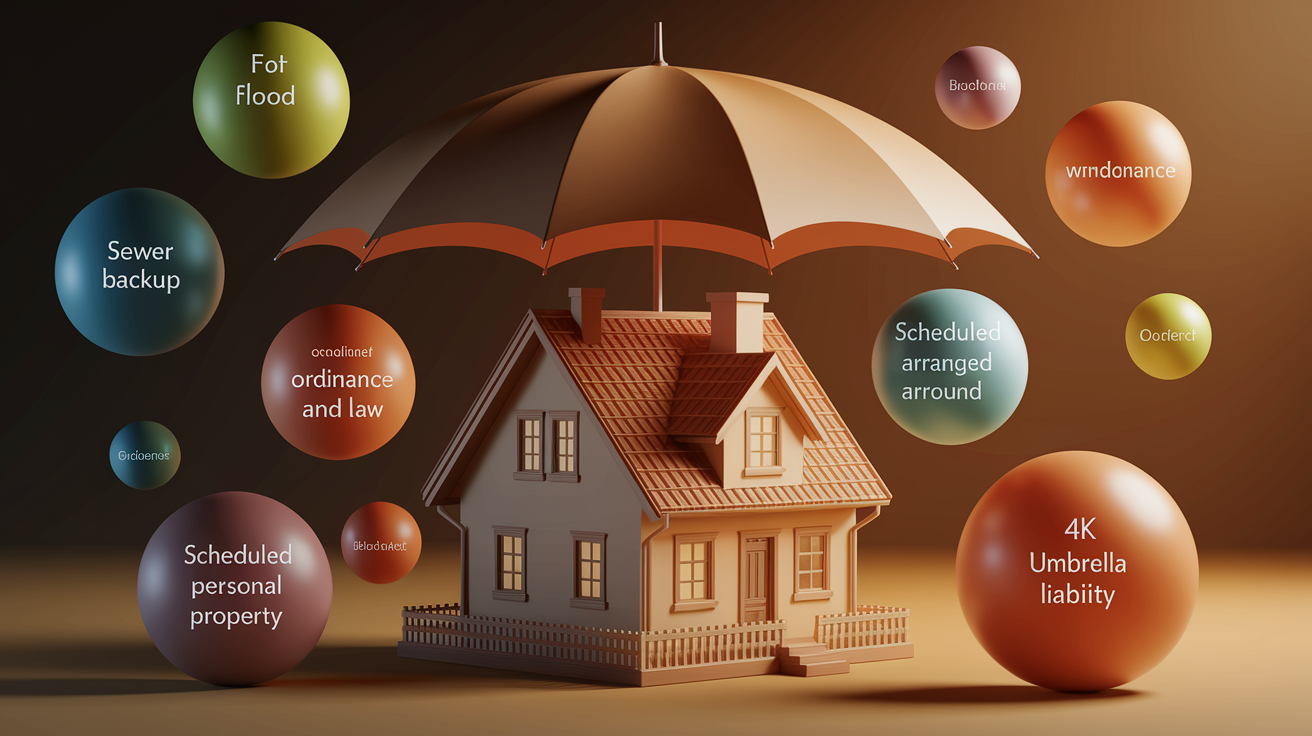
Flood insurance protects against rising water from storms, rivers, overflowing lakes, and heavy rain that overwhelms drainage. Standard homeowners policies exclude flood, so you purchase coverage separately through the National Flood Insurance Program or private insurers. NFIP policies cover up to $250,000 for the building and $100,000 for contents. Private flood policies offer higher limits, replacement cost for contents, and broader definitions of covered property. All flood policies have a 30 day waiting period before coverage starts, so buy before storm season or mortgage closing deadlines.
Earthquake coverage requires a separate policy or endorsement depending on your insurer and state. Earthquake insurance uses percentage deductibles, often 10% to 20% of the dwelling limit. High out of pocket costs before coverage begins. A home insured for $500,000 with a 15% earthquake deductible requires $75,000 in damage before the insurer pays anything. Premiums and deductibles vary by seismic zone, building age, and foundation type. If you live near fault lines, earthquake coverage prevents total financial loss after a major quake.
Sewer backup and sump pump overflow endorsements add coverage for water that backs up through drains, toilets, or sump pits. Standard policies exclude this, but the endorsement typically costs $50 to $150 annually and covers cleanup, drying, and repairs up to a sublimit, often $5,000 to $25,000. If your neighborhood has aging sewer lines or frequent heavy rain, this endorsement pays for itself after one backup event.
Ordinance and law coverage helps pay for code upgrades when you rebuild after a covered loss. If your home was built decades ago and current building codes require fire sprinklers, seismic retrofitting, or energy efficient windows, standard coverage only pays for repairs to original specifications. Ordinance and law coverage adds 25% to 50% of the dwelling limit to cover the cost of meeting new codes. Without it, you fund code upgrades out of pocket.
Scheduled personal property endorsements lift sublimits for valuable items by listing each piece individually with an appraised or agreed value. Jewelry, fine art, musical instruments, collectibles, cameras, and firearms commonly qualify. The insurer charges a small percentage of the item’s value, often 1% to 3% per year, and pays the agreed amount if the item is lost, stolen, or damaged, with no deductible. This coverage often includes mysterious disappearance and accidental damage, which standard policies exclude.
Consider supplemental coverages when:
Flood risk exists in your area (FEMA flood zones, near rivers, low elevation)
Earthquake risk is significant (active fault lines, seismic zones)
Sewer backups are common in your neighborhood or your home has a basement
Building codes have changed since your home was built, especially for older homes
High-value personal property exceeds standard sublimits for jewelry, art, or collectibles
Umbrella liability policies extend your liability limits beyond what auto and homeowners policies provide. Umbrella coverage is sold in $1 million increments and sits on top of underlying policies, paying excess liability claims after your base limits are exhausted. If you’re sued for $500,000 in property damage and your auto liability limit is $100,000, your umbrella pays the remaining $400,000. Umbrella policies cost roughly $150 to $400 per year for the first $1 million, adding another layer of protection for drivers with assets, rental properties, or high net worth.
Real World Examples of Property Damage Claims and Costs
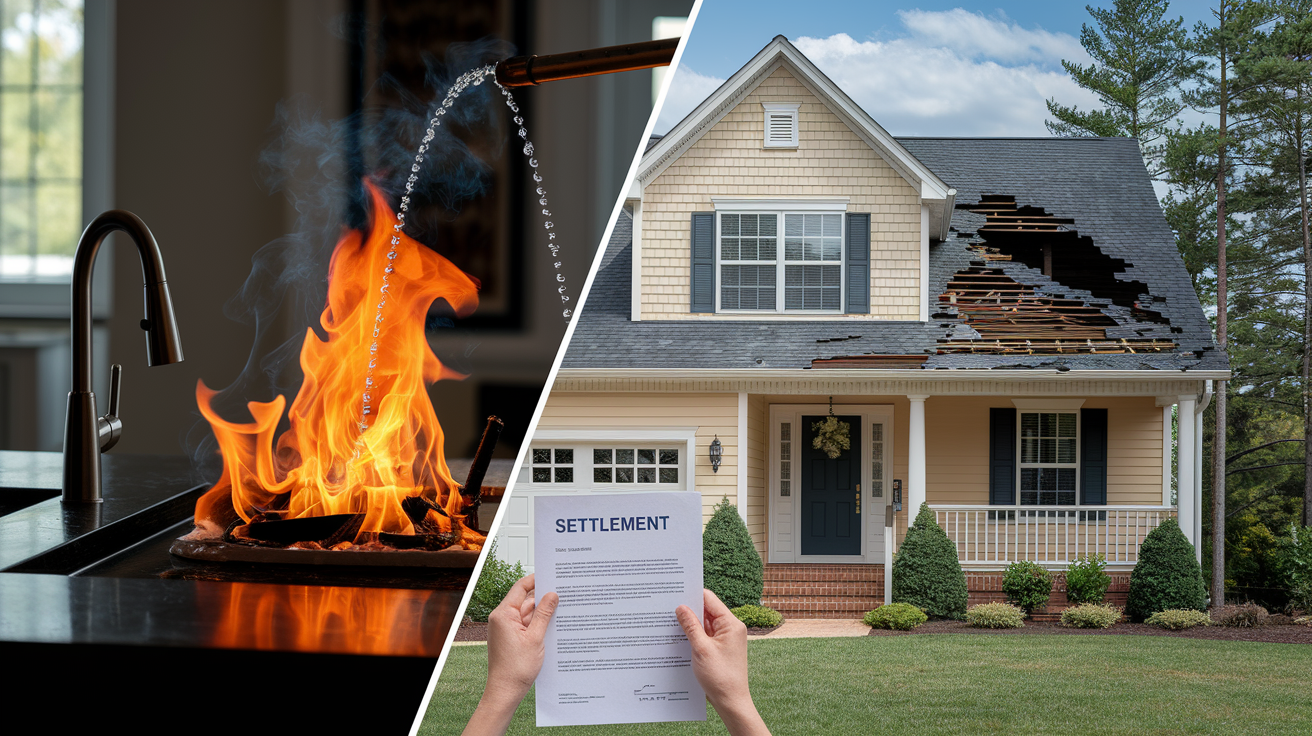
A kitchen fire starts when oil ignites on the stove and spreads to cabinets and drywall before the homeowner extinguishes it. Smoke fills the first floor, leaving soot on walls, ceilings, and furniture. The homeowners policy covers fire and smoke damage. The insurer sends an adjuster who estimates $18,000 to replace damaged cabinets, repaint smoke stained rooms, clean salvageable furniture, and deodorize the home. After the $1,000 deductible, the insurer pays $17,000. The homeowner also receives loss of use coverage for three weeks in a rental while contractors complete repairs.
A pipe freezes and bursts in a second floor bathroom during a January cold snap, flooding the bathroom, hallway, and first floor living room below. Water soaks carpet, drywall, and wood trim. The homeowner shuts off the main water valve and calls the insurer within two hours. A water mitigation company extracts standing water, sets up air movers and dehumidifiers, and monitors moisture readings for five days. The insurer covers mitigation costs of $6,500 and repair costs of $9,200 for new drywall, trim, and carpet. Total claim: $15,700 minus the $1,000 deductible, leaving $14,700 paid by the insurer.
A severe thunderstorm with hail damages the roof, gutters, and three windows. The homeowner notices missing shingles and broken glass the next morning and files a claim. An adjuster inspects and finds that hail punctured 40% of the roof surface, requiring full replacement. The estimate includes $22,000 for a new roof, $1,800 for gutters, and $1,200 for windows. The home is in a non-coastal area with a standard $1,500 deductible, so the insurer pays $23,500. If the home were coastal with a 2% hurricane deductible on a $400,000 dwelling limit, the homeowner would pay $8,000 out of pocket instead.
Typical claim payouts and homeowner costs break down like this:
Fire damage: insurer pays repair/rebuild costs minus deductible; homeowner pays deductible ($500 to $2,500) and any amounts above policy limits if damage exceeds dwelling coverage
Water damage from burst pipe: insurer pays mitigation, drying, and repairs minus deductible; homeowner pays deductible and costs for any pre-existing damage or maintenance issues excluded from coverage
Storm/hail roof damage: insurer pays roof replacement or repair minus deductible; coastal homeowners may face percentage deductibles ($3,000 to $15,000) rather than flat deductibles
Liability for damage to neighbor’s property: insurer pays settlement or judgment up to liability limit and covers legal defense; homeowner pays any amount above the policy limit if damages exceed coverage
Actual repair costs depend on materials, labor rates, and property location, but these examples show how coverage responds and where deductibles and limits create out of pocket exposure.
Final Words
In the action, we covered what a policy protects right after damage: the dwelling, other structures, personal property, loss of use, and liability for damage you cause. We listed common perils, including fire, burst pipes, storms, and vandalism, and key exclusions like flood, earthquake, and wear.
We explained limits, deductibles, and the claims steps: document, mitigate, notify, and meet the adjuster. You saw rough cost examples so you know what to expect.
If you’re still asking what does property damage insurance cover, check your policy, add needed endorsements, and start the claim fast. You’ll be back in a safe, repaired home soon.
FAQ
Q: What is an example of property damage insurance?
A: An example of property damage insurance is the liability part of a homeowners policy that pays to repair a neighbor’s fence or a car you damaged, plus related legal costs up to the policy limit.
Q: What does $25,000 property damage coverage mean?
A: The $25,000 property damage coverage means the insurer will pay up to $25,000 to repair or replace other people’s property you damaged, including related legal fees, after which you cover any excess.
Q: What is typical property damage coverage?
A: Typical property damage coverage includes first‑party protection for your dwelling, other structures, and belongings, plus liability that pays for damage you cause to others’ property, all subject to policy limits and exclusions.
Q: What are common examples of property damage?
A: Common examples of property damage are fire‑damaged roofs (repair $8,000–$25,000+), burst‑pipe water loss ($5,000–$15,000), storm or hail roof repairs, vandalism, theft, and fence replacement ($1,000–$5,000).