
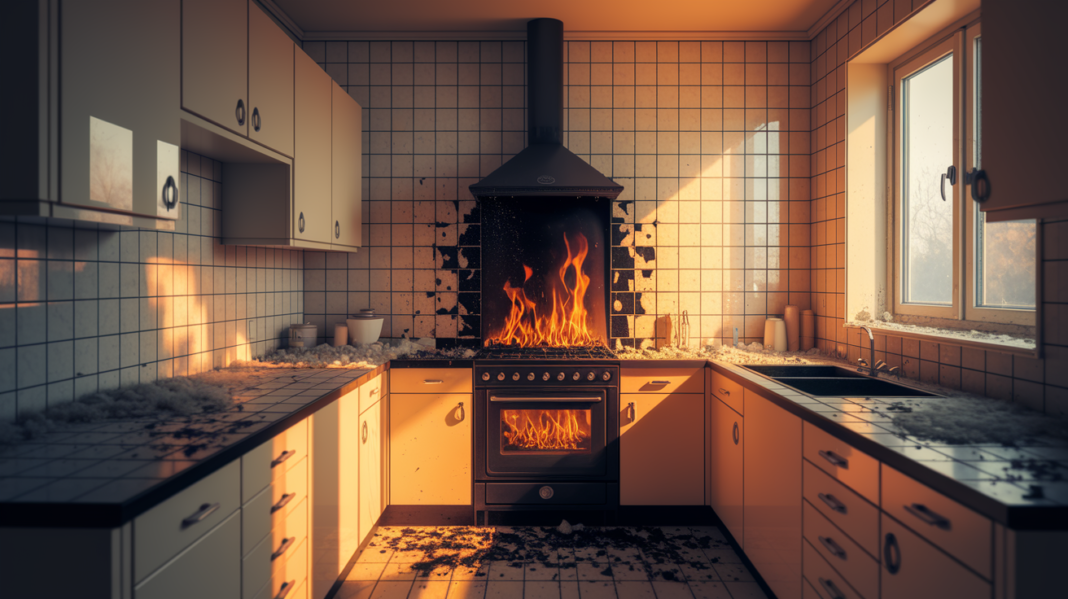

Think rebuilding your kitchen after a fire is just replacing cabinets and paint?
It’s not.
Hidden soot, soaked drywall, and warped joists can lead to mold, lingering smells, and unsafe framing if you rush the work.
This post shows the recovery steps you need: safety checks and documentation, moisture testing and controlled drying, then repair and reconstruction with the right permits.
Follow the order we recommend, and you’ll save time, help your claim, and avoid costly do-overs.
Immediate Steps to Start Rebuilding After Kitchen Fire Damage
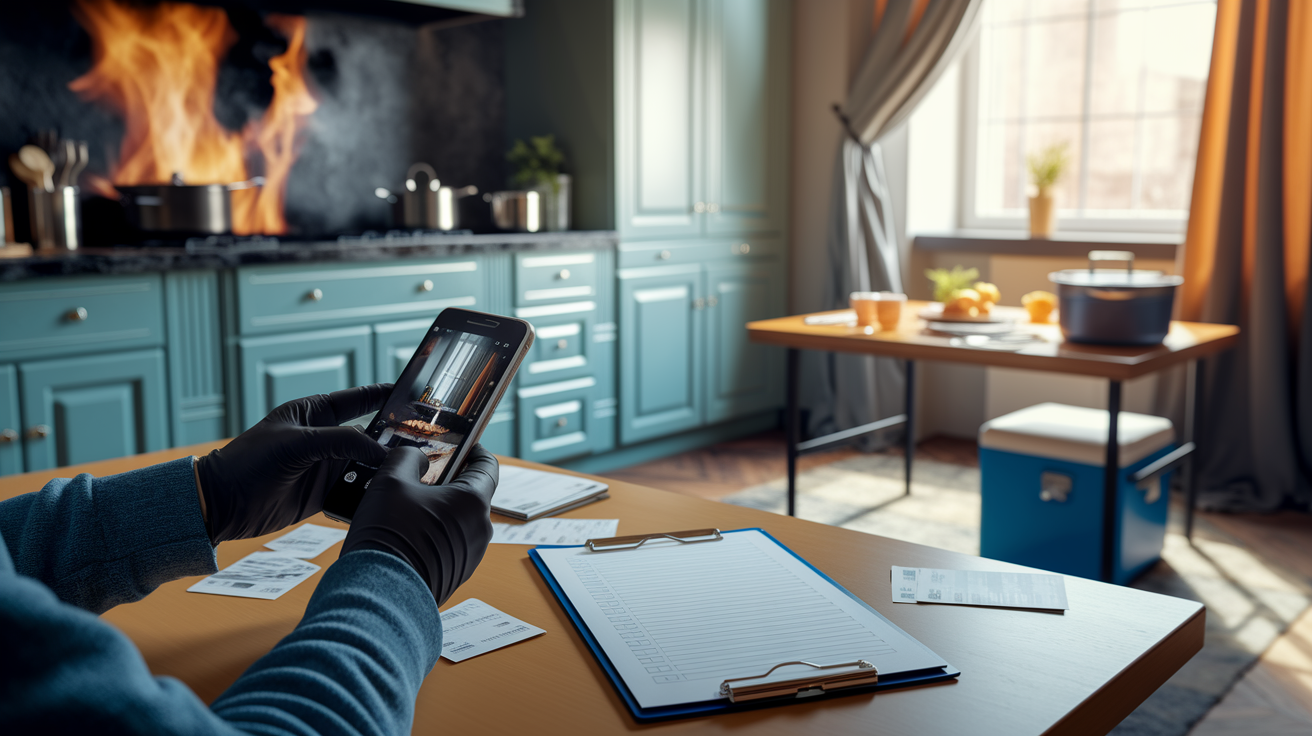
First, make sure it’s actually safe to go inside. If the fire department or your insurance company hasn’t cleared the site yet, don’t enter. Once you get the green light, your job is to document everything before you move a single thing.
Walk through with your phone and photograph every surface, appliance, wall, cabinet, ceiling, and floor. Get close shots of soot stains, charred spots, wet areas, and anything that’s broken. Shoot short videos too. Make a written list of damaged appliances, cookware, utensils, and any food that’s ruined. Keep every receipt for emergency expenses like hotel rooms, takeout meals, tarps, or temporary power setup. Your insurance adjuster needs this documentation to write the claim estimate. Missing photos usually mean delays or arguments later.
Here’s what to do in the first 24 to 48 hours:
- Shut off gas and electricity at the main panel if the fire department didn’t already handle it. Don’t turn power back on until a licensed electrician confirms it’s safe.
- Open windows and exterior doors to ventilate smoke and fumes. But don’t move wet materials until the adjuster photographs everything.
- Cover roof damage or broken windows with tarps to keep rain out and prevent more water damage.
- Call your insurance company right away. Ask about an emergency advance if your policy covers loss of use for temporary housing or meals.
- Set up a makeshift cooking area somewhere else in your home, garage, or even a covered outdoor space. A microwave, hot plate, or portable induction burner keeps your family fed while the kitchen’s down.
A temporary kitchen setup reduces stress and keeps some sense of normal going. Even a folding table with a cooler, microwave, and paper plates helps. You’re not handling this alone. These small steps give you some control while professionals figure out the bigger repairs.
Kitchen Fire Damage Assessment and Structural Evaluation
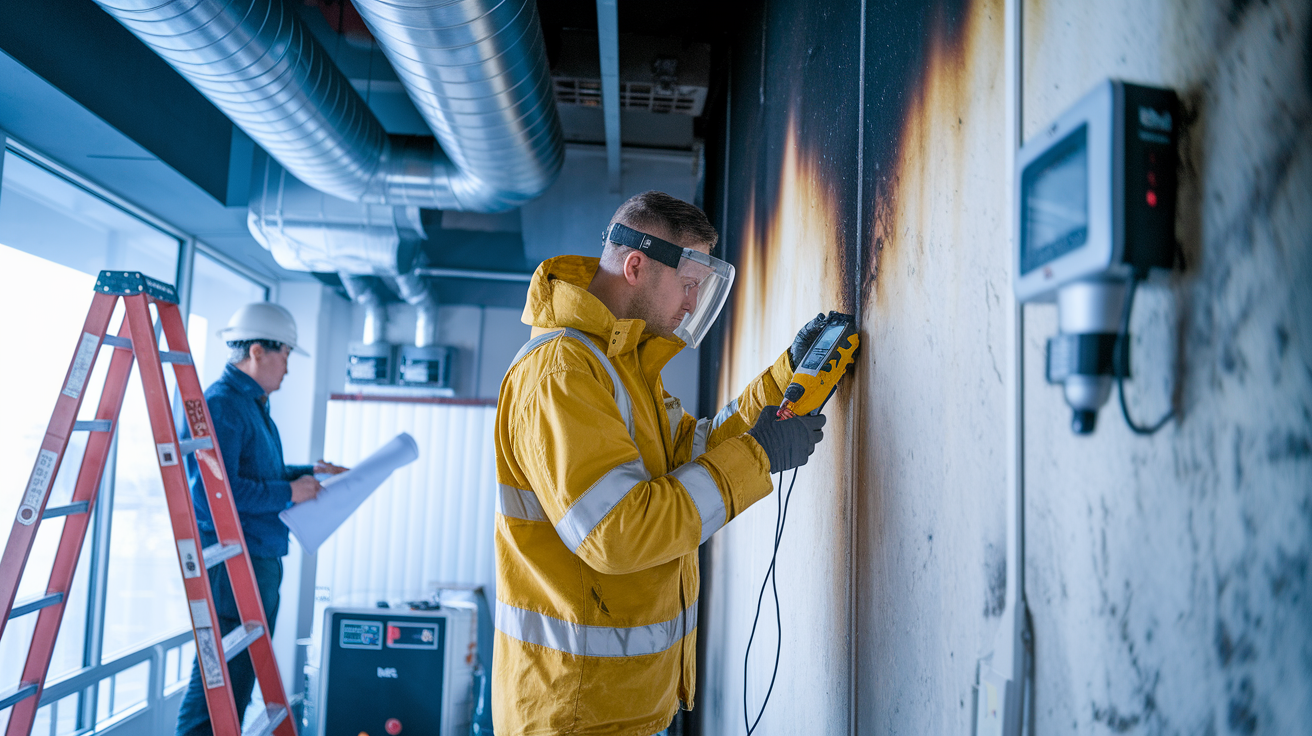
Before you rip out a single cabinet or pull up any tile, get a professional damage assessment. A licensed fire restoration contractor or general contractor with fire experience will document smoke staining, soot penetration, water intrusion from firefighting efforts, and any structural shifts. They’ll also check for hidden moisture inside walls, cabinets, and subfloors. That moisture can trigger mold growth within 48 to 72 hours.
Soot isn’t just surface dirt. It’s acidic, oily, and chemically active, especially when it comes from burning grease, plastic, or synthetic materials. If you leave it on walls, ceilings, HVAC registers, or inside ducts, it’ll keep corroding metal, staining porous surfaces, and producing stubborn odors. Water used to put out the fire soaks into drywall, insulation, flooring, and framing. You need to measure that moisture with meters, not eyeball it. Then dry it out with dehumidifiers and air movers before you close up anything.
Your assessment should cover:
- Structural framing and ceiling joists for heat damage, warping, or charring that weakens their ability to carry weight.
- Subfloor integrity under tile, laminate, or hardwood. Water and heat can delaminate plywood or crack concrete slabs.
- HVAC system and ductwork for soot contamination. Ducts need professional cleaning and filters need replacing before you run the system again.
- Moisture readings inside wall cavities, under cabinets, and below flooring to confirm everything’s dry before reconstruction starts.
If ceiling joists, roof trusses, or load bearing walls show serious charring or deflection, your contractor will bring in a licensed structural engineer to evaluate safety and design the repairs. Engineers provide stamped drawings and calculations required for permits when framing needs reinforcement or replacement. Skipping this step risks code violations, failed inspections, and unsafe conditions that show up months down the road. Hiring the right people now prevents expensive do-overs and hidden problems later.
Final Words
Start documenting now — photos, videos, and receipts. Ventilate and secure the kitchen, stop any ongoing water or structural problems, and set up a temporary cooking area so daily life can keep moving.
Next, get a full assessment for soot, smoke penetration, hidden moisture, HVAC cleaning, and any structural checks or engineer review. Rebuilding kitchen after fire damage is a step‑by‑step process: measured drying, clear documentation for insurance, and a solid repair plan. You’ll have a safe, usable kitchen again soon.
FAQ
Q: How long do toxic fumes last after a fire?
A: Toxic fumes after a fire last from hours to several days depending on fire size, materials burned, and ventilation. Ventilate, avoid running HVAC, and call a restoration pro for air testing and HEPA filtration.
Q: What is salvageable after a house fire?
A: Salvageable items after a house fire include metal cookware, framed photos, and some furniture that only has surface soot. Porous items like bedding, carpet, and some electronics often need replacement or professional cleaning.
Q: Does homeowners insurance cover housing after a fire?
A: Homeowners insurance covers housing after a fire through additional living expenses (ALE) that pay for temporary housing, meals, and storage while your home is uninhabitable, but limits and approval vary by policy.
Q: How soon can you rebuild after a fire?
A: Rebuilding after a fire can begin once the scene is secured, inspections are complete, and your insurer approves the scope; that often takes days to weeks, though emergency repairs may start sooner to prevent more damage.