
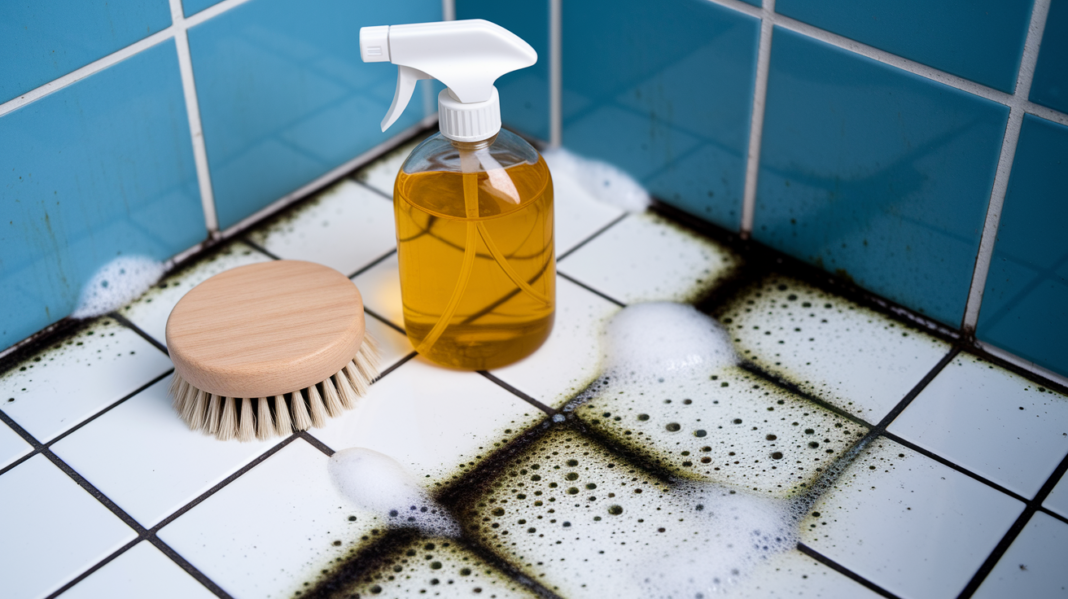

Most store bought mold removers either don’t kill the mold, or they bleach surfaces you didn’t want lightened. That’s the real problem. Products claiming to “remove mold” often just scrub off surface stains while leaving live spores behind, and bleach based formulas that actually kill mold can ruin paint, fabric, and colored grout. This guide breaks down which products handle specific surfaces without causing new damage, which ingredients actually stop regrowth, and what EPA registration really means for effectiveness. We’ll show you what works, what doesn’t, and how to match the right product to your situation.
Best Mold Removal Products: Comparison and Buying Guide
The following comparison covers the most effective tested products across different use cases, with specific attention to active ingredients, surface compatibility, and performance characteristics that determine real world success.
| Product Name | Active Ingredient | Best For | Key Features | Price Range |
|---|---|---|---|---|
| Clorox Tilex Mold and Mildew Remover Spray | Sodium Hypochlorite (Bleach) | Bathroom surfaces, killing mold | Kills 99.9% of mold and bacteria in 5 minutes, whitens grout, disinfects | $8-$12 |
| CLR Mold & Mildew Clear Stain Remover | Non-bleach formula | Painted walls, stain removal | EPA Safer Choice certified, minimal scrubbing, safe for painted surfaces, unscented | $10-$15 |
| CLR Brilliant Bath Foaming Action Cleaner | Foam-activated formula | White grout, vertical surfaces | Clings without dripping, continues whitening as it dries, EPA Safer Choice certified | $12-$16 |
| Wet & Forget Bathroom Cleaner | Preventative maintenance formula | Ongoing mold control | Weekly application controls growth, removes soap scum, citrus scent, air dries | $14-$18 |
| Mold Armor E-Z House Wash | Bleach-based concentrate | Exterior surfaces | 10-minute contact time, no scrubbing required, covers brick, siding, concrete, gutters | $18-$25 |
| RMR-86 Instant Mold Stain Remover | Industrial-strength bleach | Heavy staining, fast results | Works in seconds, professional-grade concentration, requires dilution for light stains | $20-$28 |
| Concrobium Mold Control | Non-toxic mineral salts | Prevention and treatment | No bleach, no VOCs, crushes mold spores as it dries, inhibits regrowth | $15-$22 |
| Moldex Deep Stain Remover | Oxygen bleach | Wood decks, outdoor staining | Safe for wood surfaces, removes years-old stains, environmentally safer than chlorine bleach | $16-$24 |
Two main product categories dominate the mold removal market. Bleach based disinfectants use sodium hypochlorite to kill mold spores, prevent regrowth, and disinfect surfaces. These work fast, typically 5 to 10 minutes, and handle both surface cleaning and microbial elimination. The tradeoff comes with strong fumes, surface bleaching on colored materials, and ventilation requirements. Bleach free stain removers tackle visible mold staining without the harsh chemical profile. They’re safer on painted walls, fabrics, and finished wood, emit minimal odor, and carry EPA Safer Choice certifications. But they remove stains without killing the underlying mold or preventing it from returning.
EPA registration matters because it verifies that a product has been tested and approved for specific antimicrobial claims. Products claiming to “kill mold” must demonstrate that effectiveness in EPA supervised testing to earn registration numbers. EPA Safer Choice certification goes further, indicating that every ingredient in the formula meets strict safety standards for human health and environmental impact without sacrificing performance.
Independent testing sources like the Good Housekeeping Institute provide reliability that manufacturer claims can’t match. With over 120 years of product testing experience, lab evaluations following exact manufacturer instructions, and consumer home testing panels tracking real world performance, these third party assessments reveal which products actually deliver on their promises and which ones fail under normal use conditions.
Surface Specific Product Selection Guide
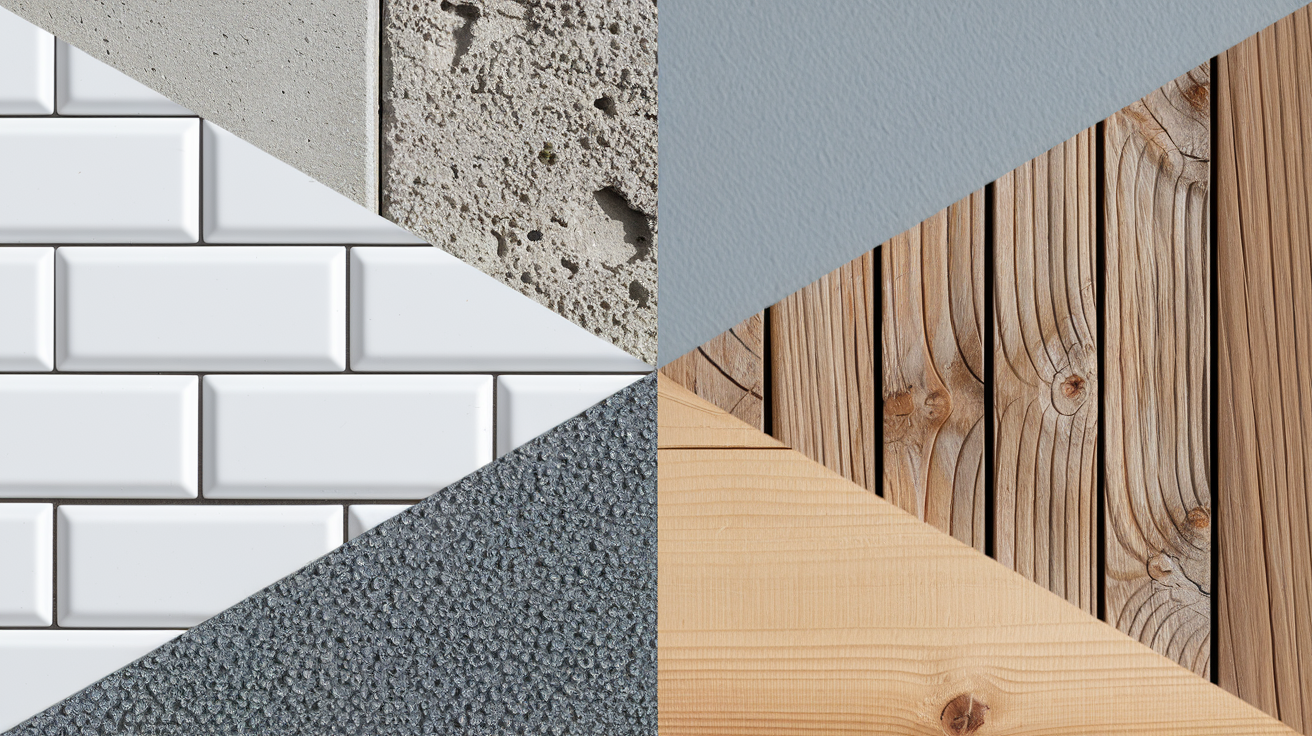
Surface type determines product compatibility and effectiveness more than any other factor, because the wrong product on the wrong material causes damage, discoloration, or complete treatment failure.
| Surface Type | Recommended Product Type | Application Method | Key Considerations |
|---|---|---|---|
| Non-porous tile | Bleach-based spray | Direct spray application | Fast-acting with 5-minute contact time, wipe clean after dwell period |
| Grout and caulk | Foam formula for white grout or bleach spray | Foam clings to vertical surfaces | Continued whitening as product dries, avoid on colored grout |
| Painted drywall | Bleach-free stain remover | Light spray application | Test inconspicuous area first to prevent paint damage or discoloration |
| Bare wood | Bleach-free or specialized wood formula | Minimal liquid application | Risk of discoloration and wood grain raising, may require sanding after treatment |
| Fabric and upholstery | Non-bleach formula only | Test hidden area first | Ensure complete drying to prevent regrowth, consider professional cleaning for extensive growth |
| Bathroom shower walls | Foam formula preferred | Clings without dripping | Maintains contact time on vertical surfaces, works while you wait |
| Exterior vinyl siding | Bleach-based concentrate | Garden sprayer application | Higher concentration for outdoor use, rinse thoroughly after 10-minute dwell |
| Concrete and brick | Bleach-based house wash | 10-minute dwell time | No scrubbing required, penetrates porous masonry |
| Gutters | Exterior-grade bleach formula | Extension wand application | Seasonal maintenance treatment, protects against organic buildup |
| Carpet | Professional-grade extraction product | Moisture removal critical | Consider professional cleaning for extensive growth, carpet backing holds moisture |
Porous surfaces like wood, drywall, fabric, and unsealed concrete absorb moisture and mold deep into the material structure where surface sprays can’t reach. Mold on these materials often requires removal and replacement rather than cleaning, especially when growth has penetrated beyond the visible surface layer. Non porous surfaces like tile, glass, metal, and sealed stone keep mold on the surface where products can make direct contact and eliminate it completely.
Vertical surface challenges in bathrooms explain why foam formulas consistently outperform standard sprays on shower walls and ceilings. When you spray a liquid cleaner on a vertical tile wall, gravity pulls it down immediately, reducing contact time at the top where mold concentrates near the ceiling line. Foam formulas cling to vertical surfaces, maintaining the necessary contact time throughout the entire affected area. As the foam slowly breaks down, it continues working, and products like CLR Brilliant Bath actually increase their whitening effect on grout as they dry.
Basement concrete and foundation walls present unique challenges because they’re both porous and chronically damp from ground contact. Standard spray products sit on the surface without penetrating, while the mold roots remain embedded in the concrete matrix. These applications need penetrating formulas designed for masonry, often applied with pump sprayers that force solution into the porous structure.
Always test products on inconspicuous areas first, especially on colored fabrics, painted surfaces, and natural stone. A 6 inch square test patch in a hidden corner reveals discoloration, paint softening, or material damage before you treat the entire visible area. Wait 24 hours after the test application to check for delayed reactions like paint peeling or color shifts that don’t appear immediately.
Safety Precautions and Protective Gear for Mold Removal
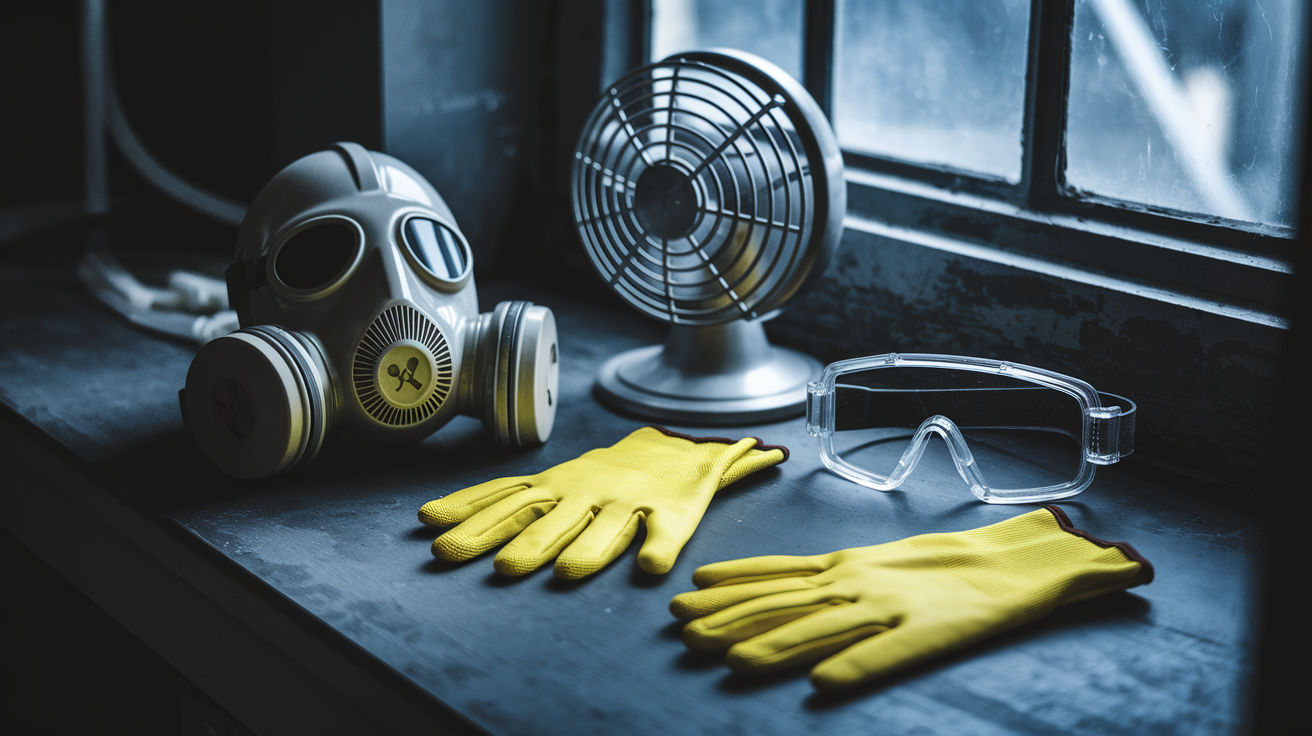
Safety gear is non negotiable when working with mold and chemical cleaners, because both the biological exposure and the product fumes create real health risks that proper protection prevents.
Three essential protective items form the minimum safety baseline. N95 respirator masks or better filter mold spores and chemical fumes from reaching your lungs. Regular dust masks don’t provide adequate protection and create a false sense of safety. Nitrile or rubber gloves prevent skin contact with both mold and harsh cleaning chemicals, especially important with bleach based products that cause chemical burns on prolonged skin contact. Safety goggles protect eyes from splashes and airborne particles that regular glasses miss, particularly when working overhead on ceilings or in tight spaces where spray mist bounces back.
Ventilation requirements become critical with bleach based products that emit strong fumes causing respiratory irritation, headaches, and dizziness in enclosed spaces. Open windows on opposite sides of the room to create cross ventilation that pulls fresh air in and pushes contaminated air out. Run bathroom exhaust fans during treatment and for at least 30 minutes after finishing. If you’re treating a windowless interior room, set up box fans pointing outward in doorways to force air movement. The smell test works here. If you can smell strong chemical odor, you need more ventilation.
Safety rules for mold product application:
Never mix products, especially bleach and ammonia, which create toxic chloramine gas that causes severe respiratory damage. Read all manufacturer warnings before opening the container, not after you’ve already started spraying. Ensure adequate air circulation throughout treatment, even if the product label doesn’t specifically require it. Keep children and pets away from treated areas during application and until surfaces are completely dry and aired out. Work in small sections to maintain control over product application, dwell time, and cleanup. Know when to call professionals: areas exceeding 2 square feet, multiple mold spots, or if you experience health symptoms during treatment.
The 2 square foot rule provides a clear threshold for professional intervention. Mold covering more area than a standard floor tile signals either extensive contamination or an ongoing moisture problem that products alone won’t fix. Health symptoms that warrant stopping DIY treatment immediately include difficulty breathing, severe headaches, dizziness, nausea, or skin irritation that doesn’t resolve after leaving the treatment area. When your body tells you to stop, listen.
Natural Alternatives and Eco Friendly Mold Products
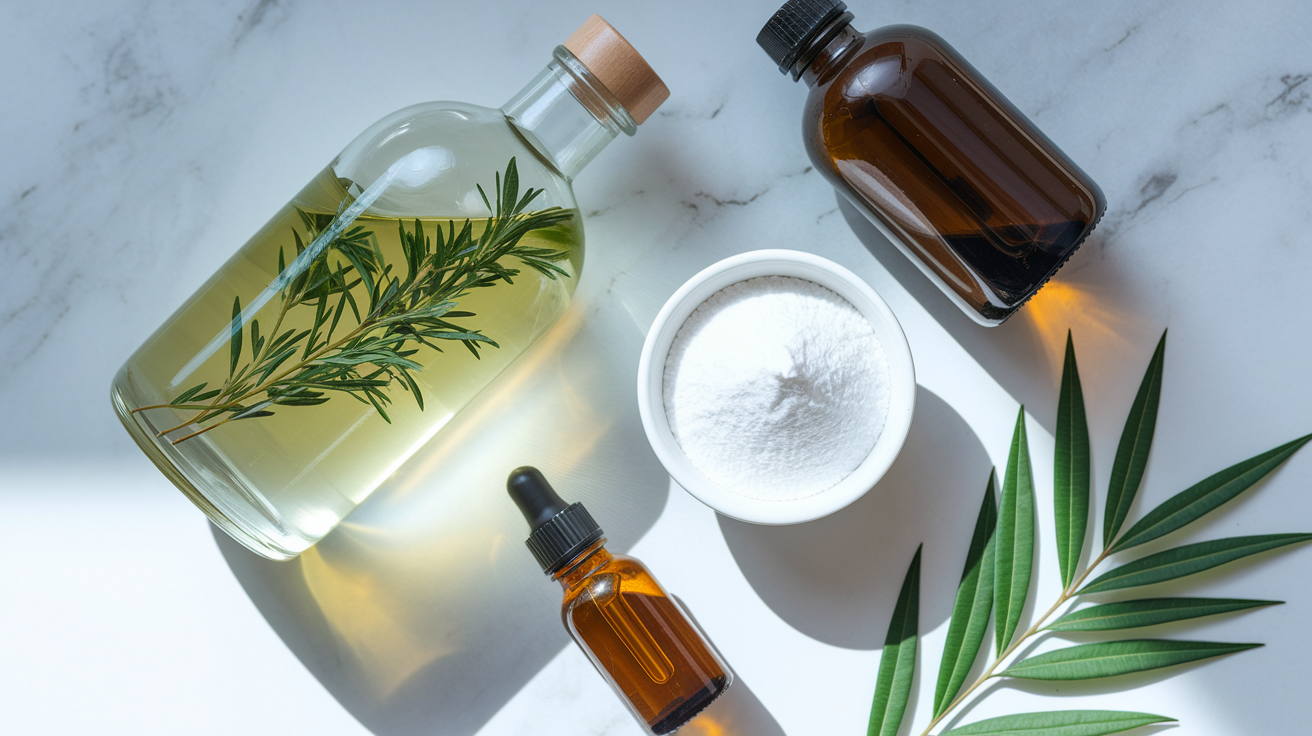
EPA Safer Choice certified products and natural alternatives give eco conscious buyers options that reduce environmental impact and chemical exposure while still addressing mold problems, though with important performance limitations to understand upfront.
Hydrogen peroxide based commercial products represent the strongest natural alternative to bleach based cleaners. At 3% concentration (the strength sold for wound care), hydrogen peroxide kills some mold species on contact and breaks down into water and oxygen, leaving no harmful residues. Products like OxiClean and specialty mold removers using hydrogen peroxide as the active ingredient work more slowly than bleach, typically requiring 10 to 15 minutes of contact time, but they’re safer on colored fabrics, produce minimal fumes, and won’t bleach out materials. The effectiveness gap shows up on heavily stained areas and in true disinfection, where hydrogen peroxide kills fewer mold species than sodium hypochlorite.
Vinegar solutions work on light surface mold but face serious limitations for removing larger growth. White vinegar at 5% acidity kills some common mold species when left in contact for at least an hour, but the acidic smell lingers, the treatment takes much longer than commercial products, and vinegar doesn’t work on porous surfaces where mold has penetrated deep. Using vinegar makes sense for weekly maintenance cleaning in bathrooms to prevent buildup. It fails on established colonies.
| Natural Ingredient | Concentration | Best For | Limitations |
|---|---|---|---|
| Hydrogen Peroxide | 3% | Light to moderate surface mold | Slower acting than bleach, less effective on heavy staining |
| White Vinegar | 5% acidity | Prevention and light maintenance | Requires 60+ minutes contact time, strong odor, ineffective on porous materials |
| Tea Tree Oil | 2 teaspoons per cup water | Small areas, preventative treatment | Expensive for large areas, limited antimicrobial research, strong scent |
| Baking Soda Paste | 1/4 cup per cup water | Scrubbing abrasive, mild cleaning | Doesn’t kill mold, physical scrubbing only, leaves white residue |
The honest tradeoff with natural alternatives: they remove visible stains and provide some antimicrobial action, but they don’t kill mold spores as completely as chemical disinfectants and they don’t prevent regrowth the way bleach based products do. If you treat mold with vinegar, remove the surface staining, but leave living spores behind, you’ll see regrowth within weeks unless you’ve also eliminated the moisture source. Natural products work best for prevention and maintenance in low risk areas, not for treating active mold infestations.
Application Techniques and Contact Time Requirements
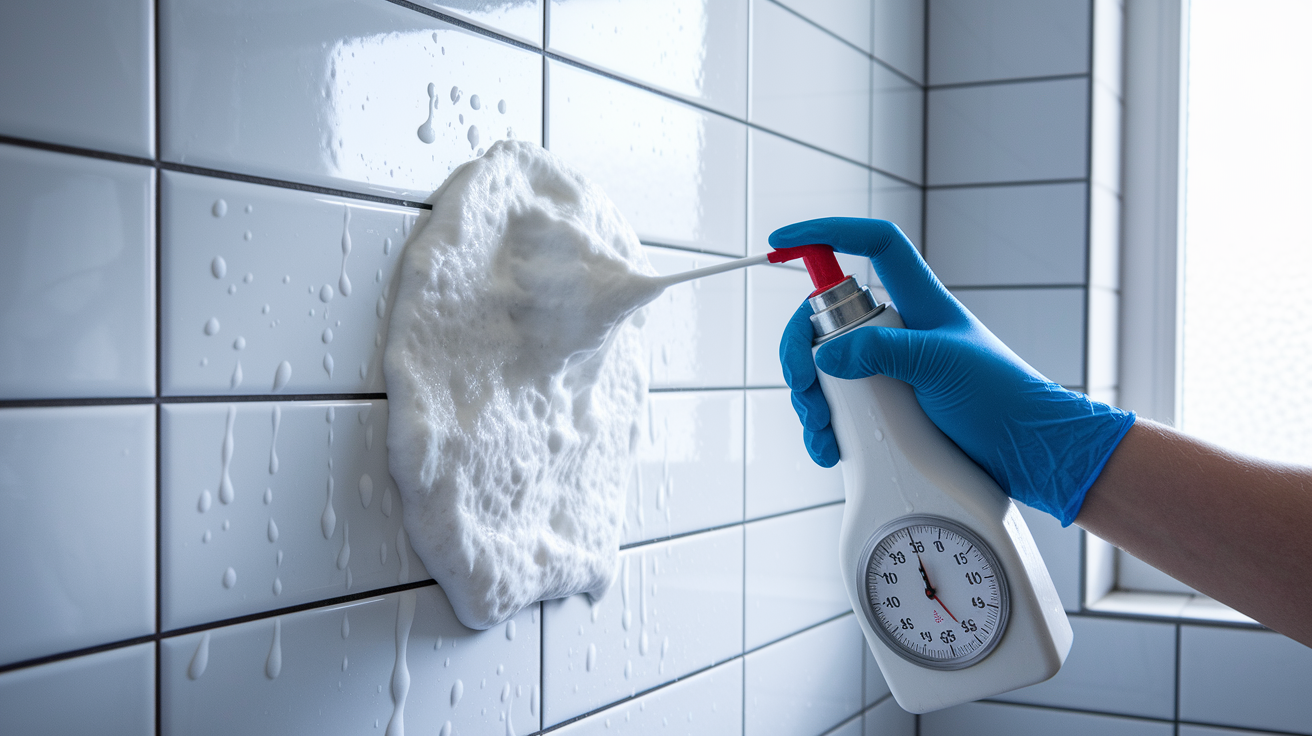
Following manufacturer instructions for contact time and application method determines success or failure more than which product you choose, because even the strongest mold remover fails when wiped away too soon.
Contact time, the period the product must remain wet on the surface, allows the active ingredients to penetrate mold colonies and complete their chemical work. Wiping too soon stops the process midway, killing only surface mold while leaving deeper growth intact. Clorox Tilex requires 5 minutes of contact time. Mold Armor needs 10 minutes before rinsing. The surface must stay visibly wet throughout the entire required period, which means reapplying if the product dries before the timer finishes, especially on porous surfaces that absorb liquid quickly.
Standard spray application process:
Ventilate the space before beginning by opening windows and starting exhaust fans. Saturate the affected area completely without oversaturating porous materials where excess liquid causes damage. Maintain surface wetness for required contact time by reapplying if the surface dries. Agitate with appropriate brush only if product instructions specify scrubbing. Many modern products like Mold Armor require no scrubbing and work better without it. Rinse thoroughly or wipe as directed by manufacturer, following the label exactly. Extract or dry surfaces completely, especially on porous materials, using fans or dehumidifiers to prevent moisture from feeding new growth.
Application tool differences matter for coverage and efficiency. Ready to use spray bottles work for indoor spot treatment on areas under 10 square feet. You point, spray, wait, and wipe. Foam applicators tackle vertical bathroom surfaces where standard sprays slide down before completing contact time, with the foam clinging and working while you move to the next section. Garden sprayers handle large outdoor areas and house washing, covering hundreds of square feet quickly with adjustable spray patterns. Pressure washer compatibility matters for specific exterior products designed to withstand high pressure rinsing, though most mold removal products require low pressure application followed by garden hose rinsing.
Ready to use products versus concentrate formulas requiring dilution create cost and coverage differences you need to calculate before buying. A ready to use 32 ounce bottle covers about 50 to 100 square feet depending on surface porosity. A concentrated gallon requiring 4:1 dilution produces 5 gallons of working solution covering 800 to 1,200 square feet. The concentrate costs more upfront but delivers lower per square foot treatment costs for large jobs like whole house exterior washing or basement waterproofing maintenance.
Reapplication becomes necessary when mold returns after proper initial treatment, signaling either inadequate contact time, product mismatch to the mold species, or most commonly an ongoing moisture problem the product can’t solve. Preventative maintenance products like Wet & Forget require application every 7 days if growth reappears, creating an ongoing treatment schedule rather than one time fixes. If you’ve applied a product correctly with proper contact time and the mold returns within two weeks, the product isn’t the problem. The moisture source is.
When to Use Products Versus Calling Professionals
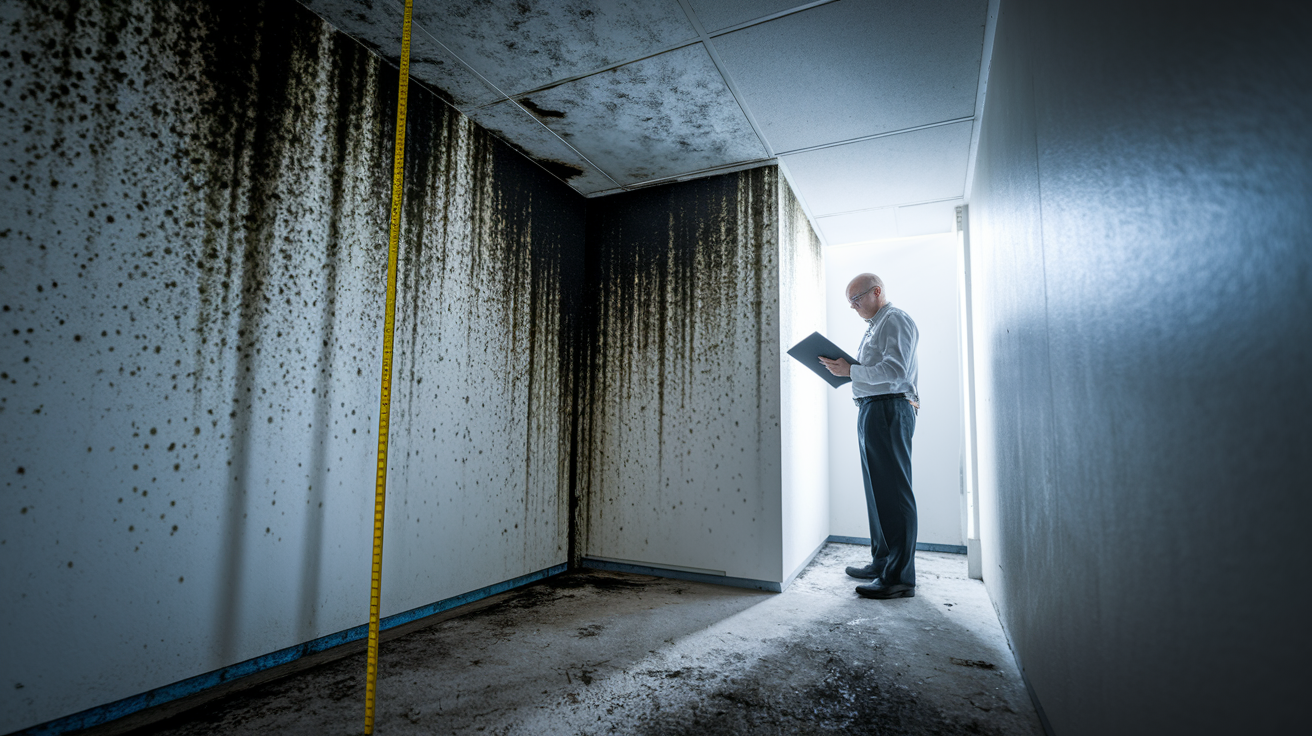
The 2 square foot threshold rule provides the primary decision point: growth covering more area than a standard floor tile signals problems beyond what consumer products should handle.
DIY product approaches work effectively when you’re dealing with isolated spots under 2 square feet, surface only growth on non porous materials like tile or glass, accessible locations without structural involvement, no underlying moisture issues that keep feeding the problem, and no health symptoms from exposure. These situations respond to proper product application with protective gear and moisture control.
Professional help becomes necessary when growth exceeds 2 square feet, multiple mold spots appear simultaneously across different areas (indicating a building wide moisture problem), you find mold inside walls or HVAC systems where consumer products can’t reach, post flooding scenarios requiring structural drying beyond surface cleaning, growth on drywall backing or insulation that must be removed rather than cleaned, persistent recurrence after proper product treatment, and underlying water damage needing professional assessment beyond what spray bottles can fix.
Warning signs demanding immediate professional intervention:
Persistent musty odors with no visible mold source, indicating hidden growth inside walls or under flooring. Health symptoms (respiratory problems, allergic reactions, worsening asthma) that improve when you leave home and return when you come back. Mold returning within weeks after treatment, proving the moisture source remains active. Water damage history or active leaks that continue feeding mold growth. Growth on structural materials like floor joists or wall studs where removal affects building integrity. Vulnerable household members (children, elderly, immunocompromised individuals) experiencing symptoms from exposure. Basement or crawl space flooding events where standing water saturated porous materials.
Health motivations for prompt treatment go beyond visible staining. Mold exposure affects people differently based on individual sensitivity and exposure duration. Some people tolerate significant mold presence with minor symptoms while others develop severe respiratory reactions to small amounts. Common symptoms include respiratory irritation, persistent coughing, wheezing, allergic reactions ranging from runny nose to skin rashes, asthma aggravation in people with existing conditions, and headaches that worsen in moldy areas. The connection between effective treatment, either DIY with proper products or professional help, and improved indoor air quality shows up in symptom resolution. When the mold goes away and stays away, the health problems tied to it disappear.
Cost considerations create real decisions between DIY and professional approaches. Consumer mold removal products range from $8 to $30 per container and handle small areas effectively when you follow application instructions and address moisture sources. Professional work starts at $500 for minimal treatments and runs into thousands for extensive projects, but the cost includes moisture source identification you might miss, containment preventing spread during treatment, structural repairs integrating water damage restoration with mold removal, and prevention strategies that products alone can’t provide.
The risk of inadequate DIY treatment leading to larger problems creates costs that exceed early professional intervention. Treating surface mold with products while missing hidden growth inside wall cavities allows continued spread, structural damage to framing and sheathing, and health exposure that compounds over months. When you finally call professionals after DIY attempts fail, you’re paying for both the original problem and the additional damage that occurred during incomplete treatment.
Preventing Mold Regrowth After Product Treatment
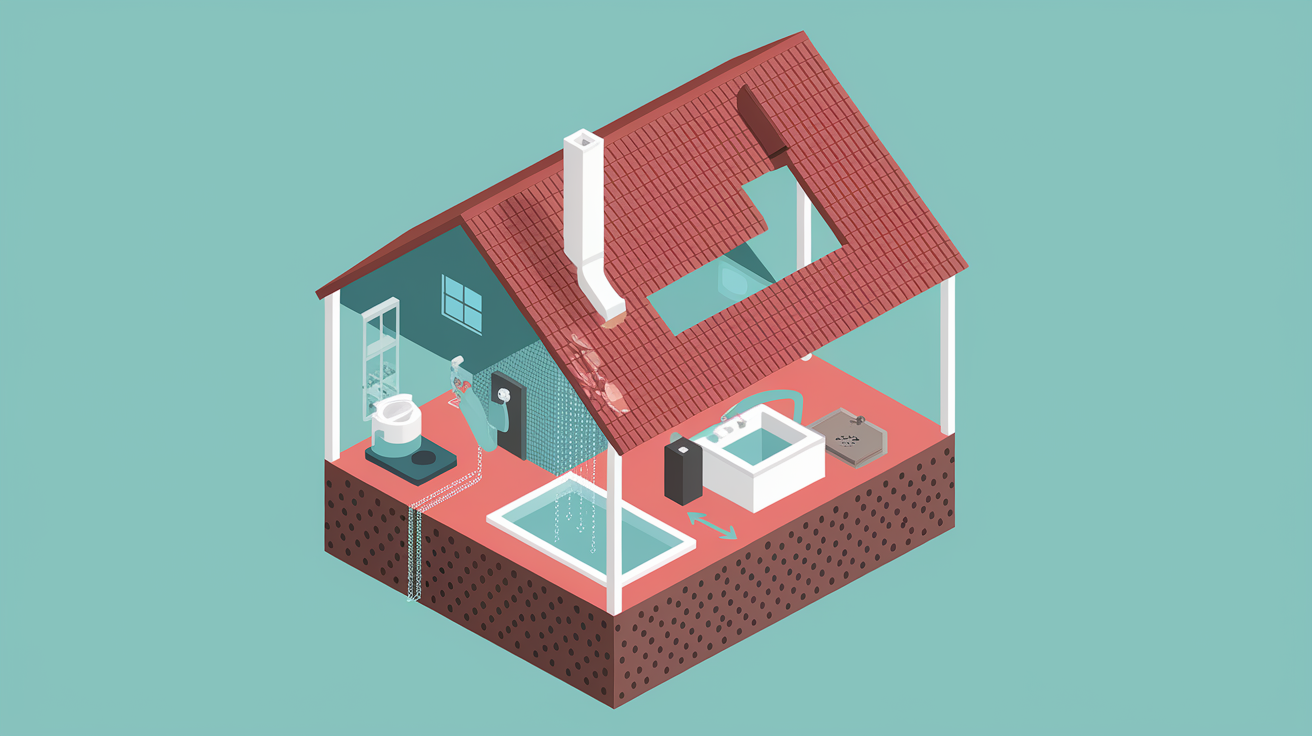
Product application alone doesn’t solve mold problems without addressing underlying moisture sources and implementing prevention strategies, because mold returns wherever moisture remains.
All mold removal products fail without moisture control, regardless of whether they kill spores or only remove stains. Mold needs three things to grow: organic material to feed on (present in nearly every building material), temperature between 40°F and 100°F (normal indoor conditions), and moisture. Remove moisture, and mold can’t establish or spread, no matter how many spores land on surfaces. This single factor determines whether your product application succeeds long term or becomes an expensive temporary fix.
The ideal indoor humidity range sits between 30% and 50% relative humidity. Above 50%, mold growth accelerates, particularly in cool areas like basement corners and exterior walls where temperature differentials cause condensation. Strategic dehumidifier placement in problem areas controls moisture accumulation. Basements benefit from whole space dehumidifiers rated for square footage and ceiling height, bathrooms need ventilation rather than dehumidification, and crawl spaces require vapor barriers combined with dehumidification or ventilation depending on climate and foundation type.
Identifying and fixing moisture sources before treating mold determines whether the treatment works or fails. Leaks in plumbing or roofs feed constant moisture to building materials, creating perfect mold conditions until you fix the water intrusion. Condensation on windows and pipes signals indoor humidity problems or inadequate insulation, forming water droplets that run down surfaces and collect in corners. Poor ventilation in bathrooms and kitchens traps humid air, allowing moisture to settle on cool surfaces where it supports mold growth. Foundation drainage issues direct water toward the building instead of away from it, saturating basement walls and floors from outside pressure. Ground moisture intrusion in below grade spaces comes through concrete and block foundations, requiring waterproofing or drainage solutions beyond what surface products address.
Prevention steps after product treatment:
Fix all water leaks immediately before applying any mold product. Treating mold while water continues leaking wastes time and money. Run bathroom exhaust fans during showers and for 30 minutes after to remove humid air before it condenses. Use dehumidifiers in basements to maintain humidity below 50%, emptying collection buckets daily or connecting continuous drainage. Improve attic ventilation to prevent condensation on roof sheathing that drips down into living spaces. Clean gutters and extend downspouts at least 6 feet away from foundation to prevent ground saturation near basement walls. Maintain HVAC systems and change filters regularly to prevent mold growth in ductwork and on coils. Apply preventative maintenance products like Wet & Forget on weekly schedules in high risk areas rather than waiting for visible growth. Seal foundation cracks that allow ground moisture entry, using hydraulic cement for active seepage and flexible sealants for stable cracks.
Products that prevent regrowth versus those requiring reapplication create different maintenance schedules. Bleach based disinfectants like Clorox Tilex kill mold spores and leave behind residual antimicrobial action that inhibits regrowth for weeks, assuming moisture doesn’t return. Stain removers and non bleach formulas clean visible mold but leave surfaces vulnerable to immediate recolonization, making them better for one time cleanup before selling a house than for long term maintenance. Maintenance formulas like Wet & Forget require regular reapplication as part of cleaning routines, controlling growth before it becomes visible rather than treating established colonies. For detailed guidance on addressing underlying water problems, see Water Damage Restoration.
Seasonal inspection schedules prevent small problems from becoming large infestations. Check vulnerable areas monthly during humid months: basement corners, bathroom ceilings, window sills, crawl spaces, and attic sheathing. Recognizing when recurring mold indicates moisture problems requiring professional water damage assessment matters more than buying stronger products. If you treat an area twice and mold returns within a month both times, you’re fighting symptoms while the moisture source continues feeding growth. At that point, call professionals who can trace the moisture source, measure humidity levels throughout the building, inspect concealed spaces, and implement structural repairs beyond what surface product application accomplishes.
Product Effectiveness Ratings and Consumer Reviews

Independent testing matters more than manufacturer claims because companies naturally emphasize their products’ strengths while downplaying limitations, but third party labs reveal real world performance.
Legitimate product reviews share specific characteristics that separate useful information from marketing noise. Testing methodology should describe how products were applied, what surfaces were treated, how long each product was left on the surface, what tools were used, and what safety equipment testers wore. Multiple surface types tested (tile, grout, wood, painted drywall, fabric) demonstrate whether a product works only on ideal non porous surfaces or handles real world variety. Before and after documentation through photos or detailed descriptions shows what “works” actually means in measurable terms. Timeline information reveals how long products took to work, whether results appeared immediately or over days, and how long treated areas stayed clean.
Red flags in product marketing should make you skeptical of effectiveness claims until you see independent verification. “Instant results” language suggests unrealistic expectations, because even strong bleach based products need 5 to 10 minutes contact time to work properly. “Never returns” promises ignore the reality that mold comes back wherever moisture remains, regardless of which product you use. Vague ingredient lists hiding behind “proprietary formula” language prevent you from knowing whether you’re buying bleach, peroxide, or just scented water with thickeners.
| Evaluation Criteria | What to Look For | Red Flags |
|---|---|---|
| Active Ingredients | Specific chemical names and concentrations listed on label | “Proprietary blend,” “natural formula” without specifics, no ingredient list |
| EPA Registration | EPA registration number for antimicrobial claims, Safer Choice certification | Claims to “kill mold” without EPA registration, missing certification numbers |
| Contact Time Specifications | Clear instructions stating minutes required for product to work | “Spray and wipe,” “instant action,” no dwell time mentioned |
| Surface Compatibility Lists | Specific surfaces listed as safe and tested, cautions about incompatible materials | “Works on all surfaces,” no warnings, vague “indoor/outdoor use” |
| Reapplication Requirements | Honest information about maintenance frequency and when retreatment is needed | “One application lasts forever,” “permanent protection,” no maintenance mentioned |
Testing products in small inconspicuous areas first protects you from discovering incompatibility after you’ve treated an entire visible surface. Apply the product to a 6 inch square in a hidden corner (behind a toilet, inside a closet, under a sink) and let it complete the full contact time plus drying. Wait 24 hours to check for delayed reactions like paint softening, color shifts, surface etching, or material damage that doesn’t appear immediately. This small test costs you nothing but 15 minutes and potentially saves you from ruining finished surfaces with products that react badly with your specific materials.
Final Words
The right black mold removal products depend on your surface type, the size of the affected area, and whether you need ongoing prevention or one-time treatment.
Bleach-based disinfectants kill spores and prevent regrowth. Bleach-free formulas remove stains safely on painted walls and fabrics.
Always match the product to the material you’re treating, follow contact time instructions, and control moisture to stop mold from coming back.
For growth exceeding 2 square feet, persistent odors, or recurring spots after treatment, professional help addresses the moisture source and structural issues that products alone can’t fix.
FAQ
What is the best product to kill black mold?
The best product to kill black mold depends on the surface and location. Bleach-based products like Clorox Tilex Mold and Mildew Remover kill 99.9% of mold in 5 minutes on non-porous bathroom surfaces. For painted walls or sensitive materials, EPA Safer Choice certified products like CLR Mold & Mildew Clear work effectively without bleach. Exterior surfaces respond well to Mold Armor E-Z House Wash.
Can I safely remove black mold myself?
You can safely remove black mold yourself if the affected area is under 2 square feet, you wear proper protective gear (N95 mask, rubber gloves, safety goggles), and you ventilate the space during treatment. Areas exceeding 2 square feet, mold inside walls, or growth after water damage require professional remediation to address structural issues and hidden moisture sources.
What actually kills black mold?
Bleach-based products containing sodium hypochlorite actually kill black mold by destroying spores and preventing regrowth. Products like Clorox Tilex require 5 minutes contact time to kill 99.9% of mold. Hydrogen peroxide-based formulas offer a natural alternative that kills mold. Vinegar and non-bleach stain removers remove visible staining but don’t kill spores or prevent recurrence.
Will hypochlorous acid kill mold?
Hypochlorous acid kills mold on contact and works as an EPA-registered disinfectant on non-porous surfaces. This active ingredient breaks down mold cell walls similarly to bleach but with lower toxicity and fewer fumes. Products containing hypochlorous acid require adequate contact time (typically 5-10 minutes) and proper surface saturation to effectively kill mold spores.
Do foam formulas work better than spray products?
Foam formulas work better than spray products on vertical surfaces like shower walls and ceilings. Foam clings without dripping, maintains contact time throughout treatment, and continues whitening grout as it dries. Standard sprays cover surfaces faster but slide down quickly. Choose foam for bathroom walls and standard spray for horizontal surfaces like countertops and floors.
How long should mold remover stay on the surface?
Mold remover should stay on the surface for the manufacturer-specified contact time to work effectively. Clorox Tilex requires 5 minutes, while Mold Armor E-Z House Wash needs 10 minutes before rinsing. Keep the surface wet during this period by reapplying if it dries. Wiping too soon reduces effectiveness and allows mold to survive.
Can I use bleach-based products on painted walls?
You should not use bleach-based products on painted walls because they may discolor paint, damage finishes, and create uneven patches. Use EPA Safer Choice certified bleach-free formulas like CLR Mold & Mildew Clear on painted drywall instead. Always test any product on an inconspicuous area first before treating visible surfaces.
What surfaces need professional mold treatment instead of products?
Surfaces needing professional mold treatment instead of products include porous materials like drywall backing, insulation, wood framing, and carpet padding where mold grows deep inside the material. Growth inside HVAC systems, wall cavities, crawl spaces, and areas affected by flooding also require professional remediation with moisture meters, containment, and structural drying equipment.
How often do preventative mold products need reapplication?
Preventative mold products like Wet & Forget need reapplication every 7 days if growth reappears in high-moisture areas. Monthly application works for maintenance in bathrooms during humid seasons. Bleach-based disinfectants prevent regrowth longer than stain-removal formulas. Addressing underlying moisture sources reduces reapplication frequency more than any product alone.
Why does mold keep coming back after treatment?
Mold keeps coming back after treatment because the underlying moisture source remains unfixed. Products remove surface growth but don’t eliminate water leaks, condensation, high humidity, or poor ventilation causing regrowth. Fix moisture problems first, then apply mold-killing products. Maintain humidity below 50% with dehumidifiers and ventilation to prevent recurrence.
Do natural mold removers work as well as chemical products?
Natural mold removers like hydrogen peroxide remove stains effectively but don’t work as well as chemical products for killing spores and preventing regrowth. Vinegar and tea tree oil solutions clean visible mold but lack disinfecting power. EPA Safer Choice certified products offer a middle ground with lower toxicity than bleach while maintaining better effectiveness than purely natural alternatives.
When should I call professionals instead of using products?
You should call professionals instead of using products when mold covers more than 2 square feet, appears in multiple locations simultaneously, returns within weeks after treatment, or grows after water damage. Health symptoms that improve when you leave home, persistent musty odors without visible sources, and vulnerable household members experiencing reactions also warrant professional assessment.