


Think your insurance check will cover everything? Think again.
A property damage claim adjuster is the licensed pro who inspects damage, documents what’s wrong, and figures out what the insurer should pay to repair or replace your stuff.
They translate policy wording into a scope of repairs and a dollar value, and who shows up (staff, independent, or public) changes the game.
This post lays out what adjusters do, how they work, and when you should hire one so you don’t leave money on the table.
What a Property Damage Claim Adjuster Does

A property damage claim adjuster is a licensed professional who investigates insurance claims, evaluates structural damage, and determines how much money an insurer should pay to repair or replace damaged property. They’re the primary technical authority during the claims process, translating policy language into dollar amounts and timelines.
Their work is both analytical and procedural. Adjusters interpret insurance contracts, apply state regulations, and confirm whether specific damages fall within covered perils or exclusions. They also act as the insurer’s representative in most communications with policyholders, contractors, and third party specialists like engineers or restoration vendors.
The core responsibilities include:
Conducting on-site inspections to measure and photograph structural, water, fire, smoke, or storm damage. Reviewing police reports, fire department documentation, and witness statements. Estimating repair scope and costs using industry software and material databases. Negotiating settlement amounts with policyholders or their representatives. Communicating coverage determinations, claim status, and next steps to all parties. Preparing written reports and justifications for approval or denial decisions.
Adjusters bridge the gap between policyholders who need their homes repaired and insurers who must verify coverage, confirm damage, and control claim costs. This balancing role can create tension when interests diverge, but skilled adjusters reduce friction by explaining decisions clearly, documenting findings thoroughly, and maintaining open communication throughout the process. They prevent guesswork by measuring damage with tools, not assumptions. Every line item in an estimate ties back to visible, verifiable evidence.
Types of Property Damage Claim Adjusters
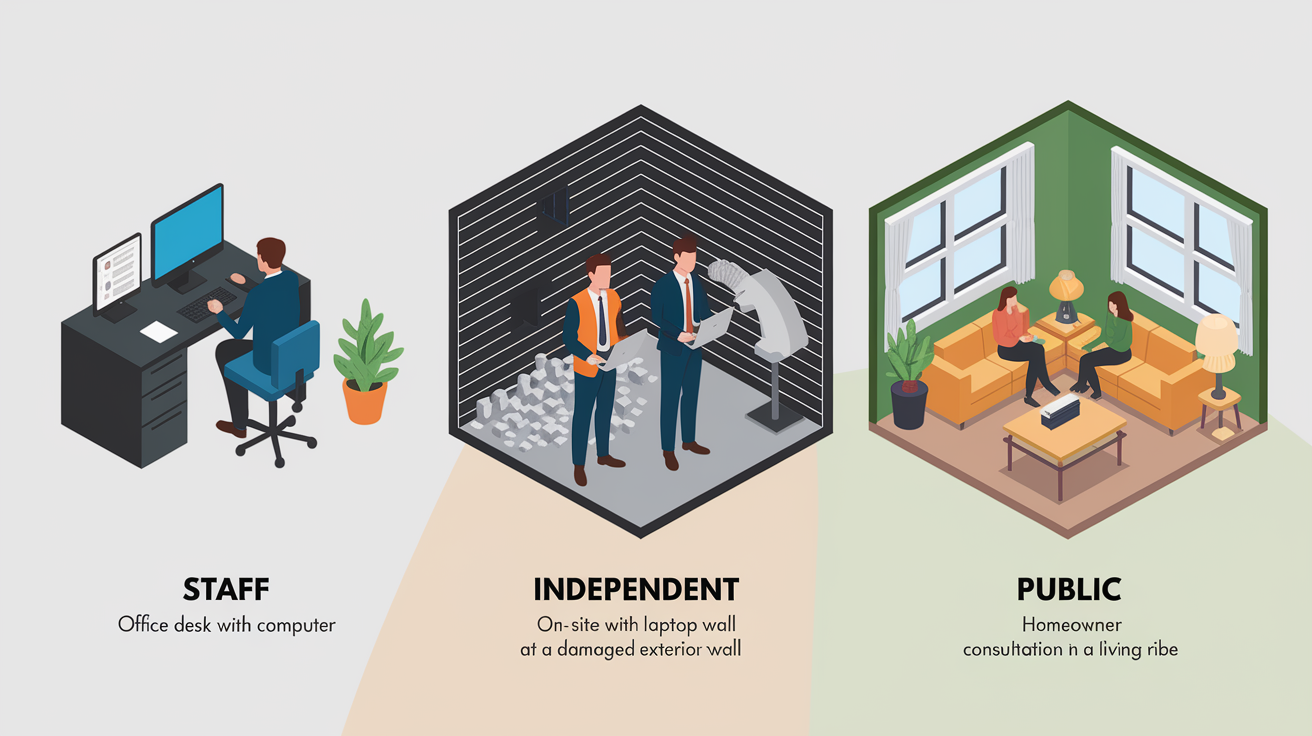
Not all adjusters work for the same employer or serve the same interests. The insurance industry relies on three distinct adjuster categories, each with different loyalties, fee arrangements, and regulatory responsibilities. Understanding who your adjuster represents helps you navigate the claims process and set realistic expectations.
Staff Adjusters
Staff adjusters are full-time employees of insurance companies. They receive salaries, benefits, and performance evaluations from the insurer that issues your policy. Their primary duty? The company. Which means their incentive structure aligns with controlling claim costs and processing files efficiently. Staff adjusters typically handle daily claims like routine water leaks, small fires, vandalism, and minor storm damage. They work from regional offices, maintain steady caseloads, and follow internal protocols set by claims departments.
Independent Adjusters
Independent adjusters operate as contractors hired by insurers on a per-claim or per-event basis. They don’t receive salaries or benefits from any single carrier. Instead, they work through independent adjusting firms and are deployed when claim volume spikes after hurricanes, wildfires, tornadoes, or hailstorms. Independent adjusters still represent the insurer’s interests and are paid by the insurer, but they juggle assignments from multiple carriers. Their workload can surge during catastrophe seasons and drop sharply during quiet months, making the role less predictable than staff positions.
Public Adjusters
Public adjusters are licensed professionals who represent policyholders, not insurers. They’re hired directly by homeowners, business owners, or property managers to investigate damage, prepare detailed scopes of loss, interpret policy language, and negotiate settlements with the insurer. Public adjusters charge fees based on a percentage of the final claim settlement, typically between five and fifteen percent depending on state caps and case complexity. They can be especially valuable when claims are large, disputed, or involve coverage gray areas.
Staff and independent adjusters appear automatically when you file a claim. Public adjusters enter the picture only when you choose to hire one. If your insurer assigns a staff or independent adjuster and you later hire a public adjuster, both will inspect the same damage and may disagree on scope, cost, or coverage.
The Property Damage Claims Process
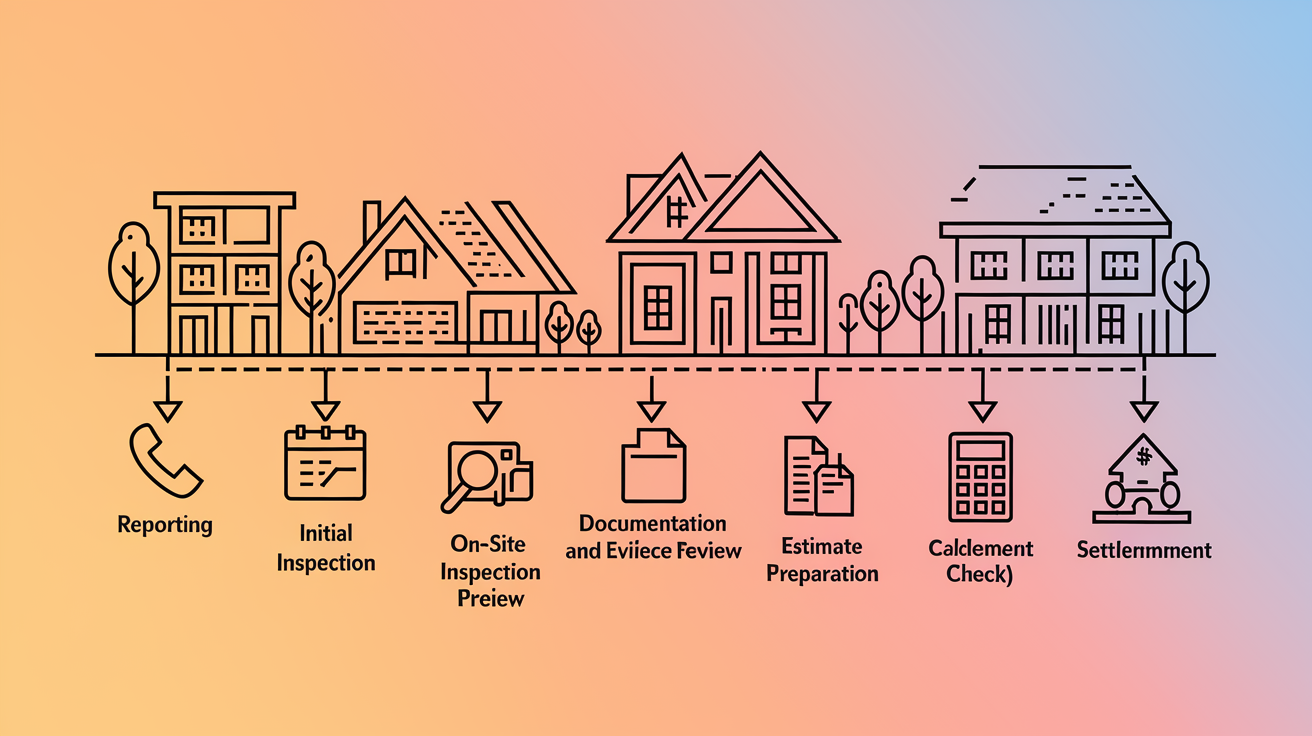
Adjusters guide nearly every stage of a property damage claim, from the moment you report the loss to the day you receive your final check. The process follows a predictable sequence, though timelines vary based on damage complexity, documentation quality, and whether disputes arise.
The typical claims workflow unfolds in six steps:
Reporting the claim. You contact your insurer by phone, app, or online portal to notify them of damage. The insurer opens a claim file, assigns a claim number, and logs the date and description of the loss.
Initial contact. An adjuster (staff or independent) is assigned to your file. They reach out within one to three business days to schedule an inspection and request preliminary documentation such as photos, receipts, or police reports.
On-site inspection. The adjuster visits your property to measure damage, take photos and videos, interview you or witnesses, and note visible structural issues, water intrusion, smoke residue, or missing materials. This visit typically lasts one to three hours depending on loss size.
Documentation and evidence review. The adjuster compiles inspection notes, reviews policy coverage, checks for exclusions, and gathers third party reports. You should provide receipts, contractor estimates, pre-loss photos, maintenance records, and any mitigation invoices during this phase.
Estimate preparation and review. The adjuster creates a scope of loss and cost estimate using software like Xactimate. They calculate actual cash value (depreciation included) or replacement cost value (no depreciation) depending on your policy terms, then submit the estimate for internal approval.
Settlement offer and payment. The insurer issues a written settlement offer. If you accept, payment is released, often in multiple disbursements if repairs are ongoing or if a mortgage lender holds an interest in the property. If you dispute the offer, you may negotiate, request an appraisal, or hire a public adjuster or attorney.
Most straightforward claims close within two to six weeks. Complex claims involving structural engineering, mold remediation, business interruption, or coverage disputes can stretch three to six months or longer. Delays typically occur when documentation is incomplete, when contractors and adjusters disagree on scope, or when insurers request additional inspections or specialist reports. The clearer and more organized your evidence, the faster the adjuster can move your file toward settlement.
When to Hire a Public Adjuster

Hiring a public adjuster isn’t necessary for every claim, but certain circumstances make professional representation a smart investment. Public adjusters bring technical estimating skills, policy interpretation experience, and negotiation leverage that most homeowners lack, especially when facing unfamiliar damage categories or large financial stakes.
Consider hiring a public adjuster when your claim involves significant repair costs, structural unknowns, or suspected hidden damage that the insurer’s adjuster may overlook. High-value properties, historic homes, and custom construction often require detailed scopes that go beyond standard estimating templates. Public adjusters can identify damage to specialty materials, custom millwork, historic finishes, and non-standard building methods that staff adjusters may not price accurately.
Disputes over coverage or settlement amounts are another strong signal. If the insurer’s offer falls thousands of dollars below contractor bids, or if the adjuster denies portions of your claim based on exclusions you believe don’t apply, a public adjuster can prepare a counter-estimate, cite relevant policy language, and negotiate directly with the insurer’s claims department.
You may benefit from a public adjuster if you:
Receive a settlement offer significantly lower than independent contractor estimates. Face extensive property damage requiring multiple trades and long-term reconstruction. Lack the time, technical knowledge, or construction background to prepare accurate scopes and cost breakdowns. Experience a partial or full claim denial that you believe is incorrect or unsupported by the policy. Encounter long delays, unresponsive adjusters, or repeated requests for documentation without progress toward settlement.
Public adjusters typically work on contingency, charging a percentage of the final settlement after your deductible is subtracted. Fees commonly range from five to fifteen percent, with exact percentages governed by state caps and the complexity of the claim. In Texas, for example, public adjuster fees are often capped at ten percent of the claim proceeds after the deductible. Always confirm the fee structure in writing before signing a contract, and verify that the adjuster holds a valid state license and bond.
Qualifications and Licensing Requirements for Adjusters
Most states require property damage claim adjusters to hold an active license issued by the state’s department of insurance or equivalent regulatory agency. Licensing ensures that adjusters meet minimum education standards, pass competency exams, and maintain continuing education to stay current on policy language, building codes, and estimating practices.
Typical prerequisites include a high school diploma or GED, though many adjusters hold associate or bachelor’s degrees in insurance, construction management, or related fields. Candidates must complete pre-licensing coursework covering insurance principles, claims procedures, ethics, and state regulations. After finishing the course, they sit for a state administered exam that tests knowledge of policy contracts, coverage types, appraisal processes, and adjuster duties. Passing scores vary by state, and some states require background checks or fingerprinting.
Once licensed, adjusters must fulfill continuing education requirements to renew their credentials. Renewal cycles range from one to three years depending on the state, and CE credit hours typically fall between eight and twenty-four per cycle. Coursework often covers updates to building codes, new estimating software features, changes in flood or windstorm coverage, and case studies on complex claims.
Recognized professional certifications include:
IICRC certifications for water damage restoration and applied structural drying. AIC (Associate in Claims) and CPCU (Chartered Property Casualty Underwriter) designations. State-specific All Lines Adjuster licenses that permit handling property, casualty, and liability claims. Xactimate or similar estimating software proficiency certificates.
Public adjusters face additional licensing hurdles in many states, including separate exams, surety bonds, and stricter continuing education mandates. Independent and staff adjusters working across state lines may qualify for reciprocal licenses if their home state has agreements with others, reducing the need to retake exams.
Costs, Fee Structures, and Payment Models

Understanding how adjusters are paid clarifies whose interests they serve and what costs you’ll incur. The fee model varies sharply depending on whether the adjuster works for the insurer or for you.
Public adjusters charge contingency-based fees calculated as a percentage of the final claim settlement. The percentage is negotiated before the contract is signed and is typically applied to the net recovery after your policy deductible is subtracted. For example, if your claim settles for fifty thousand dollars, your deductible is two thousand dollars, and the public adjuster’s fee is ten percent, the adjuster receives four thousand eight hundred dollars and you receive forty-three thousand two hundred dollars. Contingency arrangements mean you pay nothing if the adjuster fails to secure a settlement, though some firms charge flat fees or hourly rates for consultation work on disputed claims or appraisal support.
Staff adjusters and independent adjusters are paid directly by the insurance company, not by the policyholder. Staff adjusters earn salaries or hourly wages plus benefits. Independent adjusters work on contract and are compensated per claim file or per day deployed, with rates rising during catastrophe assignments when demand spikes. Neither type bills the homeowner, and their fees don’t reduce your claim payout. However, their compensation structures create built-in incentives to control costs and close files efficiently, which can influence how aggressively they negotiate on scope, materials, or labor rates.
Final Words
In the action, we showed what a property damage claim adjuster does, the types you’ll meet, the step‑by‑step claims process, when a public adjuster helps, basic licensing, and how fees are handled.
Adjusters inspect, document, estimate, and negotiate so your repairs and safety come first. Fast, measured steps cut the chance of hidden moisture or unfinished work.
A clear, experienced property damage claim adjuster makes the process less stressful and helps get your home back to normal.
FAQ
Q: What does a property damage adjuster do?
A: A property damage adjuster inspects damage, determines what the policy covers, estimates repair costs, documents losses with photos and readings, negotiates with the insurer, and guides you through the claims steps.
Q: What not to say to claim adjuster?
A: You should avoid telling a claim adjuster you caused the damage, guessing the cause, giving recorded statements without advice, accepting the first offer, promising repairs, or altering damaged areas before documentation.
Q: How much does a claims adjuster make per claim?
A: Claims adjuster pay per claim varies: staff adjusters are salaried, independent adjusters often get per file fees or hourly pay, and public adjusters usually earn a contingency fee (often 5–15% of the settlement).
Q: How to settle a property damage claim?
A: To settle a property damage claim, document losses with photos and receipts, report promptly, get contractor estimates, review the insurer’s scope, negotiate or hire a public adjuster, and accept only a clear written agreement.