


Could a slipped wire or a wet floor be the difference between a close call and a life lost?
Electricity causes thousands of injuries and hundreds of deaths each year, and most of those are preventable.
This post gives clear, step-by-step safety protocols you can use right away.
Verify de-energization, use GFCIs, follow lockout/tagout, keep equipment grounded, and wear the right protective gear.
No guesswork.
We’ll show what to do now, how to stop more damage, and how to document it for safety and insurance.
Essential Measures for Preventing Electrical Shock Incidents

Electricity causes thousands of workplace injuries and hundreds of deaths every year across the United States. OSHA identifies electrical hazards as one of the leading causes of serious workplace injuries, with most incidents coming from contact with energized parts, equipment failures, or bad installation work. The human body conducts electricity easily, and when current passes through the hands to feet pathway, it can disrupt heart rhythm and lung function. That leads to burns, severe muscle contractions, and death.
NFPA 70E sets detailed requirements for electrical safety in the workplace. This includes approach limits, arc flash boundaries, and specific PPE categories matched to the voltage and energy levels workers might face. Together with OSHA regulations covering equipment installation (29 CFR 1910.303) and lockout/tagout practices (29 CFR 1910.147), these standards define clear expectations: de-energize circuits before work begins, protect workers with proper grounding and insulation, and verify system safety before contact. Core prevention principles rely on isolating energy sources, maintaining physical barriers around live parts, and using protective devices like ground fault circuit interrupters.
Effective shock prevention combines engineering controls, administrative practices, and personal protective equipment. The following measures provide essential protection in any setting where electrical hazards exist.
-
Verify de-energization before starting work. Use a voltage tester to confirm circuits are truly off, even after switching breakers or pulling disconnects. Meters can fail, and assumptions kill.
-
Ensure all circuits and equipment are properly grounded. Grounded tools and systems provide a low resistance path for fault current, tripping breakers before current can reach dangerous levels in a person’s body.
-
Use GFCI protection for wet locations, outdoor circuits, and portable tools. GFCIs detect leakage current as small as 5 milliamps and shut off power in a fraction of a second, preventing lethal shocks.
-
Inspect cords, plugs, and tools before every use. Damaged insulation, exposed conductors, and cracked plugs are primary causes of shock. Tag out and remove defective equipment immediately.
-
Match PPE to the task and voltage level. Follow NFPA 70E tables for voltage rated gloves, insulating mats, face shields, and arc rated clothing when working on or near energized parts.
-
Apply lockout/tagout procedures during maintenance. Physically disconnect power, apply personal locks, and verify isolation to prevent accidental re-energization by another person.
-
Keep electrical equipment and work areas dry. Wet skin has approximately 100 times lower electrical resistance than dry skin, which dramatically increases shock severity. Moisture on tools, surfaces, or clothing multiplies the hazard.
-
Maintain proper clearances around overhead and underground power lines. Identify and mark energized lines before starting work. Always treat all lines as live until the utility confirms de-energization.
Identifying Electrical Shock Hazards in Work and Home Settings
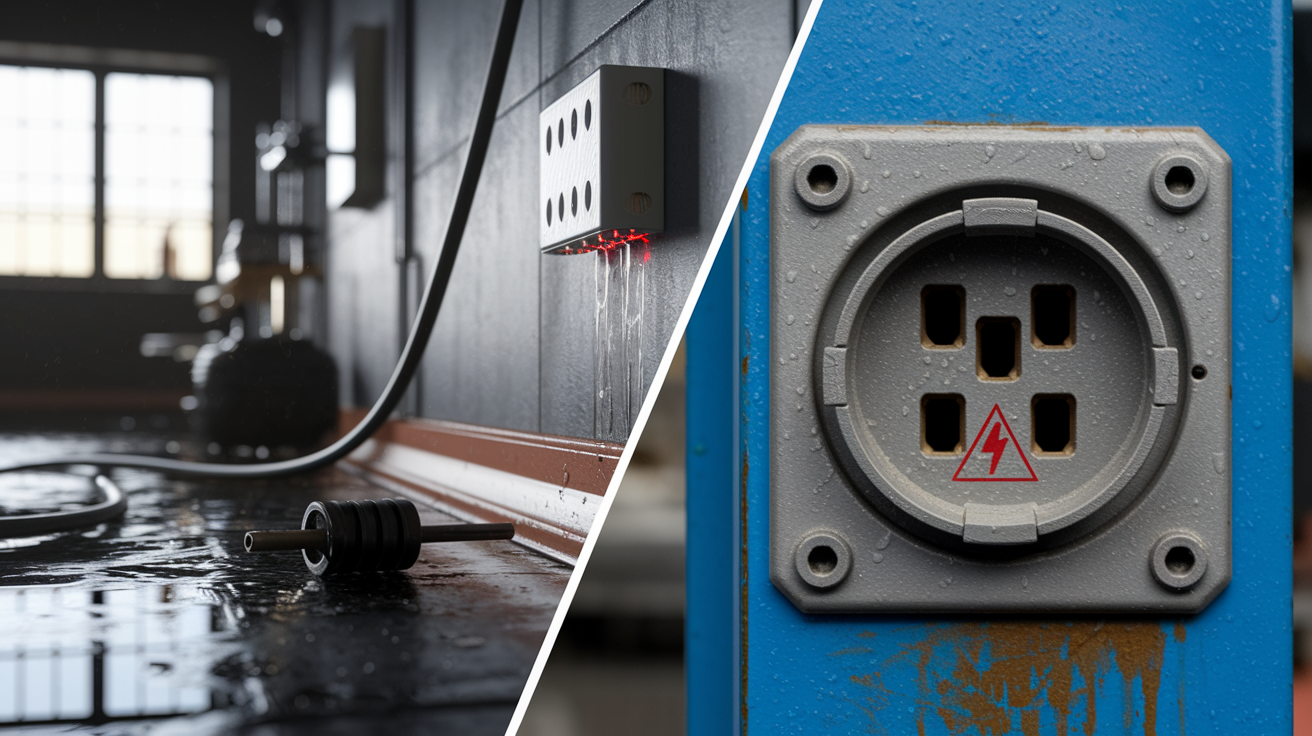
Electrical shock hazards exist wherever current flows. Most incidents stem from equipment failure, improper maintenance, or environmental conditions that degrade protective barriers. Frayed extension cords, overloaded circuits, and damaged outlets are common in both residential and commercial settings. Exposed wiring behind missing wall plates, ungrounded appliances, and jury rigged connections create pathways for current to reach the body instead of returning safely through the grounding system.
Environmental factors elevate risk significantly. Moisture lowers skin resistance and turns ordinary tools into conductors. Metal surfaces, concrete floors, and confined spaces with limited egress all increase the likelihood that a worker or homeowner will complete an electrical circuit through their body. Work in damp basements, outdoor construction, or areas near water sources requires additional precautions and circuit protection.
Signs of electrical system degradation often appear before a failure causes shock. Repeated breaker trips, flickering lights, warm outlet covers, burning smells near panels or receptacles, and tactile shocks when touching appliances or metal fixtures all signal faults that need immediate attention.
Common electrical shock hazards include:
- Damaged cords and extension cables. Insulation cracks, pinched conductors, or cuts that expose internal wiring.
- Overloaded circuits and multi plug adapters. These exceed outlet capacity, overheat wiring, and create fire and shock risks.
- Missing or broken wall plates. They expose live terminals and increase accidental contact, especially in low light.
- Ungrounded or improperly grounded tools and appliances. Fault current has no safe path and instead flows through the operator.
- Wet conditions and contact with water. This dramatically lowers body resistance and increases severity of shocks.
- Exposed conductors and open junction boxes. These allow direct contact with live parts during routine work or movement.
Safe Work Practices and Required PPE

NFPA 70E establishes arc rated personal protective equipment categories matched to specific tasks and energy exposure levels. Workers performing energized electrical work must wear voltage rated insulating gloves appropriate to the system voltage, along with leather protectors to prevent punctures. Face shields, arc rated clothing, insulating footwear, and hard hats form layers of defense against both shock and arc flash events. PPE must be inspected before each use for cracks, tears, contamination, or other damage that compromises protection.
Safe work practices begin with the assumption that all circuits are energized until proven otherwise. Use a properly rated voltage tester to verify absence of voltage on all conductors before making contact. Maintain the approach distances outlined in NFPA 70E tables. Limited approach boundaries define how close unqualified persons may come, while restricted and prohibited boundaries apply to qualified workers performing specific tasks. When energized work is unavoidable, a written energized electrical work permit documenting hazard analysis, required PPE, and emergency procedures must be completed and approved.
Insulated tools add another protective layer. Use only tools rated for the voltage present, and inspect handle insulation for chips, cuts, or wear. Metal ladders, scaffolding, and conductive materials must stay clear of energized parts and overhead lines. Keep one hand in your pocket or behind your back when working near live circuits to prevent hand to hand current flow across the chest.
Do not work alone on energized equipment. Do not wear conductive jewelry, including rings, watches, and metal framed glasses near electrical work. Do not assume that tripped breakers or open disconnects mean circuits are safe. Verify with testing. Do not bypass interlocks, remove equipment guards, or disable ground fault protection to make a task easier. Each shortcut traded for convenience opens the door to a shock incident that could have been prevented with a few extra seconds of caution.
Lockout/Tagout Procedures for Electrical Systems

OSHA standard 29 CFR 1910.147 requires lockout/tagout (LOTO) whenever maintenance, repair, or servicing could expose workers to unexpected energization or stored energy release. LOTO physically isolates electrical circuits and equipment so that only the authorized worker who applied the lock can restore power. This prevents another person from closing a breaker, throwing a switch, or plugging in equipment while someone is in contact with conductors or internal components.
A formal LOTO procedure isn’t optional. Each worksite must have written, equipment specific procedures that identify all energy sources, describe isolation steps, and define verification methods. Workers performing LOTO must be trained and authorized. The person who applies the lock is the only person who removes it at the end of the task.
Required LOTO steps for electrical systems:
-
Notify all affected workers. Alert anyone who may be impacted that equipment will be shut down and locked out. Explain the scope and expected duration.
-
Shut down equipment using normal procedures. Power off machinery and tools as designed before attempting to disconnect circuits.
-
Disconnect and isolate all energy sources. Open circuit breakers, pull fuses, or operate disconnects to interrupt power. For complex systems, isolate control circuits and backup power as well.
-
Apply lockout devices and personal locks. Attach hasps, breaker locks, or plug lockouts. Each authorized worker applies their own lock and tag.
-
Relieve or block stored energy. Discharge capacitors, block mechanical parts, and confirm that pneumatic or hydraulic pressure is released.
-
Verify isolation with a voltage tester. Test all conductors and equipment terminals to confirm absence of voltage before making contact.
-
Perform the work, then restore safely. After completing the task, remove tools, reinstall guards, verify all workers are clear, remove locks in reverse order, and restore energy following normal startup.
Grounding, Bonding, and Use of GFCI Protection

Grounding directs fault current safely into the earth and stabilizes voltage across an electrical system. When insulation fails or a live wire contacts a metal equipment frame, the grounding conductor provides a low resistance path back to the panel, allowing enough current to flow to trip the breaker almost instantly. Without grounding, that metal frame stays energized, waiting for a person to complete the circuit.
Bonding eliminates voltage differences between conductive parts that people might touch simultaneously. Metal raceways, enclosures, piping, and structural steel are bonded together so fault current flows evenly without creating a shock hazard between two surfaces. Effective bonding ensures that if one part becomes energized, all connected parts rise to the same potential, preventing current flow through a worker’s body.
Ground fault circuit interrupters (GFCIs) add a faster layer of protection. A GFCI constantly monitors current flow in the hot and neutral conductors. If even 5 milliamps of imbalance appears, indicating leakage through a person or damaged insulation, the GFCI trips in as little as 1/40 of a second, well before the shock can cause ventricular fibrillation or respiratory arrest. GFCIs are required in wet locations, outdoor receptacles, construction sites, and anywhere temporary power is used.
| Method | Purpose | Key Benefit |
|---|---|---|
| Grounding | Provides a low resistance path for fault current to return to the source and trip overcurrent devices | Prevents metal parts from staying energized after insulation failure; allows breakers to open quickly |
| Bonding | Connects conductive parts to eliminate voltage differences between surfaces a person may touch | Stops current from flowing through the body between two metal objects at different potentials |
| GFCI | Detects current imbalance and interrupts the circuit within milliseconds | Protects against shocks too small to trip a standard breaker but large enough to cause injury or death |
Inspection and Maintenance of Electrical Equipment
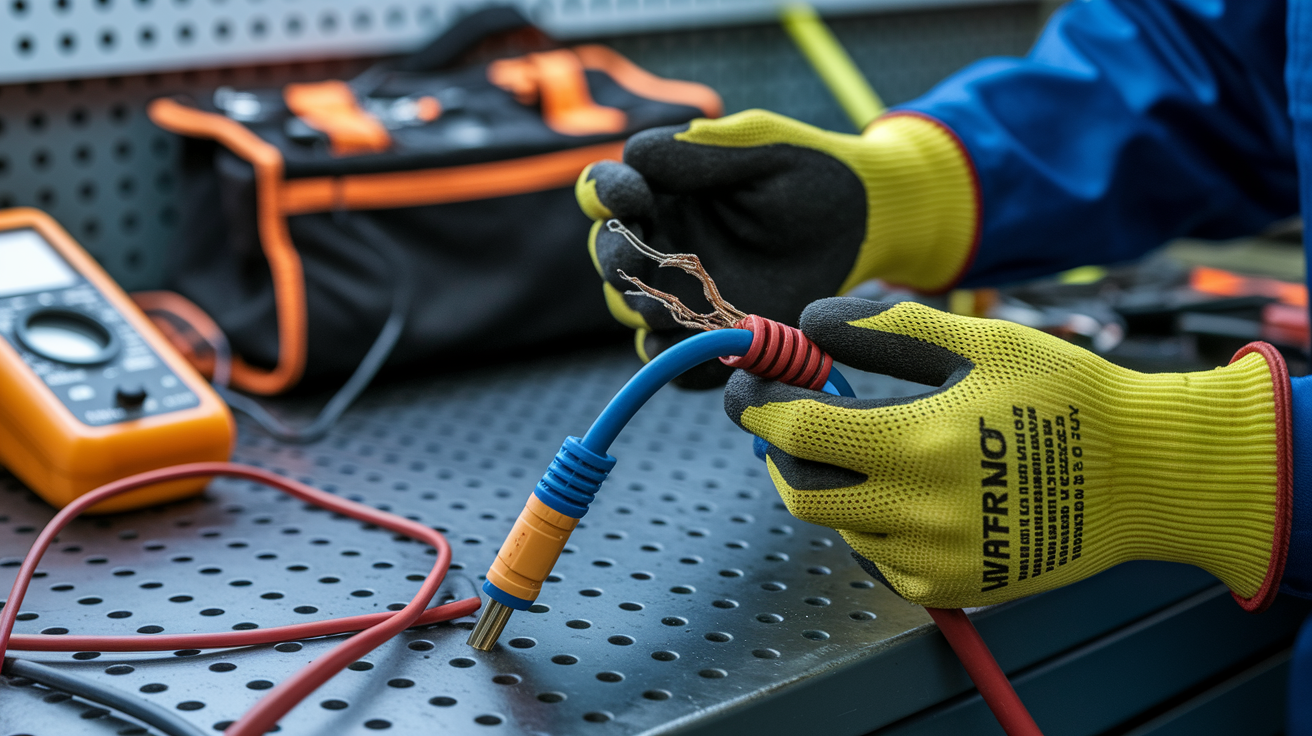
Routine inspection catches deteriorating insulation, loose connections, and damaged components before they cause shock or fire. Electrical equipment degrades over time from heat, vibration, moisture, and physical wear. A cord that looked fine last month may have developed internal breaks from repeated flexing, or a plug may have loosened to the point where arcing begins. Hidden faults stay hidden only until the moment someone makes contact.
Inspect cords, plugs, and portable tools before every use. Look for cracked or missing insulation, exposed conductors, bent or missing grounding pins, and any sign of overheating such as discolored plastic or burn marks. Check that strain reliefs are intact and that cords aren’t pinched, kinked, or running under furniture or through doorways. If a tool gives even a slight tingle when you touch the housing, tag it out immediately and have it evaluated by a qualified person.
Larger equipment requires scheduled inspections based on use and environment. Verify that grounding connections are tight, enclosures are secure, and labels are legible. Test GFCIs monthly by pressing the test button. If the device doesn’t trip, replace it. Document inspection results and track recurring issues. Patterns of failure often point to upstream electrical problems or improper use.
When unsafe conditions appear, remove the equipment from service immediately. Lock out circuits, tag the equipment clearly, and store it where no one can accidentally use it. Don’t attempt repairs unless you’re trained and authorized. The few dollars saved by ignoring a frayed cord aren’t worth the injury, the workers’ compensation claim, or the liability that follows a preventable shock incident.
Emergency Actions After Electrical Shock Exposure

When someone suffers an electrical shock, the first priority is to disconnect the power source without making yourself the second victim. Don’t touch the person if they’re still in contact with an energized conductor. You’ll complete the same circuit. Shut off the power at the breaker, unplug the equipment, or use a non-conductive object like a dry wooden board to separate the victim from the source. Only after the power is off should you approach and begin assessment.
Call emergency services immediately for any electrical shock, even if the person appears uninjured. Electrical current can disrupt heart rhythm hours after initial contact, and internal burns may not be visible on the skin. While waiting for emergency responders, check for breathing and pulse. If the victim is unconscious and not breathing, begin CPR. Electrical shock can cause cardiac arrest, and prompt chest compressions significantly improve survival.
Emergency response steps following electrical shock:
-
Disconnect power safely. Turn off the circuit breaker or unplug the device. Use a non-conductive object if necessary to separate the victim from the source.
-
Call 911 or emergency services. Provide location, nature of the injury, and victim status. Stay on the line for instructions.
-
Assess breathing and circulation. Check for responsiveness, breathing, and pulse. Begin CPR if the victim is unresponsive and not breathing.
-
Treat visible burns. Cover electrical burns loosely with clean, dry cloth. Don’t apply ointments or attempt to clean the wound.
-
Monitor and document the incident. Keep the victim still and warm. Observe for delayed cardiac symptoms. Document the incident for OSHA reporting and internal review.
Final Words
In the action, we walked through spotting common risks, the safety rules from OSHA and NFPA 70E, and the practical steps to stop shocks: inspect cords, verify de-energization, use the right PPE, and keep grounding and GFCIs working.
We also covered lockout/tagout, routine maintenance, and what to do if someone is shocked so you can respond safely.
Keep practicing electrical shock hazard prevention. Small checks and quick repairs prevent big problems and help keep your home safe.
FAQ
Q: How to prevent electric shock hazards?
A: The way to prevent electric shock hazards is to stop the power, verify de‑energization, use lockout/tagout, wear proper PPE, keep areas dry, use GFCIs and grounding, and inspect cords and tools regularly.
Q: What to use to prevent electric shock?
A: To prevent electric shock, use voltage‑rated gloves, insulated tools, GFCI protection, grounding and bonding, insulating mats, and lockout/tagout devices; always test for absence of voltage before working.
Q: What are the 5 main electrical hazards?
A: The five main electrical hazards are frayed or damaged cords and exposed wiring, wet conditions, overloaded circuits or equipment, lack of grounding or bonding, and contact with energized parts.
Q: What PPE is required for electrical shock hazard?
A: The PPE required for electrical shock hazards includes arc‑rated clothing, voltage‑rated rubber gloves, insulating sleeves, face shield, dielectric footwear, and insulating mats; final selection follows NFPA 70E risk assessment and voltage level.