


Think flipping the breaker makes a circuit safe?
A lot of people do that, and that’s how hidden voltage ends up hurting someone.
Before you touch a panel, outlet, or wire, assume it’s live until you prove otherwise.
This guide walks you step by step through what to check, how to verify your tester using the live-dead-live method (check a known live source, test the circuit, recheck the known live), when to use a non-contact tester versus a multimeter, and which PPE and tool checks actually keep you safe.
No guesswork. Just clear steps you can follow at home.
Essential Methods for Testing Electrical Hazards Safely

Testing for electrical hazards starts with knowing what you’re hunting: exposed wires, trashed insulation, overheated connections, moisture creeping near devices, and circuits carrying voltage where there shouldn’t be any. Before you put your hands anywhere near a panel or outlet, assume everything’s live until you prove otherwise. That mindset keeps you breathing. The process begins with a visual once-over, then moves to tool verification, and ends with direct testing using calibrated instruments that match the voltage class you’re checking.
OSHA 1910.333(b) and NFPA 70E standards require that circuits be placed in an electrically safe condition before work starts. That means more than just flipping a breaker. It means verifying absence of voltage with a tester you know actually works. The live-dead-live method is standard practice: verify your tester on a known live source, test the circuit you just killed, then verify the tester again on that same live source. If the tester quits at any point, you stop. Non-contact voltage detectors help with initial screening, but they can miss voltage in shielded cables, metal enclosures, or when you’re standing on an insulated surface. Direct contact testing with a digital multimeter or fused electronic tester is what confirms a circuit is truly dead.
Here are the five core checks every electrical hazard test needs to include:
- Visual inspection for exposed wiring, burn marks, discoloration, moisture, and damaged insulation
- Non-contact voltage detection to screen for presence of voltage before touching conductors
- Direct voltage measurement phase to neutral and phase to ground using a calibrated multimeter
- Ground continuity test to verify protective conductors are intact and low resistance
- Tool verification before and after testing to confirm the instrument is functioning correctly
Electrical Hazard Identification Techniques for Home and Workplace Systems

Electrical hazards show themselves in predictable ways if you know where to look. Start at the panel. Check for scorched breaker slots, melted bus bars, loose wire terminations, and signs of overheating like discoloration or warped plastic. Move to outlets and switches. Look for melted face plates, loose devices that wobble in the box, and any scorch marks around screw terminals. Damaged insulation is one of the most common issues: cracked rubber, frayed cloth covering, or exposed copper at junction boxes. Moisture near electrical equipment is an immediate red flag, especially in basements, crawl spaces, and outdoor enclosures. Overloaded circuits often reveal themselves through repeatedly tripped breakers, warm outlet covers, or multiple high draw devices daisy chained on extension cords.
Improper splices and missing grounding conductors are harder to spot but just as dangerous. Look for wire nuts that are loose or cracked, tape only splices hidden in walls, and any junction that isn’t enclosed in a code compliant box. Grounding issues show up as two prong outlets in older homes, missing ground wires at receptacles, or green grounding screws left floating. Loose connections create heat and resistance. Check for blackened wire ends, discolored terminals, and any junction where the insulation has pulled back from the connector. If you smell burning plastic or see smoke residue inside a panel, that circuit has already failed partway and needs immediate shutdown and inspection.
Common hazard indicators to inspect for include:
- Exposed or frayed conductors at outlets, switches, and junction boxes
- Burn marks, melted insulation, or discolored device covers
- Overloaded panels with multiple breakers tripped or warm to the touch
- Moisture intrusion, corrosion, or rust on electrical components
- Missing or improperly connected grounding conductors
- Loose wire terminations that move when lightly tugged
Safe Electrical Testing Procedures and Required Protective Measures

Personal protective equipment isn’t optional when testing electrical systems. You wear PPE until the circuit is proven de-energized. No shortcuts. NFPA 70E requires that PPE match the incident energy and arc flash boundary of the equipment you’re testing. For most residential panels and low voltage branch circuits, that means insulated gloves rated for the system voltage, safety glasses with side shields, and long sleeves made from natural fibers or arc rated fabric. If you’re working on energized panels or testing circuits above 240 volts, you need arc rated clothing with a minimum rating of 8 cal/cm² and a face shield. Dielectric footwear and insulated tools add layers of protection, especially when standing on damp concrete or working near grounded metal surfaces.
OSHA standards emphasize shock and arc flash boundaries. Imaginary lines that define how close you can safely approach energized parts. For low voltage systems under 50 volts, the risk is lower but still present. Above that, you stay outside the limited approach boundary unless you’re qualified, authorized, and wearing the correct PPE. The safest assumption is that every conductor is live until your tester proves otherwise. That means gloves go on before you open a panel cover, and they stay on until lockout/tagout is complete and absence of voltage is verified. If you feel uncertain about the voltage level or the condition of the equipment, stop and call a licensed electrician. Testing electrical hazards is not the time to learn by doing.
Required PPE for High and Low Voltage Testing
Insulated gloves are the first line of defense. Use gloves rated for the highest voltage present in the system. Class 00 gloves for up to 500 volts AC, Class 0 for up to 1,000 volts. Inspect gloves before every use: look for cuts, punctures, ozone cracking, and any sign of wear. Arc rated clothing becomes mandatory when testing energized equipment that could produce an arc flash. For low risk tasks like testing a residential panel with a multimeter, a minimum arc rating of 8 cal/cm² is common. Higher risk work, like fault finding on commercial distribution panels, requires higher ratings and a full face shield. Dielectric footwear provides an extra ground barrier, especially useful when working in damp environments. Safety glasses with side shields protect against arc flash and debris. Hard hats are required in commercial and industrial settings where overhead hazards exist. All PPE must be inspected, maintained, and replaced when damaged. Worn out gloves or faded arc rated clothing won’t protect you when the fault happens.
Using Non-Contact Voltage Testers for Initial Hazard Screening

Non-contact voltage testers detect the electric field around energized conductors without requiring direct contact. You hold the tip near a wire, outlet slot, or device terminal, and the tester beeps or lights up when it senses voltage. These tools are excellent for initial screening. Walk up to a panel, wave the tester near breaker terminals, and get a quick sense of what’s live. They work best on low voltage systems where you’re checking phase to ground presence, like household 120 volt circuits. For medium and high voltage systems, non-contact testers are the preferred first check because they keep you at a safer distance from exposed conductors.
But non-contact testers have real limitations. They can give false negatives, meaning they fail to detect voltage that’s actually present, in several common situations: shielded cables where the outer jacket blocks the electric field, metal enclosures that act as Faraday cages, partially buried conduit, or when you’re standing on an insulated surface and not providing a ground reference. If the test point is in contact with grounded metal, the tester may not pick up the voltage. That’s why non-contact detection is never enough by itself. You use it to screen, then follow up with direct contact testing using a multimeter or fused electronic tester to confirm absence of voltage. Relying solely on a non-contact tester for safety verification has led to injuries and fatalities. “Dead until proven dead” requires touching the conductors with calibrated probes.
| Use Case | Reliability Notes |
|---|---|
| Initial screening of exposed panel terminals and outlet slots | Reliable for quick detection; good first step before opening enclosures |
| Testing shielded cables or wiring inside metal conduit | Unreliable; shielding blocks electric field and can cause false negatives |
| Confirming absence of voltage before touching conductors | Not acceptable; must follow with direct contact multimeter or tester |
| Tracing circuits and identifying energized wires in junction boxes | Useful, but verify findings with a second method before making contact |
Multimeter Testing Techniques for Accurate Voltage and Continuity Checks

Digital multimeters give you precise voltage, resistance, and continuity readings, but only if you use them correctly. The most dangerous mistake is selecting the wrong function or range. Switch the meter to amps instead of volts, and when you touch the probes to a live circuit, you create a dead short through the meter’s low resistance current path. That arc can be fatal. Newer auto ranging multimeters reduce that risk, but older models require you to manually set the range. If you guess wrong, the meter won’t display the voltage. It’ll just show zero, making you think the circuit is dead when it isn’t. Always start on the highest voltage range, then step down if needed. True RMS meters are better for testing circuits with non-sinusoidal loads like LED drivers and variable speed motors, because they measure the actual heating effect of the current rather than assuming a perfect sine wave.
Before you test anything, inspect your multimeter and test leads. Look for cracked insulation, melted or discolored plastic, bent probe tips, and loose connections where the leads plug into the meter body. Then verify the leads with a continuity test: set the meter to ohms (Ω), touch the probe tips together, and check the reading. It should be at or below 0.3 Ω. Anything higher means the leads have excessive resistance from corrosion, internal breaks, or worn contacts, and you need to replace them. Test leads are cheap and should be swapped out annually as a standard practice. Once the leads pass, verify the meter itself on a known live source. Plug a lamp into an outlet, confirm it lights, then measure that outlet with your multimeter. You should read around 120 volts ±5% for a standard U.S. residential circuit. That’s your live reference for the live-dead-live sequence.
Here’s the correct order for multimeter testing on a de-energized circuit:
- Verify the multimeter on a known live outlet or panel (expect ~120 V or ~240 V depending on circuit type).
- Test the target circuit phase to neutral and phase to ground; both readings should be zero volts.
- Test neutral to ground; this should also read zero volts unless there’s a fault or improper bonding.
- Switch to continuity or low resistance mode and verify ground path continuity from device to panel ground bus (expect near 0 Ω).
- Re-verify the multimeter on the same known live source to confirm the meter still works. If it now reads zero, the meter failed mid-test and your dead reading is invalid.
Advanced Electrical Hazard Testing: Insulation, Grounding, Impedance, and Fault Detection

Insulation resistance testing uses a megger (insulation tester) to apply a high DC voltage, typically 250, 500, or 1,000 volts, between conductors and ground, then measures how much current leaks through the insulation. Healthy low voltage wiring should show insulation resistance greater than 1 megohm (MΩ). Readings below that threshold indicate degraded insulation from moisture, age, rodent damage, or thermal stress. You perform this test only on de-energized circuits, after lockout/tagout is complete and all connected devices are disconnected or isolated. Wet insulation, even if it looks intact, can drop resistance into the kilohm range, creating shock and fire risk once the circuit is re-energized.
Ground resistance testing measures how well your grounding electrode system connects to earth. Code typically requires ground rod resistance below 25 ohms, and many engineers target below 5 ohms for critical systems. You use a three pole ground tester with two auxiliary stakes driven into the soil at specific distances, or a clamp on ground tester that measures resistance without disconnecting the ground. High ground resistance limits fault current, which can prevent breakers from tripping during a ground fault, leaving exposed metal energized. Loop impedance testing goes further by measuring the total resistance of the fault path from the phase conductor, through the protective device, and back via the grounding system. High loop impedance means slow or failed breaker operation during a fault. Neutral ground bonding issues, like improper bonding at subpanels or missing bonds at the service entrance, create shock hazards and are detected by measuring voltage between neutral and ground under load. Correct bonding shows near zero voltage; incorrect bonding can show several volts or fluctuating readings.
Interpreting Common Fault Readings
Low megohm readings, anything significantly below 1 MΩ on a standard branch circuit, point to insulation breakdown. Common causes include water intrusion at outdoor boxes, cables run through damp crawl spaces, overheating from overloaded circuits, and physical damage like nails driven through Romex. The fix is usually replacing the damaged section of cable, drying out the enclosure, and re-testing before re-energizing. High ground resistance, above 25 ohms, often comes from poor electrode contact with soil, corroded connections at the ground rod, or using a single rod in very dry or rocky soil. Adding a second ground rod in parallel or treating the soil with conductive material can bring resistance down.
Incorrect neutral ground bonding is more subtle but just as dangerous. At the main service panel, neutral and ground must be bonded together. That’s code. But at subpanels and branch devices, neutral and ground must remain separate. If you measure continuity or low resistance between neutral and ground at a subpanel, someone installed an illegal bond, and fault current can flow on grounding conductors and metal enclosures. High loop impedance shows up as longer than expected breaker trip times during fault tests or as inability to trip at all on ground faults. That usually means loose connections, undersized grounding conductors, or long circuit runs without adequate wire gauge. All of these faults require immediate correction by a licensed electrician before the circuit is returned to service.
Lockout/Tagout and Safe Isolation Procedures Before Hazard Testing

Lockout/tagout prevents circuits from being re-energized while you’re testing or working on them. OSHA estimates that proper LOTO procedures prevent around 120 fatalities and 50,000 injuries every year in the United States. The core idea is simple: you physically disconnect the energy source, apply a lock that only you control, and tag the disconnect with your name and the date so everyone knows the circuit is out of service. No lock means someone else can flip that breaker back on while your hands are in the panel. No tag means the next shift might not know why the circuit is off and restore power without checking.
LOTO isn’t just for maintenance crews. If you’re testing a residential circuit and need to verify it’s de-energized, you follow a simplified version of the same process: turn off the breaker, verify with a tester, and either lock the panel or stay in direct control of it until testing is complete. For workplace environments, OSHA’s lockout/tagout electrical safety standards require a formal written procedure and trained personnel. The isolation sequence protects you from accidental re-energization, backfeeds from alternate sources, and stored energy in capacitors or long cable runs that can hold a charge even after the breaker opens.
The standard isolation sequence before any electrical hazard testing includes these five steps:
- Identify all energy sources and disconnect points for the circuit or equipment you’re testing. Check for backfeeds, parallel feeds, and alternate sources like generators or UPS systems.
- Notify all affected personnel that the circuit will be de-energized and locked out; post signs if the work area is accessible to others.
- Isolate the energy by opening the circuit breaker, pulling fuses, or opening a disconnect switch; for critical systems, also open upstream disconnects.
- Apply a personal lock to the disconnect device using a lockout hasp if multiple workers are involved, and attach a tag with your name, date, and reason for lockout.
- Verify the circuit is de-energized using a voltage tester on all conductors, then release any stored energy by discharging capacitors, grounding long cable runs, and confirming zero voltage before beginning work.
Verifying Absence of Voltage: Applying the Live-Dead-Live Method
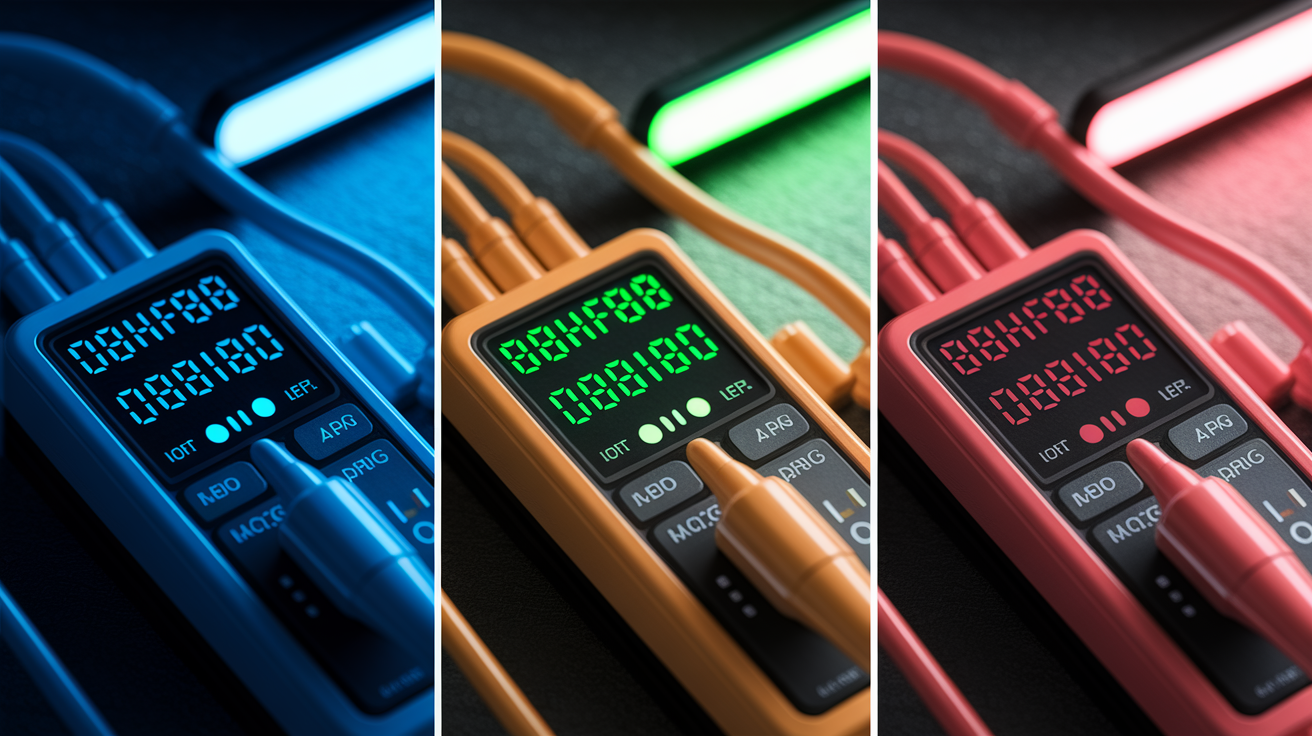
The live-dead-live method is the only reliable way to confirm a circuit is truly de-energized. OSHA requires this procedure for any work on circuits above 600 volts, and NFPA 70E extends the requirement to all voltages in section 120.1(5). The sequence is straightforward: you verify your voltage tester works by testing a known live source, then you test the circuit you just de-energized, and finally you re-verify the tester on the same known live source. If the tester fails either verification step, you can’t trust the dead reading you got in the middle. This method is explained in detail in Fluke’s guide to preparing for absence of voltage testing.
The known live source must match the voltage magnitude and type, AC or DC, of the circuit you’re testing. If you’re verifying a 240 volt dryer circuit is dead, test your meter on a 240 volt range using a known live 240 volt outlet first. Using a 120 volt outlet to verify your meter, then testing a 240 volt circuit, doesn’t prove the meter’s 240 volt range works. After you confirm zero volts on the target circuit, go back to that same live source and test again. If the meter now reads zero on a source that’s definitely live, the meter failed during your test. Battery died, fuse blew, lead broke. And you have no idea whether the circuit you thought was dead actually is.
| Step | Purpose |
|---|---|
| Verify tester on known live source (before testing circuit) | Confirms the voltage tester, test leads, and meter function are working correctly before you rely on them for safety decisions |
| Test the target circuit for absence of voltage at all points | Measures voltage phase to phase, phase to neutral, and phase to ground to confirm the circuit is de-energized and safe to touch |
| Re-verify tester on the same known live source (after testing circuit) | Proves the tester still works after the circuit test; detects meter or lead failure that would invalidate the dead reading |
Electrical Testing Tools: Selection, Calibration, and Maintenance

Choosing the right electrical tester starts with matching the tool’s category (CAT) rating to the circuit you’re testing. CAT III meters are rated for fixed wiring and distribution panels inside buildings, most residential and light commercial testing. CAT IV meters are built for service entrances, utility connections, and outdoor overhead lines where transient voltages and fault currents are higher. Using a CAT II meter (designed for portable appliances and low energy circuits) on a main panel is dangerous; the meter’s internal protection can’t handle the energy, and it may explode during a fault. Always check the voltage rating too. A CAT III 300V meter is not safe for testing 480 volt panels.
True RMS capability is essential if you’re testing modern homes with LED lighting, variable speed HVAC, and other non-linear loads. Standard averaging meters assume a perfect sine wave and give incorrect readings on distorted waveforms, sometimes underestimating voltage by 10 percent or more. Fused test leads add a critical layer of protection. If you accidentally create a short, the fuse blows before the arc gets out of control. Replace fused leads annually as a standard practice, because the wire inside fatigues with repeated flexing and temperature cycling. Calibration prevents false confidence: have your multimeter and specialized testers like meggars calibrated annually by a qualified lab, and keep records. A meter that reads zero on a live circuit because it’s out of calibration is worse than no meter at all.
When maintaining and selecting electrical test tools, always verify these four specs:
- CAT rating and voltage class match the system being tested (CAT III for panels and fixed wiring, CAT IV for service entrances)
- True RMS measurement for accurate readings on circuits with harmonic distortion and non-sinusoidal loads
- Fused test leads with current limiting fuses rated for the meter’s category and maximum voltage
- Current calibration date documented and within the recommended interval (typically 12 months for professional use)
Final Words
You kneel by the panel and see burn marks, so don’t guess, stop power if safe, apply lockout/tagout, and put on PPE. First actions: look for exposed wiring, use a non-contact tester for a quick scan, then use a verified DMM for voltage and continuity.
Remember the live-dead-live method: verify your tester on a known live source, test the circuit, then re-verify the tester. That’s how to test for electrical hazards and keep people and property safe. You’re doing the right thing.
FAQ
Q: What are the 7 electrical tests?
A: The common electrical tests are visual inspection, non-contact voltage detection, direct DMM voltage checks, continuity and ground-bond testing, insulation resistance (megger), loop impedance, and leakage-current measurement; exact list varies by job.
Q: What are the 5 main electrical hazards and what are the four types of electrical hazards?
A: The main electrical hazards are exposed conductors, damaged insulation, moisture intrusion, overloaded circuits, and loose or improper connections; they generally fall into shock, arc-flash, fire, and fault-pathway hazard types.