
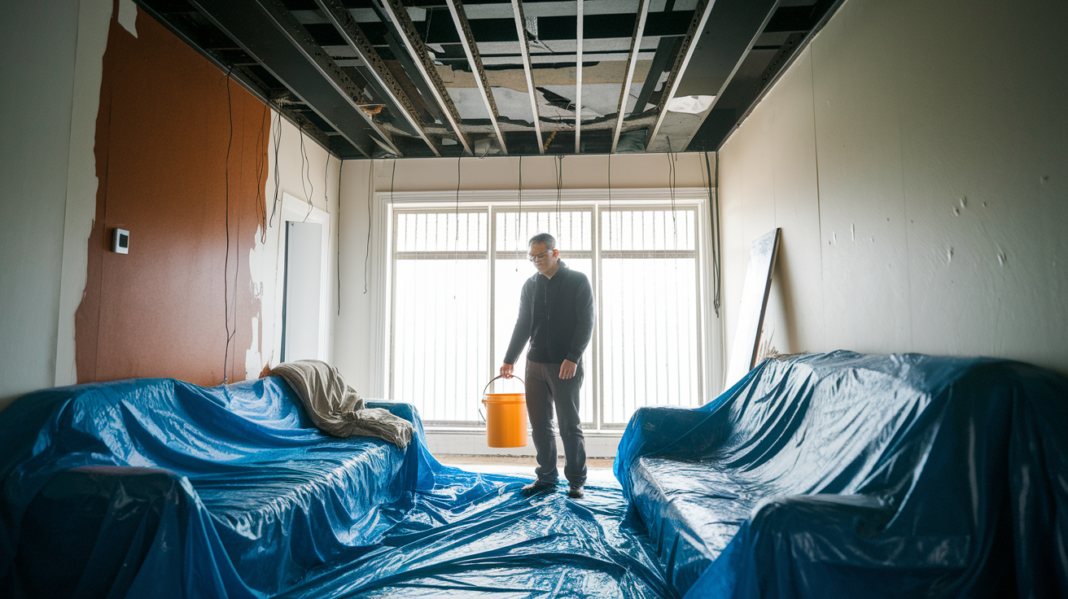

You’re staring at a wet ceiling stain that wasn’t there yesterday, and now you’re wondering if this is a quick fix or a major problem. The truth is, ceiling water leaks range from simple DIY repairs to situations that need professional intervention fast. Knowing the difference keeps you safe, saves money, and prevents small leaks from turning into collapsed ceilings. This guide walks you through emergency response, leak detection, drying procedures, and when to stop and call someone who does this every day.
Immediate Emergency Response and Temporary Stabilization

When water starts leaking through your ceiling, the first 15 minutes determine how much damage spreads. Quick action stops water from soaking insulation, weakening drywall, traveling into walls, and creating conditions for microbial growth. Every minute you wait increases repair costs and safety risks.
Watch for these warning signs: a ceiling that sags or feels soft when touched, brown or yellow stains spreading across the surface, paint that bubbles or peels away, and the steady sound of dripping water above you. You might also notice a musty smell or see actual water droplets forming.
Here’s what to do immediately:
- Turn off the water supply if the leak comes from plumbing (shut the main valve or the fixture supply line)
- Shut off electricity to the affected room at your breaker panel to eliminate shock risks
- Move furniture and valuables out of the area or cover them with plastic sheeting
- Place buckets directly under active drips to catch water
- Protect floors with tarps, old towels, or plastic sheeting to catch dripping water and falling debris
- Create a controlled drainage point by poking a small hole at the leak’s center with an awl or screwdriver, directing water into a bucket rather than letting it spread through the drywall
Never touch electrical fixtures, outlets, or switches near a wet ceiling. Water conducts electricity, and even a small amount of moisture around wiring creates serious shock hazards. If the ceiling bulges significantly or you hear cracking sounds, evacuate the room immediately. A saturated ceiling can collapse without warning. Always wear safety glasses when working overhead and put on work gloves when handling tools or damaged materials.
These temporary measures buy you time to arrange permanent repairs, but they’re not solutions that last. Most temporary fixes hold for 24 to 72 hours, giving you a window to assess damage, contact professionals if needed, and plan your next steps.
Quick temporary repairs include:
- Controlled drainage holes to relieve water pressure and direct flow into containers
- Waterproof tarps spread over the affected ceiling area and secured with painter’s tape
- Strategic bucket positioning with towels underneath to catch overflow
- Temporary patching compounds applied to small holes after drying (holding 24 to 48 hours)
- Emergency sealants for hairline cracks that aren’t actively leaking
Gather these basic tools and materials for emergency response: a sturdy stepladder, multiple buckets in different sizes, heavy plastic tarps, an awl or screwdriver for creating drainage holes, a utility knife, box fans for air circulation, and a keyhole saw if you need to open the ceiling for inspection. Safety equipment matters just as much. Wear protective eyewear to keep debris out of your eyes, a dust mask if you’re cutting into drywall, and work gloves to protect your hands from sharp edges. These tools and materials provide 24 to 72 hours of protection while you arrange professional help or prepare for permanent DIY repairs.
Finding the Source of Your Ceiling Leak

The ceiling stain shows you where water exits, but the actual leak source might be several feet away. Water travels along joists, pipes, and roof decking before finding a weak spot to drip through. That’s why a bathroom directly above doesn’t automatically mean the toilet caused your ceiling leak.
Plumbing Related Leak Sources
Bathroom fixtures cause most indoor ceiling leaks. A toilet’s wax ring can fail, letting water seep through the floor with every flush. Bathtub and shower drains loosen over time, and missing caulk around the tub edge sends water straight into the subfloor. Supply lines feeding toilets and sinks develop pinhole leaks or fail at connection points. All of this water finds ceiling cavities below.
Other plumbing culprits hide in unexpected places. Washing machine supply hoses crack and burst, flooding floors above. Dishwasher connections loosen during normal vibration. Water heaters leak from the bottom or at pipe connections, and second floor units create ceiling problems on the first floor. Hot water lines develop condensation in cold weather, dripping moisture that looks exactly like an active leak.
Roof and Exterior Leak Sources
Roof damage sends water on long journeys before it reaches your ceiling. A missing shingle allows water under the roof deck, where it travels down until finding a gap in the vapor barrier. Flashing around chimneys, skylights, and vent pipes deteriorates, creating entry points. Ice dams form along roof edges in cold climates, forcing water backward under shingles.
Clogged gutters overflow and dump water directly onto fascia boards and roof edges, where it soaks through. Flat roofs develop low spots that pool water after rain. HVAC systems mounted in attics produce condensation that drips onto insulation and eventually saturates drywall below. Even dryer vents venting into attics create moisture that condenses on cold surfaces.
Finding the exact source sometimes requires cutting a small inspection hole in the ceiling. Start at the stain’s edge and work toward the suspected source location. Lay sheets of toilet paper along pipes, ceiling joists, and around fixtures in the room above. Check back in a few hours. The toilet paper shows exactly where moisture travels by becoming visibly wet or disintegrating. When you can’t locate the source after reasonable inspection, or when water damage is extensive, professionals use thermal imaging cameras and moisture meters that detect water inside walls and ceilings without cutting large exploratory holes.
Drying and Removing Damaged Materials

Everything must dry completely before you repair anything. Sealing moisture inside the ceiling creates perfect conditions for microbial growth, which starts developing within 24 to 48 hours of water exposure. Wet framing lumber weakens. Paint won’t stick to damp surfaces. Even small amounts of trapped moisture cause problems that show up weeks later as new stains, odors, or structural sagging.
Drying timelines depend on how much water soaked in. Minor surface dampness from a small leak might dry naturally in 24 to 48 hours with good air circulation. Moderate saturation from a steady leak over several hours needs 3 to 5 days with fans and dehumidifiers running constantly. Severe flooding from a burst pipe or major roof leak requires 5 to 7 days, and usually means opening the ceiling to expose the cavity. Set up box fans pointing directly at the affected area. Open windows if outdoor humidity is lower than indoor levels. Run a dehumidifier continuously, emptying it regularly. The goal is moving air constantly across all wet surfaces, including the hidden cavity above the drywall.
| Leak Severity | Drying Time | Equipment Needed |
|---|---|---|
| Minor surface dampness | 24 to 48 hours | Box fan, open windows |
| Moderate saturation | 3 to 5 days | Multiple fans, dehumidifier |
| Severe flooding/burst pipe | 5 to 7 days | Ceiling opening, industrial fans, commercial dehumidifier |
Sometimes drying means removing material. Drywall that stayed wet for more than 48 hours usually needs replacement. Paint that bubbles or peels won’t reattach even after drying. If you press the ceiling and it feels soft or spongy, that section is too damaged to save. Wear safety glasses and a dust mask before cutting into any ceiling. Falling debris and drywall dust irritate eyes and lungs.
Here’s the removal process:
- Mark cut lines at the nearest ceiling joists on both sides of the damage, creating a rectangular section that exposes solid framing for your patch backing
- Score along marked lines with a utility knife to prevent tearing drywall beyond your cuts
- Cut with a keyhole saw following your scored lines, working slowly to avoid hitting pipes or wiring above
- Remove wet insulation from the exposed cavity if present, handling it carefully and bagging it for disposal
- Clean and dry the cut edges with a cloth, making sure all debris is cleared from the joist surfaces where new drywall will attach
Cut back to dry material even if that means removing drywall that looks fine. If you see staining or feel any dampness, keep cutting until you reach completely dry sections. This usually means exposing the ceiling joists completely, which makes installing your patch much easier anyway. Bag and remove water damaged materials immediately. Wet drywall and insulation get heavy and messy quickly. If you see extensive sagging, large sections of soft ceiling, or damage spanning multiple rooms, stop and consult a structural professional before removing anything. Some ceiling damage indicates framing problems that need expert assessment. Small sections with peeling paint or surface bubbling might only need scraping with a putty knife rather than complete removal, saving repair time if the underlying drywall stayed solid and dry.
Complete Ceiling Repair: Drywall Replacement Through Finishing

Cut your replacement drywall patch 2 inches wider and longer than the opening. This oversized approach lets you trim to exact fit without multiple trips to adjust size. Set the drywall piece against the opening and mark where it needs trimming, then score deeply along those marks with a utility knife. Snap the drywall along the score line and cut the back paper. Before installing, attach backing boards across the opening. Cut 1×3 or 1×4 boards about 6 inches longer than the opening width, slide them into the hole perpendicular to the joists, and screw them to the existing ceiling from below. These provide solid attachment points for your patch edges.
Position your cut drywall patch into the opening and secure it to the joists and backing boards with drywall screws. Drive screws every 12 inches along each joist and backing board, placing them about half an inch from the patch edges. Sink each screw head just below the drywall surface, creating a small dimple without breaking through the paper facing. Overdriving screws weakens the hold. Underdriving leaves bumps that show through the finished surface. The patch should sit perfectly flush with the surrounding ceiling. If it’s slightly high or low, remove it and adjust your backing boards.
Apply joint compound in thin layers rather than trying to fill everything at once. First coat covers the screw heads and fills the gaps along the seams. Spread compound with a 6 inch drywall knife, feathering the edges outward several inches beyond the repair. Let it dry completely overnight. Sand the dried compound with medium grit sandpaper, smoothing any ridges and bumps until the surface feels level with the existing ceiling. Wipe away dust with a damp cloth. Second coat goes on slightly wider, extending the feathered edge further into the existing ceiling. Sand again after drying. Third coat, if needed, should make the repair invisible by blending completely into the surrounding surface.
Patience produces professional results. Rushing through joint compound coats creates visible lumps and waves that show up clearly once painted. Each coat must dry thoroughly before sanding, and each sanding must finish completely smooth before the next coat. Most repairs need two to three coats depending on the damage size and your feathering skill. Humidity and temperature affect drying time, so don’t force the schedule.
Prime the repaired area before painting. Primer seals the joint compound, blocks any remaining water stains, and creates uniform paint adhesion across the patched and original ceiling surfaces. Open windows during primer application for ventilation and faster drying. Let primer cure for the time listed on the can before painting.
Match your ceiling texture before applying the final paint. Smooth ceilings just need careful paint application. Knockdown texture requires spraying texture compound and knocking down the peaks with a trowel after a few minutes. Popcorn texture uses specialized spray equipment most homeowners rent rather than buy. For paint color matching, take a sample chip from an inconspicuous area to the paint store for computer matching. When the repair is small (under 2 square feet), you can feather the new paint into the existing ceiling color. Larger repairs show less when you paint the entire ceiling, ensuring perfect color consistency and eliminating any visible repair edges. Keep windows open during final paint drying for ventilation and to prevent paint odor from concentrating in the room.
When to Call a Professional for Ceiling Leak Repairs
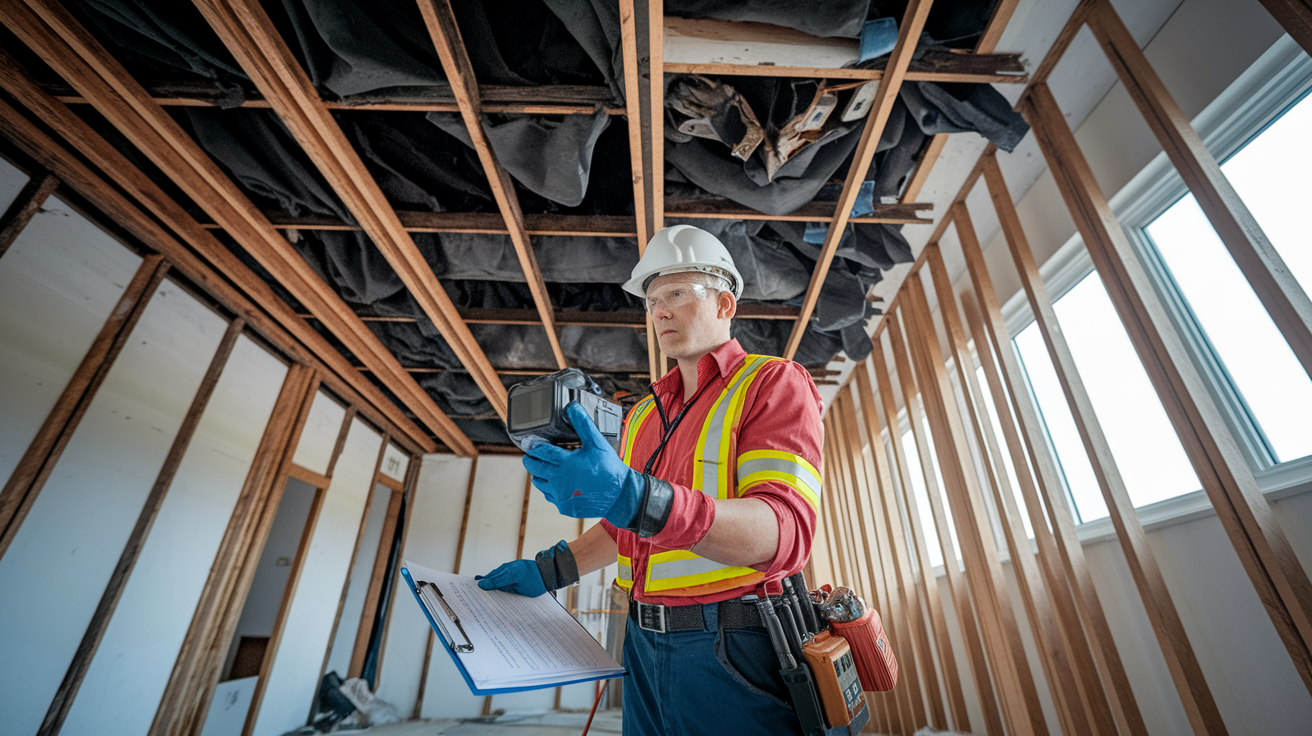
Some ceiling leaks exceed DIY capabilities, no matter how handy you are. Attempting complex repairs yourself often costs more in the long run when initial mistakes require professional correction anyway. Safety risks increase when you’re working with structural damage, hidden electrical systems, or potential health hazards.
Call professionals for these situations:
- Extensive structural damage showing sagging joists, cracked framing, or ceiling sections at risk of collapse
- Hidden plumbing leaks requiring opening walls, rerouting pipes, or accessing crawl spaces and subfloors
- Mold contamination covering more than 10 square feet or showing black, green, or fuzzy growth patterns
- Electrical wiring running through or near the affected ceiling area, especially active junction boxes or fixtures
- Roof repairs beyond simple shingle replacement, including flashing work, deck damage, or structural concerns
- Recurring leaks from sources you can’t identify after reasonable inspection efforts
- Insurance claim requirements needing detailed documentation, estimates, and licensed contractor invoices
- HVAC system complications involving condensate lines, ductwork modifications, or equipment access
Different leak sources require specific expertise. A licensed plumber handles supply line leaks, drain failures, and fixture problems. Roofing contractors specialize in exterior leak sources, from shingle damage to flashing repairs. Water damage restoration companies manage extensive ceiling damage involving multiple trades, structural concerns, and coordinated drying, repair, and finishing work. For situations requiring immediate response, such as burst pipes or severe active leaks, emergency services provide rapid stabilization and damage control 24 hours a day.
Professionals bring specialized equipment you can’t easily rent or buy. Moisture meters detect hidden water in walls and ceilings without opening exploratory holes. Thermal imaging cameras show temperature differences that reveal water paths and saturation areas invisible to normal inspection. Industrial dehumidifiers and air movers dry structures faster and more thoroughly than consumer equipment. Professionals also know building codes, permit requirements, and proper repair sequences that prevent future problems. During assessment, expect professionals to inspect the damage area, trace the water source, test surrounding areas for hidden moisture, explain repair scope and timeline, and provide detailed written estimates before starting work. Most ceiling leak repairs take 3 to 7 days once started, depending on drying requirements and repair complexity.
Ceiling Water Leak Repair Costs and Budget Planning

Ceiling leak repair costs swing from under $100 for small DIY patches to several thousand dollars for extensive professional restoration. The damage extent drives costs more than any other factor. A fist sized stain with solid drywall underneath costs far less than a sagging 8 foot section requiring joist repairs. Accessibility matters too. First floor ceilings with open attics above cost less to fix than second story repairs requiring roof work. Regional labor rates vary significantly, and material choices affect the final bill.
DIY repairs save labor costs but require your time, tools, and skill. Professional services cost more upfront but include expertise, proper equipment, warranty coverage, and faster completion. For small cosmetic repairs, DIY makes financial sense. For anything involving structural work, plumbing, or electrical systems, professional help usually costs less than fixing DIY mistakes.
| Repair Type | DIY Cost Range | Professional Cost Range | Typical Timeline |
|---|---|---|---|
| Minor patch and paint | $50 to 150 | $200 to 400 | 1 to 2 days |
| Drywall section replacement | $100 to 300 | $400 to 800 | 2 to 4 days |
| Plumbing repair + ceiling fix | $200 to 500 | $800 to 2,000 | 3 to 5 days |
| Roof repair + ceiling restoration | $300 to 800 | $1,500 to 4,000 | 5 to 7 days |
| Full ceiling replacement | $500 to 1,500 | $2,000 to 6,000 | 5 to 10 days |
Hidden costs appear during repairs. Microbial growth remediation adds $500 to $3,000 depending on contamination extent. Structural reinforcement for damaged joists runs $400 to $1,200 per joist. Some municipalities require permits for ceiling work, adding $50 to $300 in fees. When hiring contractors, get three written estimates detailing materials, labor, timeline, and warranty coverage. Verify licensing and insurance before signing contracts. Budget planning depends on whether you’re handling an emergency or planning repairs. Emergency repairs often cost 20 to 30 percent more due to urgent response needs and after hours labor rates. Planned repairs let you shop contractors, schedule during slower seasons, and negotiate better rates. Set aside 15 to 20 percent above the highest estimate for unexpected complications discovered once work begins.
Navigating Insurance Claims for Ceiling Water Damage

Homeowner’s insurance typically covers sudden, accidental water damage but excludes gradual leaks and maintenance neglect. A burst pipe flooding your ceiling overnight gets covered. A slow drip from worn plumbing that stained the ceiling over six months doesn’t. Insurance companies distinguish between “sudden and accidental” events versus “maintenance issues.” Understanding this difference before filing prevents claim denials and frustration.
Document everything immediately when water damage occurs. Take photos showing the ceiling damage from multiple angles, capturing both close ups of the affected area and wide shots showing the room context. Record video walking through the space, narrating what you see and when you discovered the problem. Write detailed notes describing the leak source, when you first noticed it, and what emergency measures you took. Get professional assessments quickly. Contractors, plumbers, or restoration companies provide written evaluations documenting damage extent, probable cause, and repair estimates. This documentation becomes essential when the insurance adjuster visits.
Start your claim by calling your insurance company’s claims line within 24 hours of discovering major damage. Provide your policy number, explain what happened in simple terms, and ask about your next steps. The company assigns an adjuster who schedules an inspection visit, usually within 3 to 7 days. During the adjuster visit, show all damage areas, provide your documentation, and explain the timeline. The adjuster evaluates coverage, determines claim value, and explains what the policy will pay. After approval, you receive a repair authorization and initial payment, typically covering a portion of costs upfront with the remainder paid after completion. Keep all receipts, invoices, and photos throughout repairs. Insurance companies require final documentation before releasing remaining claim funds.
Claims get denied when homeowners can’t prove the damage happened suddenly, when evidence suggests neglect over time, when the policy specifically excludes the damage cause, or when documentation is insufficient. Avoid denials by maintaining home maintenance records showing regular inspections and upkeep. Report leaks immediately rather than waiting until damage worsens. Take thorough documentation at the first sign of problems. Read your policy carefully, understanding what’s covered and excluded. Most policies cover burst pipe damage but exclude roof leaks from poor maintenance, foundation seepage, sewer backups (without additional coverage), and damage from pests or vermin. When claim denial seems unfair, request a detailed written explanation citing specific policy language, then consider hiring a public adjuster who works for you rather than the insurance company.
Preventing Future Ceiling Water Leaks in Your Home

Prevention stops ceiling leaks before they start, protecting your home’s structure, your belongings, and your repair budget. A proactive approach costs far less than emergency repairs and restoration work. Prevention isn’t a single task. It’s ongoing attention to the systems and structures that keep water where it belongs.
Schedule these regular maintenance tasks:
- Annual roof inspections checking shingles, flashing, and roof penetrations for wear or damage
- Gutter cleaning every 3 months, more often if trees overhang your roof, preventing overflow and ice dams
- Plumbing fixture checks every 6 months, inspecting supply lines, drain connections, and toilet seals for leaks or corrosion
- Caulk and grout inspection annually around tubs, showers, and sinks, recaulking when gaps appear
- Appliance hose replacement every 5 years for washing machines and water heaters, even if hoses look fine
- HVAC condensation line clearing annually before cooling season, preventing clogs that cause overflow
Build monitoring habits that catch problems early:
- Monthly ceiling inspections walking through your home looking for new stains, soft spots, or paint changes
- Listening for dripping sounds especially after using plumbing fixtures or during and after rain
- Checking for musty odors that indicate hidden moisture accumulation
- Monitoring water bills for unexplained increases suggesting hidden leaks
- Attic checks within 24 hours after heavy rain, looking for wet insulation or roof deck staining
Create a home maintenance calendar noting when each task is due. Set phone reminders for seasonal work like gutter cleaning and roof inspections. Consider professional preventive inspections every 2 to 3 years. Plumbers can pressure test supply lines and inspect fixtures. Roofing contractors provide detailed assessments catching problems before they leak. HVAC technicians service condensation systems during annual tune ups. Smart home leak detection systems now monitor for water where it doesn’t belong. Small sensors placed under sinks, near water heaters, and around appliances alert your phone when they detect moisture. Whole house systems shut off main water supply automatically when flow patterns indicate possible leaks. These technologies cost $100 to $500 depending on coverage extent, catching problems that save thousands in ceiling repairs.
Final Words
Ceiling water leak repair starts with fast action to contain the damage, careful work to find the source, thorough drying to prevent mold, and patient rebuild steps that blend the fix into your ceiling.
The work matters because it protects your home from worse structural problems and keeps your space livable.
Some repairs you can handle with the right tools and time. Others need a professional who can trace hidden leaks, assess structural impact, or match textures cleanly.
Either way, you’re not stuck guessing. You know what to stabilize first, what to inspect, and when to call for backup.
FAQ
What do you do if your ceiling is leaking water?
If your ceiling is leaking water, immediately place buckets under active drips, move furniture and valuables away from the area, and shut off electricity to the affected room. Turn off the water supply if you suspect a plumbing source. Create a small controlled drainage hole at the leak center using an awl or screwdriver to direct water into a bucket rather than letting it spread through the drywall. Cover floors with tarps to catch dripping water and falling debris while you identify and stop the source.
How much does it cost to fix a ceiling leak?
Ceiling leak repair costs vary from $150 to $500 for minor DIY patch and paint work to $1,500 to $4,000 for professional drywall section replacement and finishing. If plumbing repairs are needed alongside ceiling fixes, expect $800 to $3,000 combined. Full ceiling replacement with underlying cause repair can range from $2,500 to $8,000 depending on damage extent, accessibility, and whether structural reinforcement is required.
Does home insurance cover ceiling leaks?
Home insurance typically covers ceiling leaks from sudden events like burst pipes or storm damage but excludes gradual leaks from poor maintenance or pre-existing conditions. Coverage depends on the documented cause, your specific policy terms, and whether you’ve maintained regular home upkeep records. Document damage immediately with photos and professional assessments to support your claim, and notify your insurer within 24 to 48 hours of discovery.
Can you repair a water damaged ceiling?
You can repair a water damaged ceiling after the source is stopped and all affected materials are completely dry. Minor damage may only need spackling and paint, while moderate damage requires cutting out wet drywall back to ceiling joists, drying the cavity with fans for 24 to 72 hours, then installing replacement drywall with joint compound and finishing. Severe structural damage or mold contamination beyond 10 square feet requires professional restoration to ensure safe, lasting repairs.