
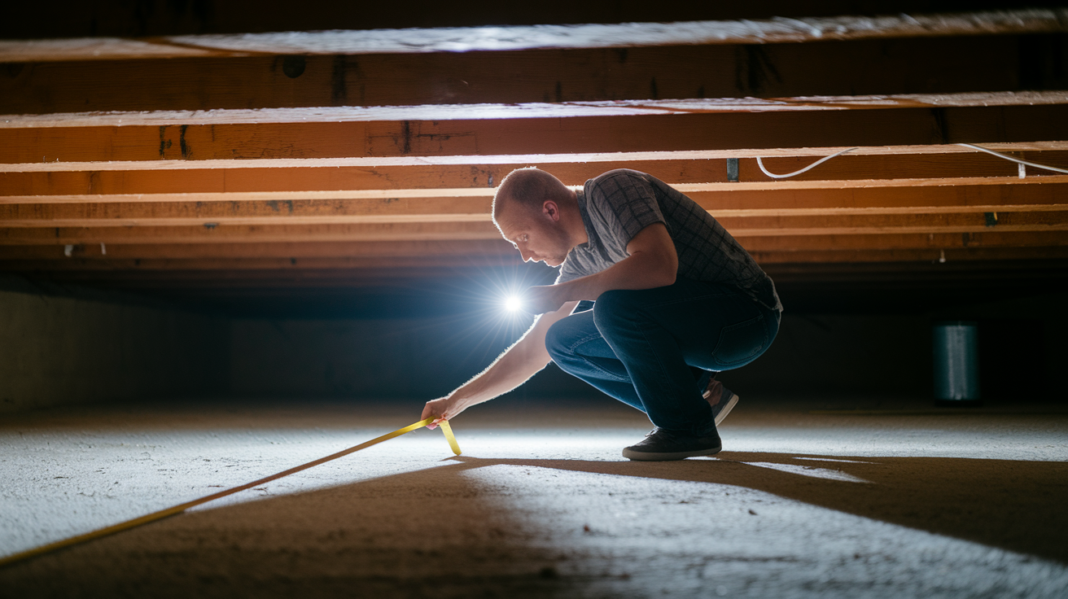

Most homeowners buy crawlspace dehumidifiers based on square footage alone, then wonder why humidity stays high or energy bills spike. That’s because accurate sizing depends on four factors working together: your space’s square footage, how well it’s sealed, current humidity level, and your climate zone. Get the calculation right and you’ll control moisture efficiently without wasting energy. Get it wrong and you’re either running a unit that can’t keep up or burning through electricity on an oversized machine that cycles on and off until it breaks.
Determining Required Dehumidifier Capacity: A Complete Calculation Method
Getting the size right matters because undersized dehumidifiers can’t pull enough moisture to hit your target humidity. They just run nonstop without controlling anything. Oversized units waste energy and flip on and off too much, which burns out parts faster and costs more to run. Accurate crawl space dehumidifier sizing means looking at four things at once: square footage, how sealed your space is, current humidity level, and your climate zone. This way you get the complete answer upfront instead of guessing or trusting manufacturer claims that don’t match real conditions.
Here’s the formula that ties everything together. Start by calculating crawl space area in square feet (length times width). For weird layouts, measure each section separately and add them up. Next, figure out your sealing classification multiplier based on how it’s built: Loosely Sealed spaces (older homes with minimal air sealing and foundation cracks) get 1.4x, Moderately Sealed spaces (newer construction with some air sealing and intact foundations) use 1.0x, and Tightly Sealed or Encapsulated spaces (new builds meeting Energy Star standards or confirmed air leakage of 3 ACH50 or less) use 0.7x. Then measure your current relative humidity with a hygrometer. Don’t guess. Apply the humidity adjustment: 50 to 60% RH uses 1.0x, 60 to 70% RH uses 1.3x, and above 70% RH uses 1.5x. Finally, apply your climate zone factor: hot, humid regions like the Southeast and Gulf Coast get 1.2x, moderate climates get 1.0x, and arid regions get 0.8x. Put it together: Required Capacity (pints/day) = [Base Square Footage ÷ 50] × Sealing Multiplier × Humidity Multiplier × Climate Multiplier.
Let’s walk through a real example. Say you’ve got a 1,500 square foot crawl space in coastal Georgia. It’s loosely sealed (built in 1985, no encapsulation, visible foundation cracks), current RH reads 68% on your hygrometer, and you’re in a hot, humid climate. Here’s the math: [1,500 ÷ 50] × 1.4 × 1.3 × 1.2 = 30 × 1.4 × 1.3 × 1.2 = 65.5 pints per day. Round up to the next available capacity, which means you need a 70 pint dehumidifier. Dehumidifier performance is measured in pints per day at standard AHAM conditions (80°F and 60% RH), so manufacturers rate units under controlled test conditions. Your actual space will vary. The formula accounts for those variations.
| Square Footage | Loosely Sealed / High Humidity (pints/day) | Moderately Sealed / Moderate Humidity (pints/day) | Tightly Sealed / Low Humidity (pints/day) |
|---|---|---|---|
| Under 500 | 35-45 | 25-35 | 20-28 |
| 500-1000 | 45-60 | 35-50 | 28-38 |
| 1000-1500 | 60-80 | 50-65 | 38-50 |
| 1500-2000 | 80-100 | 65-80 | 50-65 |
| 2000-2500 | 100-120 | 80-95 | 65-80 |
| Over 2500 | 120+ | 95+ | 80+ |
This calculation gives you the complete sizing answer by accounting for all variables upfront. The sections that follow cover refinements like low temperature operation, drainage options, and placement strategies, but this formula gives you the core capacity number you need to start shopping confidently.
How Crawl Space Sealing and Encapsulation Status Affects Capacity Requirements
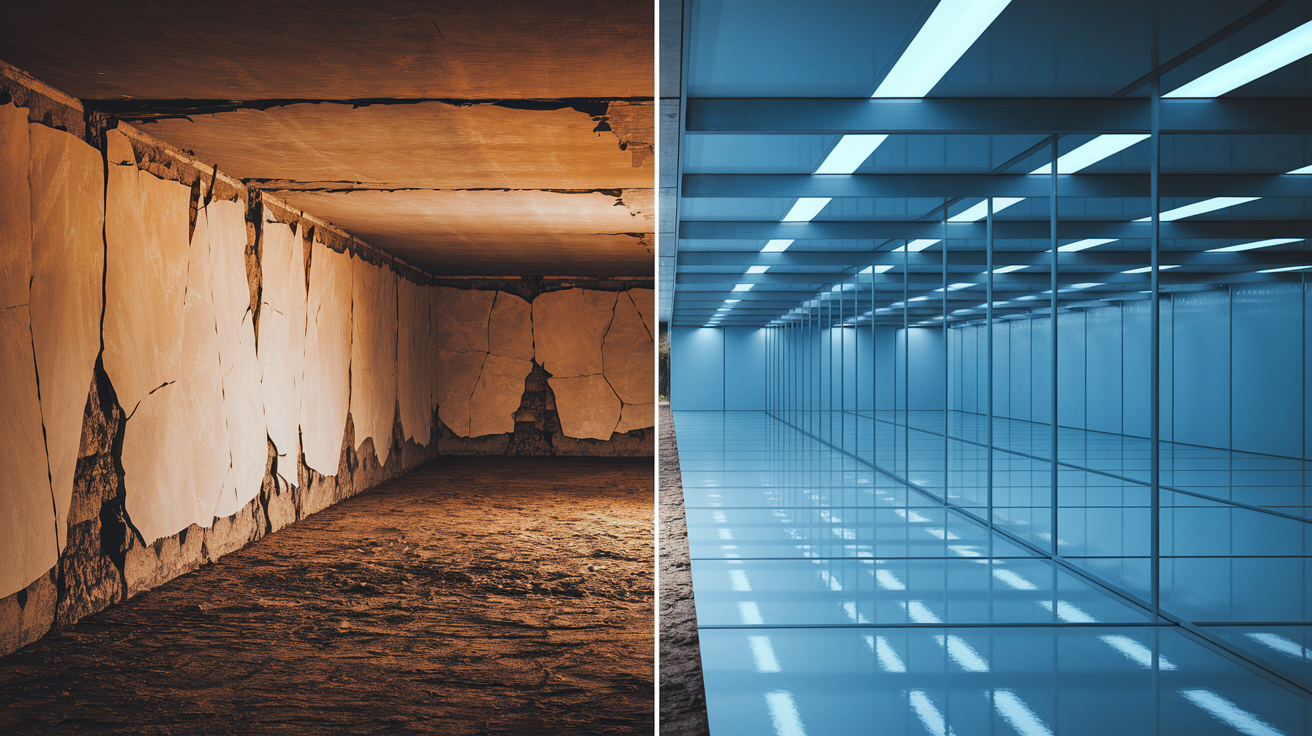
Construction quality and sealing status create vastly different moisture loads even when square footage is identical. A 1,200 square foot tightly encapsulated crawl space in a new home needs roughly half the dehumidifier capacity of a 1,200 square foot vented dirt floor crawl space in an older house. Understanding these three classifications helps you apply the right multiplier and avoid buying a unit that’s either too weak or unnecessarily powerful.
Loosely Sealed Crawl Spaces
Loosely sealed crawl spaces are typical in older structures built before modern air sealing practices became standard. You’ll find minimal or no vapor barriers, foundation walls with visible cracks or gaps, penetrations around pipes and utilities that were never sealed, and vented openings that allow exterior air to flow freely. These spaces experience constant moisture intrusion from two sources: humid outdoor air infiltrating through vents and gaps, and ground moisture migrating up through exposed soil. The dehumidifier is fighting a continuous battle against new moisture entering the space every hour. That’s why these require 40% higher capacity per square foot (the 1.4x multiplier). If your crawl space has dirt floors, open vents, and you can see daylight through foundation cracks, you’re looking at a loosely sealed space.
Moderately Sealed Crawl Spaces
Moderately sealed crawl spaces represent newer construction or older homes that have been partially upgraded. You’ll typically find some form of vapor barrier covering at least the ground, foundations in good condition without major cracks, vents that have been sealed or reduced, and some air sealing around major penetrations. These spaces have balanced moisture loads. Not fighting constant heavy infiltration, but not completely eliminating moisture sources either. They use the standard baseline capacity calculation (1.0x multiplier) because they represent typical middle ground conditions. Most crawl spaces built in the last 20 years that haven’t been fully encapsulated fall into this category.
Tightly Sealed and Encapsulated Crawl Spaces
Tightly sealed and encapsulated crawl spaces are found in new construction meeting LEED, Energy Star, or Passive House standards, or in older homes that have been professionally encapsulated. These spaces have complete vapor barriers covering both the ground and crawl space walls, sealed foundation penetrations, closed and sealed vents, and confirmed air leakage testing showing 3 ACH50 (air changes per hour at 50 pascals pressure) or less. Encapsulation provides better air circulation for more consistent humidity distribution and allows 30% lower capacity per square foot (the 0.7x multiplier) because the primary moisture sources (ground evaporation and outside air infiltration) have been largely eliminated. The dehumidifier’s role shifts from fighting constant new moisture to maintaining stable conditions in a controlled environment.
Encapsulation versus ventilated status fundamentally changes what you’re asking the dehumidifier to do. In a vented crawl space, the unit constantly battles humid summer air pouring through foundation vents, which can reach 75% relative humidity in hot, humid climates. In an encapsulated space, the dehumidifier maintains a sealed environment where moisture sources are controlled, making the job easier and allowing smaller capacity units to cover larger areas effectively.
Temperature Range Considerations for Crawl Space Dehumidifier Performance

Crawl space dehumidifiers work most efficiently when operating temperatures stay between 65 and 80 degrees Fahrenheit. When temperatures drop below this range, efficiency decreases because moisture in the air starts freezing on the cooling coils instead of condensing into water that drains away. Ice buildup blocks airflow and stops moisture removal until the unit cycles into defrost mode to melt the ice. In unheated crawl spaces, especially in northern climates or during winter months, temperatures often drop well below 65°F. Standard room dehumidifiers designed for living spaces won’t work.
That’s why crawl space dehumidifiers are built differently. Units specifically designed for crawl spaces can operate at temperatures as low as 33.8°F (1°C), using low temperature compressor technology and automatic defrost cycles to handle cold conditions. If your crawl space regularly sees temperatures below 60°F during any season, you need a unit rated for low temperature operation. Not a higher capacity regular dehumidifier. Seasonal temperature fluctuations also matter. A crawl space might hit 75°F in July but drop to 45°F in January, so year round moisture control requires a dehumidifier with defrost mode that automatically pauses moisture removal, melts accumulated ice, and resumes operation without manual intervention.
Check manufacturer specifications for minimum operating temperature before finalizing your selection. If you live in cold climates where crawl space temperatures drop below 50°F regularly, low temperature operation capability is non negotiable regardless of your calculated pint per day capacity.
CFM Rating and Airflow Requirements for Crawl Space Coverage
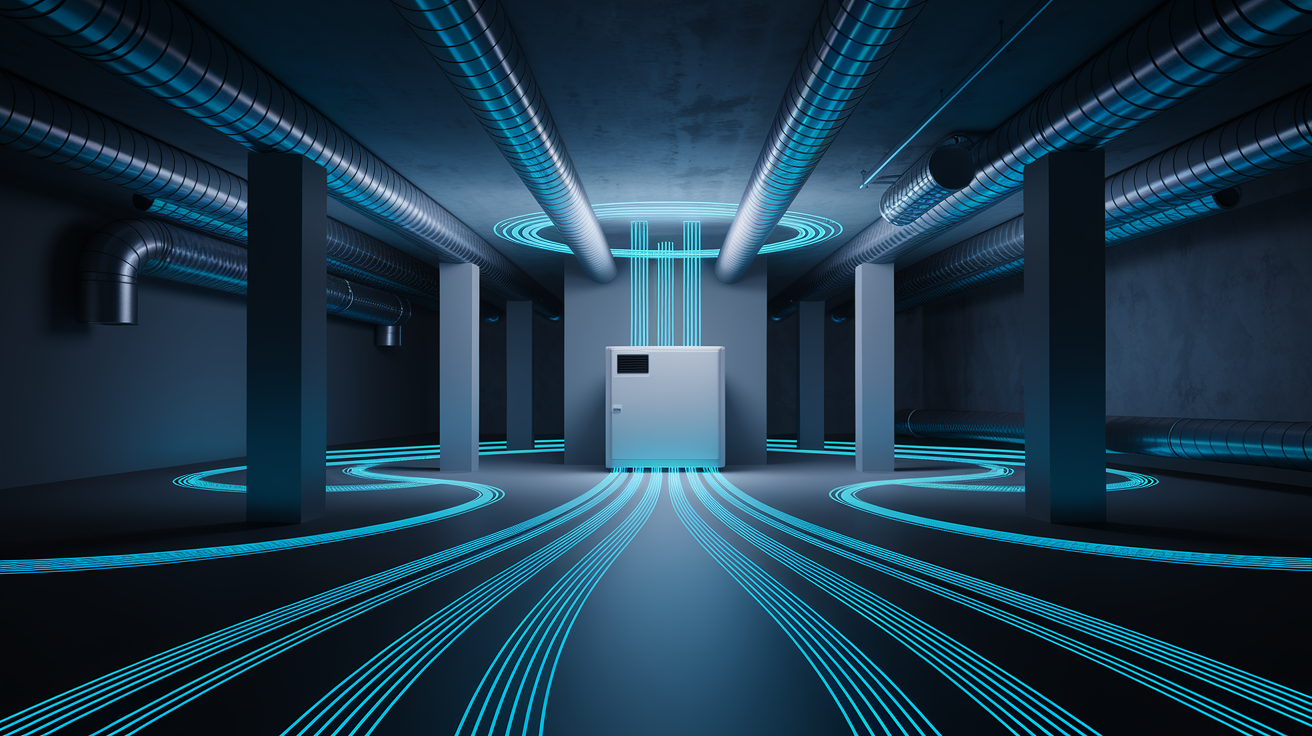
CFM (cubic feet per minute) measures how much air the dehumidifier moves through its system every minute. This matters because the unit can only remove moisture from air that actually passes through it. A dehumidifier with adequate pint per day capacity but insufficient CFM won’t circulate air effectively in larger crawl spaces, leaving pockets of high humidity in corners and far ends while the area near the unit stays dry. Manufacturers state coverage area in square feet, but that coverage assumes the unit’s CFM rating can actually move enough air to reach all parts of the space.
To calculate required CFM, start with your crawl space volume in cubic feet (length × width × height). For effective moisture control, you want the dehumidifier to exchange the total air volume roughly once every hour. A 2,000 square foot crawl space with 3 foot height has 6,000 cubic feet of air. Dividing by 60 minutes means you need at least 100 CFM to turn over the air hourly. Most crawl space dehumidifiers in the 70 pint range move 180 to 220 CFM, which provides adequate circulation for spaces up to 2,500 square feet with typical layouts. Complex layouts with pillars, HVAC ductwork, or multiple rooms may need higher CFM or strategic placement to ensure air reaches all areas.
Several factors affect whether stated CFM will deliver effective coverage. Crawl space layout complexity matters. Open rectangular spaces need less CFM than L shaped or divided areas. Obstacle placement counts too. Dense ductwork, support posts, and stored items block airflow and require higher CFM. Vapor barrier presence makes a difference. Smooth plastic barriers allow better air movement than dirt floors. Duct work options help. Some units allow flexible duct attachment to distribute air to remote corners. And central versus distributed placement changes things. Centrally located units need less CFM than corner installations.
Units with duct attachment capability let you actively distribute conditioned air to crawl space corners that wouldn’t receive adequate airflow from the unit’s natural circulation pattern. If your crawl space extends more than 30 feet in any direction from where you plan to place the dehumidifier, look for models that accept duct attachments or plan to install two smaller units instead of one large centrally located unit.
Regional Climate and Current Humidity Assessment
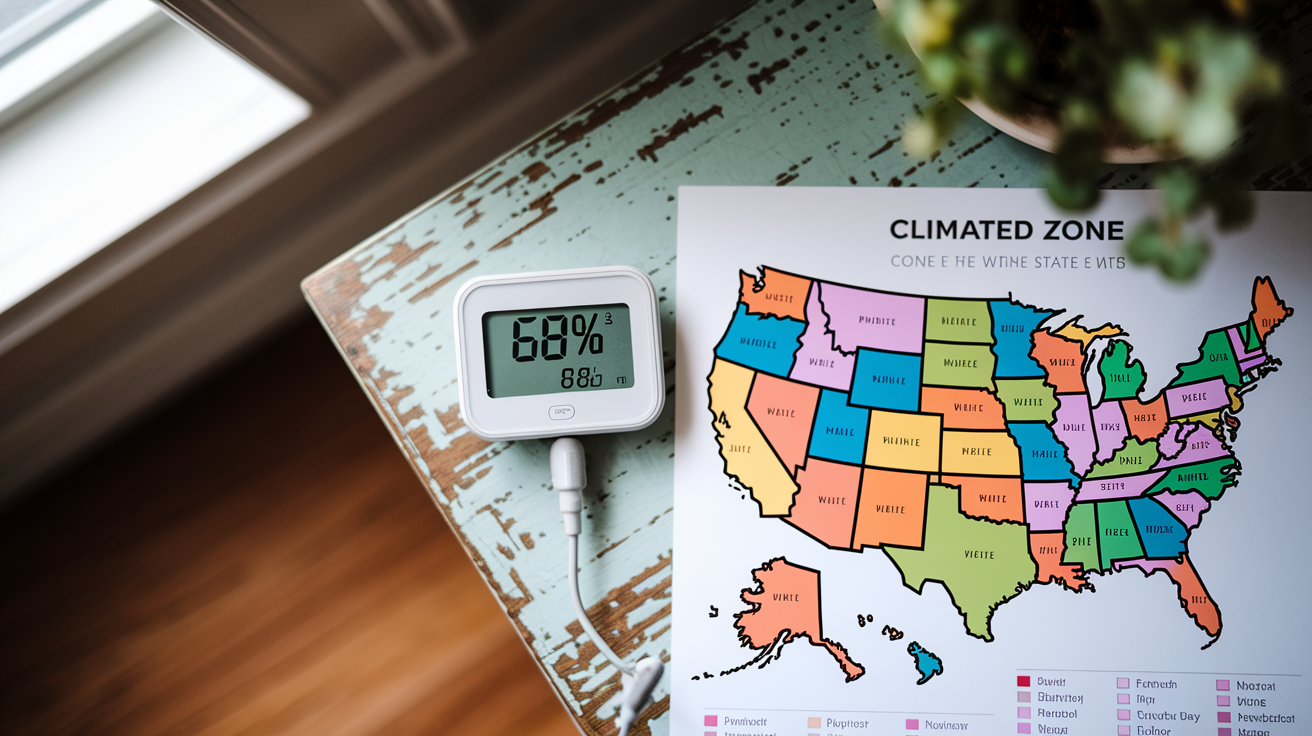
Regional climate conditions create baseline differences in moisture load that identical crawl spaces in different locations must handle. A 1,500 square foot crawl space in coastal South Carolina fights constant 75% summer humidity from hot Gulf air, ground moisture from high water tables, and year round warmth that accelerates evaporation. That same 1,500 square foot crawl space in Phoenix deals with 20% ambient humidity, minimal ground moisture, and dry heat that actually helps keep things dry. Sizing for coastal South Carolina requires higher capacity (the 1.2x climate multiplier) while Phoenix might use a reduced multiplier because the environment naturally suppresses moisture accumulation. Humid continental climates in the Midwest and Northeast, Pacific Northwest coastal regions, and anywhere with sustained rainy seasons all justify upward capacity adjustments.
Measuring your current relative humidity with a hygrometer is essential because perception is unreliable and RH fluctuates throughout the day and night. Your crawl space might read 55% RH at noon but climb to 72% RH at 3 AM when temperatures drop and moisture condenses. Grab a basic digital hygrometer from any hardware store for $15 to 30, and measure actual conditions instead of guessing. Place the hygrometer in your crawl space and check readings at different times over several days to understand your baseline and peak conditions.
Here’s how to properly assess your humidity levels. Measure during the highest humidity season for your region (summer in most areas, rainy season in others) to capture worst case conditions. Test at multiple locations including corners, the center, and near foundation walls since RH can vary significantly across the space. Record readings both morning and evening for 3 to 5 days to capture daily fluctuation patterns. Calculate the average and compare it to the 55% target to determine which adjustment multiplier applies to your sizing calculation.
Target relative humidity for crawl spaces is 30 to 60 percent, with 55 percent being the optimal point to prevent wood rot, mold and mildew growth, and insulation damage from moisture absorption. If your current RH averages 50 to 60%, you’re dealing with moderate conditions that use the standard 1.0x humidity multiplier. If readings consistently show 60 to 70%, apply the 1.3x multiplier because you’re starting from elevated baseline moisture. Above 70% RH requires the full 1.5x multiplier because you’re fighting high moisture loads that allow mold to establish quickly and wood to begin rotting.
Summer humidity in subterranean spaces can reach 75% RH during hot humid months even if outdoor ambient humidity is lower. Crawl spaces stay cooler than outdoor air, which causes moisture to condense as warm humid air enters and cools down. Add soil moisture from saturated ground after heavy rain or from high water tables, and you’re dealing with moisture entering from below while humid air enters from vents or gaps. This combination justifies the higher capacity requirements in humid climates and explains why the same square footage needs different dehumidifier capacity in different parts of the country.
Drainage System Options and Their Role in Dehumidifier Selection
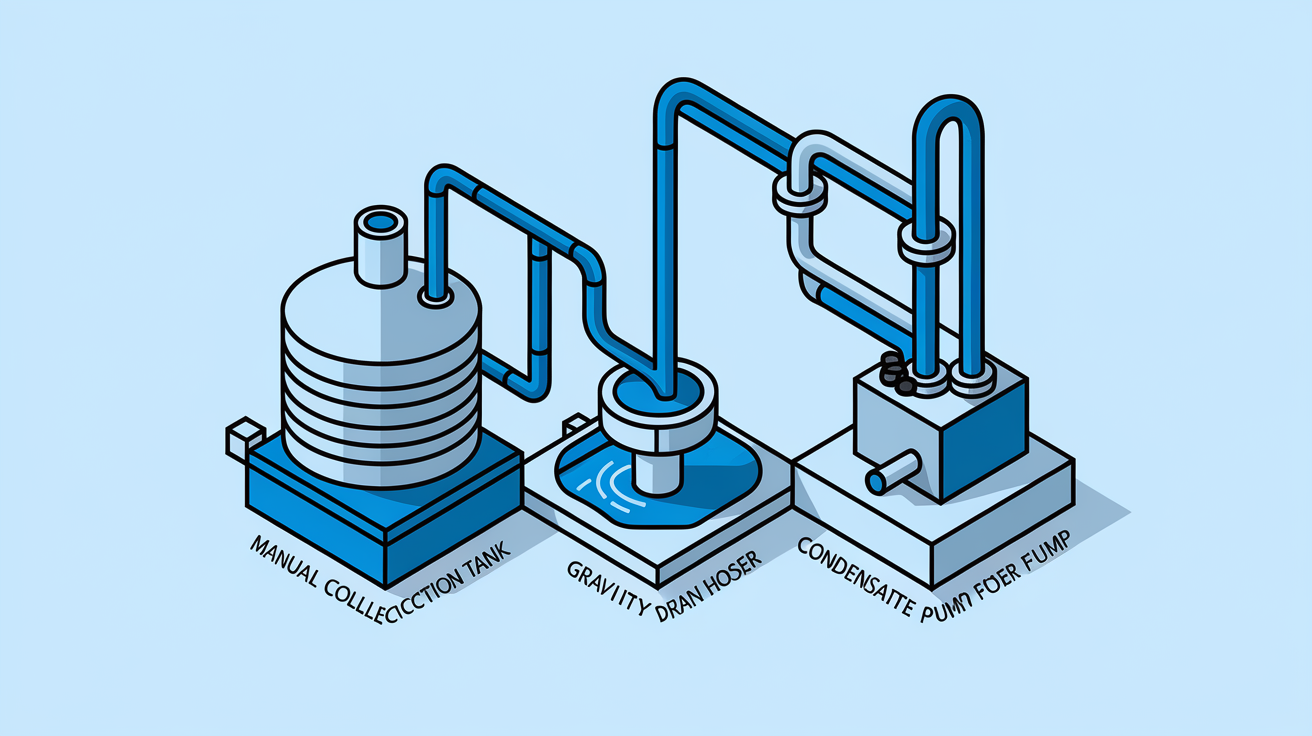
Drainage matters because crawl space dehumidifiers remove water continuously, and that water has to go somewhere. Units with inadequate drainage plans either overflow, shut down when tanks fill, or require constant trips to empty collection buckets. None of which work for crawl spaces you visit maybe twice a year.
Manual Tank Collection
Manual tanks collect condensate water in a removable bucket that you empty by hand. Tank capacities typically range from 1 to 2 gallons, which fills quickly when a 70 pint dehumidifier is removing moisture aggressively. A 70 pint unit running in high humidity can fill a 2 gallon tank in less than a day, meaning you’d need to crawl into the space daily to empty it. This is rarely practical for crawl space applications where access is difficult and visits are infrequent. Manual tanks work for basements where you can check them easily, but crawl spaces need automatic continuous drainage.
Gravity Drain Systems
Gravity drains route condensate water through a hose to a floor drain, daylight drain leading outside, or other drainage point that sits lower than the dehumidifier outlet. Gravity flow requires no pump and no additional power consumption, making it simple and reliable as long as your crawl space has an appropriate drain point below the unit’s drain outlet. Many crawl spaces don’t have floor drains, and exterior drainage only works if your crawl space elevation allows water to flow downhill to the exit point. If you have a floor drain installed or can route a hose to daylight through a foundation penetration with proper downward slope, gravity drain systems work well.
Built In Condensate Pump Options
Built in pumps let you drain water upward and outward to sinks, exterior locations, sump pump basins, or anywhere else regardless of elevation. Pumps typically lift water 15 to 20 feet vertically, which means you can route condensate out through rim joist penetrations, into basement utility sinks, or directly outside even when the crawl space floor sits below the drainage destination. This eliminates the elevation limitations of gravity drains and is the most common solution for crawl space installations. Some systems coordinate with existing sump pumps by routing dehumidifier condensate into the sump basin so one pump handles both water sources.
Plan your drainage solution before finalizing dehumidifier selection to ensure the unit you choose has compatible drainage features. Most crawl space dehumidifiers offer gravity drain connections as standard with optional built in pump upgrades, giving you flexibility to match your space’s infrastructure.
Energy Efficiency and Operating Cost Factors in Sizing

Dehumidifier capacity and power consumption are directly related, but larger units don’t always cost more to operate. A properly sized 70 pint dehumidifier that reaches target humidity and cycles off uses less total electricity than an undersized 50 pint unit that runs continuously without ever controlling the moisture. Dehumidifiers draw anywhere from 4 to 8 amps depending on capacity and compressor size. A 70 pint unit typically uses 5.5 to 6.5 amps at 115 volts, consuming roughly 650 to 750 watts during active operation. Multiply watts by estimated runtime hours to calculate daily and annual energy consumption.
ENERGY STAR certification indicates the unit meets U.S. Environmental Protection Agency efficiency standards, which means it removes more moisture per watt of electricity consumed compared to non certified models. ENERGY STAR labeled dehumidifiers provide significant long term cost savings over the typical 5 to 10 year lifespan. The certification focuses on energy factor ratings that measure pints removed per kilowatt hour, so higher energy factor numbers mean better efficiency. When comparing two dehumidifiers with similar capacity, the ENERGY STAR model might cost $50 to 100 more upfront but save $200 to 400 in electricity over its operational life.
Here are the six key operating cost factors to evaluate. Initial purchase price ranges from $200 for basic 50 pint units to $1,500+ for commercial 110+ pint models with advanced features. Watts per pint removed is an efficiency rating that determines how much electricity is needed to remove moisture. Duty cycle percentage measures how many hours per day the unit actually runs based on moisture load and capacity match. Local electricity rates vary from $0.08 to $0.25 per kWh across different regions, directly affecting annual costs. Maintenance costs include filter replacements, occasional coil cleaning, and potential repairs over lifespan. Expected lifespan matters. Well maintained crawl space dehumidifiers last 5 to 10 years, spreading initial cost across years of service.
Electrical capacity in your crawl space also matters. Most crawl space dehumidifiers run on standard 115 volt household circuits, but you need to verify the circuit can handle the amperage draw. A 70 pint unit drawing 6 amps on a 15 amp circuit leaves adequate headroom, but if you’re adding a dehumidifier to a circuit that already serves crawl space lighting or receptacles, calculate total load to avoid tripping breakers.
Avoiding Critical Sizing Errors
Following the sizing formula helps, but specific mistakes still lead homeowners to select incorrect capacity despite doing the math. Recognizing these errors before you buy saves the cost and hassle of returning an ineffective unit.
Here are the four most common sizing mistakes. First, selecting based on price rather than calculated capacity requirements. Buying a 50 pint unit because it’s $150 cheaper than the 70 pint model your calculation shows you need means you’ll end up with a dehumidifier that runs constantly without reaching target humidity, wasting more money on electricity than you saved upfront. Second, failing to account for moisture sources beyond ambient humidity. The sizing formula assumes normal conditions, but if you have active plumbing leaks, surface water entering during rain, or groundwater seepage through foundation walls, you need to address those water intrusion sources first or significantly increase dehumidifier capacity to compensate. Third, using manufacturer’s maximum coverage area without applying sealing, humidity, and climate adjustments. A dehumidifier rated for “up to 2,600 square feet” achieves that coverage only in tightly sealed spaces with moderate humidity in average climates. If your crawl space is loosely sealed with 70% RH in coastal Florida, that same unit might effectively cover only 1,200 square feet. Fourth, ignoring low temperature operation requirements in cold climates. Buying a standard dehumidifier with adequate pint capacity but no low temperature capability means it stops working during cold months when your crawl space drops below 60°F, leaving you with zero moisture control for half the year.
Signs that sizing was incorrect show up within the first few weeks after installation. If the unit runs continuously 24/7 without reaching your target RH, it’s undersized for the actual moisture load. If it cycles on for 5 to 10 minutes, shuts off for 10 to 15 minutes, and repeats constantly, it’s likely oversized and short cycling, which wears the compressor prematurely. Accelerated wear shows up as louder operation, reduced moisture removal despite continuous runtime, or frost buildup on coils even in moderate temperatures.
Reassess your sizing calculation if the installed dehumidifier doesn’t achieve target humidity levels within 2 to 3 weeks of continuous operation. Either your initial measurements underestimated actual conditions, or there’s an unaccounted moisture source adding load beyond what the formula predicted.
Installation Location and Placement for Optimal Dehumidifier Performance
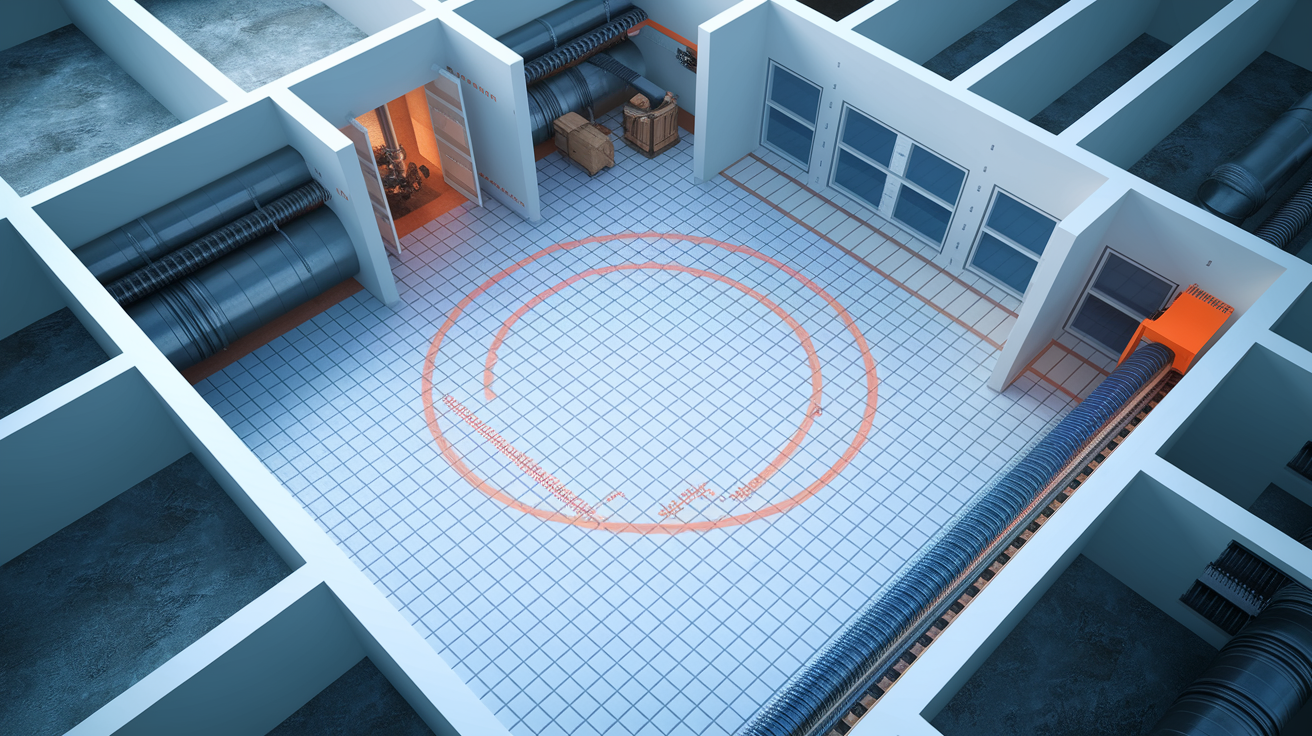
Where you put the dehumidifier determines whether it can actually deliver the coverage area your sizing calculation expects. A properly sized 70 pint unit stuck in a crawl space corner blocked by ductwork won’t circulate air effectively, leaving the far end of the space humid while the area near the unit stays dry.
Central placement versus corner placement makes a measurable difference. Locate the unit as close to the geometric center of your crawl space as practical, which allows air to circulate evenly in all directions. If your crawl space is long and narrow, place the unit somewhere along the centerline rather than at one end. This positioning reduces the maximum distance air must travel to reach any part of the space.
Five placement considerations that affect performance. Central location for even distribution minimizes distance to farthest corners and promotes balanced humidity control across entire space. Clearance from walls matters. Maintain at least 12 inches on all sides for unrestricted air intake and discharge. Access for maintenance is important. Position where you can reach the unit for filter changes without crawling over obstacles or squeezing through tight gaps. Proximity to drainage helps. Locate near floor drains or exterior walls where drainage hoses can route efficiently. And avoid direct contact with vapor barrier. Elevate unit on plastic blocks or concrete pavers to prevent weight from tearing encapsulation material.
Unobstructed air intake and discharge keep the dehumidifier running at maximum efficiency. Don’t push the unit tight against foundation walls, stack items around it, or let insulation drape over vents. Air needs to flow freely into the intake grille, through the cooling coils, and out the discharge without fighting obstacles. Placing the unit where HVAC ductwork or support posts don’t block airflow paths helps circulation reach all areas.
Access requirements matter more than you’d think for equipment that lasts 5 to 10 years. You’ll need to reach the unit at least quarterly to check filters, verify operation, and confirm drainage is working. If you place it in the most remote corner where you can barely reach it now, you won’t maintain it properly, and performance will degrade as filters clog and efficiency drops.
Product Capacity Ranges and Price Considerations by Application
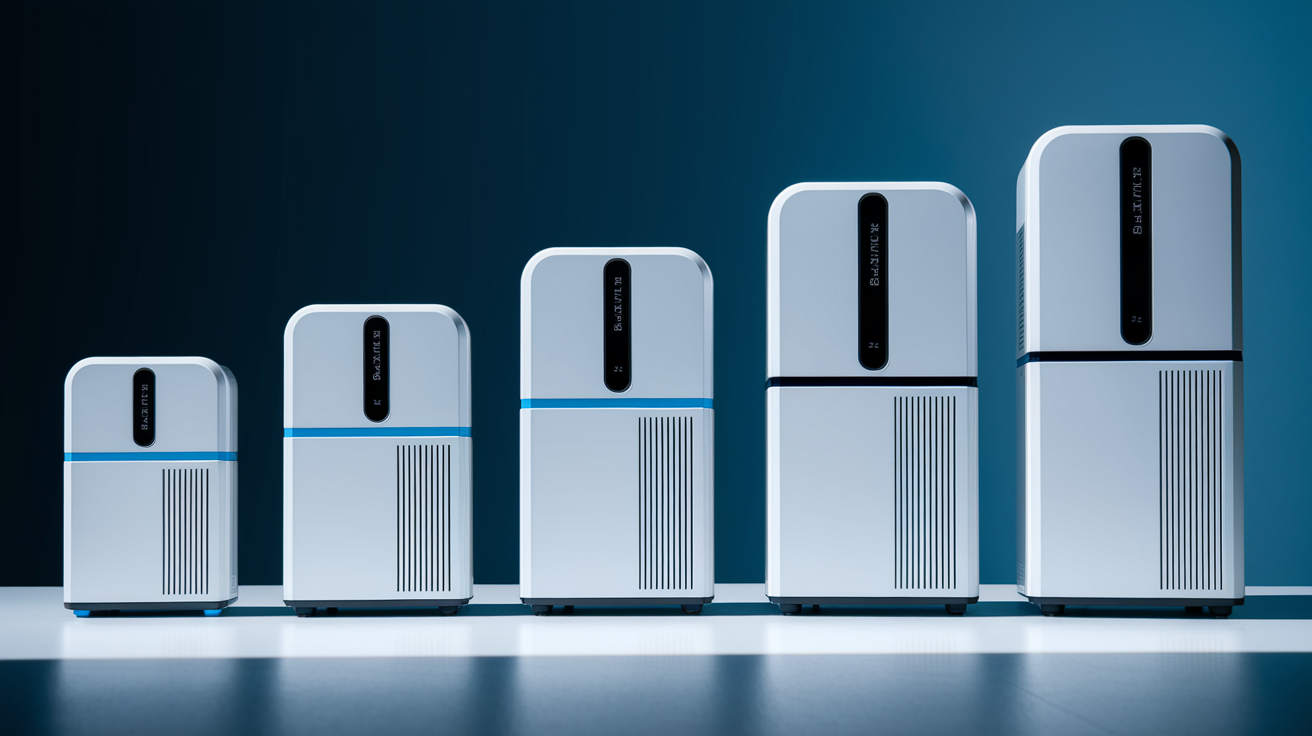
Crawl space dehumidifiers for residential applications typically range from 30 to 110 pints per day capacity, which covers spaces from small 400 square foot areas up to large 3,000+ square foot crawl spaces. Commercial grade units start at 110 pints and extend to 300 pints per day for large buildings, warehouses, or multi unit applications, but most single family homes don’t need commercial capacity.
Residential grade and commercial grade dehumidifiers differ in construction and expected duty cycle. Residential units use lighter cabinets, standard compressors designed for intermittent operation, and basic controls suited for homeowner use. Commercial units feature reinforced steel cabinets, heavy duty compressors built for continuous 24/7 operation, higher CFM ratings for moving air through larger spaces, and often include remote monitoring and control capabilities. These construction differences justify the significant price gap between a residential 70 pint unit at $800 and a commercial 135 pint unit at $2,200.
Five capacity tiers with approximate price ranges and applications. 30 to 50 pints costs $250 to 450 for small crawl spaces under 1,000 sq ft with moderate sealing and average humidity. 50 to 70 pints costs $500 to 900, the most common residential range for 1,000 to 2,000 sq ft crawl spaces with typical moisture loads. 70 to 95 pints costs $800 to 1,200 for larger crawl spaces 2,000 to 2,800 sq ft or smaller spaces with high humidity and loose sealing. 95 to 135 pints costs $1,400 to 2,000 for large residential crawl spaces over 2,800 sq ft or transition to light commercial applications. And 135+ pints commercial costs $2,000 to 5,000+ for multi unit buildings, commercial structures, or extreme moisture conditions requiring industrial capacity.
Warranty coverage expectations correlate with price and build quality. Budget residential units typically offer 1 year limited warranties covering defects but not wear items like compressors. Mid range residential dehumidifiers include 2 to 3 year warranties with 5 year compressor coverage. Premium residential and commercial units often provide 5 year full warranties recognizing that continuous duty construction should deliver reliable performance throughout the expected 5 to 10 year lifespan. Extended warranty coverage signals manufacturer confidence in durability, which matters when you’re installing equipment in a crawl space you won’t check frequently.
Price correlates with capacity, build quality, and expected lifespan, but cheapest isn’t always most expensive in the long run. A $300 unit that fails after 3 years costs more over 10 years than a $900 unit that runs reliably for the full decade.
When to Seek Professional Assessment for Crawl Space Sizing
DIY sizing calculations work well for straightforward situations: dry crawl space that needs humidity maintenance, typical construction, no visible moisture damage, and no complications beyond selecting appropriate capacity. Complex scenarios benefit from professional evaluation before you spend money on equipment.
Six situations that indicate professional assessment is recommended. Active flooding or standing water indicates drainage problems or groundwater intrusion requiring remediation before dehumidification. Visible mold growth covering more than 10 square feet suggests moisture problems severe enough to need remediation, not just dehumidification. Structural damage including rotted floor joists, sagging subfloors, or crumbling foundations shows moisture has caused damage requiring repair, not just control. Failed previous attempts where installed dehumidifiers couldn’t control humidity points to moisture sources or conditions exceeding equipment capacity. Building code requirements for new construction or major remodeling may mandate specific moisture control strategies, ventilation rates, or equipment certifications. And insurance claims for water damage requiring documentation needs professional assessment, moisture mapping, and scope of work for remediation.
Professional assessment includes tools and expertise beyond basic square footage calculation. Moisture meter readings measure actual moisture content in wood framing, subfloors, and foundation walls to identify problem areas and track progress. Thermal imaging cameras reveal hidden moisture intrusion, air leaks, and insulation defects that affect sizing requirements. Blower door testing measures actual air leakage rates (ACH50) to determine if your crawl space truly qualifies as tightly sealed or if it’s leakier than construction age suggests. Comprehensive moisture source identification distinguishes between ground moisture, air infiltration, plumbing leaks, and condensation so solutions address root causes.
Professionals identify moisture sources you might miss. Condensation on cold water pipes, small plumbing leaks behind vapor barriers, or groundwater wicking through foundation walls. Buying a dehumidifier without addressing active water intrusion wastes money on equipment that fights an unwinnable battle. Professional sizing prevents costly mistakes and ensures building code compliance when required, giving you confidence the solution will actually work.
Maintenance Requirements and Performance Monitoring After Installation
Routine maintenance keeps your crawl space dehumidifier removing moisture effectively throughout its 5 to 10 year lifespan. Filter cleaning or replacement is the most frequent task. Plan on checking filters monthly and cleaning or replacing them every 2 to 3 months depending on crawl space dust levels. Dirty filters restrict airflow, reduce moisture removal efficiency, and force the compressor to work harder, wasting energy and shortening equipment life. Most crawl space dehumidifiers use washable filters you can rinse and reuse, while others need replacement filters available from the manufacturer.
Performance monitoring verifies the sized unit is actually maintaining target relative humidity. Use the dehumidifier’s built in humidistat if it has one, or place a separate hygrometer in the crawl space to track RH independently. Target range is 30 to 60 percent, with 55 percent being optimal for preventing wood rot, mold, and insulation damage. Check readings weekly for the first month after installation to confirm the unit is reaching target levels, then shift to monthly checks once performance stabilizes.
Five performance check steps for quarterly verification. Verify RH levels stay consistently within 30 to 60% range using hygrometer readings at multiple locations. Check drainage operation by confirming water flows freely through hose or pump operates when unit runs. Inspect filters for dust buildup and clean or replace if airflow seems reduced. Monitor runtime cycles to ensure unit reaches setpoint and shuts off rather than running continuously. Review energy consumption by comparing monthly electricity usage to baseline to spot efficiency problems.
Expected lifespan of 5 to 10 years with proper maintenance means the unit should run reliably for most of a decade if you keep up with basic care. Signs that sizing was incorrect or the unit is failing include inability to reach target RH despite continuous operation (undersized or failing compressor), extremely short on/off cycles every 5 to 10 minutes (oversized), and steadily increasing energy consumption over time (dirty coils or refrigerant leak reducing efficiency).
If RH readings stay above 60% despite the dehumidifier running constantly, either your sizing calculation underestimated actual moisture load or an unaddressed moisture source is adding water faster than the unit can remove it. Reassess conditions and consider whether you need higher capacity or must fix water intrusion problems first.
Final Words
Crawlspace dehumidifier sizing relies on accurate square footage calculation combined with your space’s sealing status, current humidity measurement, and climate zone reality.
The four-factor formula walks you through base capacity, then adjusts for what actually affects moisture load in your specific situation.
Measure your dimensions. Check your RH with a hygrometer. Apply the multipliers. Match the result to a unit that fits your drainage setup and electrical capacity.
When you get the sizing right the first time, you avoid undersized units that can’t keep up and oversized units that waste energy short cycling. Your crawl space stays at that stable 55% RH that protects your structure.
FAQ
What size dehumidifier for a 2000 sq ft house?
A 2000 square foot house typically requires a dehumidifier with 65 to 100 pints per day capacity, depending on sealing quality, current humidity levels, and climate zone. Loosely sealed spaces with high humidity need larger units, while tightly sealed encapsulated crawl spaces can use smaller capacities.
How do I calculate what size dehumidifier I need?
To calculate what size dehumidifier you need, multiply your square footage divided by 50, then adjust using multipliers for sealing type, current relative humidity, and climate zone. For example, a 1,500 square foot loosely sealed crawl space with 68% RH in a hot-humid climate requires approximately 65 pints per day capacity.
Is it worth putting a dehumidifier in a crawl space?
Putting a dehumidifier in a crawl space is worth it because it prevents wood rot, mold growth, insulation damage, and structural moisture problems by maintaining optimal relative humidity between 30 and 60 percent. Crawl spaces without dehumidification can reach 75% humidity during hot humid summer months, causing serious damage.
What’s the best setting for a dehumidifier in a crawl space?
The best setting for a dehumidifier in a crawl space is 55% relative humidity, which prevents wood rot, mold and mildew growth, and insulation damage while avoiding over-drying. Use a hygrometer to verify actual humidity levels rather than relying on perception, as RH fluctuates throughout day and night.
What happens if I choose an undersized dehumidifier?
An undersized dehumidifier fails to remove sufficient moisture from your crawl space, runs continuously without reaching target humidity levels, and cannot prevent mold growth or structural damage. Units must match calculated capacity requirements based on square footage, sealing quality, current humidity, and climate conditions.
What happens if I choose an oversized dehumidifier?
An oversized dehumidifier wastes energy, cycles on and off too frequently causing excessive wear, and may fail to run long enough for proper air circulation. Proper sizing using square footage and condition multipliers prevents both energy waste and premature equipment failure.
How do I measure my crawl space square footage for sizing?
To measure your crawl space square footage for sizing, multiply length times width for rectangular spaces, or calculate each section separately and add totals for irregular layouts. Multiply length, width, and height together to determine total cubic feet if CFM ratings matter for your application.
Do encapsulated crawl spaces need smaller dehumidifiers?
Encapsulated crawl spaces need 30% smaller dehumidifiers (0.7x multiplier) because complete vapor barriers, sealed penetrations, and controlled air leakage eliminate most moisture sources. Encapsulation provides better air circulation for consistent humidity levels compared to loosely sealed spaces requiring 40% higher capacity.
How does climate zone affect dehumidifier sizing?
Climate zone affects dehumidifier sizing through moisture load multipliers: hot-humid regions require 1.2x capacity, moderate climates use 1.0x standard sizing, and arid regions need only 0.8x capacity. Coastal and humid continental climates create higher baseline moisture loads than mountain or desert regions.
What relative humidity level indicates I need a larger dehumidifier?
Relative humidity levels above 60% indicate you need a larger dehumidifier with capacity adjusted upward by 1.3x for 60-70% RH or 1.5x for RH above 70%. Measure current RH with a hygrometer at multiple locations and times rather than relying on perception.
Can I use gravity drain with my crawl space dehumidifier?
You can use gravity drain with your crawl space dehumidifier only if floor drains or exterior drainage points exist at lower elevation than the unit. Built-in condensate pumps enable drainage to any location including up and out, making them more practical for most crawl space installations.
How does crawl space temperature affect dehumidifier performance?
Crawl space temperature affects dehumidifier performance because efficiency decreases below the optimal 65 to 80 degree Fahrenheit range as moisture freezes on coils. Units designed for crawl spaces can operate as low as 33.8 degrees Fahrenheit using automatic defrost modes for year-round operation.
What CFM rating do I need for my crawl space?
CFM rating needed for your crawl space depends on cubic footage and desired air exchanges per hour, with proper air circulation ensuring moisture removal reaches corners and distant areas. Central placement with unobstructed airflow provides better coverage than perimeter placement in complex layouts.
How do I know if my dehumidifier is correctly sized after installation?
You know your dehumidifier is correctly sized after installation if it maintains target relative humidity of 55% within 2-3 weeks, cycles normally rather than running continuously, and achieves consistent readings throughout the space. Inability to reach target RH or excessive short cycling indicates incorrect sizing.
Should I choose ENERGY STAR rated crawl space dehumidifiers?
You should choose ENERGY STAR rated crawl space dehumidifiers because they meet EPA energy efficiency standards and provide significant long-term cost savings over typical 5-10 year equipment lifespan. Efficient models reduce operating costs while maintaining effective moisture removal for continuous crawl space operation.