
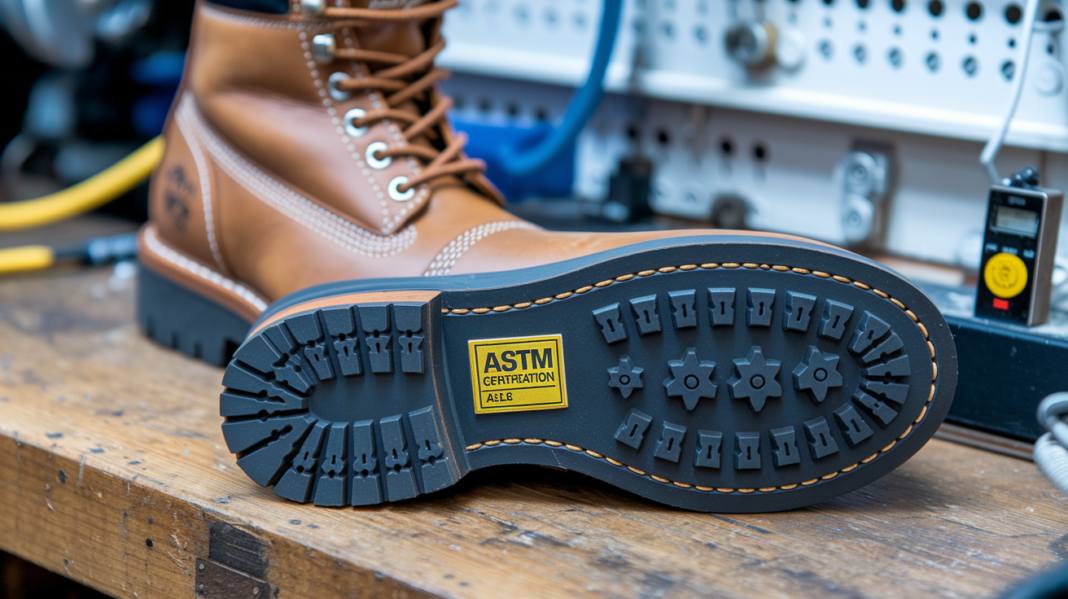

You might think any work boot keeps you safe around electricity, but uncertified footwear can turn you into a conductor when you contact live circuits. EH-rated safety boots use non-conductive soles tested to block 600 volts in dry conditions, preventing current from flowing through your body to the ground. This protection only works when boots carry the ASTM F2413 certification label permanently attached inside, not just marketing claims on the box. We’ll show you which boots meet the standard, what the certification actually tests, and where to buy footwear that delivers real electrical protection instead of dangerous guesswork.
Top-Rated Boots, Key Certifications, and Where to Buy

EH-rated safety boots protect workers from electrical currents up to 600 volts in dry conditions. They use thickly insulated, non-conductive soles that stop electricity from flowing through the footwear to the person wearing them. The ASTM F2413 certification validates this protection through testing conducted by the American Society for Testing and Materials, which checks how well boots hold up when workers encounter live wires, energized equipment, or secondary electrical sources. Only boots that pass these voltage exposure tests get the official EH designation. You’ll find it on labels permanently attached inside the footwear near the tongue or collar, where you can verify certification before buying.
| Manufacturer | Model Features | Price Range | Available At |
|---|---|---|---|
| Chippewa | ASTM F2413 EH certified, leather construction, Vibram outsoles, composite toe options | $150-$249 | Manufacturer direct, specialty safety retailers, authorized online distributors |
| Kodiak | ASTM tested EH protection, Ortholite Comfort Foam, waterproof models, metal-free options | $100-$199 | Specialty safety retailers, manufacturer website, authorized distributors |
| Timberland PRO | EH-rated with anti-fatigue technology, composite toe, slip-resistant, alloy safety toe | $150-$219 | Specialty retailers, manufacturer direct, major online safety suppliers |
| Keen Utility | ASTM F2413 EH certified, asymmetrical safety toe, waterproof membrane, wider fit options | $150-$199 | Manufacturer website, outdoor retailers, authorized safety footwear dealers |
| Wolverine | EH protection with CarbonMAX safety toe, waterproof leather, slip-resistant Wolverine outsole | $120-$189 | Specialty safety stores, manufacturer site, authorized online retailers |
| Carhartt | ASTM F2413 EH rated, Storm Defender waterproof, composite toe, oil-resistant outsole | $130-$179 | Specialty retailers, manufacturer direct, farm supply stores, authorized distributors |
Legitimate ASTM certification appears as a permanently affixed label inside the boot. You’ll typically find it sewn or heat-stamped on the tongue or collar area where it won’t wear off during use. This label clearly states “ASTM F2413 EH” along with additional protection ratings the boot provides, such as compression resistance (C75 or C50), impact resistance (I75 or I50), and metatarsal protection if applicable. Don’t trust verbal claims or marketing materials alone. Physically inspect the label inside the boot before purchasing, because uncertified boots that look similar offer zero electrical protection and put you at serious risk around energized circuits and equipment.
The three main price tiers for EH-rated boots reflect construction quality, material selection, and extra safety features that affect both protection and comfort during long work shifts. Boots in the $100 to $149 range typically meet minimum ASTM F2413 standards with basic leather uppers, non-conductive rubber outsoles, and standard insulation. They may lack comfort technologies or waterproofing. The $150 to $199 tier adds premium features like Vibram high-performance outsoles, 3M Thinsulate insulation, cushioned footbeds with arch support systems, and often includes waterproof membranes that extend boot life in demanding conditions. Boots priced $200 to $249 incorporate specialized technologies like metal-free construction for airport and security work, odor control systems, puncture-resistant midsoles, and proprietary comfort platforms designed for workers who spend entire shifts on concrete or climbing ladders.
Purchase EH-rated boots from specialty safety footwear retailers where trained staff can properly measure your feet, assess your specific workplace hazards, and verify certification labels before you leave the store. Manufacturer websites offer complete product lines with detailed specifications and sizing guides, though you miss the fitting expertise that prevents buying the wrong size or width. Authorized online distributors like SafetyShoeDistributors.com or WorkBootWarehouse.com stock multiple brands with competitive pricing and return policies. But first-time buyers benefit from in-person fitting to establish correct size before ordering online for future replacements. Farm supply stores, industrial uniform shops, and dedicated safety equipment suppliers maintain stock specifically for electricians, utility workers, and construction crews who need immediate replacements rather than waiting for shipping.
Certification Standards and Construction Requirements
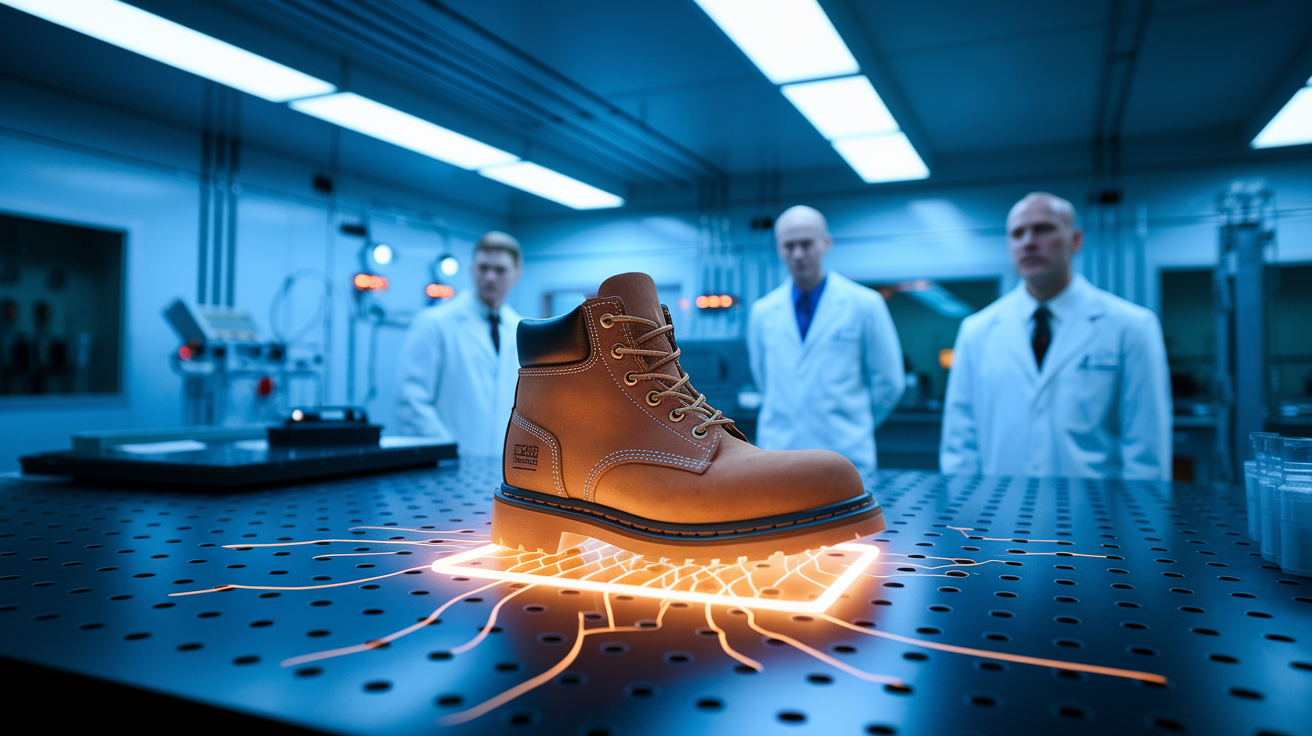
The ASTM F2413 electrical hazard certification process tests boots by placing them on a conductive plate connected to an electrical power source, then applying 600 volts of alternating current for one minute while measuring any current leakage through the sole and heel to a simulated human foot inside the boot. Boots pass certification when leakage current stays below 1.0 milliampere under this sustained electrical exposure. This proves the non-conductive materials successfully block dangerous current flow that would otherwise travel through the wearer’s body to ground. Testing laboratories evaluate multiple sample boots from each production run, examining sole integrity, heel construction, and the complete barrier between conductive surfaces and the wearer’s foot. The certification label gets permanently attached inside passing boots, displaying the ASTM F2413 designation along with the specific year of the standard version used for testing.
Non-conductive rubber compounds formulated with synthetic materials and specific carbon black ratios create the insulating barrier that defines EH-rated protection. These rubber formulations exclude conductive additives while maintaining flexibility, durability, and traction properties workers need on job sites. Sole thickness typically measures between 10mm and 15mm, providing sufficient insulation depth to prevent electrical current penetration while supporting the worker’s weight during standing, walking, and climbing tasks. The heel construction uses similar non-conductive materials extending from the outsole through any midsole layers. This ensures complete electrical isolation from ground contact points where current would normally flow through conductive footwear during accidental contact with energized equipment or wiring.
Key certification requirements and testing criteria that boots must satisfy for ASTM F2413 EH rating:
Sole thickness meeting minimum insulation standards with non-conductive rubber compounds throughout the entire ground contact surface. Heel construction using identical non-conductive materials as the sole without any conductive fasteners or metal shanks that create electrical pathways. Non-conductive material requirements extending through all layers between the wearer’s foot and external conductive surfaces including midsoles, outsoles, and heel stacks. Voltage exposure testing at 600 volts for sustained periods with leakage current measurements staying below 1.0 milliampere throughout the test duration. Secondary electrical source protection validated through open circuit testing that confirms insulation integrity when electricity seeks paths to ground through footwear. Open circuit protection standards requiring complete electrical isolation even when wet contaminants like conductive fluids contact the sole exterior while remaining dry against the foot.
Leather upper construction in EH-rated boots serves structural and protective functions while the sole system handles electrical insulation. Full-grain leather provides abrasion resistance, ankle support, and protection from physical hazards like falling objects or sharp materials. The leather connects to the non-conductive sole through cement bonding or stitching methods that don’t compromise the electrical barrier. Manufacturers carefully select attachment points and adhesives that maintain insulation properties. Quality EH-rated boots integrate a moisture barrier between the leather upper and the interior lining, preventing sweat or external moisture from saturating the boot’s interior and compromising the dry conditions necessary for electrical protection. The complete boot functions as a system where durable leather protects against mechanical hazards while the carefully engineered sole assembly provides the tested electrical insulation that defines the EH rating.
| Material Type | Protective Property | Boot Location |
|---|---|---|
| Non-conductive rubber compound | Blocks electrical current flow, withstands 600-volt exposure with less than 1.0 milliampere leakage | Outsole and heel contact surfaces |
| Synthetic insulation layers | Creates additional electrical barrier while providing cushioning and temperature control | Midsole between outsole and footbed |
| Full-grain leather | Resists abrasion and punctures while supporting ankle structure and preventing mechanical injuries | Upper construction from vamp through collar |
| Non-metallic shanks | Provides arch support without creating conductive pathways through the sole assembly | Embedded in midsole beneath arch area |
| Moisture-resistant membrane | Prevents internal saturation that would compromise electrical insulation while allowing vapor transmission | Between leather upper and interior lining |
OSHA Compliance and Proper Use Conditions

OSHA regulations under 29 CFR 1910.136 and 1910.137 require employers to assess workplace electrical hazards and provide appropriate protective footwear when employees face risks from electrical shock through ground contact points. The regulatory framework places responsibility on employers to conduct hazard evaluations that identify work areas, tasks, and conditions where energized equipment, exposed conductors, or potential ground faults create electrical dangers requiring certified protective footwear as part of comprehensive electrical safety programs. Compliance documentation must demonstrate that selected footwear meets ASTM F2413 standards appropriate to the identified hazards, with regular inspections confirming boots remain in serviceable condition throughout their use.
Specific occupations and job roles requiring EH-rated footwear:
Electricians working with building wiring, panel installations, circuit repairs, and electrical system maintenance where accidental contact with energized conductors can occur. Linesmen installing, maintaining, and repairing electrical power transmission and distribution lines carrying high-voltage current. Utility workers servicing electrical infrastructure, substations, transformers, and power distribution equipment in both above-ground and underground installations. Industrial engineers troubleshooting automated manufacturing systems, motor controls, and electrical components integrated into production equipment. Maintenance workers performing repairs on electrical machinery, lighting systems, HVAC equipment, and facility electrical infrastructure. Construction workers on job sites with temporary power systems, exposed wiring during building phases, and multiple trades working near energized circuits. Manufacturing technicians operating equipment with exposed electrical components, control panels, and machinery requiring routine electrical inspection or adjustment. Electrical installers working with commercial and industrial electrical systems during new construction, retrofits, and equipment commissioning.
EH-rated boots function as secondary protection that reduces injury severity if primary electrical safety measures fail. Not as standalone safeguards against electrical shock. The 600-volt protection limit applies only in completely dry conditions where both the boots and the work surface stay free from moisture. Wet floors, damp concrete, puddles, or even high humidity can severely compromise or eliminate the electrical insulation properties that define EH protection. Workers must never rely on EH-rated footwear as their main defense against electrical contact. Proper lockout/tagout procedures, insulated tools, voltage testing, de-energizing circuits before work, and maintaining safe distances from exposed conductors remain the essential safety practices that actually prevent electrical injuries.
Workplace hazard assessment requires employers to evaluate maximum voltage levels workers might encounter, environmental conditions including potential moisture exposure, the likelihood of primary electrical contact versus secondary ground fault scenarios, and whether specialized footwear beyond basic EH ratings becomes necessary for adequate protection. This assessment process identifies specific work zones, tasks, and conditions requiring EH-rated boots, documents the evaluation in writing, and establishes replacement schedules based on boot condition rather than arbitrary time periods. Employers must train workers on proper use limitations, dry condition requirements, voltage exposure thresholds, and the critical understanding that damaged or wet boots provide no electrical protection regardless of their original certification.
Situations where EH-rated boots don’t provide adequate protection and different footwear or additional safety measures become mandatory:
Wet or damp conditions including rain-soaked work areas, flooded spaces, standing water, moisture-saturated concrete, or high humidity environments that compromise insulation properties. Voltage exposure exceeding 600 volts requires dielectric footwear tested and certified for higher voltage ratings specific to the electrical hazard present. Primary electrical contact points where workers directly handle energized conductors need insulated gloves, tools, and procedures beyond footwear protection. Compromised or damaged boots with sole cracks, separation between sole and upper, worn-through areas, or punctures that create conductive pathways negating EH protection. Expired or worn footwear that no longer maintains the tested insulation properties due to material degradation, chemical exposure, or mechanical breakdown. Situations requiring dielectric footwear instead based on hazard assessment showing voltage levels, wet conditions, or direct electrical work beyond EH-rated boot capabilities.
Additional PPE requirements for electrical work include insulated gloves rated for the specific voltage present, safety glasses with side shields protecting against arc flash debris, flame-resistant clothing when arc flash hazards exist, hearing protection in high-voltage switch yards, and fall protection when working on elevated electrical installations. Comprehensive safety protocols layer multiple protective measures including lockout/tagout procedures that de-energize circuits before work begins, voltage testing with properly rated meters to verify circuits are dead, establishing restricted approach boundaries based on voltage levels, using insulated tools that prevent current flow through hand contact, and maintaining buddy systems where a qualified observer monitors workers performing high-risk electrical tasks.
Additional Safety Features in Electrical Hazard Boots

Modern EH-rated work boots combine electrical protection with multiple safety features addressing the various physical hazards electricians and utility workers encounter during typical workdays. Job sites present risks beyond electrical shock. Falling tools and materials threaten toes, sharp objects on floors can puncture feet, slippery surfaces cause falls, and heavy equipment creates impact dangers that require comprehensive foot protection integrated into electrical safety footwear.
Toe Protection Options
Composite toe caps made from carbon fiber, Kevlar, or fiberglass materials provide ASTM-rated impact and compression protection while eliminating metal that could conduct electricity or interfere with security screening equipment. These non-metallic toe caps meet the same ASTM F2413 I75 and C75 standards as steel toes, protecting against 75 pounds of impact force and 2,500 pounds of compression force without adding the weight or thermal conductivity of steel. Nano toe technology offers a lower-profile alternative to traditional safety toes using advanced composite materials in a slimmer design that increases toe box space while maintaining impact ratings. “The nano composite toe in my Kodiak boots gives me way more wiggle room than the old steel toes that always cramped my toes on long shifts.”
Metal-free construction benefits electricians working in settings where eliminating all conductive materials reduces electrical hazard risks and allows passing through metal detectors without removing boots at airports, power plants, or secure facilities. Steel toe alternatives using composite materials maintain their insulation properties across temperature extremes without conducting heat or cold directly to toes like steel caps that become uncomfortable in summer heat or winter cold. Metatarsal guards extending over the top of the foot add protection for workers in heavy industrial settings where dropped tools, rolling equipment, or falling materials threaten not just toes but the entire forefoot area.
Sole Protection Systems
Puncture-resistant midsoles constructed from woven Kevlar or composite plates stop sharp objects like nails, metal shavings, wire strands, and construction debris from penetrating through the outsole into the worker’s foot. These flexible protective layers meet ASTM F2413 puncture resistance standards, withstanding 1,200 Newtons of force without penetration while maintaining the non-conductive properties essential for EH ratings. Slip-resistant tread patterns with deep lugs and specialized rubber compounds grip oily, wet, or debris-covered surfaces where electrical workers frequently walk. Some manufacturers specifically engineer outsoles to provide both EH electrical insulation and slip resistance on contaminated floors.
Oil-resistant outsole properties prevent the rubber from degrading when exposed to petroleum products, hydraulic fluids, lubricants, and chemicals common in manufacturing and utility environments. The specialized rubber compounds maintain their non-conductive electrical properties while resisting swelling, cracking, or material breakdown that would otherwise compromise both traction and EH protection over time. Multi-directional tread designs channel fluids away from the contact surface while maintaining grip on ladder rungs, steel structures, and smooth concrete where electrical work frequently occurs.
Environmental Protection
Waterproof membranes like Gore-Tex or proprietary breathable barriers bonded between the leather upper and interior lining keep feet dry in wet weather while allowing sweat vapor to escape during physical work. Workers must understand that waterproofing protects the interior of the boot and keeps feet comfortable, but doesn’t change the fundamental limitation that EH electrical protection only functions in dry conditions where the boot exterior remains moisture-free. Waterproof boots still lose their electrical insulation properties if the outsole contacts wet floors, damp concrete, or standing water. The moisture creates a conductive path to ground that bypasses the boot’s insulation.
This moisture limitation means workers in wet environments need to evaluate whether EH-rated boots provide adequate protection or if dielectric boots tested for wet conditions better match their specific hazards. Waterproof membranes do extend boot life by preventing interior moisture damage, reducing odor from sweat accumulation, and maintaining comfort during long shifts in varying weather. Some boots incorporate breathable waterproofing with integrated insulation like 3M Thinsulate, providing cold weather comfort for outdoor electrical workers while maintaining the dry interior critical for foot health and reducing the risk of fungal infections.
Differentiating EH-Rated from Other Electrical Safety Footwear

Different electrical footwear types exist because workplaces present distinctly different electrical hazards requiring specific protective capabilities that single boot design can’t address across all scenarios. EH-rated boots protect against secondary electrical shock through ground contact in dry conditions, dielectric boots provide higher voltage protection usable in wet environments, static dissipative footwear prevents static buildup in electronics manufacturing, and conductive footwear grounds workers in explosive atmospheres. Selecting the wrong type for your specific hazard creates dangerous false security.
| Footwear Type | Voltage Rating | Wet/Dry Use | Primary Purpose |
|---|---|---|---|
| EH-Rated | Up to 600 volts AC, tested per ASTM F2413 | Dry conditions only | Secondary protection against electrical shock through sole and heel insulation for construction, manufacturing, and general electrical work |
| Dielectric | 14,000 to 20,000 volts tested per ASTM F2412 and F2413 | Both wet and dry conditions | Primary protection for utility workers on energized lines, substation work, and high-voltage electrical installations requiring maximum insulation |
| Static Dissipative (SD) | Not rated for electrical shock protection | Both wet and dry conditions | Controlled static electricity discharge protecting sensitive electronics from ESD damage in manufacturing, assembly, and repair environments |
| Electrically Conductive | Not rated for electrical shock protection | Both wet and dry conditions | Rapid static electricity grounding preventing spark ignition in explosive atmospheres with flammable vapors, gases, or combustible dust |
Dielectric boots undergo testing at voltage levels twenty to thirty times higher than EH-rated footwear, with certification requiring complete immersion in water during testing to verify protection remains effective in wet conditions that would completely eliminate EH-rated protection. Utility workers climbing poles to service high-voltage lines wear dielectric boots tested to 14,000 or 20,000 volts, providing a critical safety margin when working directly on energized circuits where primary contact risks exist. The construction differs fundamentally. Dielectric boots use thicker insulation throughout, eliminate all metal components including shanks and hardware, and undergo individual boot testing rather than production batch sampling.
Static dissipative and conductive footwear serve opposite purposes from insulating EH-rated boots by intentionally creating electrical pathways that drain static charges from workers to ground, preventing static buildup that damages sensitive electronic components in clean rooms, semiconductor manufacturing, and electronics assembly areas. These footwear types incorporate conductive materials in the sole that continuously discharge the static electricity humans naturally accumulate through movement and friction. Conductive footwear drains charges even faster than static dissipative types, making it essential in environments where explosive vapors, gases, or combustible dust create fire and explosion risks from static sparks. Grain elevators, chemical processing plants, refineries, and munitions manufacturing facilities require conductive footwear as primary protection against ignition sources.
Leather footwear provides no inherent electrical hazard protection despite common misconceptions, and arc flash protection addresses entirely different hazards than electrical shock through ground contact. Leather boots without ASTM F2413 EH certification may offer general foot protection, durability, and even arc-rated flame resistance, but provide zero insulation against electrical current flow to ground. Arc flash protection, designated by an ASTM F2413 arc rating, indicates the leather can withstand brief exposure to the extreme heat generated by electrical arcs without igniting or melting, protecting skin from thermal burns. But this thermal protection offers no defense against electrical shock traveling through conductive soles to ground. Workers need boots with both arc flash ratings and EH certification when their hazard assessment identifies risks from both thermal events and electrical shock paths.
Proper Fit and Comfort Considerations for Safety Boots

Proper fit matters critically for EH-rated boots because gaps, looseness, or excessive tightness can compromise the electrical protection barrier while creating pressure points and friction that lead to blisters, foot fatigue, and pain during shifts lasting eight to twelve hours on concrete floors, climbing ladders, or navigating construction sites. Boots that fit poorly allow moisture infiltration through poorly sealed seams where the upper meets the sole, reducing or eliminating the dry conditions essential for electrical insulation. Too-tight boots restrict blood circulation in feet and toes, causing numbness and cold feet that tempt workers to remove boots for relief. Too-loose boots create movement inside the footwear that causes blisters and reduces stability when walking on uneven surfaces or climbing.
Key sizing considerations when selecting EH-rated safety boots:
Length measurement with thumb-width space between your longest toe and the boot’s toe cap when standing, accounting for foot expansion during long work shifts. Width selection matching your foot’s widest point across the ball, with boots available in standard D width for men and B width for women plus wide and narrow options for proper fit. Toe box clearance providing enough vertical space above toes to prevent pressure against the safety toe cap, especially important with composite and nano toe designs that require different internal volumes. Heel cup security holding your heel firmly in place without slipping during walking or climbing, verified by walking up and down an incline when trying boots. Arch support matching your foot’s natural arch height, with some boots offering removable insoles that accommodate custom orthotics for workers needing additional support. Sock thickness accommodation since electrical workers typically wear thicker cushioned or moisture-wicking work socks that require trying boots with the actual socks you’ll wear on the job. Half-size availability in most quality EH-rated boots from size 5 through 15, allowing fine-tuning for feet that fall between full sizes rather than forcing too-tight or too-loose fit.
Modern comfort technologies in quality EH-rated boots address the reality that electrical workers spend long shifts on their feet. Manufacturers incorporate cushioned insole systems like Ortholite Comfort Foam that provides responsive cushioning and moisture management. The Comfortzone system in some Kodiak models uses specific arch support geometry and heel cushioning to reduce fatigue in feet, knees, and lower back by distributing weight and absorbing impact. Breathable materials in boot liners and moisture-wicking insole fabrics manage sweat accumulation that otherwise creates uncomfortable dampness and increases blister risks. Technologies like Kodiak SOS Smell Out Science actively control odor from bacterial growth in the warm, moist boot environment.
Quality boots require a break-in period typically lasting one to two weeks where you gradually increase wearing time as leather softens, cushioning compresses to match your foot shape, and your feet adapt to the boot’s support structure. Start by wearing new boots for two to three hours during lighter tasks, then extend time as comfort improves rather than committing to a full shift in brand-new boots that can cause painful blisters requiring days of healing. Test new boots in your home or on a weekend day before wearing to a job site, walking on various surfaces to identify pressure points or rubbing spots where you might need to adjust lacing, add moleskin padding, or determine the boots won’t work for your feet.
Brand Comparisons, Pricing, and Where to Buy

Major manufacturers specializing in EH-rated footwear differentiate their products through proprietary comfort technologies, outsole compounds, and construction methods that extend beyond minimum ASTM F2413 certification requirements. Chippewa Boots built their reputation in logging and heavy construction, bringing decades of expertise in full-grain leather selection and Goodyear welt construction that allows resoling to extend boot life. Their EH-rated models incorporate Vibram outsoles originally developed for mountaineering to provide superior grip and abrasion resistance on industrial surfaces. Kodiak Boots emphasizes value-priced safety footwear with technologies like Ortholite Comfort Foam insoles, 3M Thinsulate insulation in winter models, and their proprietary Metal-Free Technology eliminating all conductive components for workers in environments requiring metal detector clearance. Wolverine integrates CarbonMAX safety toes and their exclusive MultiShox compression pad systems that absorb impact across the heel and forefoot, while Keen Utility focuses on asymmetrical safety toe designs that follow natural foot shape and wider toe boxes accommodating foot spread during long work periods.
| Brand | Key Technologies | Price Range | Warranty | Standout Feature |
|---|---|---|---|---|
| Chippewa | Vibram outsoles, Goodyear welt construction, full-grain leather, composite toe options | $150-$249 | 30-day comfort guarantee, construction defect coverage | Resoleable construction extends life beyond typical cement-bonded boots |
| Kodiak | Ortholite Comfort Foam, 3M Thinsulate, SOS odor control, Metal-Free Technology | $100-$199 | 60-day comfort guarantee | Best value per dollar with extensive comfort features at lower price points |
| Wolverine | CarbonMAX safety toe, MultiShox compression pads, moisture-wicking lining, slip-resistant outsoles | $120-$189 | 30-day comfort guarantee, one-year warranty against defects | MultiShox impact absorption reduces foot and leg fatigue on concrete |
| Keen Utility | Asymmetrical safety toe, wider toe box, Keen.Dry waterproof membrane, metatomical footbed design | $150-$199 | One-year warranty, 30-day trial period | Asymmetrical toe shape and width options fit problem feet other brands don’t accommodate |
| Timberland PRO | Anti-fatigue technology, Ever-Guard leather, alloy or composite toe, Raptek microfiber lining | $150-$219 | 60-day comfort guarantee | Anti-fatigue technology uses geometric cone support for exceptional comfort on hard surfaces |
| Carhartt | Storm Defender waterproof, composite toe, FastDry technology lining, oil-resistant rubber outsole | $130-$179 | 30-day comfort return, one-year warranty | Storm Defender waterproofing with sealed seams for workers in wet weather climates |
Boots priced $100 to $149 meet ASTM F2413 EH certification requirements with serviceable construction using genuine leather uppers, non-conductive rubber outsoles, and basic cushioned footbeds, providing adequate protection for workers in lower-risk electrical environments or those needing backup boots. These entry-level boots typically use cement-bonded sole attachment rather than stitched construction, limiting repair options but keeping initial costs accessible for workers or employers purchasing multiple pairs. Waterproofing remains optional or basic in this price range. Advanced comfort technologies like premium insole systems, arch support, or temperature regulation are rarely included.
The $150 to $199 price tier represents the sweet spot for most electrical workers, delivering ASTM-certified protection with meaningful comfort upgrades including Vibram or similarly branded high-traction outsoles, moisture-wicking interior linings, cushioned insole systems with arch support, and waterproof membranes that extend boot life in variable weather. Boots at this price point often incorporate composite or alloy safety toes instead of heavier steel, include puncture-resistant midsoles as standard features, and use higher-grade leathers with better abrasion resistance and break-in characteristics. Manufacturers at this tier typically offer multiple width options, half sizes throughout the range, and design details like padded collars, gusseted tongues keeping debris out, and reinforced toe caps that handle repeated impacts without premature wear.
Premium boots in the $200 to $249 range justify higher investment through specialized technologies addressing specific work conditions like extreme cold insulation, maximum cushioning systems for workers on concrete all day, slip resistance certified for oil industry applications, or metal-free construction meeting security screening requirements at airports and power facilities. These boots often use exotic leathers or advanced synthetic materials offering superior water resistance, lighter weight, or increased flexibility compared to standard full-grain leather. Construction quality at this tier frequently includes resoleable attachment methods, reinforced high-wear areas, and premium hardware that won’t fail or rust during years of hard use.
Cost-per-wear calculations reveal that $175 boots lasting 18 months through proper care cost roughly 39 cents per workday, while $110 boots requiring replacement every 9 months cost 49 cents per day. The higher initial investment actually saves money over time while providing better protection and comfort during those months of use. Cheap non-certified boots under $80 might last 6 months before sole separation or wear-through compromises both safety and waterproofing, forcing replacement at 53 cents per day while never providing legitimate electrical protection at all. Quality EH-rated boots maintain their protective properties throughout their usable life when properly maintained, meaning the certification you pay for at purchase continues functioning until physical damage or excessive wear makes replacement necessary.
Purchase EH-rated boots from specialty safety footwear retailers where staff trained in occupational footwear fitting can measure both feet, assess your gait, identify arch type, and recommend specific models matching your workplace hazards and foot characteristics. These specialty stores stock wide selections across brands and price points, maintain inventory in extended sizes and widths often unavailable elsewhere, and provide return policies accommodating the break-in period where comfort issues may emerge. Manufacturer websites offer complete product lines with detailed specifications, sizing charts, and often slightly better pricing than retail, though you assume responsibility for accurate sizing without professional fitting assistance.
Authorized online distributors like WorkBootsUSA.com, SafetyJoe.com, and Steel-Toe-Shoes.com provide competitive pricing across multiple brands with customer reviews comparing fit, comfort, and durability between models. These distributors verify ASTM certification, clearly photograph the required labels, and often include measurement guides helping you determine correct size based on traced foot dimensions. First-time buyers benefit most from in-person retail fitting to establish their proper size in safety footwear, which typically runs different from athletic shoes, then can confidently order future replacements online in the same size and model.
Quality indicators to evaluate when comparing brands across price points:
ASTM compliance verification through clear label photography or certification documentation showing the boots passed testing with ASTM F2413 EH designation. Construction material quality visible in full-grain versus corrected grain leather, branded outsole compounds like Vibram versus generic rubber, and stitching density at stress points. Proprietary comfort or safety technologies like named insole systems, waterproof membranes, or specialized toe protection beyond minimum standards. Warranty length and coverage indicating manufacturer confidence, with 60-day comfort guarantees and one-year defect warranties outperforming 30-day limited returns. Verified customer reviews from actual electrical workers describing real-world durability, comfort during long shifts, and whether sizing runs accurate or requires adjustment. Transparent pricing without frequent “sales” from inflated list prices, suggesting honest value rather than manipulated discounts creating false urgency.
Employer reimbursement programs in many electrical contracting companies, utility providers, and large manufacturers provide annual footwear allowances ranging from $150 to $250 recognizing that proper safety footwear protects workers
Final Words
Electrical hazard safety boots protect you from electrical shock up to 600 volts in dry conditions when properly certified and maintained.
Look for clear ASTM F2413 labels inside every boot you consider. Verify non-conductive construction and proper fit before wearing them on any job site.
Choose a reputable manufacturer within your budget, whether that’s the $100-149 entry level or the $200-249 premium range. Focus on proven compliance, quality materials, and comfort features that support all-day wear.
Keep your boots dry, inspect them regularly, and replace them when you see sole damage or excessive wear. Your electrical hazard safety boots work as secondary protection alongside proper safety protocols.
FAQ
What does electrical hazard mean on boots?
Electrical hazard on boots means the footwear is designed with non-conductive materials that protect wearers from electrical shock by creating a barrier against electrical currents flowing through the sole and heel in dry conditions.
What does it mean if a boot is an electrical hazard?
If a boot is electrical hazard rated, it has passed ASTM F2413 testing and provides protection from up to 600 volts in dry settings by using insulated sole construction that prevents electrical current from reaching the wearer.
What kind of work boots should electricians wear?
Electricians should wear ASTM F2413 EH-rated work boots with non-conductive rubber outsoles, proper insulation thickness, and visible certification labels inside the boot confirming electrical hazard protection for dry environments.
What is the OSHA standard for electrical safety shoes?
OSHA requires workers around live wires and electrical hazards to wear safety shoes meeting ASTM F2413 electrical hazard standards, providing protection from up to 600 volts as secondary protection in dry conditions only.
How do EH-rated boots differ from dielectric boots?
EH-rated boots protect against 600 volts in dry conditions and focus on sole protection, while dielectric boots are tested to higher voltages and can be used in wet conditions for more comprehensive electrical protection.
Do EH-rated boots work in wet conditions?
EH-rated boots do not provide electrical hazard protection in wet or damp conditions because moisture compromises the non-conductive barrier, requiring dielectric footwear instead for wet environment electrical work.
How long do EH-rated boots maintain their protection?
EH-rated boots maintain protection as long as the sole remains intact without cracks, separation, or excessive wear, typically lasting 12 to 18 months with proper maintenance, dry storage, and regular inspection.
Can steel toe boots be EH-rated?
Steel toe boots can be EH-rated if they meet ASTM F2413 standards with properly insulated construction, though composite or nano toe options are often preferred in electrical environments to eliminate metal contact risks.
What is the price range for quality EH-rated boots?
Quality EH-rated boots typically range from $100 to $249, with entry-level certified boots at $100-149, mid-range options at $150-199, and premium models with advanced comfort features at $200-249.
Where should you buy EH-rated safety boots?
You should buy EH-rated safety boots from specialty safety footwear retailers for expert fitting, manufacturer websites for complete product lines, or authorized online distributors, verifying ASTM certification labels before purchase.
Are EH-rated boots the primary protection against electrical shock?
EH-rated boots are not primary protection against electrical shock but serve as secondary safeguards, requiring additional PPE and comprehensive safety protocols including lockout procedures and proper voltage exposure management.
What materials make boots EH-rated?
Non-conductive rubber compounds in the outsole and heel make boots EH-rated by creating an insulated barrier with specific thickness requirements that prevent electrical current flow to the wearer in dry conditions.