
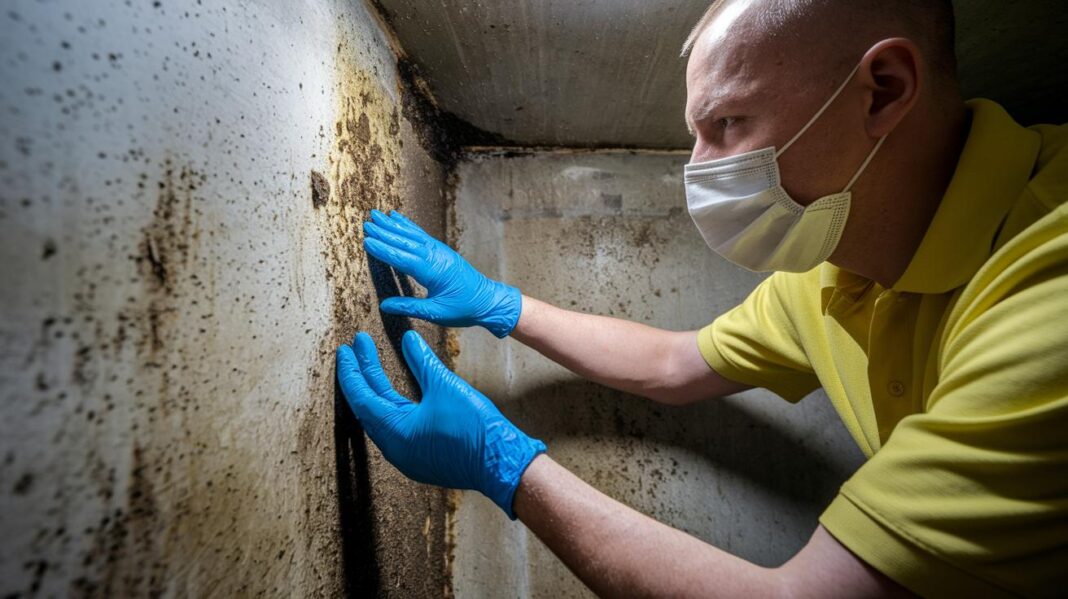

Have you ever wondered how long it takes to remove mold from your home? You might think it’s a quick fix because many cleanups finish in just a few days. But each job has several clear steps. We start with an inspection to locate the mold. Then, we set up barriers to keep it from spreading. Next, we remove the mold and run dehumidifiers (machines that pull moisture from the air) to dry the area. The time for each part depends on how extensive the mold is and how damp your home remains. Read on for the fast facts and step-by-step details you need to know.
how long does mold remediation take: Fast Facts
We know dealing with mold can be stressful. Most home mold cleanups take between 1 and 5 days. Small problems sometimes clear up in 1 or 2 days and, in a very limited case, even in just one day.
For more than a tiny spot, our process starts with a 1–2 day inspection where we check the mold and moisture levels. Next, we spend a day using plastic barriers to stop mold spores from spreading. The mold removal itself takes 1–5 days based on how much mold is present.
If the mold damage is severe and moisture is high, it may take a week or more. After we remove the mold, we clean and sanitize for 1–2 days. Then, we run dehumidifiers (machines that pull moisture from the air) for 1–3 days to lower the humidity to safe levels. Restoration work varies by repair needs, but quick, effective action helps get your home safe faster.
Detailed Mold Remediation Process and Unified Step Overview

Mold Assessment (1–2 days)
We start with a full inspection of your home. Our team checks every affected area, measures the moisture in the air (humidity), takes samples, and maps out where the mold is. Think of it like a quick health check for your property.
Containment (1 day)
Next, we set up a safe zone using plastic sheeting and negative air machines (devices that push air out). This step stops mold spores from spreading to clean areas. It’s like closing off a room until we can clean it properly.
Mold Removal (1–5 days)
We remove all moldy materials and use EPA-registered biocides (chemicals that kill mold) along with HEPA vacuums (machines that trap tiny mold particles) to clean surfaces. The time needed depends on how much work must be done, whether it’s a small leak or a big spill.
Cleaning and Sanitizing (1–2 days)
All surfaces and belongings get a thorough scrub and disinfecting to remove any remaining mold spores. Imagine washing dishes until no grease is left; we do the same to ensure your space is free of residue.
Drying and Dehumidifying (1–3 days)
We use air movers and dehumidifiers (machines that remove moisture from the air) until moisture levels drop below 60%. This works much like letting damp towels dry completely so they no longer foster mold growth.
Restoration (Variable)
Finally, we repair or replace damaged materials, like drywall or insulation, to restore your home to its original condition.
Key Factors Influencing Mold Remediation Duration
Mold cleanup times vary based on several factors. The more mold there is, the longer it takes to remove and clean. For example, if you have a small patch on a wall, the job might only take one day. However, larger areas can extend the process over several days.
The size of the moldy area is very important. A bigger spot means we need to set up extra plastic barriers and isolate a larger space. Drying a larger area also takes more time because there is more material to dry out. Sometimes, we use air movers (fans that circulate air) and dehumidifiers (machines that pull moisture from the air) continuously for 1 to 3 days to help speed up drying.
Other factors can slow down the work, too. Ongoing moisture from leaks or high humidity levels can prevent the area from reaching a safe moisture level until the source is fixed. Places like attics or tight crawlspaces need extra time because setting up our equipment there takes longer.
Local weather also plays a big role. Warm and dry conditions help dehumidifiers work faster, while cool and damp weather can slow things down. When we manage these environmental factors well, the cleanup timeline becomes more predictable and effective.
Special Cases: Black Mold and Attic Abatement Timelines

When dealing with mold, some jobs need extra time and careful attention. Removing black mold (a type that can make you sick) usually takes between 3 and 7 days. We follow strict safety steps, use special equipment, and handle everything carefully to keep your family safe. For example, one humid basement project took seven days to safely remove all the black mold while protecting the occupants.
Cleaning an attic for mold typically takes at least 7 days. Attics can be tough because they are hard to reach and have high humidity that slows down drying. One of our teams told us that working in a cramped attic meant setting up carefully and checking every contaminated spot.
Crawlspaces can be challenging too. These tight spaces often have lingering moisture. That means we may need 3 to 5 days to do the job right. Our crew uses portable barriers and dehumidifiers (machines that pull moisture from the air) to control damp areas even in hard-to-reach spots.
| Scenario | Typical Timeline | Key Considerations |
|---|---|---|
| Black Mold Removal | 3–7 days | Strict safety steps, special equipment, health protection |
| Attic Abatement | At least 7 days | Limited access, high humidity, extra drying time |
| Crawlspace Remediation | 3–5 days | Tight space, moisture control challenges, careful containment |
These timelines show the extra care we take in areas where safety and complete removal are the top priorities.
Occupancy Guidelines and Scheduling During Mold Remediation
Your safety is our top concern during mold cleanup. We ask that you do not stay in the active work area until containment is complete and the process is finished. To avoid any risk, it's best to leave your home while we work. We generally recommend that you arrange temporary housing for about 1 to 3 days. This period lasts until our disinfection procedures and clearance tests show that your home is safe to re-enter.
We work closely with you to plan around your schedule. This planning helps reduce any household disruption and ensures the cleanup goes smoothly. One homeowner shared, "We organized our move with clear directions and only returned when clearance tests confirmed safe spore levels."
Please follow these guidelines:
- Do not enter the work zone until the cleanup is finished.
- Set up temporary housing during the active remediation.
- Only return after clearance tests confirm that spore levels are safe.
Once testing shows safe conditions, you can confidently move back in. Our team is here to keep you safe and get your home back to a livable state.
Final Words
In the action, we see mold remediation projects are broken down into clear steps that keep you informed. The process spans from assessment and containment through removal, cleaning, drying, and final restoration. Each phase has a distinct timeline, so knowing how long does mold remediation take helps set your expectations. Small jobs may finish in a couple of days while larger issues require more time. With steady progress and expert care, you'll have a safer, more livable home soon.
FAQ
How much does mold remediation cost?
The mold remediation cost varies with job size, severity, and local rates. Projects can range from a few hundred dollars to several thousand dollars, with a clear estimate provided upfront.
How long does mold remediation take?
The mold remediation process typically lasts 1–5 days. Small jobs may finish in 1–2 days, while black mold usually takes 3–7 days, and larger issues might require additional time.
Do you have to leave your house during mold remediation?
Safety protocols usually require you to leave active remediation zones. Homeowners typically relocate until clearance tests confirm that spore levels are safe for re-occupancy.
How long does it take to kill mold with vinegar?
Vinegar can kill common mold on surfaces within about one hour of contact. However, it may not eliminate all spores or be effective on severe infestations compared to professional treatments.
How long should you stay out of the house after mold remediation?
Homeowners should generally wait 1–3 days after remediation. Clearance testing confirms that spore levels are safe, ensuring the home is ready for occupancy again.
What kills 100% of mold?
EPA-registered biocides and specific fungicides are designed to kill mold effectively, though complete eradication of every spore is challenging. Maintaining low moisture is key to prevent future mold growth.
How fast can mold remediation be done?
Mold remediation can be completed in as little as one day for minor cases, but more severe infestations usually require several days to complete the thorough cleanup.