


Would you pay $500 or $30,000 to remove black mold from your home?
Most homeowners pay about $1,200 to $3,400 for professional black mold remediation in 2024.
The real price depends on how much square footage is affected, what materials are contaminated—drywall, insulation, HVAC—and whether growth hides inside walls or crawl spaces.
This guide breaks down typical price ranges, what contractors charge, when DIY is okay, and how insurance and moisture repairs change the bill.
Read on so you can act fast, stop more damage, and plan the right fix without surprises.
National Costs for Black Mold Removal

Most homeowners pay between $1,200 and $3,400 for professional black mold remediation in 2024. That range covers moderate contamination, enough to require containment, equipment, and disposal, but not extensive structural rebuilding. The final number depends on how much square footage is affected, what materials are contaminated, and whether moisture damage runs deeper than what’s visible on the surface.
Cost per square foot typically falls between $10 and $25 for standard remediation work. Light surface cleaning on nonporous materials runs on the lower end. Jobs requiring drywall removal, insulation disposal, and HEPA filtration push toward the higher range. Hidden growth inside wall cavities or above ceilings often costs more because contractors bill for demolition, containment, and reconstruction in addition to actual removal.
Small areas under 10 square feet may not need a contractor at all, but when you do hire one for a minor spot, expect $150 to $500. Larger projects, especially when HVAC systems, crawl spaces, or basements are involved, quickly climb into the thousands. Whole home remediation, common after flooding or severe long term leaks, frequently exceeds $6,000 and can reach $30,000 or more when structural repairs and full reconstruction are included.
- Small area (under 10 sq ft): $150–$500
- Bathroom removal: $500–$1,500
- HVAC system remediation: $500–$3,000
- Crawl space treatment: $500–$2,000
- Whole home remediation: $6,000–$30,000+
Factors That Influence Removal Costs

Severity drives the biggest swings in pricing. A few spots on bathroom grout cost very little to treat. Widespread contamination across drywall, insulation, and structural framing requires demolition, disposal, air filtration, containment barriers, and reconstruction. All of which add thousands to the bill. Contractors assess the extent before quoting, and hidden growth behind walls or above ceilings often surprises homeowners once demo begins.
Location inside the home matters too. Tight crawl spaces and attics require protective gear, special lighting, and slower work. HVAC ducts spread contamination throughout the house and demand duct cleaning or replacement in addition to removal. Accessibility also affects labor time. Second story exterior walls or hard to reach corners take longer to contain and clean than open basement floors.
Moisture source repair is separate from removal but almost always necessary. If the leak, condensation issue, or plumbing failure isn’t fixed, it returns. Contractors may include minor repairs in their scope, but larger plumbing or roofing work typically adds $200 to $2,000 or more to the total project cost. Testing fees for air samples or surface swabs, plus post remediation clearance testing, commonly add another $200 to $600.
Cost Differences by Location in the Home

Bathrooms are one of the most common spots, and remediation here typically costs $500 to $1,500. Most bathroom jobs involve tile grout, caulk, drywall behind showers, or subfloor damage under leaking toilets. Contractors remove contaminated drywall or underlayment, treat the framing, and replace materials. Small surface spots cost less. Wet wall cavities cost more.
Attics run $1,000 to $3,000 depending on insulation removal and roof leak repairs. Growth happens on roof sheathing, rafters, and blown in insulation when ventilation is poor or leaks go unnoticed. Remediation requires removing contaminated insulation, HEPA vacuuming wood surfaces, treating with antimicrobial solutions, and replacing insulation. Access is tight, and contractors often work in protective suits under heat lamps or in freezing cold, which slows the process.
Crawl spaces cost $500 to $2,000 for removal. Contamination here usually affects floor joists, subfloors, and vapor barriers. Crawl space jobs require encapsulation, moisture control, and sometimes structural repairs if wood rot is present. The confined space makes containment and air filtration equipment setup more expensive per square foot than open areas.
Basements are among the most expensive locations, typically $2,000 to $6,000 or higher. Finished basements with drywall, carpet, and insulation require extensive demo and reconstruction. Unfinished basements cost less but still need moisture control, foundation sealing, and sometimes sump pump installation to prevent recurrence. Large square footage and the need to address chronic moisture issues drive costs upward quickly.
What Affects Removal Quotes from Contractors

Inspections often cost $200 to $600 and include visual assessment, moisture mapping with meters, and sometimes air or surface sampling. Some contractors offer free visual inspections if you hire them for remediation, but third party inspectors charge separately. Testing adds to upfront costs but helps confirm the type and whether HVAC systems are contaminated, which changes the scope and price of the job.
Experience, certifications, and equipment all influence what contractors charge. IICRC certified technicians (trained and tested for remediation work) typically charge more than uncertified crews, but they follow containment protocols, use HEPA filtration, and provide documentation for insurance claims. Companies that own negative air machines, commercial dehumidifiers, and thermal cameras can complete jobs faster and more thoroughly, but their overhead is higher.
Key elements that change contractor quotes include:
- Certifications and training — IICRC or state licensing usually raises hourly rates but improves quality and insurance acceptance.
- Equipment requirements — HEPA air scrubbers, negative air machines, and moisture meters add daily rental or ownership costs to the bill.
- Testing and clearance requirements — Air sampling before and after remediation adds $200–$600 but may be required by insurance or local code.
- Contamination level — Light surface growth costs far less than contamination inside walls, HVAC ducts, or structural cavities requiring demolition.
DIY vs Professional Removal Costs
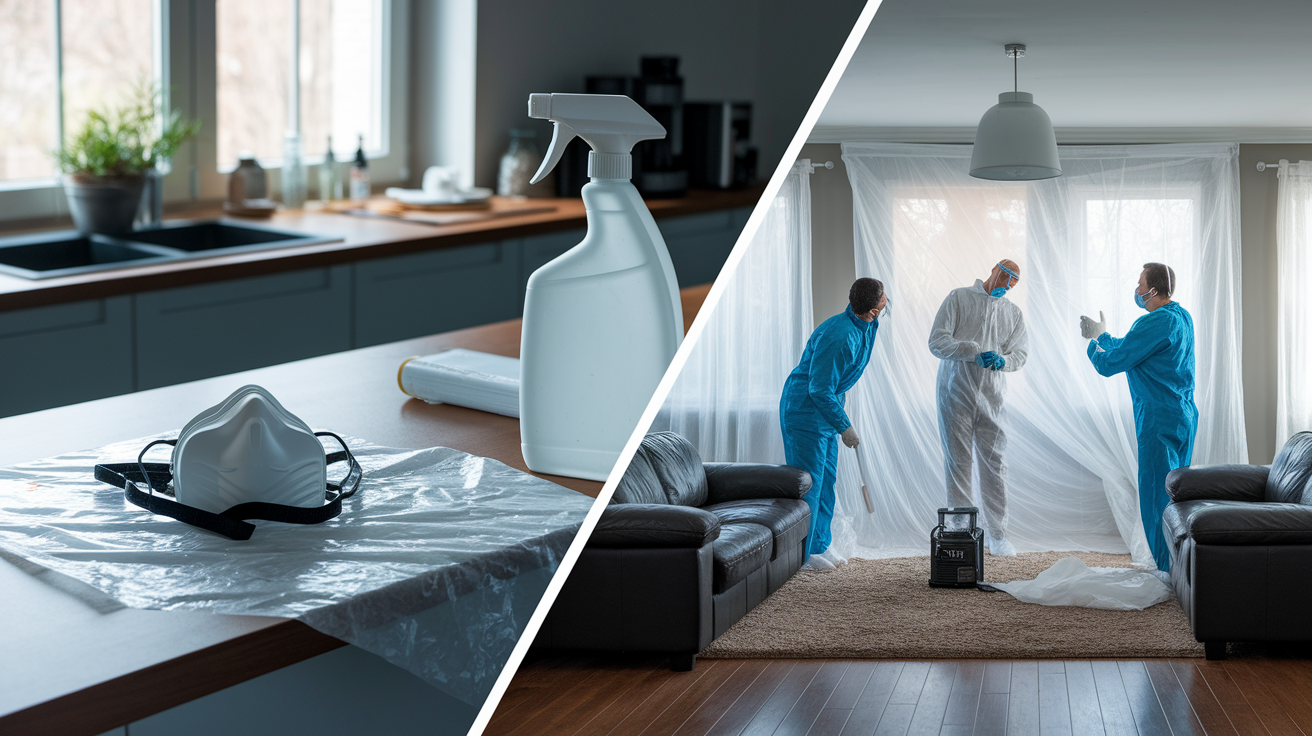
DIY supplies for small spots typically cost $20 to $150. That includes a respirator with P100 or N95 filters, disposable gloves, goggles, antimicrobial cleaner or diluted bleach alternative, plastic sheeting for containment, and disposal bags. HEPA vacuum rentals run $40 to $100 per day if you don’t own one. These costs work only when contamination is under 10 square feet, on nonporous surfaces like tile or painted wood, and there’s no HVAC involvement or structural damage.
Professional remediation starts around $500 for small jobs and climbs quickly for anything involving porous materials, hidden growth, or widespread contamination. Professionals bring containment barriers, negative air pressure systems, HEPA filtration, licensed technicians, and post remediation clearance testing. The gap between DIY and professional costs is large, but pros handle risks DIY can’t. Cross contamination, incomplete removal, and exposure to high spore counts that can trigger respiratory problems or worsen asthma.
- DIY material costs: $20–$150 for small surface jobs under 10 sq ft.
- Professional minimum: $500–$1,000 for contained, small area remediation with equipment and disposal.
- Risk and liability: Professionals carry insurance and provide documentation. DIY leaves liability and health risk with the homeowner.
Insurance Coverage for Remediation

Homeowners insurance rarely covers it unless it’s caused by a sudden, covered event like a burst pipe, appliance failure, or storm damage. Policies typically exclude growth resulting from long term leaks, poor maintenance, condensation, or gradual seepage. When coverage does apply, it usually caps payouts between $1,000 and $10,000 depending on the policy. Some insurers offer endorsements or riders that raise limits to $25,000 or $50,000, but those cost extra and aren’t standard.
Documentation matters if you file a claim. Take photos immediately after discovering contamination, document the moisture source and timeline, and keep all contractor invoices and inspection reports. Adjusters often require proof that the damage was sudden and accidental, not the result of deferred maintenance. Some policies also require you to mitigate damage immediately. Meaning you can’t wait weeks to dry out wet materials or stop an active leak, or the insurer may deny the claim.
Policy language varies widely. Read your declarations page and exclusions section carefully, or call your agent before hiring a contractor. If remediation is tied to a covered water loss, the insurer may cover removal and repairs up to the cap. If it’s tied to an excluded cause, like foundation seepage or years of bathroom humidity, you’ll pay out of pocket. Coverage for testing, air quality monitoring, and temporary relocation also depends on the policy and the scope of contamination.
Timeline and What to Expect During Removal

Most remediation projects take 1 to 5 days depending on contamination severity and square footage. Small bathroom jobs may finish in a single day. Larger projects involving multiple rooms, HVAC decontamination, or structural repairs stretch to a week or more. Drying time after water mitigation can add another 24 to 72 hours before remediation even begins, especially if contractors are waiting for materials to reach safe moisture levels.
Duration directly affects labor costs and equipment rental fees. Contractors typically charge daily rates for air scrubbers, dehumidifiers, and negative air machines. Jobs that take longer cost more, which is why timelines are included in written estimates. If hidden growth is discovered during demolition, the scope and timeline expand, often requiring a change order and additional cost approval before work continues.
- Inspection and containment setup — Day 1: visual assessment, moisture readings, plastic barriers installed, negative air machines running.
- Removal and disposal — Days 1–3: contaminated drywall, insulation, or other porous materials removed. HEPA vacuuming of framing and surfaces.
- Cleaning and antimicrobial treatment — Days 2–4: surfaces scrubbed, treated with specific solutions, air filtration continues.
- Clearance testing and reconstruction — Days 3–5+: air or surface samples taken to verify safe spore levels. Drywall, insulation, and finishes reinstalled if clearance passes.
When Professional Help Is Necessary

Professional remediation is required whenever contamination covers more than 10 square feet. That’s the threshold the EPA uses in its cleanup guidelines, and most contractors follow it. Small spots on tile or nonporous surfaces can be cleaned with household products. Anything larger, especially on drywall, insulation, carpet, or wood, needs containment and equipment to prevent spores from spreading during removal.
HVAC contamination makes professional help mandatory. Growth inside ducts or on air handler components spreads spores throughout the home every time the system runs. Duct cleaning alone costs $300 to $1,000, but full remediation with replacement of contaminated sections or units can reach several thousand dollars. DIY methods can’t address airflow systems safely or effectively.
- Contamination over 10 square feet — EPA guidance and most local codes require pros for jobs this size.
- HVAC or ductwork involvement — Growth in vents or air handlers spreads spores. Needs containment and specialized cleaning.
- Structural or hidden contamination — Growth inside walls, above ceilings, or under floors requires demolition and moisture verification tools homeowners don’t own.
- Recurring growth or ongoing moisture — If it returns after cleaning, the moisture source isn’t fixed and needs professional assessment and repair.
Final Words
Stop the leak and get a written estimate.
This post gives national averages, price per square foot, and how location and severity change costs. We covered DIY vs pro, contractor quote differences, insurance, and typical timelines.
If you’re wondering how much is black mold removal, expect a wide range and plan for an inspection. We’ll document damage, stop more harm, and give you clear numbers and a repair plan so you can move forward with confidence.
FAQ
Q: What kills 100% of black mold and can black mold be fully removed?
A: What kills 100% of black mold and whether it can be fully removed: no single home product guarantees complete kill; pros remove contaminated materials, use HEPA filtration and antimicrobials, then verify with testing and moisture readings.
Q: Will insurance pay for black mold?
A: Whether insurance will pay for black mold depends on the cause: insurers often cover mold from a sudden, covered event like a burst pipe, but not long-term leaks or neglect; check your policy and document damage.
Q: Is professional mold removal worth it?
A: Whether professional mold removal is worth it: yes for areas over 10 square feet, HVAC contamination, or structural issues—pros contain the area, remove unsafe materials, prevent spread, and provide insurance documentation.