


If you think airing out the house for a few hours will get rid of soot smell, you’re about to be disappointed. Soot doesn’t just float around waiting to blow outside. It embeds itself in fabrics, soaks into drywall, settles deep in your HVAC ducts, and keeps releasing that smoky odor for weeks or months if you don’t attack it properly. This guide walks you through the real three-part process: assess and ventilate first, deep clean everything the soot touched, then neutralize lingering odor with methods that actually work.
Effective Strategies for Eliminating Soot Odor

Getting soot smell out of your house takes a three part approach: assessment and ventilation first, then deep cleaning everything the soot touched, and finally targeted odor neutralization using both natural methods and mechanical equipment. Soot doesn’t just sit on surfaces where you can see it. It embeds itself in fabrics, soaks into porous materials like drywall and wood, travels through your HVAC system, and settles in spots you’d never think to look. Air fresheners won’t touch this problem because you’re fighting microscopic combustion particles that stick to everything and keep releasing smell over time.
The sections below walk through each phase step by step. We’ll start with identifying your specific soot source and making sure it’s safe to begin work, then move through ventilation techniques, surface specific cleaning methods, and finally odor absorption and air purification strategies. The process takes anywhere from a few days for minor candle soot to several weeks for extensive fire damage, depending on how much soot you’re dealing with and how fast you get started.
Identifying the Soot Source and Assessing Damage Severity

What caused your soot problem determines which cleaning methods will actually work and whether you can handle it yourself or need professional help.
Common soot sources include fireplace backflow when downdrafts push smoke into your living space instead of up the chimney, scented candles burning wrong and producing black smoke, furnace puffback incidents where oil burners misfire and blast soot throughout your ductwork, cooking fires that spread greasy smoke residue, and actual house fires of any size. Each source produces different types of soot. Some dry and powdery, others oily and sticky. They respond to different cleaning approaches.
| Soot Source | Soot Type | DIY or Professional |
|---|---|---|
| Fireplace backflow | Dry soot | DIY |
| Candles burning improperly | Dry soot | DIY |
| Furnace puffback | Oily soot | Professional |
| Minor cooking incident | Dry soot | DIY |
| House fire | Both types | Professional |
Assess your damage by examining how much area the soot covers, whether it wipes away easily or feels greasy, and how long it’s been sitting there. Dry soot appears powdery and brushes off somewhat easily with a dry sponge. Oily soot feels sticky and smears when you touch it. Time matters because acidic soot compounds corrode metal surfaces within hours and cause permanent discoloration on porous materials like wood, wallpaper, and painted drywall if you don’t remove them quickly. If you see widespread oily residue, notice soot inside your heating vents, or find permanent staining on surfaces, you’re looking at professional level work.
Essential Safety Precautions Before Removing Soot Smell

Soot contains toxic combustion byproducts and acidic compounds that pose real health risks when inhaled or absorbed through skin. Those same acidic compounds start corroding metal surfaces and degrading materials within hours of contact.
Before starting any cleaning work, gather this protective equipment:
- N95 or P100 respirator masks to prevent inhaling fine particles
- Rubber or nitrile gloves to protect skin from acidic compounds
- Eye protection to keep particles out of eyes
- Long sleeves and pants to minimize skin exposure
- Closed toe shoes that you can clean or discard afterward
- Hair coverage to keep soot out of hair
- Disposable coveralls for heavy contamination situations
Any food that was exposed to soot or smoke, even if it looks perfectly fine and was sealed in packaging, must be thrown out. Combustion particles carry harmful chemicals that contaminate food, and no amount of washing or wiping makes it safe to eat. This applies to pet food too.
Keep children and pets completely away from affected areas during cleaning. Dispose of heavily contaminated items in sealed bags rather than trying to save everything. Don’t track soot from contaminated rooms into clean areas of your house. Remove shoes and coveralls before moving between spaces. Recognize that extensive fire damage, widespread oily soot, or situations involving structural concerns require professional remediation both for safety and because insurance companies often require documented professional services for claims.
Immediate Ventilation Methods for Soot Odor Control

Ventilation is your critical first step, but understand that it won’t solve the problem by itself since soot particles stick to surfaces and won’t blow away completely.
Create cross ventilation by opening windows on opposite sides of your house so fresh air flows through rather than just circulating contaminated air. Open interior doors between rooms to allow airflow to reach all affected spaces. Prioritize the rooms with the heaviest soot exposure first. Get air moving there before worrying about lightly affected areas.
Position fans strategically using these steps:
- Place box fans in windows facing outward to exhaust contaminated air outside rather than recirculating it
- Position additional fans to direct airflow from clean areas toward contaminated zones, pushing dirty air toward the exhaust fans
- Run bathroom and kitchen exhaust fans at maximum settings to help pull air out of the house
- Avoid using ceiling fans, which just circulate particles around the room without removing them
- Maintain this ventilation setup for a minimum of 24 to 48 hours for light soot exposure, longer for heavier contamination
Replace your HVAC air filters immediately. Smoke particles clog filters fast and then get blown throughout your ductwork, spreading contamination to every room. Keep your heating and cooling system turned off during this initial ventilation phase to prevent circulating contaminated air through your ducts before you’ve had a chance to clean. If smoke entered your HVAC system at all, schedule a professional duct inspection because particles settle deep inside ductwork where you can’t reach them, and they’ll keep releasing odor every time your system runs.
Deep Cleaning Hard Surfaces to Eliminate Soot Residue
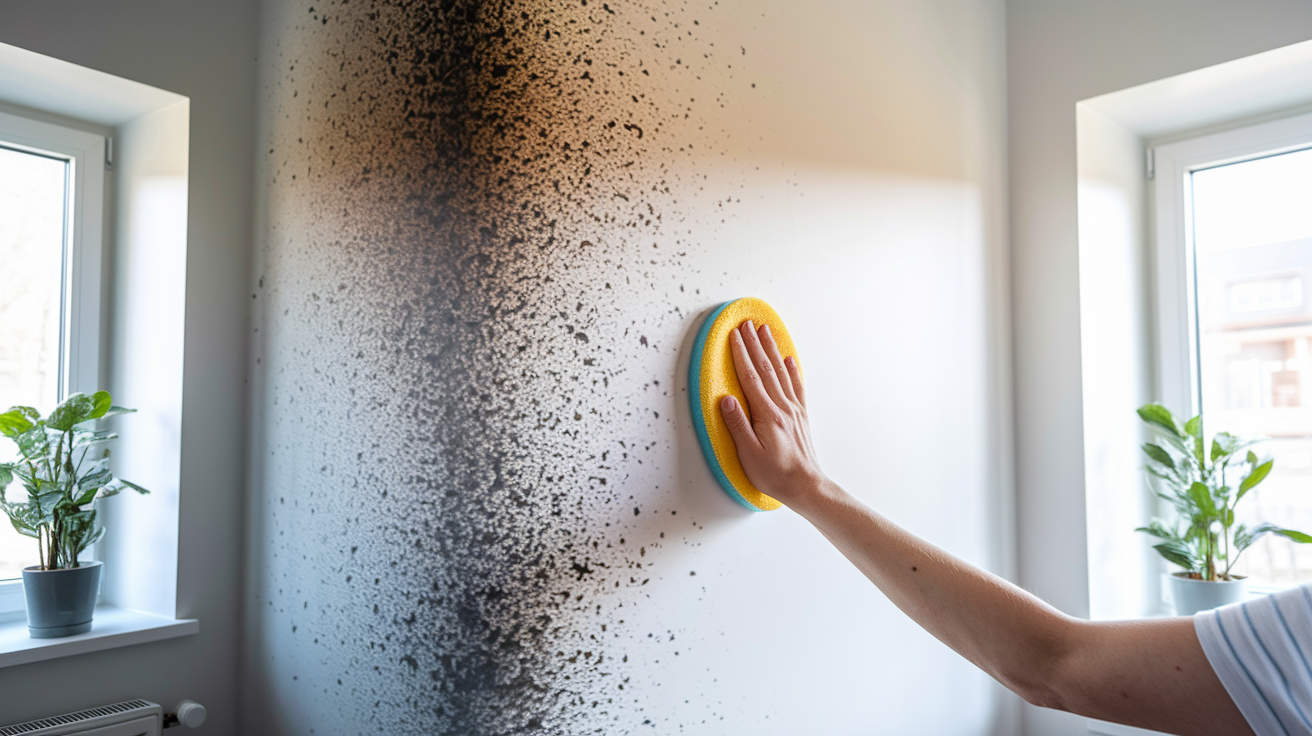
Always clean from top to bottom. Start with ceilings and work your way down to baseboards so you’re not contaminating already cleaned surfaces with soot that falls from above.
For dry soot, begin with a chemical dry sponge, also called a soot sponge, before using any water. These specialized sponges lift dry soot particles without smearing them. Work in overlapping strokes across the surface, and rotate or replace sections of the sponge as they become saturated with soot. If you keep using a dirty section, you’ll just smear soot around. After dry sponging, follow up with damp cleaning using either mild detergent mixed with water or a white vinegar solution made from one cup of vinegar per gallon of water.
Clean all these hard surfaces thoroughly:
- Ceilings, working in small sections
- Walls, starting at the top and working down
- Baseboards and all trim work
- Door frames and both sides of doors
- Window frames, sills, and glass
- Cabinet exteriors and interiors after removing contents
- Countertops and backsplashes
- Light switch plates and outlet covers
Oily soot won’t respond to simple detergent and requires TSP cleaner, trisodium phosphate, or a commercial degreaser formulated for smoke damage. Test any strong cleaning solution in an inconspicuous area first to make sure it won’t damage the finish. Oily soot that covers large areas or has penetrated porous surfaces may need professional cleaning equipment and solvents that aren’t available to consumers.
If visible staining remains after thorough cleaning, if odor keeps seeping from walls even after they’re clean, or if your existing paint finish was damaged during cleaning, you’ll need to apply an odor sealing primer before repainting. Use products specifically rated for smoke damage like Kilz or Zinsser BIN. Regular primer won’t block odor compounds from continuing to off gas through the new paint.
Carpet and Upholstery Soot Deodorizing Techniques

Carpets and upholstery present special challenges because their porous fibers trap soot particles deep inside where surface cleaning can’t reach. Standard vacuum cleaners with rotating brushes can push particles deeper instead of removing them, and using too much moisture or the wrong cleaning chemicals can permanently set stains.
Follow this treatment process for carpets and upholstered furniture:
- Vacuum thoroughly using a vacuum with a HEPA filter, making slow overlapping passes to capture as many particles as possible. For upholstery, use a handheld attachment without beater bars since rotating brushes force soot deeper into fabric.
- Sprinkle baking soda liberally over the entire surface, covering it completely
- Work the baking soda gently into the fibers using a soft brush, but don’t scrub aggressively
- Leave the baking soda in place for a minimum of 12 to 24 hours to absorb odor compounds
- Vacuum again thoroughly with your HEPA filtered vacuum, and repeat the entire process if odor persists after the first cycle
Test any cleaning solution on a hidden area before applying it to visible surfaces. Check an area under furniture or in a closet to make sure the cleaner won’t cause discoloration or damage. Avoid excessive moisture that can spread soot deeper into padding or cause mold growth, especially if you’re working with upholstery that dries slowly. Keep furniture pieces away from carpets during treatment to prevent cross contamination where furniture legs contact carpet fibers.
Professional carpet and furniture cleaning becomes necessary when odor remains after two complete DIY treatment cycles, when you see visible staining that home methods won’t remove, when you’re dealing with oily soot contamination that requires specialized extraction equipment, or when you’re treating high value furnishings where mistakes would be costly.
Cleaning Washable Fabrics Affected by Soot Odor

Washable items that need attention include all clothing that was in affected areas, bedding and pillows, towels and washcloths, removable curtains and drapes, washable furniture slipcovers, and table linens.
For items exposed to dry soot, sort everything by fabric type and color as you normally would, then use the hottest water temperature the fabric care label allows since heat helps release embedded smoke smell. Add one cup of white vinegar to the wash cycle along with your regular detergent. The vinegar neutralizes acidic odor compounds that detergent alone won’t remove. Include a commercial odor eliminator product if the smell is particularly strong, and run an extra rinse cycle to make sure all cleaning residue is removed.
Follow these best practices for smoke affected laundry:
- Air dry items outdoors in sunlight whenever possible since UV exposure helps break down remaining odor compounds
- Avoid putting items in the dryer until odor is completely gone because dryer heat can permanently set smoke smell into fibers
- Inspect items carefully after washing and rewash anything that still smells before drying
- Send delicate fabrics and anything labeled “dry clean only” to professional cleaners rather than risking damage
- Never put items with oily soot residue in your washing machine because the oily compounds can clog your machine’s pump and spread contamination to other laundry
Professional dry cleaners have specialized solvents designed for smoke odor removal that work better than water based home washing for certain items. Send suits, wool garments, silk clothing and draperies, structured curtains with linings, and anything labeled “dry clean only” to cleaners who have experience with smoke damage. Tell them specifically about the soot exposure so they use appropriate treatments.
Addressing Hidden Areas Where Soot Smell Accumulates

Soot particles settle everywhere, including spaces you don’t see during daily life. These hidden locations keep emitting odor even after you’ve cleaned all visible surfaces.
| Hidden Location | Cleaning Method | Priority Level |
|---|---|---|
| Closet interiors | Wipe walls and shelves, remove all items first | High |
| Dresser drawers | Empty completely and wipe all interior surfaces | Medium |
| Light fixtures | Remove covers and shades, wash thoroughly | Medium |
| Behind appliances | Pull out refrigerator, stove, washer to vacuum and wipe | High |
| Inside cabinets | Empty and wipe all surfaces including tops | High |
| Air ducts and vents | Professional cleaning required | High for fire events |
| Attic and crawl spaces | Professional assessment recommended | Medium |
Your HVAC system deserves special attention because smoke particles circulate through ductwork every time the system runs, continuously recontaminating spaces you’ve already cleaned. Replace your filters immediately. This isn’t optional. Vacuum and wipe down all supply and return vents you can access. For any significant smoke event, professional duct cleaning is essential because particles settle deep inside ductwork where home cleaning methods can’t reach them.
Professional HVAC duct cleaning costs vary based on contamination severity and your system size. Routine duct cleaning for maintenance purposes typically runs $300 to $500, but smoke remediation cleaning that requires specialized equipment and multiple passes through the system ranges from $500 to $2,000. That investment stops your ventilation system from recontaminating your home every time it cycles on.
Natural Odor Absorbers for Soot Smell Neutralization

Natural absorbers work continuously to capture airborne odor molecules and provide safe, affordable odor control that complements your mechanical cleaning efforts.
Use these methods throughout your home:
White vinegar bowls. Place uncovered bowls containing 1 to 2 cups of white vinegar in each affected room, replacing the vinegar every 24 hours. Alternatively, simmer a 50/50 vinegar water solution on your stovetop for 30 minutes to treat the whole house at once. The vinegar smell dissipates as it dries, taking smoke odor with it.
Activated charcoal bags. Position bags near odor sources, in closets, and in central room locations. These bags adsorb odor molecules from the air. Recharge them monthly by placing in direct sunlight for several hours.
Baking soda boxes. Open boxes of baking soda and place them in closets, drawers, and around rooms. Replace monthly as the baking soda becomes saturated with absorbed odors.
Coffee grounds. Use fresh, unused coffee grounds in breathable fabric bags or open containers for enclosed spaces like cabinets. The grounds absorb odors without adding coffee scent to your belongings.
Lemon water. After completing all cleaning work, simmer lemon slices in water on your stovetop to add fresh scent. This is a finishing touch, not a treatment method.
These natural absorbers work by capturing volatile organic compounds that cause odors, neutralizing acidic odor molecules through chemical interaction, and providing continuous odor control between your active cleaning sessions. They work by absorption, physically trapping odor molecules, and neutralization, chemically altering odor compounds so they no longer smell.
Natural absorbers supplement but don’t replace physical cleaning. They work best after you’ve removed soot residue from surfaces. Otherwise you’re trying to absorb odors that are still being generated by contaminated materials.
Air Purification Systems for Persistent Soot Odor

Mechanical air purification removes airborne soot particles and odor molecules that cleaning alone cannot address. These microscopic particles remain suspended in your home’s air for extended periods, standard ventilation doesn’t capture them before they resettle on surfaces, and continuous filtration prevents the recontamination of areas you’ve already cleaned.
Effective air purification requires dual filtration technology working together. HEPA filters capture 99.97% of particles 0.3 microns and larger, including soot particles, ash, and solid combustion byproducts that cause visible residue. Activated carbon filters handle what HEPA can’t. They adsorb gaseous odor molecules and volatile organic compounds that pass right through HEPA material. You need both filter types because soot odor comes from both solid particles and gaseous compounds.
Run your air purifiers effectively by following these steps:
- Select a unit sized appropriately for your room’s square footage with a CADR, Clean Air Delivery Rate, rating specifically for smoke particles
- Position the purifier in a central location at least one foot away from walls so air can circulate freely around all sides
- Run continuously on the highest setting for the first 48 to 72 hours to remove the bulk of airborne contamination
- Replace filters according to the manufacturer’s schedule, or sooner if they appear visibly dirty when you check them
- Use multiple units for whole house treatment since most residential purifiers are designed to treat one room effectively
Professional air purification systems offer capabilities beyond consumer models for severe contamination situations. Commercial grade air scrubbers process much higher air volumes per hour, use medical grade HEPA filtration that captures even smaller particles, include multiple activated carbon stages for aggressive odor removal, and are available through restoration companies for temporary rental during intensive remediation projects. Light smoke exposure may clear in one to two days with ventilation and residential air purification. Heavy, ingrained smoke smells require deep cleaning, natural absorption methods, and continuous operation of HEPA air purifiers with activated carbon filtration.
Commercial Odor Neutralizers and Soot Smell Encapsulation
Commercial products that neutralize or encapsulate odors work differently than air fresheners and scented sprays, which only mask smells temporarily without addressing the underlying odor sources.
Enzymatic odor neutralizers contain biological enzymes that break down organic odor compounds at the molecular level, permanently eliminating them rather than covering them up. Apply these products after you’ve completed surface cleaning, allow the recommended dwell time of 6 to 24 hours for the enzymes to work, and expect best results on porous surfaces like unsealed wood and concrete where odor molecules have penetrated deeply.
Use these specialized products for different situations:
Enzymatic spray cleaners. Apply to fabrics, unsealed wood, and other porous surfaces after initial cleaning.
Hydroxyl generating devices. Professional equipment that treats entire rooms by producing hydroxyl radicals that break down odor compounds in air and on surfaces.
Odor blocking primers. Oil based or shellac based primers applied to walls and ceilings before repainting to seal in odors that cleaning couldn’t remove.
Commercial smoke sealants. Applied to permanently affected wood surfaces to encapsulate odor compounds.
Professional grade vapor barrier paints. Used for severe odor encapsulation when standard primers aren’t sufficient.
Odor sealing primers deserve special attention because they’re essential when porous drywall or plaster has absorbed smoke compounds too deeply for cleaning to remove. Apply primer only after cleaning and completely drying the surface. Primer can’t seal in surface contamination. Use products specifically rated for smoke damage like Kilz, Zinsser BIN, or similar primers that list smoke odor blocking in their specifications. These primers require proper ventilation during application because they contain strong solvents.
Surface sealing with primers and vapor barrier paints is a last resort solution for when cleaning, absorption methods, and air purification don’t eliminate odor from porous building materials. It works by creating an impermeable barrier that prevents trapped odor compounds from off gassing into your living space. Once sealed, those surfaces won’t release smell even though odor compounds remain trapped inside the material.
Professional Soot Odor Removal Services and Methods
Professional intervention becomes necessary when odor persists despite thorough DIY cleaning efforts, when you’re dealing with extensive fire damage affecting multiple rooms, when oily soot contamination requires specialized solvents and equipment you don’t have access to, when your HVAC system is contaminated and needs complete servicing, when structural damage raises safety concerns, or when insurance coverage requires documented professional services for your claim.
Professional fire damage restoration companies provide specialized services and equipment that go beyond consumer level solutions.
Ozone Treatment
Ozone generators produce O3 molecules that oxidize and chemically break down odor compounds at the molecular level, destroying them rather than masking or absorbing them. Treatment requires complete evacuation of all people, pets, and plants for the entire treatment period, typically 24 to 48 hours, followed by an extended ventilation period of several hours before the space is safe to reoccupy. Ozone treatment remains controversial. Some restoration professionals swear by it while others avoid it due to concerns about material damage and health risks if not performed correctly. This is not a DIY method because improper ozone exposure damages lungs and degrades certain materials.
Thermal Fogging
Thermal fogging heats a deodorizing solution until it vaporizes into a fog that penetrates fabrics, wall cavities, and hidden spaces following the same paths smoke originally traveled. The fog particles neutralize odors through direct chemical interaction with odor compounds. Only trained technicians with specialized heating equipment perform this service, and it’s typically combined with other cleaning methods rather than used as a standalone treatment for comprehensive odor elimination.
Professional HVAC and Duct Cleaning
Professional duct cleaning for smoke remediation includes inspection of your entire system to locate all contamination, mechanical agitation using specialized brushes and air whips to dislodge particles stuck to duct walls, powerful vacuum extraction to remove loosened soot, sanitization of system components with antimicrobial treatments, complete filter replacement throughout the system, and verification testing to confirm proper operation and air quality.
Full service restoration companies coordinate every aspect of recovery as an integrated service: initial damage assessment with documentation for insurance, emergency stabilization to prevent further damage, comprehensive cleaning of all affected materials, necessary repairs to damaged building components, and finish work to restore your home’s appearance. Working with one company that handles the complete sequence eliminates coordination headaches and ensures each phase is completed properly before the next begins.
Timeline Expectations for Soot Smell Removal Success
How long complete odor removal takes depends on how much soot exposure occurred, how quickly you start remediation after the incident, and which cleaning methods you use.
| Contamination Level | Typical Timeline | Methods Required |
|---|---|---|
| Minor (candle soot, single room) | 2 to 5 days | Ventilation, surface wiping, natural absorbers |
| Moderate (fireplace backdraft, multiple rooms) | 1 to 2 weeks | Deep cleaning, laundering, air purification, odor neutralizers |
| Severe (furnace puffback, oily soot) | 2 to 4 weeks | Professional cleaning, HVAC service, possible primer/repainting, ongoing air treatment |
| Extensive (house fire) | 4 to 12 weeks | Full professional restoration, structural repairs, complete remediation |
Some cases take longer than others for specific reasons. Oily soot requires specialized solvents and more aggressive treatment than dry soot, often needing multiple cleaning passes. Delayed response allows soot to penetrate deeper into porous materials where it becomes harder to remove. Quick action makes everything easier. High humidity environments slow drying and prolong odor because moisture keeps odor compounds active. Some materials eventually need replacement rather than cleaning when odor has penetrated too deeply or when the cost of cleaning exceeds replacement value.
You’ll know you’re finished when the odor is no longer detectable when you come inside from fresh air outdoors. Your nose adjusts to constant smells, so stepping outside and coming back in gives you a fresh perspective. When no visual soot residue remains on any surface, and when air quality testing shows acceptable particulate levels if you choose to verify scientifically.
Cost Considerations for Soot Odor Removal Projects
Costs vary widely based on how much contamination you’re dealing with, which cleaning methods you choose, and whether your homeowners insurance covers the damage.
Typical DIY costs include:
- Cleaning supplies and chemical sponges: $30 to $60
- White vinegar and baking soda in quantity: $15 to $30
- Activated charcoal bags for multiple rooms: $25 to $50
- HEPA vacuum purchase or short term rental: $50 to $150 purchase, $30 to $50 rental
- Residential air purifier with HEPA and carbon filtration: $150 to $400
- Replacement HVAC filters: $20 to $80 depending on system size
- Enzymatic odor neutralizer products: $25 to $75
- Odor sealing primer and paint for an average room: $75 to $200
| Professional Service | Typical Cost Range | When Needed |
|---|---|---|
| Carpet and upholstery cleaning | $150 to $500 | Persistent odor after DIY attempts |
| HVAC duct cleaning | $300 to $2,000 | Smoke entered ventilation system |
| Ozone treatment | $400 to $1,200 | Severe odor in multiple rooms |
| Complete fire restoration | $5,000 to $50,000+ | Structural damage, extensive contamination |
| Thermal fogging | $500 to $1,500 | Odor penetrated walls and hidden spaces |
Most homeowners insurance policies cover fire and smoke damage including professional remediation costs. Document everything with photos before you start cleaning, during the process, and after completion. Save all receipts for cleaning supplies and professional services. Obtain written estimates from professional restoration companies even if you plan to do some work yourself. Insurance adjusters use these estimates to determine claim values. Understand your policy’s deductible and coverage limits before starting work. Many restoration companies work directly with insurance adjusters and can bill insurance companies directly, which simplifies the claims process.
Attempting inadequate DIY methods can actually increase long term costs if odor persists and you eventually need professional help anyway, or if you damage materials through improper cleaning techniques and create additional repair expenses. Start with appropriate methods for your contamination level rather than hoping the cheapest approach will work.
Preventing Future Soot Smell Problems in Your Home
Prevention costs far less and causes far less disruption than remediation after soot damage has occurred.
Take these preventive steps regularly:
- Schedule annual furnace inspections and professional cleaning before each heating season starts
- Have your chimney professionally swept and inspected yearly if you use your fireplace regularly
- Replace HVAC filters every 1 to 3 months depending on system usage and manufacturer recommendations
- Use properly sized candles in stable holders positioned away from drafts and curtains
- Trim candle wicks to 1/4 inch before lighting each time to prevent excessive soot production
- Install smoke detectors in all required locations and test them monthly to catch problems early
- Use your kitchen exhaust fan during all cooking and clean the hood filters monthly
- Ensure proper fireplace draft before lighting fires by holding a lit match near the damper opening to verify upward airflow, and never close the damper while hot ashes remain
- Address any unusual odors from your HVAC or heating system immediately rather than waiting to see if they go away
- Establish and enforce outdoor only smoking rules with designated areas kept away from windows and air intake vents
Recognize warning signs before they become major problems: unusual burning or musty odors when your heating system starts up, visible soot accumulation around supply vents or above your fireplace opening, candles that produce black smoke instead of clean flame, or your furnace cycling on and off irregularly.
Professional maintenance contracts provide value beyond the immediate service. Annual HVAC service agreements typically cost $150 to $300 but catch developing problems before they cause damage, often including priority emergency service if problems do occur. Chimney sweep services run $125 to $250 but prevent dangerous creosote buildup that causes chimney fires and backdraft incidents that fill your home with smoke. Documentation of regular professional maintenance supports insurance claims if incidents occur despite your preventive efforts, showing you maintained your systems responsibly.
Final Words
Removing soot smell from house takes patience and the right approach for your situation.
Start with ventilation, work through cleaning systematically from top to bottom, and use natural absorbers or air purifiers to catch what surfaces release over time.
Light soot clears in days. Heavy contamination needs weeks and possibly professional help.
If you’ve cleaned thoroughly and the odor still won’t budge, that’s when specialized restoration makes sense. We handle the full process so you’re not juggling contractors or wondering what to do next.
Your home can smell clean again.
FAQ
How can you effectively get rid of soot smell in your house?
You can effectively get rid of soot smell in your house by ventilating the space thoroughly, deep cleaning all hard surfaces from ceiling to floor, treating carpets and fabrics with baking soda, washing all washable items with vinegar, and running HEPA air purifiers with activated carbon filters continuously until the odor clears.
What materials and methods absorb smoke odor most effectively?
Activated charcoal bags, baking soda, and white vinegar absorb smoke odor most effectively because they capture volatile organic compounds and neutralize acidic odor molecules rather than just masking the smell. Place these natural absorbers throughout affected rooms and replace them regularly for continuous odor control.
How long does soot smell typically last in a home?
Soot smell typically lasts 2-5 days for minor exposure with proper ventilation and cleaning, 1-2 weeks for moderate contamination requiring deep cleaning, or 2-4 weeks for severe cases involving oily soot or furnace puffback. Heavy house fire smoke damage may require 4-12 weeks of professional restoration to eliminate completely.
What products and techniques do professional restoration services use to remove smoke smell?
Professional restoration services use ozone generators that break down odor molecules, thermal fogging that penetrates deep into porous materials, HVAC duct cleaning to remove embedded particles, odor-sealing primers before repainting, and hydroxyl generators for whole-room treatment. These specialized methods reach areas and contamination levels that DIY cleaning cannot address effectively.
When should you call professionals instead of attempting DIY soot odor removal?
You should call professionals when odor persists after thorough DIY cleaning attempts, when dealing with oily soot from furnace malfunctions, when smoke has contaminated your HVAC system, after house fires affecting multiple rooms, or when structural damage assessment is needed. Professional services have specialized equipment and techniques for severe contamination.
Can natural methods like vinegar and baking soda completely eliminate soot odor?
Natural methods like vinegar and baking soda help reduce soot odor but work best as supplements to physical cleaning rather than standalone solutions. They absorb airborne odor molecules and neutralize acidic compounds effectively after you’ve removed soot residue from surfaces through proper cleaning.
How do you prevent soot buildup and smoke odors from recurring?
You prevent soot buildup and smoke odors from recurring by scheduling annual furnace inspections and chimney cleanings, replacing HVAC filters every 1-3 months, using kitchen exhaust fans during cooking, trimming candle wicks to prevent excess soot, and addressing unusual heating system odors immediately before they spread.
What safety equipment do you need before cleaning soot from your home?
You need N95 or P100 respirator masks, rubber or nitrile gloves, eye protection, long sleeves and pants, and closed-toe shoes before cleaning soot from your home. For heavy contamination, add hair coverage and disposable coveralls to prevent exposure to toxic combustion byproducts and acidic compounds.
How does HVAC system contamination affect soot odor removal success?
HVAC system contamination continuously recontaminates cleaned spaces by circulating smoke particles through ductwork back into your home. You must replace filters immediately, clean supply and return vents, and schedule professional duct cleaning after significant smoke events to prevent odor from returning.
What’s the difference between dry soot and oily soot for cleaning purposes?
Dry soot comes from wood, paper, or candles and cleans with chemical sponges and mild detergents, while oily soot from furnace malfunctions or petroleum products requires TSP cleaner, commercial degreasers, and often professional equipment. Oily soot penetrates deeper into porous materials and poses greater cleaning challenges.