
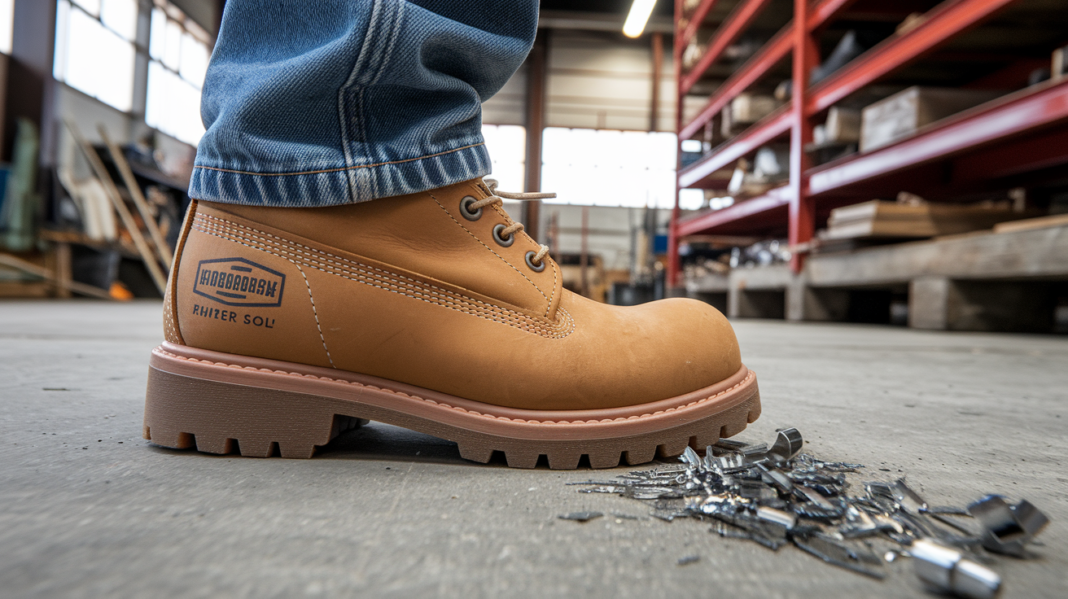

Ever thought about the ground beneath your feet being the difference between a close call and a deadly shock? When you’re standing near energized equipment, your footwear either blocks electrical current or lets it flow straight through your body to the ground. EH-rated safety shoes create that barrier with thick insulating soles tested to resist 18,000 volts, protecting electricians, maintenance workers, and anyone working around live circuits. But here’s what matters: EH protection only works in dry conditions, and it’s backup protection, not your primary defense against electrical hazards.
What Electrical Hazard Safety Shoes Are and How They Protect You

EH-rated safety shoes protect against electrical shock by using thick insulating soles rated for 600-volt workplace protection, with testing showing resistance up to 18,000 volts. These shoes work by blocking electrical current from traveling through your body to the ground when you’re standing on or near energized equipment. The non-conductive soles create a barrier that stops electricity flow, preventing you from becoming a path to ground during accidental contact with live circuits or energized surfaces.
The ASTM F2413 standard defines how electrical hazard footwear gets certified. During testing, shoes must resist 18,000 volts at 60 Hz for one full minute while allowing less than 1 milliampere of leakage current to pass through. This rigorous test confirms the footwear’s ability to provide shock resistance under controlled lab conditions. Certified EH-rated shoes carry labels inside the footwear clearly showing their EH Series rating, and the boots themselves get marked with EH Series labels on the upper portion.
Key protection features and certification identifiers include:
- Non-conductive sole and heel construction using thick insulating materials that prevent current flow to ground
- ASTM F2413 certification with interior labeling confirming electrical hazard rating and compliance
- 18,000-volt test resistance with maximum leakage current below 1 milliampere during standardized testing
- Dry condition requirement, electrical protection functions only when both the shoe and ground surface remain dry
- Step potential protection while standing on ground near energized equipment or circuits
EH protection works only in dry conditions and serves as supplemental protection, not primary protection against electrical hazards. Moisture creates conductive paths that bypass the sole’s insulation, eliminating the electrical barrier between your body and ground. EH-rated footwear can’t protect workers who directly contact energized circuits or work on live electrical systems. That requires de-energizing circuits and using insulated gloves, tools, and other primary protective equipment. You’ve also got to maintain safe working distance from energized parts, following lockout/tagout procedures and comprehensive electrical safety protocols.
OSHA Requirements and Regulatory Compliance for EH-Rated Footwear

OSHA requires workers exposed to live electrical circuits and energized equipment to wear EH-rated safety footwear as part of their personal protective equipment. This mandate applies when employees face potential electrical shock hazards from step potential, voltage differences that can exist between two points on the ground near energized equipment. Workers performing tasks around live wires, electrical panels, power distribution systems, or any location where accidental contact with electricity could occur must wear footwear meeting electrical hazard standards.
OSHA adopts ASTM F2413 standards as the benchmark for electrical hazard footwear compliance, making ASTM certification the regulatory requirement for workplace electrical safety programs.
Specific occupations and industries mandated to wear EH-rated shoes include:
- Electricians installing, maintaining, and repairing electrical systems in residential, commercial, and industrial settings
- Linesmen working on utility power lines and electrical distribution infrastructure
- Industrial engineers overseeing electrical equipment and production machinery in manufacturing facilities
- Maintenance workers servicing building electrical systems, HVAC equipment, and facility infrastructure
- Construction workers operating near temporary power sources, overhead lines, and electrical site installations
- Utilities workers in power generation plants, substations, and electrical distribution networks
- Manufacturing technicians operating electrical machinery and automated production equipment
- Power line workers installing and maintaining overhead and underground electrical transmission systems
Employers carry responsibility for conducting workplace hazard assessments to identify electrical risks, providing appropriate ASTM-certified footwear to exposed workers, and delivering training on proper use and limitations of EH-rated shoes. This includes documenting the hazard assessment, making sure footwear certification matches identified electrical risks, establishing inspection and replacement protocols, and confirming employees understand when and how to wear their protective footwear correctly.
OSHA requires EH shoes as one component within layered electrical safety systems, not as standalone protection against electrical hazards. Complete electrical safety programs include circuit de-energization as the primary control, followed by lockout/tagout procedures, insulated tools, rubber insulating gloves rated for voltage levels, and EH-rated footwear as supplemental protection.
How Electrical Hazard Shoes Differ from Static Dissipative and Dielectric Footwear
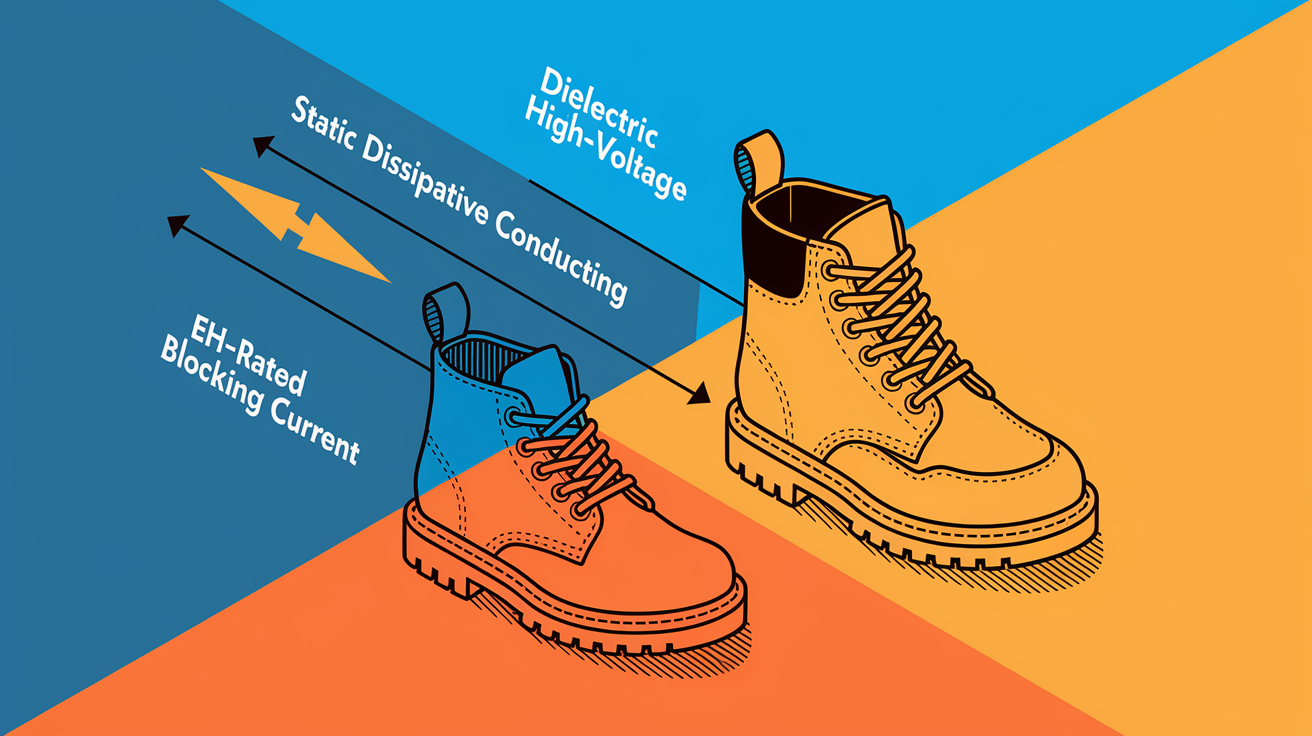
These footwear types serve opposite electrical functions. Some prevent current flow while others promote it, making proper selection critical for worker safety in different electrical environments.
EH-Rated Footwear Characteristics
EH-rated footwear uses non-conductive design that actively blocks electrical current from passing through the shoe to ground. These shoes provide 600-volt workplace protection, tested to withstand 18,000 volts under controlled conditions, specifically protecting against step potential when standing near energized equipment. EH protection functions strictly in dry conditions. Moisture on the shoe or ground surface creates conductive paths that eliminate the insulating barrier.
Dielectric Footwear for Higher Voltage Environments
Dielectric footwear undergoes testing to higher voltage levels than standard EH-rated shoes and maintains electrical protection even in wet conditions. This specialized footwear serves electrical utility workers and other professionals who face higher voltage exposure or work in environments where moisture can’t be controlled.
Static Dissipative (SD) and ESD Footwear
Static dissipative footwear intentionally conducts electricity from your body through the shoe to ground, preventing static buildup that could ignite flammable atmospheres or damage sensitive electronic components. These shoes protect against ignition hazards from flammable materials and gases by continuously dissipating static charges before they accumulate to dangerous levels. Static dissipative boots with steel toe comply with ASTM F2413 certification standard, while soft toe versions meet ASTM F2892 requirements. This footwear requires regular cleaning and resistance testing because flexing, contamination, and moisture can change electrical resistance properties over time. Static dissipative and ESD footwear serve the opposite function from EH-rated shoes. They’re designed to conduct electricity, not block it.
Electrically Conductive Footwear
Conductive footwear provides maximum conductivity for fastest static discharge in explosive atmospheres where even brief static accumulation poses immediate fire or explosion risks when working with volatile chemicals, dusts, or gases.
| Footwear Type | Electrical Function | Primary Hazard Addressed | Wet Use Capability | Typical Applications |
|---|---|---|---|---|
| EH-Rated | Blocks current flow to ground | Electrical shock from step potential | Dry conditions only | Construction, utilities, manufacturing with electrical equipment |
| Dielectric | Blocks current at higher voltages | High-voltage electrical shock | Wet and dry conditions | Electrical utility linework, high-voltage maintenance |
| Static Dissipative | Conducts static safely to ground | Static ignition of flammable atmospheres | Controlled resistance in various conditions | Electronics manufacturing, refineries, chemical plants, explosive atmospheres |
| Electrically Conductive | Maximum conductivity for rapid discharge | Static ignition with immediate fire/explosion risk | Controlled maximum resistance | Munitions handling, volatile chemical processing, explosive dust environments |
Industries and Work Environments Requiring Electrical Hazard Boots

Electrical hazards exist in numerous industries beyond dedicated electrical trades, affecting workers who operate near energized equipment, power sources, and electrical distribution systems even when electrical work isn’t their primary job function.
Work environments and scenarios where electrical hazards exist include:
- Construction sites near overhead power lines, temporary electrical service, and underground utilities
- Manufacturing plants with electrical machinery, motor-driven equipment, and automated production systems
- Utilities and power generation facilities including substations, generation plants, and distribution networks
- Building maintenance operations servicing lighting, HVAC, elevators, and electrical infrastructure
- HVAC installation and repair involving electrical connections to heating, cooling, and ventilation equipment
- Telecommunications infrastructure work on cell towers, network equipment, and communication systems
- Food processing plants with electrical conveyor systems, refrigeration equipment, and processing machinery
- Healthcare facilities maintaining medical imaging equipment, power distribution, and critical electrical systems
- Transportation maintenance shops servicing electric vehicles, charging systems, and rail electrical systems
- Industrial machinery operations with motor-driven equipment, control panels, and electrical automation
Construction sites present electrical risks from proximity to power lines during excavation, crane operation, and scaffold installation near overhead conductors. Manufacturing environments expose workers to energized machinery, control panels, and electrical drives that power production equipment. Building systems maintenance requires working around electrical panels, circuit breakers, and distribution equipment that remains energized during facility operations. Healthcare and food service facilities maintain electrical equipment that can’t be fully de-energized during working hours, creating step potential hazards for maintenance staff. These diverse environments share common electrical risks requiring supplemental protection through EH-rated footwear combined with comprehensive electrical safety protocols.
Key Construction Features That Make Safety Shoes Electrical Hazard Rated

Sole and heel construction forms the foundation of electrical hazard protection, using thick insulating materials that create high electrical resistance between the foot and ground. These materials, typically specialized rubber compounds and engineered polymers, must maintain their insulating properties under compression and flexing during normal walking. The sole thickness and material density work together to stop current flow, preventing electricity from passing through the shoe when you stand on or near energized surfaces. Both the outsole and heel require consistent electrical resistance across their entire surface since current will follow the path of least resistance through any weak point in the construction.
Upper materials don’t determine EH rating status. The sole and heel construction carry full responsibility for electrical protection. Leather footwear doesn’t automatically qualify as EH-rated, even when it includes arc flash protection or fire-resistant properties. A boot can feature premium full-grain leather uppers, moisture barriers, and advanced comfort systems while completely lacking electrical hazard protection if the sole hasn’t been constructed with insulating materials and tested to ASTM F2413 standards. The certification comes from complete construction validation through standardized testing, not from assumptions based on material type or appearance.
Safety toe protection options including composite, steel, and alloy toe caps integrate with EH-rated footwear without compromising electrical protection when properly designed. Composite toe styles (135 available options) use non-conductive materials that complement EH protection. Steel toe (17 styles) and alloy toe (21 styles) caps are isolated from ground contact by the insulating sole, preventing them from creating conductive paths. Soft toe options (44 styles) eliminate metal components entirely while maintaining full electrical hazard protection through sole construction. The toe protection choice depends on impact and compression hazards in the work environment, selected independently from the electrical hazard rating.
Complete boot integrity throughout its service life determines whether electrical protection remains effective. Any puncture, embedded conductive material, or structural damage that breaches the sole creates a direct path for current to flow from your foot to ground. A single nail penetrating the outsole, metal shavings embedded in the tread, or excessive wear reducing sole thickness all eliminate the electrical barrier the shoe was designed to provide. This makes ongoing inspection and proper maintenance critical. EH protection exists only when the insulating barrier remains completely intact with no conductive bridges connecting the interior of the shoe to the ground surface.
| Component | Material Type | EH Protection Role |
|---|---|---|
| Outsole | Specialized rubber compounds, engineered polymers | Primary electrical resistance barrier between foot and ground |
| Midsole | Non-conductive foam, cushioning polymers | Secondary insulation layer, maintains electrical resistance through shoe structure |
| Heel | High-resistance rubber, insulating compounds | Prevents current flow through heel strike area during walking |
| Upper | Leather, synthetic materials, textile | No direct EH protection role, contains foot within protective sole structure |
| Toe Cap | Composite, steel, alloy (when present) | Isolated from ground by insulating sole, doesn’t compromise electrical protection |
Conditions That Compromise Protection and Proper Maintenance Practices

EH protection functions only in dry conditions because moisture creates conductive paths that bypass the sole’s insulation properties. Water conducts electricity far better than the insulating materials in EH-rated soles, so even a thin film of moisture on the outsole or ground surface provides an alternative route for current to flow from you to ground. Standing water, wet concrete, rain-soaked surfaces, and even high humidity that causes condensation on the sole all eliminate the electrical barrier the footwear was designed to provide. The insulating materials remain intact, but moisture bridges the gap they’re meant to maintain.
Environmental conditions that compromise EH protection include:
- Wet surfaces including water, oil, coolant, or other liquids on floors
- Humid environments where condensation forms on sole surfaces
- Rain exposure saturating footwear exteriors and ground contact areas
- Standing water from flooding, drainage problems, or outdoor weather conditions
- Perspiration buildup inside footwear that saturates insole and migrates to outsole
- Cleaning with excessive water that doesn’t fully dry before wearing
Physical damage, sole wear, and contamination create electrical pathways through footwear that completely eliminate EH protection. Excessive wear reduces sole thickness until the remaining material no longer provides adequate insulation. Think of it like wearing through the tread on a tire until the thinner inner layers become exposed. Punctures from nails, screws, or sharp objects create direct holes connecting the inside of the shoe to ground. Metal shavings, wire fragments, staples, or other conductive debris embedded in the tread act as tiny conductors carrying current through the insulating sole material. Any of these conditions turn EH-rated footwear into standard work shoes with no electrical protection capability.
Specific contaminants and damage types that eliminate EH protection:
- Metal shavings and wire fragments embedded in sole tread patterns
- Screws, nails, staples, or other fasteners penetrating through sole material
- Excessive sole wear reducing thickness below effective insulation levels
- Punctures, cuts, or tears in sole material creating pathways through the insulation
- Cracks in sole or heel from age, flexing, or environmental degradation
Daily inspection routines before each shift prevent you from relying on compromised footwear. Visual inspection checks the entire outsole for embedded metal, visible punctures, and worn areas where thickness has diminished noticeably. Run your hand across the sole to feel for embedded objects your eyes might miss. Flex the shoe to check for cracks in the sole or separation between layers. Look at heel wear patterns. Uneven wear can expose thinner material or create gaps. This takes 30 seconds and catches problems before you step onto a work site where electrical hazards exist.
Proper cleaning procedures that maintain EH protection:
- Remove loose debris, dirt, and visible contaminants from sole surface after each work shift
- Apply mild soap solution to outsole and heel using clean water
- Scrub tread patterns with soft brush to dislodge embedded particles without damaging sole material
- Rinse thoroughly with clean warm water to remove soap residue and loosened contamination
- Check carefully for embedded conductive materials like metal shavings that resist removal
- Inspect sole thickness and overall integrity for wear, punctures, or structural damage
- Air-dry completely away from direct heat sources before storing or wearing
Storage away from electric motors, transformers, and electrical equipment prevents premature material degradation that compromises EH protection. Electrical fields can cause cracking and deterioration in the rubber compounds and polymers used in insulating soles. Store footwear in cool, dry locations away from temperature extremes, direct sunlight, and ozone-generating equipment. Keep them elevated off damp concrete floors. Don’t leave EH-rated shoes in vehicles where heat cycles speed up material breakdown. Clear replacement indicators include outsoles with embedded conductive materials that can’t be removed, sole thickness diminished noticeably from wear patterns, any punctures or tears visible in sole material, and cracks in the sole or heel structure. When you see these signs, the footwear has lost its electrical protection capability. Dispose of it immediately rather than risking electrical shock from compromised insulation.
Combining Electrical Hazard Protection with Other Safety Features

Workers face multiple simultaneous hazards in most industrial and construction environments, requiring integrated protection rather than single-function safety footwear. A maintenance electrician might encounter electrical shock risks, slip hazards from oil on concrete floors, and impact dangers from dropped tools during a single shift. Construction workers near power lines also walk on uneven ground, handle heavy materials, and work in weather conditions creating slip risks. Multi-hazard footwear addresses these layered workplace dangers through engineered designs that don’t compromise any individual protection element.
Slip-resistant outsoles combined with EH rating use tread patterns and rubber compounds that maintain both traction and electrical insulation properties simultaneously. The deep lugs and channels that provide grip on slick surfaces are molded from the same non-conductive materials that block current flow to ground. Oil-resistant rubber formulations prevent the sole from breaking down when exposed to petroleum products while maintaining the electrical resistance required for EH certification. This dual protection matters in manufacturing plants where machine coolant creates slippery floors around energized equipment, and in food processing facilities with both electrical machinery and wet, greasy work surfaces.
Impact protection through safety toes doesn’t compromise electrical hazard rating when the toe cap remains isolated from ground contact by the insulating sole. Composite toe caps (135 available styles) use non-metallic materials that complement EH protection with no conductive components. Steel toe (17 styles) and alloy toe (21 styles) options protect against crushing and impact while the thick insulating sole prevents the metal toe cap from creating a path to ground. The toe protection sits above the EH-rated sole structure, separated from ground contact during normal wear, allowing both safety features to function independently.
Additional protective features integrate into EH-rated footwear including puncture-resistant plates in the midsole that stop nails and sharp objects from penetrating, metatarsal guards protecting the upper foot from falling objects, and waterproof uppers that keep feet dry in wet conditions. It’s critical to understand that waterproof uppers don’t enable EH protection in wet environments. The outsole still requires dry ground contact for electrical insulation to function. Waterproof construction prevents moisture from entering the shoe during rain or puddle contact, maintaining comfort without changing the dry-condition requirement for electrical protection.
| Feature Combination | Protection Provided | Typical Use Case |
|---|---|---|
| EH + Slip Resistant | Electrical shock protection and traction on slick surfaces | Manufacturing with machine coolant, food processing with wet floors near electrical equipment |
| EH + Composite Toe | Electrical insulation and impact/compression resistance with non-metal construction | Construction near power lines with heavy material handling, warehouse electrical maintenance |
| EH + Steel Toe + Metatarsal Guard | Multi-layer foot protection from electrical, impact, and falling object hazards | Heavy industrial settings with overhead crane operations and energized equipment |
| EH + Puncture Resistant Plate | Electrical insulation and protection from sharp objects penetrating sole | Construction demolition, industrial maintenance, scrap yard operations with electrical hazards |
| EH + Waterproof Upper | Electrical protection with moisture barrier for foot comfort (dry ground still required) | Utilities outdoor work, construction in variable weather with electrical equipment exposure |
| EH + Chemical Resistant | Electrical insulation with sole material resistant to chemical degradation | Refineries, chemical plants, industrial facilities with both electrical and chemical exposure |
Selecting the Right Electrical Hazard Safety Shoes for Your Workplace

Assess all job-specific requirements including electrical hazards and additional workplace risks before selecting footwear that matches your complete exposure profile.
Proper fit and sizing matter for both safety and comfort during long work shifts. Measure both feet at the end of your workday when feet are at their largest from standing and walking, since morning measurements don’t account for normal swelling. Fit to your larger foot if they differ in size. Try footwear while wearing the actual work socks you’ll use on the job. Thickness affects fit significantly. Length sizing should provide approximately half an inch of space between your longest toe and the shoe’s end when standing. Width matters as much as length. Your foot should sit comfortably across the widest part without pinching or excessive room. Extended width options including 4E, 6E, and EW accommodate wider feet that standard widths compress uncomfortably.
Style choices between athletic designs and traditional boots depend on work environment demands and personal preference. Athletic work shoe styles (122 EH-rated options available) provide flexibility, lighter weight, and modern cushioning systems suited for lighter-duty work environments where ankle support isn’t critical. These work well in manufacturing, maintenance, and indoor industrial settings with level walking surfaces. Traditional work boot styles (33 EH-rated options) offer ankle support, more durable construction for heavy-duty applications, and better protection from debris, making them appropriate for construction sites, outdoor utilities work, and industrial environments with uneven terrain or falling object risks.
Comfort features reduce fatigue during 8-12 hour shifts and directly affect your ability to stay safe and productive throughout the workday. Cushioning in the midsole absorbs impact during walking and standing. Arch support prevents foot strain and back pain from inadequate support structures. Moisture management through breathable materials and moisture-wicking linings keeps feet dry, reducing blister formation and odor. Padded collars and tongues eliminate pressure points around the ankle. These comfort technologies matter because uncomfortable footwear causes distraction, reduces mobility, and leads workers to remove their safety shoes when they shouldn’t.
Key selection criteria to evaluate when choosing EH-rated footwear:
- Verified EH certification meeting ASTM F2413 standards with interior labeling confirmation
- Additional safety features matching your workplace hazards (slip resistance, safety toe, puncture protection, metatarsal guards)
- Proper fit in both length and width with adequate toe room and no pressure points
- Work environment conditions assessment (indoor vs outdoor, dry vs occasionally damp, temperature extremes)
- Shift duration comfort requirements including cushioning, arch support, and breathability for all-day wear
- Style preference between athletic work shoes for flexibility and boots for ankle support and durability
- Expected durability based on work environment severity and typical replacement timeline
- Budget considerations balancing initial cost against expected lifespan and cost-per-wear value
Try footwear while wearing your work socks and spend time walking and standing to identify pressure points before purchase. Walk around the store for at least five minutes. Comfort in the first 30 seconds doesn’t predict all-day wearability. Stand in one position to simulate work tasks and notice any pinching across the forefoot or heel slippage. Flex your foot as if climbing stairs or ladders to check for excessive tightness or looseness during movement. These few minutes reveal fit problems that won’t become apparent until you’re already on the job site where returning footwear becomes complicated.
Understanding Pricing and Long-Term Value of EH-Rated Safety Footwear

Typical price ranges for EH-rated safety footwear span entry-level options starting around budget-conscious pricing, mid-range selections offering enhanced comfort and durability features, and premium models incorporating advanced materials and technologies for maximum performance and longevity.
Factors influencing pricing include leather quality (full-grain leather costs more than split leather or synthetic materials but offers superior durability), sole construction complexity (multi-layer cushioning systems and specialized rubber compounds increase manufacturing costs), additional safety features beyond EH rating (each added certification or protective element adds to production expense), integrated comfort technologies from athletic shoe development (gel cushioning, memory foam, moisture management systems), and brand reputation built through consistent quality and warranty support. Premium footwear uses materials and construction methods that extend usable lifespan, maintain protection effectiveness longer, and provide better support throughout their service life.
Calculate long-term value based on durability, expected lifespan, and replacement frequency rather than focusing solely on initial purchase price. Entry-level EH-rated footwear might require replacement every 3-6 months in demanding work environments due to sole wear, structural breakdown, or comfort degradation. Mid-range quality typically delivers 6-12 months of effective service. Premium construction often provides 12-18 months or longer before replacement becomes necessary. When you calculate cost-per-wear, dividing the purchase price by the number of work shifts the footwear lasts, higher initial investment frequently reduces your actual cost while providing better protection and comfort throughout the longer service life. A premium boot lasting 300 work shifts costs less per day than a budget option requiring replacement after 80 shifts.
Manufacturer warranty coverage typically includes materials and workmanship defects discovered during normal use, protecting against sole separation, stitching failure, and premature material breakdown that occurs before expected wear limits. Most warranties run 30 to 90 days, with premium manufacturers offering extended coverage up to six months or one year. Warranties don’t cover normal wear from use, contamination, improper care, or damage from workplace hazards. Understanding warranty terms helps assess total cost of ownership. A manufacturer confident in their construction quality stands behind their product with meaningful warranty coverage that provides recourse if the footwear fails prematurely.
Ensuring Proper Fit and All-Day Comfort in EH Safety Footwear

Proper fit matters because poor fit compromises both safety feature effectiveness and causes injuries from inadequate support during long work shifts. Loose-fitting safety shoes allow your foot to slide forward during walking, reducing the protective space safety toes provide and causing impact injuries the toe cap should prevent. Excessive foot movement inside the shoe creates friction that produces blisters, hot spots, and pressure sores that worsen throughout your shift. Shoes that fit too tightly compress your foot, restricting blood circulation and causing numbness, cramping, and pain that distracts from safe work practices. The safety features built into EH-rated footwear work correctly only when the shoe fits properly and stays positioned correctly on your foot during movement.
Measure both feet correctly by standing with your full weight distributed evenly, since foot dimensions change between sitting and standing positions. Measure at the end of your workday when feet have swollen to their largest daily size from hours of standing and walking. Morning measurements don’t account for this natural expansion that affects fit throughout your work shift. Always fit to your larger foot if they differ in size, even if the difference seems small. Account for work sock thickness by wearing your actual job socks during fitting, since thick work socks consume interior space that affects how the shoe fits. The goal is replicating actual wearing conditions to get accurate fit assessment rather than measuring under ideal conditions that don’t match real-world use.
Arch support options and orthotic compatibility matter for workers with flat feet, high arches, plantar fasciitis, or other foot conditions requiring customized support for all-day comfort. Many EH-rated safety shoes include removable insoles that allow insertion of custom orthotics prescribed by podiatrists or preferred over-the-counter arch supports. This accommodation enables workers with specific medical needs to get both required electrical protection and the personalized support their feet need to remain pain-free during long shifts.
Properly fitting safety shoes before purchase requires these steps:
- Measure both feet while wearing work socks and standing with full weight on each foot
- Check for minimum half-inch space between your longest toe and the shoe’s end when standing
- Make sure the heel stays firmly in place without slipping up and down during walking
- Test width across the ball of foot. The widest part should sit comfortably without pinching or excessive looseness
- Walk and stand continuously for 5-10 minutes to simulate work conditions and identify developing pressure points
- Confirm complete absence of pressure points anywhere on your foot, ankle, or heel during extended standing
Realistic break-in expectations with quality safety footwear involve 2-3 days of gradually increasing wear time as materials conform to your foot shape and flex points soften through normal movement. Some initial stiffness is normal as leather uppers and structured support elements adapt to your specific foot contours. Persistent discomfort continuing beyond this break-in period indicates poor fit requiring exchange. Quality safety footwear shouldn’t cause ongoing pain, hot spots, or numbness after the brief initial adaptation period. Sharp pressure points, numbness in toes, heel blisters continuing past the first week, or pain in arches or ankles during normal use all signal incorrect fit rather than break-in issues.
Common Mistakes and Safety Risks with Electrical Hazard Footwear
The critical misconception that EH-rated shoes provide complete electrical protection creates dangerous situations where workers believe they’re fully protected when they’re actually at severe risk. EH footwear provides supplemental protection designed for accidental contact with energized circuits and step potential hazards when standing near electrical equipment. It’s secondary protection against unexpected energization, not protection enabling intentional work on live electrical systems. Workers who believe EH-rated shoes make them safe to work on energized panels, touch live conductors, or bypass lockout/tagout procedures misunderstand the fundamental purpose of electrical hazard footwear and face life-threatening shock risks the shoes were never designed to prevent.
Common dangerous mistakes that compromise electrical safety when using EH-rated footwear:
- Relying on EH shoes as primary electrical protection instead of supplemental backup protection within comprehensive electrical safety systems
- Wearing EH-rated footwear in wet conditions, standing water, or on moisture-covered surfaces where electrical insulation doesn’t function
- Failing to conduct daily pre-use visual and tactile inspections for sole damage, embedded metal, and wear before each shift
- Assuming leather construction, work boot appearance, or arc flash protection automatically equals verified EH rating and ASTM certification
- Ignoring visible sole wear and reduced thickness that eliminates effective electrical insulation before reaching obvious failure
- Contaminating outsoles with metal shavings, wire fragments, and conductive debris without cleaning between tasks
- Using EH-rated footwear in environments requiring static dissipative properties, creating static ignition risks in flammable atmospheres
- Working on electrical circuits and equipment exceeding the 600-volt workplace protection rating EH footwear provides
- Continuing to wear footwear with punctures, embedded conductive materials, or structural damage that eliminates electrical protection
Comprehensive electrical safety protocols position EH footwear as one component within complete electrical safety systems that prioritize hazard elimination as the primary control method. The electrical safety hierarchy starts with de-energizing circuits whenever possible. You can’t be shocked by equipment that’s completely disconnected from power sources through verified lockout/tagout procedures. Engineering controls including insulated barriers, guard rails around energized equipment, and physical separation create distance between workers and electrical hazards. Administrative controls establish safe work procedures, require qualified person designations, and mandate permits for energized work. Personal protective equipment including rubber insulating gloves rated for specific voltage levels, insulated tools, arc-rated clothing, and EH-rated footwear form the final protective layer. Critical backup protection when other controls don’t eliminate the electrical hazard completely. EH footwear serves as the ground-level backup preventing step potential injuries when standing near energized equipment that’s been properly controlled through primary safety measures. This layered approach recognizes that supplemental protection fills gaps in primary controls rather than replacing comprehensive electrical safety planning with a single piece of protective equipment.
Leading Manufacturers and Product Categories for EH-Rated Work Footwear
Numerous established safety footwear manufacturers offer ASTM F2413 EH-rated certified footwear across entry-level, mid-range, and premium price points, making proper electrical protection accessible regardless of budget constraints. The marketplace includes both traditional work boot manufacturers who’ve added electrical hazard protection to their industrial product lines and athletic-focused brands bringing sports shoe technology into occupational safety footwear. This variety means workers can select EH-rated footwear matching their specific job requirements, comfort preferences, and workplace culture (some sites prefer traditional boot appearance while others welcome athletic styling) while maintaining verified electrical protection across all categories.
Athletic-style work shoe manufacturers integrate sports shoe cushioning systems, lightweight materials, and flexibility technologies into EH-rated occupational footwear. These brands bring gel cushioning, memory foam midsoles, engineered mesh uppers for breathability, and modern athletic aesthetics to safety footwear design. The result is EH-rated shoes that feel more like running shoes than traditional work boots while meeting identical ASTM F2413 electrical protection standards. These manufacturers typically offer the widest variety of EH-rated styles (some product lines include 122+ athletic work shoe options with electrical protection), appealing to workers in lighter-duty industrial environments, manufacturing facilities, maintenance operations, and jobs requiring extensive walking where traditional boot weight becomes fatiguing.
Traditional work boot manufacturers offer EH-rated options in their heavy-duty industrial and construction boot lines, emphasizing durability, ankle support, and rugged construction for demanding work environments. These brands focus on full-grain leather uppers, Goodyear welt construction for resoling capability, aggressive tread patterns for traction on construction sites, and reinforced toe and heel counters for extended service life. EH-rated work boots from these manufacturers (typically 30+ styles per product line) suit construction workers, utilities personnel, heavy industrial applications, and outdoor work requiring ankle stability on uneven terrain. The traditional boot category prioritizes longevity and protection in harsh environments over lightweight comfort, targeting workers who value proven durability.
Specialized EH-rated footwear designed for specific sectors addresses unique requirements beyond general industrial applications. First responder footwear combines electrical hazard protection with features needed by police, fire, and EMS personnel including slip resistance on varied surfaces, quick-dry materials for water exposure, and uniform appearance standards.
Final Words
Safety shoes electrical hazard rated footwear protects you only when you understand exactly how it works and where it fails.
Check your soles every morning. Keep them dry. Get rid of boots with embedded metal or worn-down heels.
Remember, EH-rated shoes are backup protection, not permission to work on live circuits. They give you a safety margin during the unexpected.
Pair them with proper lockout procedures, insulated tools, and the right training. That’s how you make it home safe.
FAQ
Do all safety shoes protect against electrical hazards?
Not all safety shoes protect against electrical hazards because only footwear specifically tested and certified to ASTM F2413 EH standards provides electrical shock resistance. Regular work boots, even with safety toes or leather construction, do not automatically qualify as EH-rated without proper sole insulation and certification testing.
What is the OSHA standard for electrical safety shoes?
The OSHA standard for electrical safety shoes requires footwear meeting ASTM F2413 specifications when workers are exposed to live electrical circuits or energized equipment. OSHA mandates EH-rated footwear as part of comprehensive personal protective equipment protocols for electrical workers, not as standalone protection against electrical hazards.
What are the electrical hazards of OSHA?
The electrical hazards OSHA addresses include shock from contact with energized circuits, step potential from voltage gradients in the ground, burns from arc flash incidents, and electrocution risks in construction and industrial environments. OSHA requires employers to conduct hazard assessments and provide appropriate protective equipment including EH-rated footwear where electrical risks exist.
Are electrical hazard shoes the same as ESD shoes?
Electrical hazard shoes are not the same as ESD shoes because they serve opposite functions. EH-rated footwear blocks electrical current from traveling through the body to ground, while ESD and static dissipative shoes intentionally conduct electricity away from the body to prevent static buildup that could ignite flammable atmospheres.
What voltage do electrical hazard safety shoes protect against?
Electrical hazard safety shoes protect against up to 600 volts in workplace conditions and are tested to resist 18,000 volts at 60 Hz for one minute with maximum leakage current below 1 milliampere. This protection functions only in dry conditions as supplemental defense against accidental contact with energized circuits.
How can I tell if my work boots are EH-rated?
You can tell if your work boots are EH-rated by checking for the interior label marked with ASTM F2413 EH certification and the EH Series designation on the boot upper. Leather construction or work boot appearance alone does not guarantee electrical hazard protection without proper testing and certification markings.
Can I wear EH-rated shoes in wet conditions?
You cannot rely on EH-rated shoes in wet conditions because moisture creates conductive pathways that bypass sole insulation and eliminate electrical protection. EH-rated footwear provides shock resistance only in dry settings, and workers facing wet environments with electrical hazards should use dielectric overshoes for step potential protection.
How often should I replace electrical hazard safety shoes?
You should replace electrical hazard safety shoes when sole thickness diminishes noticeably from wear, when conductive materials become embedded in the sole, or when punctures, tears, or cracks appear in sole material. Daily pre-use inspection helps identify damage that eliminates EH protection and requires immediate replacement.
What is the difference between EH-rated and dielectric safety boots?
The difference between EH-rated and dielectric safety boots is that dielectric footwear is tested to higher voltage levels than standard EH-rated shoes and can be used in wet conditions. EH-rated boots protect against 600-volt workplace hazards in dry settings, while dielectric boots serve electrical utility workers facing higher voltage exposure.
Do composite toe boots work with electrical hazard protection?
Composite toe boots work with electrical hazard protection because non-metallic toe caps do not compromise the sole’s non-conductive properties. Many manufacturers offer composite toe options in EH-rated footwear, providing both impact protection and electrical shock resistance in a single boot.
How do I clean electrical hazard boots without damaging protection?
You clean electrical hazard boots without damaging protection by removing loose debris, applying mild soap solution, scrubbing with a soft brush, rinsing with warm water, and air-drying away from heat sources. Avoid harsh chemicals that degrade insulating materials and always inspect for embedded conductive materials during cleaning.
Can you combine slip resistance with electrical hazard protection?
You can combine slip resistance with electrical hazard protection because tread patterns can maintain both traction and electrical insulation properties. Many manufacturers offer dual-certified footwear with slip-resistant outsoles that meet ASTM F2413 EH standards, providing multi-hazard protection for workers facing both electrical and slip risks.