
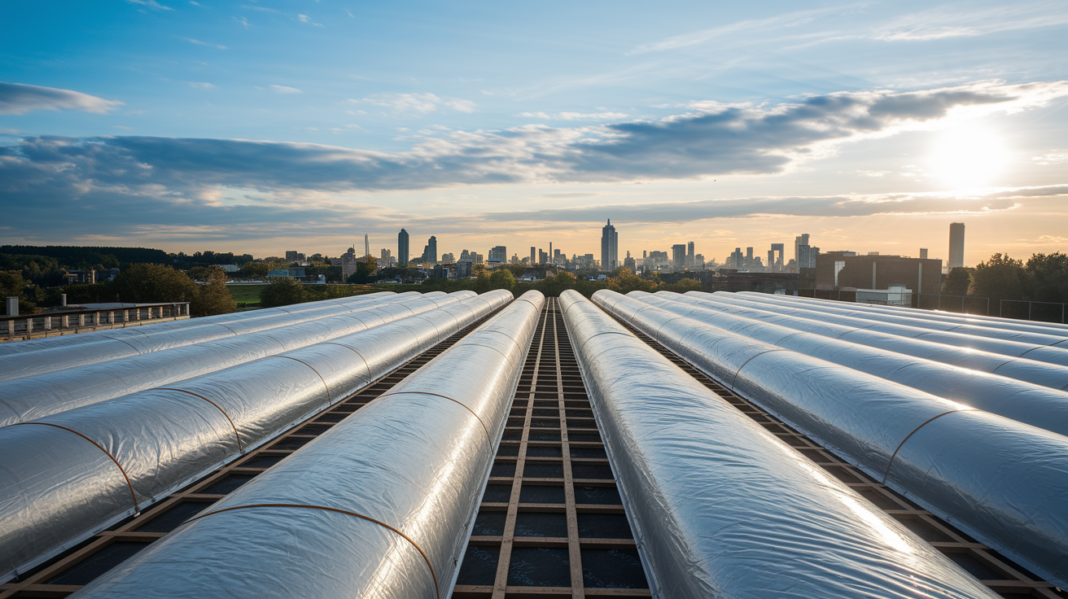

Think a blue tarp will always save your home?
Not always.
The right temporary roof cover stops water from getting into the structure and prevents mold, warping, and further interior damage while you wait for permanent repairs.
Polyethylene tarps, vinyl, canvas, reinforced mesh, shrink wrap, and metal sheets each behave very differently in wind, sun, and rain.
This post walks you through what works fast, what lasts, and which choice actually protects your house so you avoid more damage and insurance headaches.
Overview of the Most Reliable Temporary Roof Cover Material Options
When your roof’s damaged or exposed, the right temporary cover stops water from getting into the structure and prevents mold, warping, and further interior damage while you wait for permanent repairs.
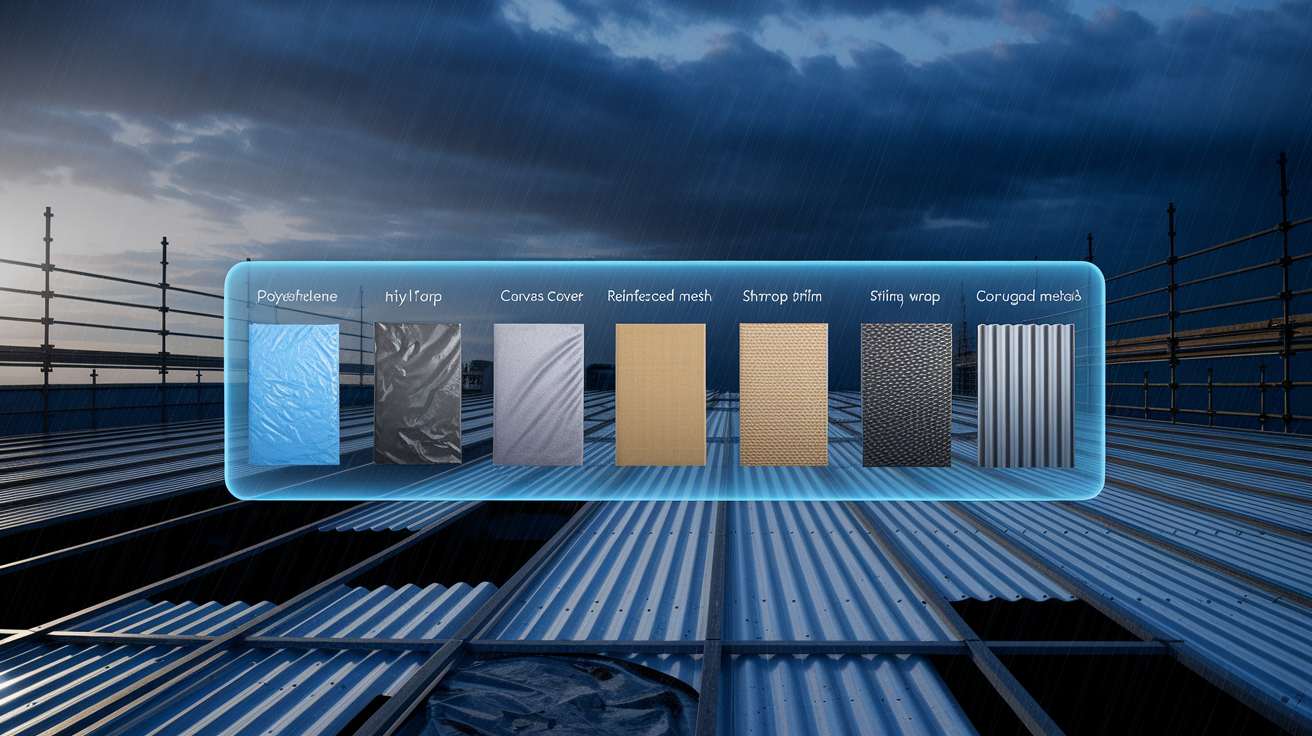
The main material categories include polyethylene tarps and sheeting, vinyl tarps, canvas covers, reinforced mesh barriers, shrink wrap plastic, and corrugated iron or metal sheets. Each one uses different fastening systems, offers different levels of durability, and suits different project sizes and weather conditions.
Choosing the right temporary roof cover depends on how quickly you need protection, how long the cover will stay up, the weather conditions you expect, and whether you need to allow visual inspections without removing the material. Some materials are lightweight and quick to deploy in an emergency. Others are heavier, longer lasting, and built to resist severe wind, UV exposure, or repeated handling.
Polyethylene tarps and sheeting are lightweight, waterproof, UV resistant covers for short term emergency use. Vinyl tarps are heavy duty, abrasion resistant covers for longer exposure and harsh conditions. Canvas covers are breathable, moisture repelling material that allows airflow while shedding water. Reinforced mesh barriers are high shade mesh with perforations to allow controlled drainage and debris blocking in high winds. Shrink wrap plastic sheeting is large format film that’s heat welded and heat shrunk for drum tight, sealed coverage. Corrugated iron (CI) or metal sheets are reusable, rigid panels installed in smaller sections for scaffolding or construction projects.
Material by Material Comparison of Temporary Roof Cover Choices
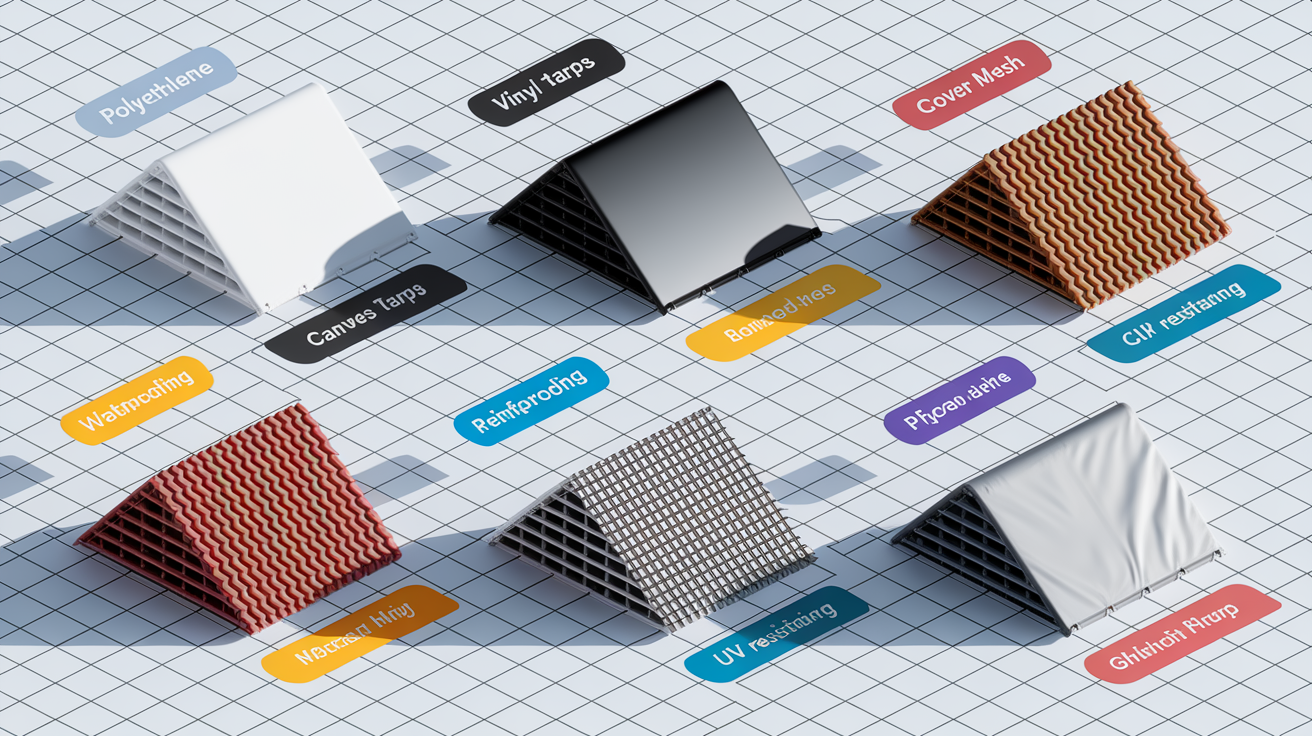
Polyethylene tarps are the most common emergency roof cover. They’re described as “100% waterproof,” resist UV rays, and don’t rot, mildew, or tear easily under normal handling. Poly tarps come in multiple colors, thicknesses, and specialty variants including fire retardant, string reinforced, and clear options. The classic “blue tarp” is a poly tarp. They’re lightweight, inexpensive, and fast to deploy, but they degrade faster than vinyl or metal covers when exposed to sun and wind for weeks or months.
Vinyl tarps offer higher durability and strength. They resist abrasion, tears, mold, mildew, and sunlight better than polyethylene. Vinyl’s available in multiple grades, material weights, and specialty treatments such as fire retardant and camouflage finishes. Vinyl’s best when the cover will remain in place for an extended period or in environments where the material may be scraped, walked on, or exposed to debris. The trade off is higher cost and slightly more weight during handling.
Canvas tarps are waterproof but breathable. They repel moisture while allowing air circulation underneath, which helps prevent condensation and trapped humidity. Canvas is useful when you need to protect against rain but allow the roof deck or interior to breathe and dry out. Canvas is heavier and less flexible than poly or vinyl, and it requires more care during storage to prevent mildew when damp.
Reinforced mesh tarps feature a shade closure weave around 95% with small perforations that allow controlled airflow and drainage. Mesh tarps block debris and driving rain while reducing wind load because air can pass through the perforations. They’re recommended for high wind areas and storm protection where a solid tarp might catch wind and lift or tear. Mesh doesn’t provide full waterproofing, so it’s used when partial ventilation and debris blocking are priorities.
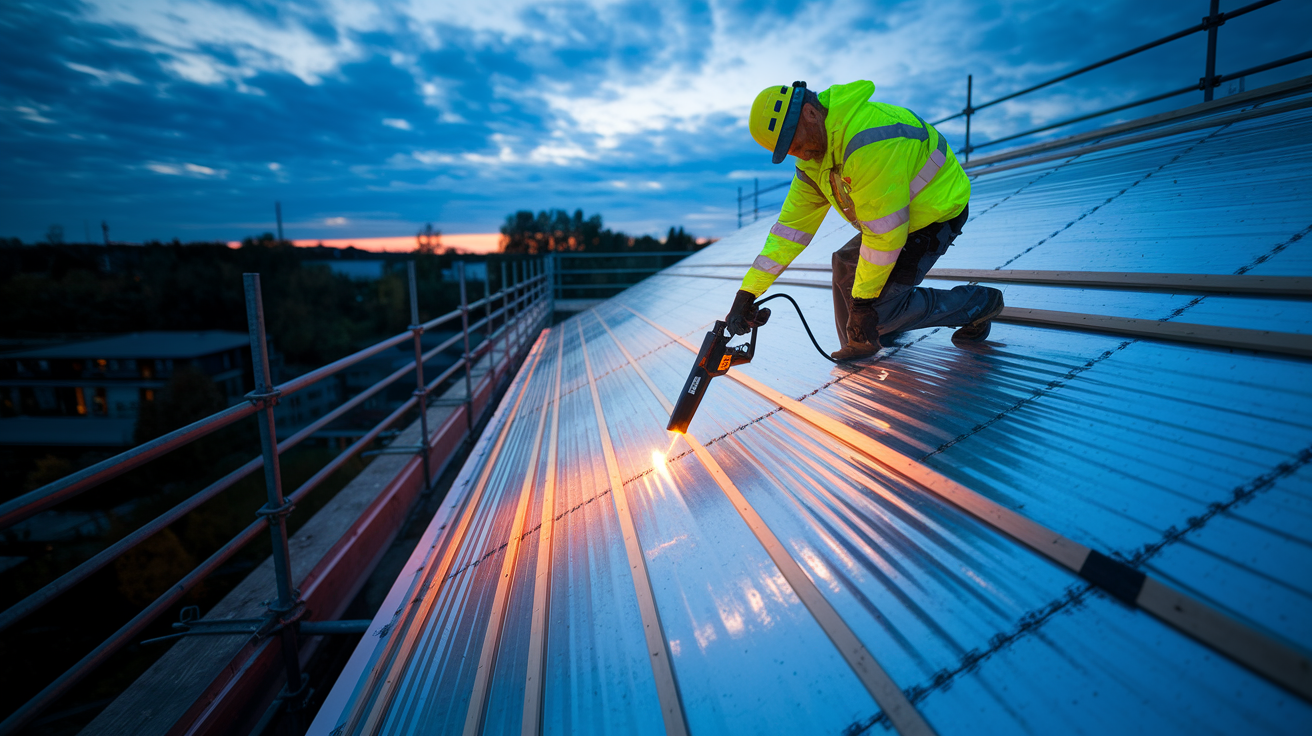
Plastic sheeting is sold in rolls and comes in thicknesses of 5 mil, 6 mil, and 10 mil, with widths commonly at 15 feet, 20 feet, and 40 feet, and roll lengths of 100 or 200 feet. Options include flame retardant treatments and string reinforcement. Plastic sheeting allows you to cover large areas quickly by rolling out continuous film. It’s fast and cost effective but less durable than tarps with grommets and reinforced edges. Shrink wrap plastic is a specialized form of sheeting installed in large sections, typically around 7 meters by 15 meters (approximately 105 square meters per sheet). Shrink wrap is heat welded at the seams and then heat shrunk drum tight using a handheld propane hot air gun. This creates fewer joints and leak points compared to overlapping tarps, and the tight finish resists wind uplift when properly battened.
| Material | Strengths | Limitations | Best Use Case |
|---|---|---|---|
| Polyethylene tarps | Waterproof, UV resistant, lightweight, inexpensive, tear/rot/mildew resistant | Degrades faster under prolonged sun and wind, lower abrasion resistance | Emergency storm coverage, short term protection (days to weeks) |
| Vinyl tarps | Highest abrasion/tear/mildew resistance, long lifespan, multiple weight grades | Higher cost, heavier to handle and transport | Long term temporary coverage, high traffic or debris prone areas |
| Canvas covers | Moisture repelling with airflow, breathable, durable if maintained | Heavier, requires dry storage to prevent mildew, more expensive than poly | Situations where breathability and moisture control are needed |
| Reinforced mesh | Wind load reduction, debris blocking, controlled airflow/drainage | Not fully waterproof, allows some water and light penetration | High wind zones, debris protection, storm barrier where ventilation helps |
| Plastic sheeting | Fast roll out coverage, large continuous areas, low cost, flame retardant options | No grommets or reinforced edges, tears more easily, shorter lifespan | Quick full area coverage, construction enclosures, temporary sealing |
| Shrink wrap plastic | Heat welded seams, minimal leak points, drum tight finish, large section coverage | Requires training, propane heat gun, battens, and calm weather for installation | Scaffolding roofs, awkward/small roofs, rapid deployment with long term seal |
Installation Methods for Popular Temporary Roof Cover Materials
Most temporary roof covers are secured using grommets, ropes, bungee cords, zip ties, sandbags, or anchor boards. Grommets are metal reinforced holes along the edges of tarps and sheeting that accept fasteners. Bungee cords and ropes tie the tarp to solid anchor points on the roof structure, such as rafters, fascia boards, or scaffold frames. Zip ties work for quick attachment to chain link, scaffold tubes, or temporary framing. Sandbags anchor edges and prevent wind from getting underneath the cover. For more secure or long term installations, use 2 x 4 anchor boards placed over the tarp edge and fastened to the roof deck with nails or screws. This sandwiches the tarp between the board and the roof surface.
Shrink wrap installation requires different preparation. First, secure perimeter handrails for fall protection and anchor any fall protection lines if working at height. Install scaffold boards as battens to hold the film in place, running them in a pattern three boards wide to create safe access while you work. Space battens approximately every 2 meters to resist wind uplift and suction under the film. Before you shrink the film, heat weld all overlaps and seams using a propane heat gun. After sealing the seams, heat shrink the entire sheet drum tight. Install a self adhesive foam strip between the battens and the shrink wrap to act as a gasket and prevent water from entering through screw holes. Don’t attempt shrink wrap installation in wet or windy conditions because moisture or wind during fitting reduces the strength and seal of the finished cover.
When working with any temporary roof cover, prioritize safety. Wear rubber soled shoes with good grip to reduce slip risk on smooth or wet surfaces. Inspect the roof for loose shingles, debris, or objects that could be dislodged during installation and become flying projectiles in wind. Secure all fasteners to solid structure, not to damaged or weak sections of the roof. Avoid installing covers during high winds, heavy rain, or icy conditions. If you’re not confident working at height or handling large sheets in wind, call a professional.
Measure the damaged or exposed area and select a cover size that provides at least 2 feet of overlap on all sides. Inspect the roof surface for loose materials, sharp edges, and weak structure before placing the cover. Position the cover over the area, ensuring it extends beyond the damage and overlaps any adjoining tarps by at least 2 feet. Secure one edge first using grommets and fasteners (rope, bungee, or anchor boards) to prevent the cover from blowing away. Pull the cover tight across the area to remove slack and wrinkles, which reduce wind resistance and water shedding. Fasten the remaining edges and corners, working systematically around the perimeter. Inspect all seams, overlaps, and fasteners to confirm the cover’s tight, sealed, and won’t lift in wind.
Weather Resistance, Durability, and Mil Thickness Across Roof Cover Materials
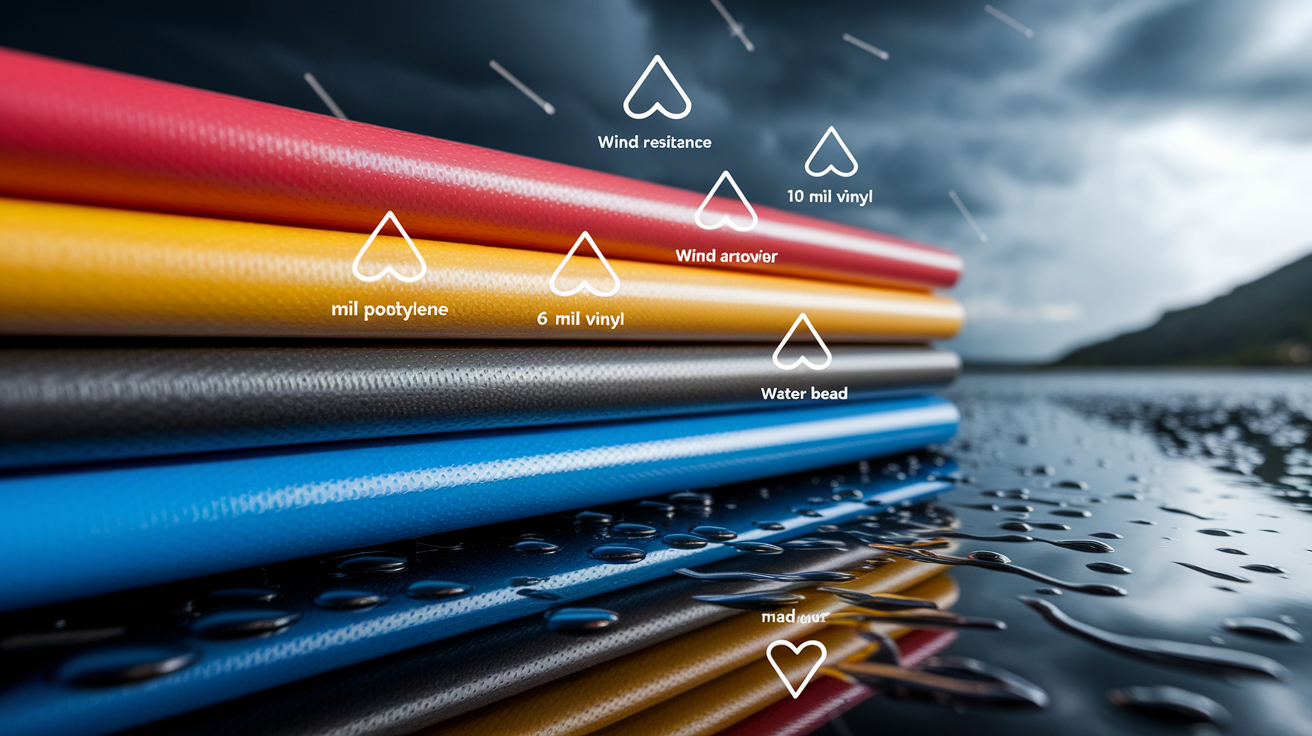
Mil thickness measures the gauge of plastic sheeting and poly tarps. Common options are 5 mil, 6 mil, and 10 mil. Higher mil numbers mean thicker material, which generally increases puncture resistance, tear strength, and lifespan. A 6 mil reinforced polyethylene sheet offers a balance of flexibility, strength, and cost for short term emergency coverage. A 10 mil sheet is heavier and more resistant to punctures from hail, debris, or foot traffic, making it better for longer exposure or rough handling. Vinyl tarps are rated by material weight in ounces per square yard or grams per square meter (gsm), not mil thickness. Heavier vinyl (higher gsm) resists abrasion and tearing better and lasts longer under UV exposure.
Waterproofing performance depends on the material and how it’s installed. Polyethylene and vinyl tarps are described as “100% waterproof” when seams and fasteners are properly sealed. Shrink wrap sheeting has fewer joints than overlapping tarps because sections are heat welded, which reduces leak points. Canvas repels water but isn’t fully waterproof in prolonged heavy rain. Mesh tarps allow controlled water passage and aren’t designed for full rain protection. Plastic sheeting without reinforced edges can tear at fastener points during wind or rain, creating new leak paths.
Wind resistance is determined by material strength, fastening density, and cover shape. Shrink wrap and tightly battened sheeting resist wind better than loose tarps because they’re pulled drum tight and mechanically anchored at regular intervals. Temporary roofs face uplift from low pressure forming under the film during wind events. Mitigate uplift by securely clipping scaffold boards or anchor boards and spacing battens approximately every 2 meters. Vinyl and reinforced poly tarps perform better in sustained wind than lightweight, non reinforced plastic. Mesh tarps reduce wind load by allowing air to pass through perforations instead of catching and lifting the entire cover.
Rain protection varies. Shrink wrap and heat welded seams offer the fewest leak points. Poly and vinyl tarps are fully waterproof when fastened correctly. Canvas sheds light rain but not prolonged downpours. Wind resistance improves with tight installation, mechanical battening, and material weight to reduce uplift. Mesh allows airflow to prevent wind catch. Loose or oversized tarps flap and tear in high winds. UV exposure breaks down materials at different rates. Vinyl and UV treated poly tarps resist sun degradation for weeks to months. Untreated plastic sheeting breaks down faster. Multi year reinforced films (like 4 year greenhouse sheeting) offer extended UV stability. Hail and debris impact resistance is better with 10 mil plastic, vinyl tarps, and corrugated metal compared to thin sheeting. Reinforced mesh blocks debris while allowing drainage. Freeze and snow load conditions favor rigid covers like corrugated iron that shed snow. Flexible tarps can sag and pool water or snow, requiring frequent inspection and clearing.
Cost Considerations and Sizing Guidelines for Temporary Roof Cover Materials

Measure the area you need to cover before purchasing materials. Avoid tarps that are excessively large because they create extra surface area that can flap in wind or become a safety hazard during installation. Provide at least 2 feet of overlap on all edges to ensure water sheds away from the damaged area and doesn’t flow under the cover. If you’re covering an area with multiple tarps or sheets, overlap adjoining pieces by at least 2 feet and secure the overlap with fasteners or heat welding to prevent separation.
Plastic sheeting is sold in rolls with widths of 15 feet, 20 feet, and 40 feet, and lengths of 100 or 200 feet. This format allows fast, continuous coverage of large areas but requires careful handling to prevent tearing at edges and fastener points. Shrink wrap sections cover approximately 105 square meters (roughly 1,130 square feet) per installed sheet, which is much faster than installing corrugated iron sheets at approximately 2 square meters per piece after overlaps. Cost efficiency improves when you can cover more area per section and reduce labor time.
Corrugated iron and keder track systems have higher upfront material costs and require more labor for lifting, positioning, and securing each piece. Vinyl tarps cost more per square foot than polyethylene but last longer and resist damage better, reducing replacement frequency. Budget for fasteners, anchor boards, bungee cords, ropes, sandbags, and any specialty tools like heat guns for shrink wrap. If you’re renting equipment or hiring labor, calculate the total installed cost per day or per project, not just material cost.
| Material | Typical Size/Format | Coverage Efficiency |
|---|---|---|
| Polyethylene tarps | Pre cut sizes (e.g., 10’x12′, 20’x30′) with grommets | Moderate, multiple tarps needed for large areas, fast deployment |
| Vinyl tarps | Pre cut sizes and custom orders, heavier material | Moderate, fewer replacements due to durability |
| Plastic sheeting rolls | 15′, 20′, 40′ widths, 100–200 ft lengths | High, continuous coverage over large areas with minimal seams |
| Shrink wrap sections | ~7 m x 15 m per section (~105 m² or ~1,130 sq ft) | Very high, heat welded seams and drum tight finish reduce labor per area |
| Corrugated iron sheets | ~2.0 m x 1.0 m per piece (~2 m² installed after overlaps) | Low, individual lifting and fastening, reusable but labor intensive |
Safety Requirements and Compliance for Temporary Roof Cover Work

Fall protection is the most critical safety requirement when installing temporary roof covers. Use perimeter edge protection such as guardrails or toe boards on all open sides of the roof. Anchor fall protection lines to solid structure and wear a full body harness if working near edges or on sloped surfaces. For shrink wrap installation on scaffolding, install scaffold boards in runs three boards wide to create safe access paths and reduce the risk of stepping through gaps or onto unsupported film.
Avoid installing temporary covers in wet, windy, or icy conditions. Wet surfaces increase slip risk. Wind makes large sheets difficult to control and can pull fasteners out of weak structure or rip the material during installation. Ice reduces traction and creates fall hazards. If conditions are unsafe, delay installation until weather improves or call a professional crew with proper equipment and training.
Wear rubber soled shoes with good grip to reduce slip risk on smooth or wet roof surfaces. Inspect ladders and scaffolding for stability, missing rungs, loose joints, or damaged components before climbing. Secure all tools and fasteners in a tool belt or bucket to prevent them from falling and becoming projectiles. Check the roof for loose shingles, debris, sharp edges, or weak decking that could shift or collapse under your weight. Use proper lifting techniques when handling heavy tarps, vinyl rolls, or corrugated sheets. Get help for large or awkward materials.
Temporary Roof Cover Materials for Insurance, Claims, and Emergency Mitigation

Most homeowners insurance policies include a “duty to mitigate” clause, which requires you to take reasonable steps to prevent further damage after a covered loss. Promptly covering exposed areas with tarps or sheeting is considered reasonable mitigation. Tarp costs, fasteners, and professional installation fees are commonly reimbursable after you file a claim, but you should verify coverage details and limits with your insurer before starting work.
Clear reinforced polyethylene sheeting allows insurance adjusters and inspectors to view and document roof damage without removing the cover. This speeds the inspection process and reduces the risk of additional water intrusion during claim evaluation. Take photographs of the damage before covering it, then photograph the installed cover and all fastening points. Keep receipts for materials and labor. Wind and hail account for more than 40% of property damage insurance claims, and over 5 million residential roofs are replaced annually in the U.S., so thorough documentation helps your claim move faster.
You can install temporary covers yourself if you’re confident working at height and have the right tools and materials. DIY installation saves labor costs and allows faster response in an emergency. Professional installation is recommended if the roof is steep, high, or structurally unstable, or if you lack experience with fall protection and fastening systems. Professionals carry liability insurance, use code compliant anchoring methods, and often provide documentation that satisfies insurance requirements. If you choose professional installation, confirm that the contractor is licensed, insured, and familiar with your local building codes and insurance procedures.
Long Term and Short Term Material Selection Strategy for Temporary Roof Protection
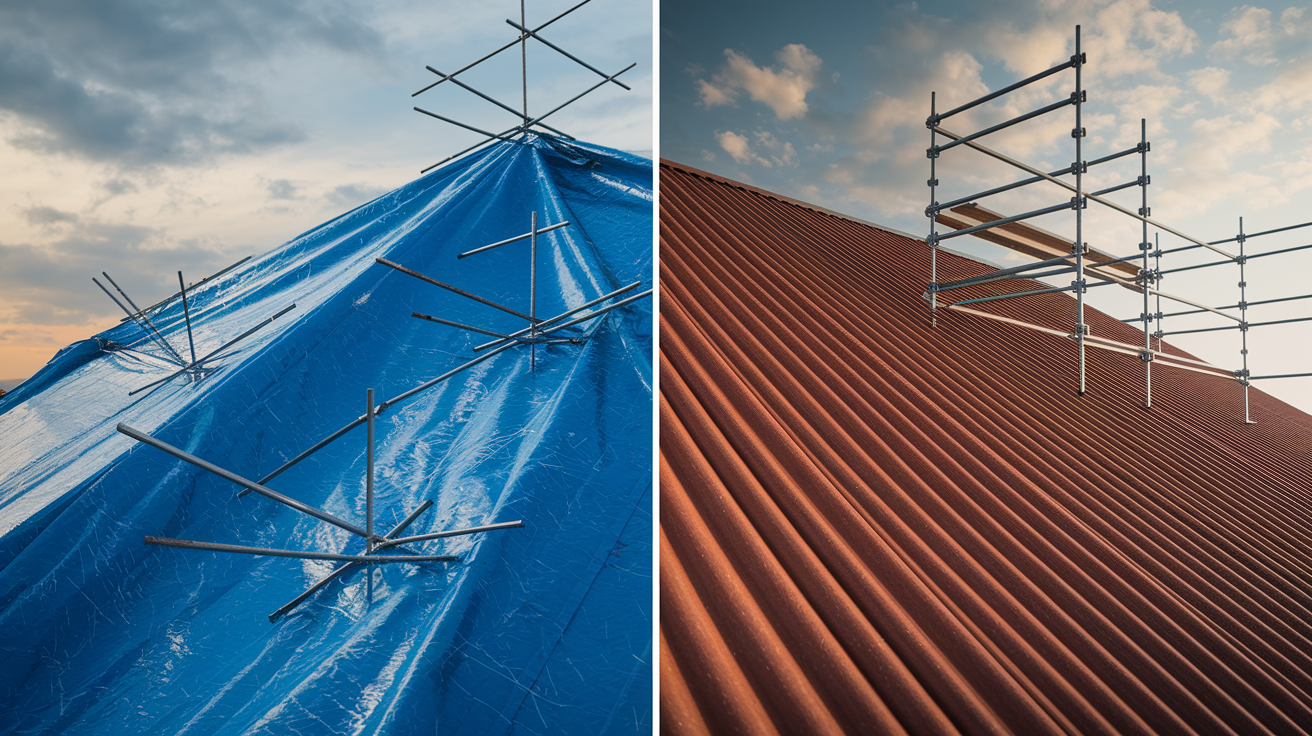
Short term temporary covers are designed for days to weeks of exposure while you wait for insurance approval, contractor availability, or favorable weather for permanent repairs. Use 6 mil clear reinforced polyethylene sheeting (such as Clear Dura Skrim) for short term emergency coverage. It’s lightweight, quick to deploy, waterproof, and allows visual inspection without removal. Polyethylene tarps in various colors and thicknesses also work well for short term use, especially when speed and cost are priorities.
Long term temporary covers must resist UV degradation, temperature cycling, wind, and repeated weather exposure for weeks to months. Use multi year reinforced films such as SolaScrim 4 Year clear reinforced greenhouse sheeting for extended UV stability and durability. Vinyl tarps are the longest lasting flexible cover option because they resist abrasion, tearing, mold, mildew, and sunlight better than polyethylene. Corrugated iron and keder track systems are reusable and durable for construction projects or scaffolding roofs that remain covered for extended periods.
Consider environmental exposure when selecting materials. Roofs in full sun degrade poly and untreated plastic sheeting faster than shaded areas. High wind zones require heavier materials, tighter fastening, and mechanical battening to resist uplift. Snow and ice loads can sag flexible tarps and pool water, so rigid covers or frequent inspection and clearing are necessary in winter climates. Coastal or high humidity areas accelerate mildew and corrosion, so choose mildew resistant materials and galvanized or stainless fasteners.
Reusable and recyclable materials reduce waste and long term costs. Corrugated iron sheets can be lifted, stored, and reused on multiple projects. Vinyl tarps can be cleaned, folded, and stored for future use if handled carefully. Shrink wrap can be cut off in sections and bundled for recycling on site or at a yard, making dismantling faster and waste handling simpler than stacking and transporting rigid sheets. Polyethylene tarps and sheeting degrade over time and are less reliably reusable, but some specialty poly products are labeled as recyclable.
Expected lifespan of cover matters. Days, weeks, or months of exposure before permanent repairs affects your choice. UV exposure intensity is another factor. Full sun requires UV treated or multi year films, while shaded areas allow untreated poly. Wind and debris load in high wind zones need heavier materials, reinforced edges, and mechanical battening. Breathability needs vary too. Canvas or mesh if airflow and moisture control are required, solid tarps for full waterproofing. Reusability and sustainability play a role. Corrugated iron and vinyl can be reused, shrink wrap and poly are recyclable but degrade faster. Budget and labor availability round out the decision. Poly is lowest cost and fastest DIY, vinyl and metal require more investment but last longer.
Final Words
Stop the water first, then pick a cover that fits the opening and how long you’ll need it. Do the immediate work that keeps the home from getting worse.
This guide walked through the main cover types, material comparisons, installation steps and safety, mil thickness and sizing, cost estimates, and insurance tips. We also covered short‑ vs long‑term choices so you can pick something that holds until repairs.
Photo everything, secure proper anchors, and get help if you’re unsure. With the right temporary roof cover materials in place, you’ll stop more damage and move forward to a solid repair.
FAQ
Q: What is the best material for a temporary roof?
A: The best material for a temporary roof and the cheapest way to cover a roof is reinforced polyethylene (poly) tarps. They’re affordable, waterproof, and quick to install; basic poly sheeting works for very short-term fixes.
Q: How to cover a roof temporarily?
A: To cover a roof temporarily, stop flowing water if safe, clear loose debris, lay a tarp with at least 2 ft overlap, secure edges with 2×4 battens and screws, and weigh corners with sandbags.
Q: Does peel-and-stick roofing work?
A: Peel-and-stick roofing can work, but it’s designed as an underlayment and for planned repairs. It needs clean, dry surfaces and time to bond, so it’s often not the best choice for emergency, wet installs.