
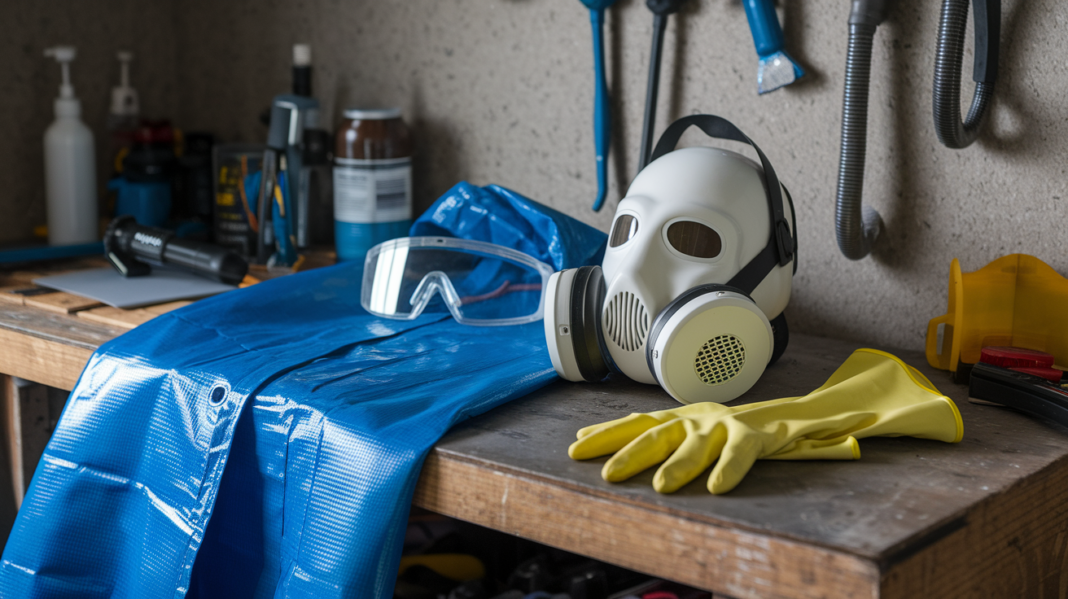

Think your hardware store dust mask will protect you from black mold spores measuring 0.003 millimeters across. It won’t. Cloth masks, surgical masks, and basic dust filters let microscopic spores straight through to your lungs while you’re scrubbing contaminated surfaces and stirring them into the air you breathe. Black mold removal demands respiratory protection filtering down to 0.3 microns, sealed eye coverage blocking spores from every angle, chemical resistant gloves and coveralls creating full body barriers, and waterproof footwear. The right PPE checklist depends on how much contamination you’re facing, what materials are affected, and whether you’re dealing with surface growth or hidden mold behind walls.
Essential PPE Requirements: Complete Equipment Specifications for Black Mold Removal

Black mold removal needs four types of protection working together. Respiratory defense, full body skin barrier, eye and face shielding, and hand plus foot protection. Each piece blocks a different contamination path. Your lungs need filtered air. Your skin needs a sealed barrier. Your eyes need wraparound coverage. Your hands and feet need chemical resistance and waterproofing.
Equipment specs change based on how much mold you’re dealing with, what type it is, and how long you’ll be working. Small jobs under 30 square feet need minimum protection standards. Larger areas demand professional grade equipment with better filtration and sealed containment. The wrong gear doesn’t just make the job uncomfortable. It lets microscopic spores enter your body while you’re stirring them into the air.
Complete PPE Specifications for Black Mold Removal:
-
NIOSH approved N95 respirator filtering 95 percent of airborne particles down to 0.3 microns, works for areas under 30 square feet with proper fit testing and single use disposal after each work session, or upgrade to P100 respirator filtering 99.97 percent of particles with replaceable cartridges for jobs over one hour or multiple cleaning sessions
-
Full face respirator with P100 filters combining respiratory and complete eye protection for contamination approaching 30 square feet, heavy spore concentration shown by strong musty odors, or when working in confined spaces like closets and bathrooms where air circulation is limited
-
Powered Air Purifying Respirator (PAPR) with HEPA filters providing battery powered positive airflow for professional remediation over 30 square feet, eliminating breathing resistance during extended work periods and maintaining protection even with facial hair present
-
ANSI Z87.1 rated non vented or indirect vent safety goggles with anti fog coating wrapping fully around eye sockets to block airborne spores from every angle, featuring soft rubber gaskets that seal against facial contours without gaps at temples or nose bridge
-
Clear polycarbonate face shield worn over goggles deflecting liquid disinfectants, cleaning agents, and debris during scrubbing work. Face shields never replace goggles because they allow airborne spores to enter from sides and bottom gaps
-
Nitrile or neoprene chemical resistant gloves with extended mid forearm cuffs reaching at least six inches above wrist, minimum 6 mil thickness resisting punctures from rough surfaces and degradation from bleach solutions and antimicrobial cleaners, single use disposal protocol after each contaminated area
-
Disposable Tyvek or microporous film coveralls with integrated hood covering hair completely, elastic wrist and ankle closures preventing sleeves from riding up during overhead work, sealed seams resisting tearing around sharp edges, and attached boot covers eliminating the gap where spores collect at shoe tops
-
Knee high waterproof rubber or PVC boots with slip resistant soles gripping wet basement concrete and damp subfloors, or disposable polyethylene boot covers over regular work shoes for small jobs under 30 square feet lasting less than one hour
-
Two layer glove system pairing inner disposable nitrile liner gloves with outer heavy duty chemical resistant gloves for extended jobs requiring repeated tool handling, allowing outer glove changes when contaminated while maintaining inner barrier protection
-
All respiratory equipment must get proper seal with clean shaven face (no beards, stubble, or sideburns breaking contact), pass user seal check by covering exhaust valve and inhaling to verify mask pulls tight against face, and remain dry throughout work session. Damp masks lose filtration efficiency
| Respirator Type | Filtration Efficiency | Best For | Limitations | Cost Range |
|---|---|---|---|---|
| N95 Disposable | 95% of particles 0.3 microns | Single room jobs under 30 sq ft, work under 1 hour | Single use only, no facial hair allowed, discard when damp | $2-5 each |
| P100 Half Face Reusable | 99.97% of particles | Multiple sessions, jobs lasting 1-3 hours, moderate contamination | Requires cleaning after each use, cartridge replacement every 40 hours | $30-80 plus $15-30 per cartridge pair |
| Full Face P100 | 99.97% plus complete eye protection | Heavy contamination approaching 30 sq ft, confined spaces, extended work | Higher cost, more cleaning required, can fog in humid conditions | $150-400 plus cartridge replacements |
| PAPR with HEPA | 99.97% with powered airflow | Professional remediation over 30 sq ft, all day work, facial hair present | Heavy, requires battery charging, high initial investment | $800-2,000 plus filter replacements |
Jobs under 30 square feet (approximately 5.5 feet by 5.5 feet, or three standard 2×4 foot ceiling tiles) are suitable for DIY work with minimum protection. N95 respirator, ANSI Z87.1 goggles, 6 mil nitrile gloves, and disposable Tyvek coveralls. Upgrade to P100 respirator and two layer glove system for multiple cleaning sessions, work over one hour, or when strong musty odors indicate heavy spore concentration in the air. Professional help becomes necessary for contamination over 30 square feet, within HVAC ductwork, behind walls, under flooring, or in structural cavities where hidden growth extends beyond what you can see.
Don’t substitute cloth masks, surgical masks, vented safety glasses, vinyl gloves, or regular work clothing for proper PPE. OSHA requires fit testing for all respirators in workplace settings. CDC recommends seal check procedures before each use even for homeowner projects. Replace disposable respirators when breathing becomes difficult, masks become damp from exhaled moisture, or after completing a single work session. Reusing disposable masks allows mold spores collected on the outer surface to work through the filter material. Disposable coveralls, gloves, and boot covers also get one use, then go straight into sealed plastic bags for disposal.
DIY Safety Thresholds: When Homeowner PPE Is Sufficient Versus Professional Intervention

The 30 square foot threshold (approximately 5.5 feet by 5.5 feet or three standard 2×4 foot ceiling tiles) marks the maximum safe DIY project size. Measure the entire contaminated area by length times width for continuous growth. For scattered patches, add up each separate spot. If the total exceeds 30 square feet, stop. That’s the line where homeowner equipment stops being enough and professional grade containment systems become necessary to prevent spreading spores throughout your home during cleanup.
Minimum DIY PPE includes NIOSH approved N95 respirator filtering 95 percent of airborne particles, ANSI Z87.1 non vented goggles sealing completely around eyes, 6 mil nitrile gloves with mid forearm cuffs extending at least six inches above wrists, and disposable Tyvek coveralls with integrated hood and boot covers. This combination works for small surface mold on hard materials like tile, glass, or sealed wood where you can see the entire affected area and reach it without opening walls or moving insulation. The job should take less than one hour of active scrubbing and wiping.
Upgrade to P100 respirator filtering 99.97 percent of particles if you’re working longer than one hour, planning multiple cleaning sessions over several days, or dealing with strong musty odors that show heavy spore concentration in the air. Strong odors mean high counts. High counts mean more protection. Add a two layer glove system and consider a full face respirator combining P100 filtration with eye protection when working overhead on ceilings where contaminated liquid can drip onto your face.
You need professional help when contamination appears in HVAC ductwork, behind walls, under flooring, in crawlspaces, or involves porous materials like drywall and insulation that absorb mold deep into their structure. Professional mold remediation handles hidden mold behind visible growth, water damage from sewage or flooding, and structural material involvement requiring moisture meters and air quality testing to verify complete removal. Health conditions including asthma, immune deficiencies, chronic respiratory sensitivities, or pregnancy require professional services regardless of contamination size. Your safety matters more than saving money on a small job.
Proper PPE Donning, Removal, and Decontamination Procedures
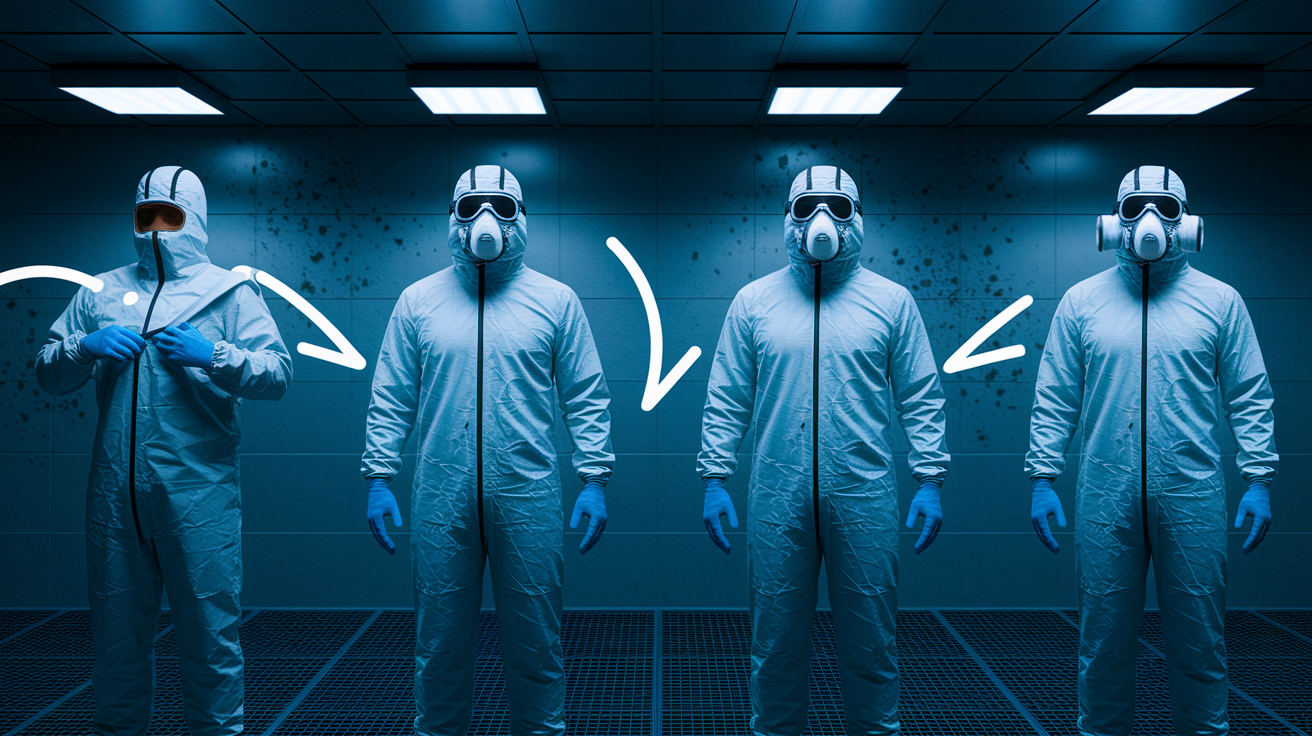
Contamination happens during removal, not during the work. Most people get exposed when they peel off dirty coveralls, yank off gloves, or pull respirators over contaminated hair. Spores cling to every surface. They wait for you to make a mistake. Set up a decontamination zone before you start work. A clean area just outside the contaminated space where you can remove gear without tracking spores into the rest of your home.
Don’t remove PPE in clean areas of the home. Set up plastic sheeting on the floor. Keep a trash bag open and ready. Have clean water and detergent nearby for washing reusable items.
PPE Removal Sequence:
-
Remove outer gloves first while still wearing all other gear, turning them inside out as you peel them off so contaminated surfaces fold inward, then drop directly into open trash bag without touching clean surfaces
-
Peel coveralls forward and down from shoulders, rolling contaminated outer surface inward as you pull arms free, then step out of leg sections and boot covers while folding everything into itself, seal in trash bag
-
Remove goggles by grasping the strap from behind your head, lifting forward and away from face without touching the front lenses where spores have settled, place directly in decontamination bucket or trash bag depending on whether they’re reusable or disposable
-
Remove respirator last by releasing bottom strap first, then top strap, pulling forward from your face without touching the front filter surface, seal disposable masks in trash bag or set reusable respirators aside for immediate cleaning
-
Wash hands thoroughly with soap and water for at least 20 seconds, scrubbing under nails and between fingers where spores hide
-
Shower immediately if any skin contacted contaminated surfaces or if working longer than one hour in heavy contamination
Reusable Equipment Decontamination:
-
Take apart respirators, goggles, and face shields completely, removing filters and cartridges first, then wash all components in warm water with detergent using a soft brush to scrub crevices and seal surfaces
-
Rinse thoroughly under running water until no soap residue remains, then spray or wipe all surfaces with 70 percent isopropyl alcohol solution or EPA approved quaternary disinfectant, allowing complete contact time per product instructions
-
Air dry all components completely in a clean area away from contamination zones. Damp equipment grows mold itself and loses seal integrity, inspect seals and straps for cracks or degradation after drying
-
Scrub waterproof boots with detergent in a dedicated bucket, rinse clean, spray with 70 percent alcohol or disinfectant, then dry completely before storage or next use
-
Store all cleaned equipment in sealed plastic bags or closed containers in clean, dry locations away from temperature extremes and direct sunlight that degrades rubber seals and plastic components
Professional Grade PPE for Large Scale Mold Remediation

Powered Air Purifying Respirator (PAPR) systems deliver battery powered airflow through HEPA filters, maintaining positive pressure inside the hood that prevents any outside air from entering even if the seal isn’t perfect. The constant airflow eliminates breathing resistance during heavy physical work like tearing out drywall or hauling contaminated materials. PAPR systems work with facial hair and provide cooling air circulation during extended remediation work in hot, humid conditions where regular respirators become uncomfortable within minutes.
Full face respirators combine P100 filtration blocking 99.97 percent of airborne particles with complete eye protection in one sealed unit. Professional crews use these for contained work areas where disinfectant misting, pressure washing, or aggressive scrubbing creates liquid droplets carrying spores. Mold remediation services deploy negative air pressure containment systems using specialized machines that pull contaminated air from work zones, pass it through HEPA filters capturing 99.97 percent of particles, then exhaust clean air outside the home. This prevents spores from migrating into unaffected rooms during demolition and removal work.
IICRC certification standards for mold remediation professionals require documented training in containment protocols, PPE selection, air monitoring, and structural drying techniques. Professional services handle contamination exceeding 30 square feet, mold within HVAC systems where spores circulate throughout the home, and hidden growth in wall cavities requiring moisture meters and thermal imaging to locate. Certified crews coordinate moisture elimination, contaminated material removal, antimicrobial treatment, and final air quality testing as one complete sequence. That’s the difference between clearing visible mold and actually solving the moisture problem that caused it.
Health Risks of Inadequate PPE During Mold Removal

Airborne spores enter lungs and eyes within minutes of disturbing mold growth, causing immediate throat irritation, coughing fits, and watery eyes that blur vision while you’re trying to work. Sensitive individuals develop asthma like attacks with chest tightness and wheezing that doesn’t stop when you leave the area. Skin contact causes rashes, itching, and redness that spreads beyond the initial touch point.
| Exposure Duration | Symptoms | Protection Level Needed |
|---|---|---|
| First 5-10 minutes | Throat tickle, mild cough, watery eyes, musty smell triggering nausea | Minimum N95 respirator and goggles prevent immediate respiratory and eye irritation |
| 30-60 minutes continuous exposure | Persistent coughing, breathing difficulty, eye burn, headache from spore concentration | P100 respirator with higher filtration and sealed coveralls block increasing spore loads |
| Repeated exposure over days | Chronic sinus congestion, developing allergic sensitivity, skin rashes, worsening respiratory symptoms | Full face respirator or PAPR system plus complete body coverage prevent sensitization |
| Long term chronic exposure | Asthma development, chronic bronchitis, permanent respiratory damage, immune system impacts | Professional remediation with containment systems and medical monitoring required |
CDC studies document higher respiratory infection rates among workers who skip respirators in moldy environments. Your body fights the spore invasion. That immune response creates inflammation. Inflammation reduces your ability to fight actual infections. Spores cling to hair, clothing, and shoes, causing cross contamination that spreads microscopic particles to clean areas of your home where family members breathe them in hours after you finish working. Unprotected workers experience eye burn and breathing difficulty that forces them to stop working before the job is complete, leaving partially disturbed mold colonies that rebound within weeks.
Mycotoxins produced by black mold species including Stachybotrys chartarum create additional health concerns beyond allergic reactions. These chemical compounds irritate mucous membranes, disrupt normal cell function, and accumulate in the body with repeated exposure. Proper PPE blocks both spores and mycotoxins from entering your respiratory system, landing on your skin, or contaminating your clothing.
Where to Purchase and Rent Mold Removal PPE

Major home improvement stores carry N95 respirators in the paint department, disposable Tyvek coveralls in painting supplies, nitrile gloves in multiple sections, and basic safety goggles near power tools. Safety supply distributors stock higher grade equipment including P100 respirators, full face masks, and chemical resistant boots in wider size ranges with expert fitting assistance. Online marketplaces offer complete PPE kits bundling respirators, coveralls, gloves, goggles, and boot covers at package pricing, but verify NIOSH approval markings and check seller ratings before purchasing respiratory protection.
Cost ranges help you budget appropriately. N95 disposable respirators run $2 to $5 each, reusable half face respirators with P100 cartridges cost $30 to $80 plus $15 to $30 per replacement cartridge pair, full face respirators range $150 to $400, and PAPR systems start around $800 reaching $2,000 for professional grade units. Disposable Tyvek coveralls cost $8 to $15 per suit. Chemical resistant nitrile gloves run $1 to $3 per pair for 6 mil thickness. Non vented goggles meeting ANSI Z87.1 standards range $8 to $25. Complete PPE for one small DIY project under 30 square feet totals approximately $35 to $60 for disposable components plus $30 to $80 if purchasing a reusable respirator.
Rental options exist for one time projects through tool rental centers and safety equipment suppliers. PAPR systems rent for $75 to $150 per day or $200 to $400 per week. Full face respirators rent for $25 to $50 per day with cartridge purchases. Rental makes sense for large one time projects where purchasing professional equipment exceeds the cost of hiring professional remediation services. Most rental agreements require cleaning deposits and proof of training for PAPR systems.
Verification Checklist Before Purchase:
-
NIOSH approval marking printed directly on respirator facepiece or packaging, including TC approval number (example: TC 84A XXXX)
-
Expiration date for respirators and cartridges. Unused respirators degrade over time as elastic straps lose tension and filter materials break down
-
Proper sizing availability in small, medium, and large for respirators and coveralls, with measurement guides provided to ensure correct fit
-
Replacement filter and cartridge availability for reusable respirators. Discontinued models become unusable when cartridges run out
-
Return policies allowing unused, unopened respirators and unopened coverall packages to be returned if sizing doesn’t fit properly after trying on at home
-
ANSI Z87.1 marking on goggle frames or packaging confirming impact and splash protection standards compliance
OSHA and EPA Standards for Mold Remediation PPE

OSHA respiratory protection standard 29 CFR 1910.134 requires fit testing for all respirators used in workplace settings to ensure proper seal and filtration effectiveness. Fit testing uses specialized equipment measuring air leakage around mask edges while the wearer performs bending, talking, and head turning exercises that simulate real work movements. Homeowners performing DIY cleanup aren’t legally required to complete formal fit testing, but the same physics apply. Gaps around your mask let unfiltered air enter with every breath. Perform a user seal check before each use by covering the exhaust valve with your hand and inhaling to verify the mask pulls tight against your face with no air leaking around edges.
ANSI Z87.1 establishes impact and splash protection standards for eye wear used during construction, demolition, and chemical handling work. Non vented safety goggles meeting this standard feature wraparound coverage, indirect ventilation preventing liquid entry, and polycarbonate lenses resisting impacts from falling debris. The standard requires marking on the frame or lens, not just the packaging. Vented safety glasses don’t meet the standard for mold work because ventilation holes allow spores to enter from sides and bottom gaps.
EPA guidelines for mold remediation specify disposal procedures for contaminated materials and list approved antimicrobial products effective against fungal growth. All disposable PPE counts as contaminated material requiring sealed plastic bags for disposal. Most municipalities allow sealed bags to go in regular trash for residential projects under 30 square feet, but commercial remediation projects may require biohazard disposal following local regulations. EPA approved biocides include quaternary ammonium compounds, hydrogen peroxide solutions, and registered fungicides. Don’t mix different cleaning products as chemical reactions can create toxic fumes requiring emergency ventilation.
IICRC S520 standard provides detailed protocols for professional mold remediation including containment construction, negative air pressure requirements, HEPA filtration specifications, and personal protection equipment. The standard divides remediation into three conditions. Condition 1 (normal fungal ecology), Condition 2 (settled spores or actual growth), and Condition 3 (actual growth plus significant amplification). Each condition specifies minimum PPE requirements. Homeowners working under the 30 square foot threshold fall into Condition 2 protocols requiring N95 minimum respiratory protection, eye protection, gloves, and disposable coveralls. Condition 3 work demands professional intervention with full face respirators or PAPR systems.
Maintaining and Storing Reusable Mold Removal Equipment

Clean elastomeric respirators, full face masks, and goggles immediately after each use while contamination is still damp and easier to remove. Take apart respirators completely by removing filters and cartridges first. Never submerge cartridges in water as moisture destroys filter media. Wash facepiece, straps, and seals in warm water with mild detergent using a soft brush to scrub crevices where spores collect around exhalation valves and nose cups. Rinse thoroughly under running water until no soap residue remains because residue irritates skin during next use and degrades rubber seals over time.
After washing and rinsing, spray or wipe all surfaces with 70 percent isopropyl alcohol solution or EPA approved quaternary disinfectant, following product contact time instructions (typically 10 minutes for alcohol, 5 minutes for quaternary compounds). This step kills any remaining spores that survived detergent washing. Air dry all components completely in a clean area away from contamination zones. Damp equipment grows mold itself, and moisture trapped in crevices prevents proper seal formation during next use.
Complete air drying takes 4 to 6 hours for respirators and goggles, longer for boots with thick insulation. Hang items where air circulates freely. Don’t store in sealed bags while damp. Store cleaned and dried equipment in sealed plastic bags or closed containers protecting from dust, dirt, and temperature extremes. Direct sunlight and heat above 120°F degrade rubber seals and plastic components. Freezing temperatures make rubber seals stiff and prone to cracking.
Reusable Equipment Maintenance Schedule:
-
Inspect seals, straps, and lenses before each use checking for cracks, tears, stiffness, or cloudiness indicating degradation requiring replacement
-
Replace respirator cartridges every 40 hours of use, sooner if breathing becomes difficult or chemical odors break through indicating filter saturation
-
Replace head straps when elastic no longer holds mask tight against face or when buckles crack and slip during adjustments
-
Test respirator seal monthly by performing positive and negative pressure seal checks even if the mask hasn’t been used recently
-
Replace goggle lenses when scratches or cloudiness impair clear vision. Damaged lenses create hazards while working on ladders or in tight spaces
-
Monitor expiration dates on respirator cartridges and complete respirator assemblies. Manufacturers guarantee filtration performance only until the printed date
-
Launder removable boot liners separately from other clothing in hot water with detergent and one cup white vinegar to kill spores and eliminate odors
Final Words
Proper PPE for black mold removal isn’t optional. It’s the difference between safe cleanup and serious health complications.
The 30 square foot threshold gives you a clear decision point. Below that, minimum N95 protection, nitrile gloves, sealed coveralls, and non-vented goggles let you handle it yourself.
Above that, or when mold hides in walls, HVAC systems, or structural cavities, it’s time to call in professional help with full containment systems and PAPR respirators.
Follow the removal sequence exactly. Contamination happens when you’re taking gear off, not putting it on.
Your respiratory health matters more than finishing the job fast.
FAQ
Will an N95 mask protect against black mold?
An N95 mask will protect against black mold for small jobs under 30 square feet when properly fitted and used with other PPE like goggles, nitrile gloves, and disposable coveralls. N95 respirators filter 95 percent of airborne particles down to 0.3 microns, which includes mold spores. The mask must achieve a tight seal against your face with no gaps and requires a user seal-check before each work session. For jobs lasting longer than one hour, multiple cleaning sessions, or areas approaching 30 square feet, upgrade to a P100 respirator that filters 99.97 percent of airborne particles. Never use cloth masks or surgical masks as substitutes. Facial hair prevents proper seal, which makes the respirator ineffective.
What respirator is best for black mold removal?
The best respirator for black mold removal depends on contamination size and exposure duration, ranging from N95 disposables for small jobs to powered air-purifying respirators (PAPR) for professional work. For areas under 30 square feet with work sessions under one hour, a NIOSH-approved N95 disposable respirator provides adequate protection at 95 percent filtration efficiency. P100 half-face respirators with replaceable cartridges are better for jobs exceeding one hour or multiple cleaning sessions, filtering 99.97 percent of airborne particles. Full-face respirators with P100 filters combine respiratory and eye protection for contamination approaching 30 square feet. Professional remediation over 30 square feet requires PAPR systems with HEPA filters and battery-powered airflow for maximum protection.
What should you wear when cleaning black mold?
When cleaning black mold, you should wear four integrated protection categories: NIOSH-approved respirator, full-body disposable coveralls, non-vented safety goggles, and chemical-resistant nitrile gloves with extended cuffs. For areas under 30 square feet, minimum PPE includes an N95 respirator, ANSI Z87.1-rated non-vented goggles, disposable Tyvek coveralls with integrated hood and boot covers, and 6-mil nitrile gloves reaching mid-forearm. Upgrade to a P100 respirator for work exceeding one hour or multiple sessions. Never use regular work clothing, cloth masks, vented safety glasses, or vinyl gloves as substitutes. All equipment must work together to prevent spores from entering your respiratory system, eyes, or contacting skin.
Is P100 or N95 better for mold?
P100 respirators are better for mold removal than N95 masks because they filter 99.97 percent of airborne particles compared to N95’s 95 percent filtration efficiency. P100 respirators with replaceable cartridges are recommended for jobs lasting longer than one hour, multiple cleaning sessions, or areas approaching the 30 square foot professional threshold. N95 disposable respirators are sufficient for small jobs under 30 square feet with work sessions under one hour when properly fitted. Both respirator types must achieve a tight seal against your face with no facial hair interference and require a user seal-check before each use. For professional remediation over 30 square feet, P100 filtration in a full-face respirator or PAPR system is mandatory.