
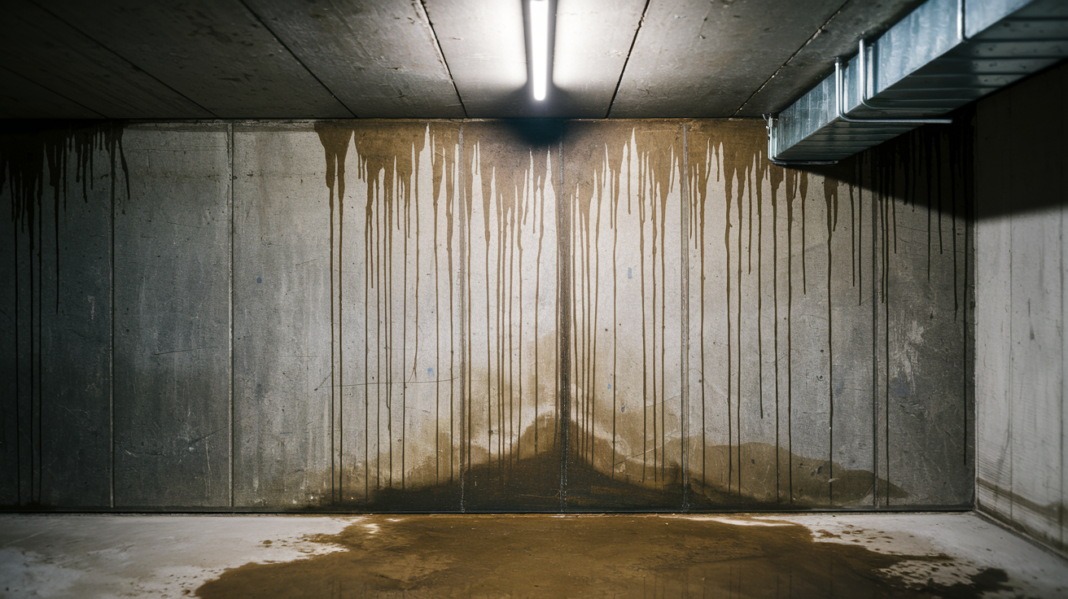

Think your basement leak is just a crack? Think again.
Basement wall seepage usually sneaks in through hidden spots—poor grading, clogged gutters, failed drain tiles, hydrostatic pressure, or a high water table.
Those problems keep soil saturated and push moisture through tiny pores, mortar joints, and seams.
In this post we’ll show how to spot the real entry points, what each sign means, and the practical steps to stop water, document damage for insurance, and restore what got wet.
No guessing. Just clear checks and repair-first solutions.
Primary Reasons Basement Walls Experience Water Seepage
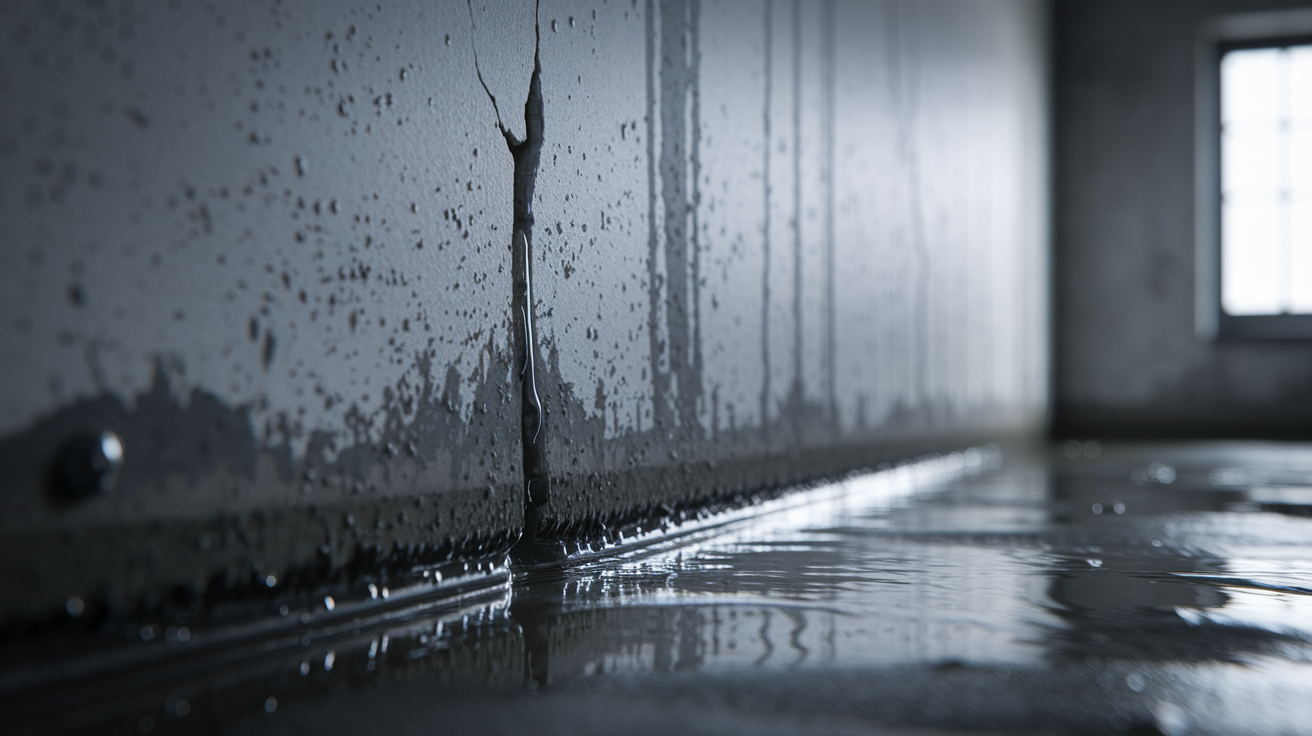
Water seepage happens when moisture slowly works its way through foundation walls, leaving damp spots, stains, and a musty smell that won’t go away. The most common driver is hydrostatic pressure, the force created when saturated soil pushes against the foundation and shoves water through small pores, cracks, and joints. Poor drainage, failed waterproofing, improper grading, clogged gutters, and a high water table all contribute by keeping soil wet and pressure high.
Diagnosing the root cause means looking at where and when water appears. After heavy rain, does moisture show up at the floor/wall joint, around window sills, or in the middle of the wall? Is the seepage steady or does it come and go with storms? Understanding the pattern helps you find the weak point, whether it’s a crack, a drainage failure, or saturated soil pressing against the wall.
Homeowners can often spot seepage signs before the damage spreads. Early recognition stops mold growth, prevents insulation sag, and reduces the risk of structural issues down the line.
Common indicators of basement wall seepage:
- Damp patches or wet streaks on interior walls
- White powdery deposits (efflorescence) on concrete or block surfaces
- Peeling paint or bubbling wall finishes
- Musty odor that lingers even after cleaning
- Puddles or standing water at the wall/floor junction
- Visible cracks with moisture stains around the edges
- Wall bowing or inward bulge at the center
- Increased humidity and condensation on cool surfaces
Hydrostatic Pressure and Soil Saturation
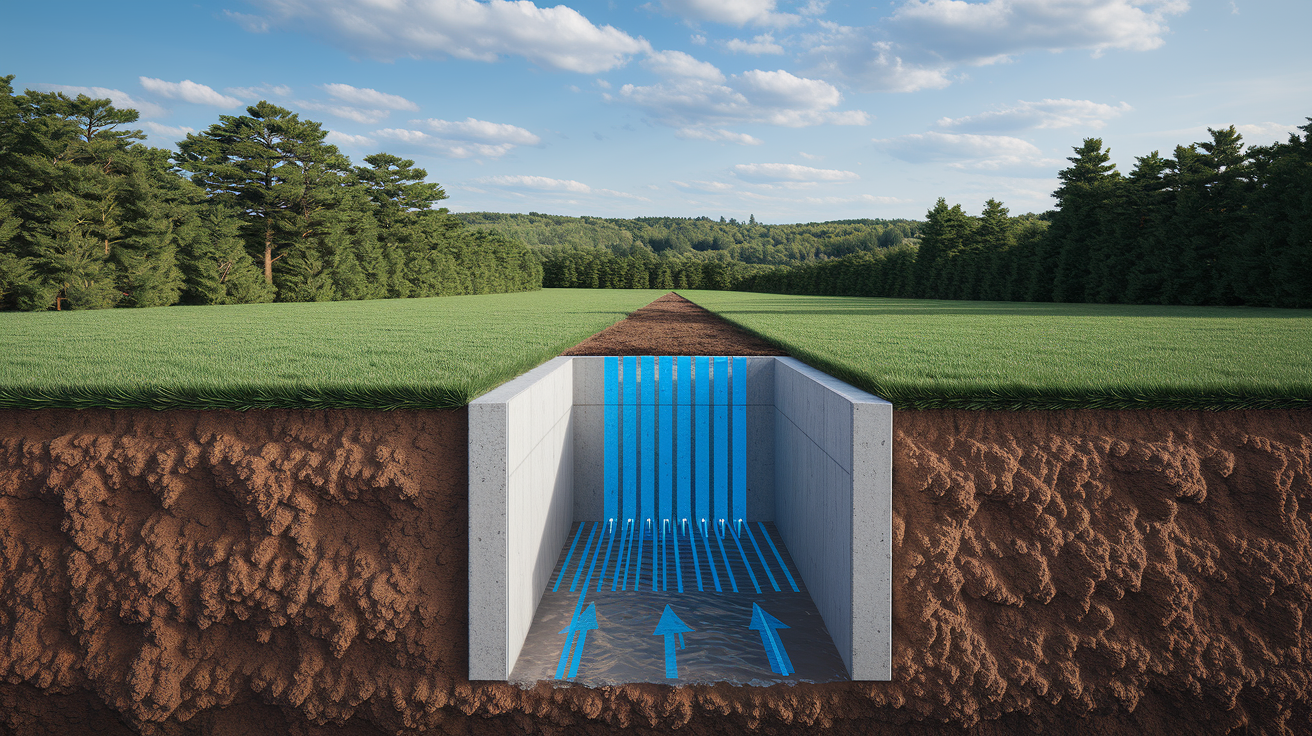
Hydrostatic pressure builds when water saturates the soil around your foundation. Heavy rain, rapid snowmelt, or a high water table all add volume to the ground, and that water presses against the basement walls with steady force. Concrete is porous. Even small imperfections let moisture migrate through. Over time, persistent pressure finds every weak spot: tiny voids between aggregate particles, hairline cracks, mortar joints in block walls, and gaps around pipe penetrations.
You’ll see the result as slow, steady dampness that appears after storms and worsens when the ground stays wet. Common signs include a horizontal wet line at a consistent height, damp patches that grow during prolonged rain, and a cold, clammy feeling on the wall surface. If the wall starts to bow inward or you notice new cracks forming near the center, the pressure’s exceeded what the wall was designed to handle.
Quick diagnostic steps to confirm hydrostatic pressure involvement:
- Inspect after heavy rain to see if seepage appears or worsens.
- Check exterior grading and downspout discharge points for standing water or saturated soil near the foundation.
- Look for efflorescence (white mineral deposits) on interior walls, a sign that water’s moving through the concrete and evaporating inside.
- Measure any wall bowing with a level or straight edge. Inward movement indicates lateral soil pressure.
Poor Exterior Drainage and Clogged Drain Tiles
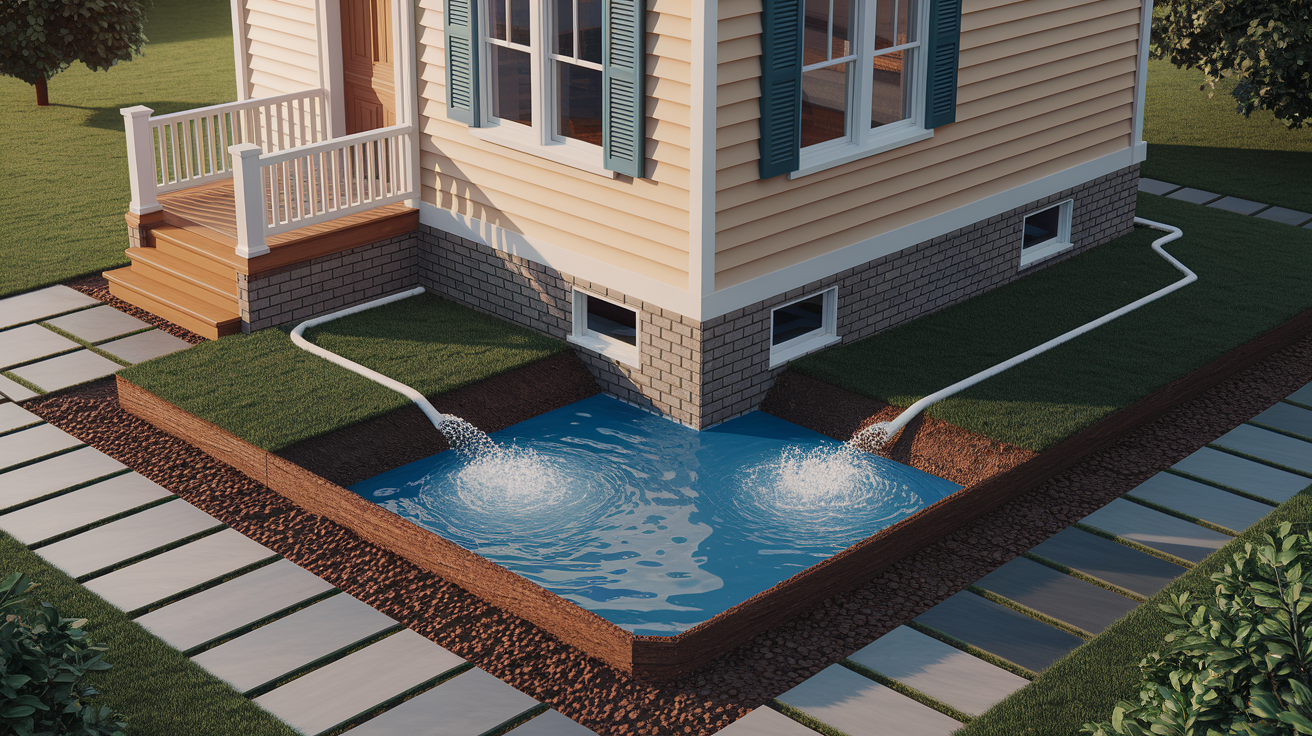
Foundation drain tiles run along the base of the footing to collect groundwater and channel it away from the basement. When these drains clog with sediment, silt, or roots, water has nowhere to go. It backs up, saturates the soil, and pushes through the wall. Poor surface drainage makes things worse by funneling roof runoff and surface water straight to the foundation perimeter instead of directing it away.
You can often trace drainage failure by walking the exterior after a storm. Look for areas where water pools near the basement wall or where the soil stays soggy long after the rain stops. Inside, seepage may appear as a damp band at the floor/wall joint or localized wet spots where the clogged drain tile no longer relieves pressure.
Drainage failure indicators around the home:
- Standing water or mud along the foundation perimeter after rain
- Downspouts discharging directly at the foundation wall
- Eroded soil channels leading toward the basement
- Window wells that fill with water and drain slowly
- Constant dampness at the base of exterior walls even during dry weather
Foundation Cracks and Wall Defects

Even a hairline crack can let water in when hydrostatic pressure’s present. Vertical cracks usually form as the foundation settles and are often narrow and stable. Horizontal cracks are more serious. They signal lateral pressure from saturated soil pushing the wall inward. Stair step cracks in block walls indicate movement along mortar joints and can open wider under load.
Water follows the path of least resistance. A crack that looks dry during normal weather can weep or drip during a storm when exterior pressure spikes. You may see rust staining, mineral deposits, or damp halos around the crack, all signs that moisture’s actively moving through.
Not all cracks need immediate structural repair, but every crack that leaks needs sealing and pressure relief to prevent it from widening. The type of crack tells you what’s happening outside and helps guide the repair.
| Crack Type | Likely Cause | Seepage Risk Level |
|---|---|---|
| Vertical | Foundation settling or concrete shrinkage | Low to moderate |
| Horizontal | Lateral soil pressure from saturated ground | High |
| Stair-step (block walls) | Uneven settling or excessive soil load | Moderate to high |
Improper Grading and Negative Slope Around the Home
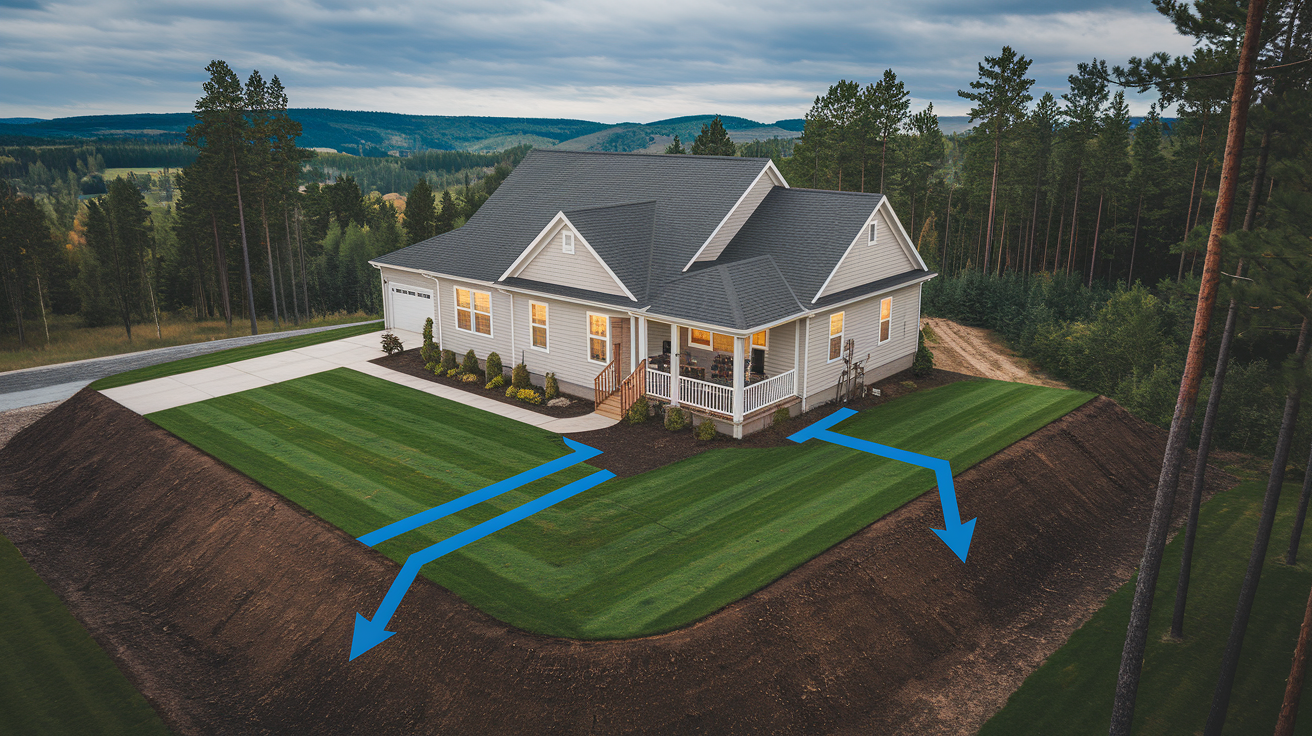
The ground around your home should slope away from the foundation, carrying surface water out toward the yard instead of pooling at the basement wall. Negative grading does the opposite. Soil settles over time, landscaping projects change the grade, or the home was built without proper slope to begin with. Water flows downhill, and if downhill means toward your basement, saturation and seepage follow.
You can check grading with a simple walk around. Look for low spots where water collects near the foundation, areas where mulch or soil has settled below the level of the basement slab, or places where runoff from the yard funnels straight to the house. Fixing grading is often one of the most cost effective ways to reduce hydrostatic pressure and stop seepage before it starts.
Visual grading checks homeowners can perform:
- Stand 10 feet from the foundation and look for obvious dips or depressions that direct water inward.
- Pour a bucket of water near the foundation and watch which direction it flows.
- Inspect for soil erosion channels or water stains on the exterior wall that suggest repeated pooling.
Gutter and Downspout Malfunctions
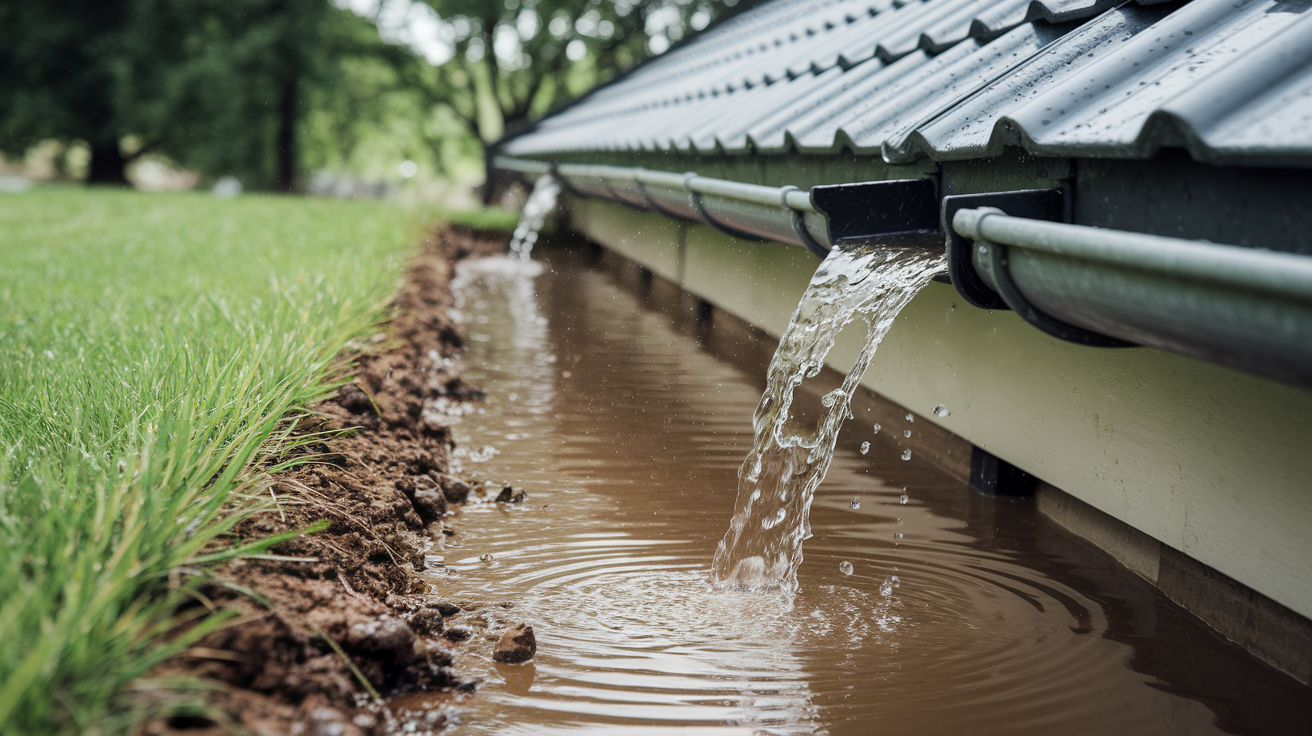
Roof runoff carries a huge volume of water during storms. A single inch of rain on a 1,500 square foot roof produces over 900 gallons of water. If gutters are clogged, sagging, or missing, that water pours over the edge and lands right at the foundation. Short downspouts that end within a few feet of the basement wall dump concentrated flow into the soil, saturating it and spiking hydrostatic pressure.
The result is localized seepage near downspout discharge points or along sections of the basement where gutter overflow is worst. You may see water stains on the exterior wall below the roofline, soil erosion channels near downspouts, or damp basement walls directly below problem gutters.
Roof runoff indicators linked to wall moisture:
- Water pouring over gutter edges during rain instead of flowing through downspouts
- Downspouts discharging within 3 feet of the foundation
- Splash stains or streaking on exterior walls below the gutter line
- Wet basement walls in areas aligned with roof valleys or heavy runoff zones
Failed or Missing Waterproofing Layers
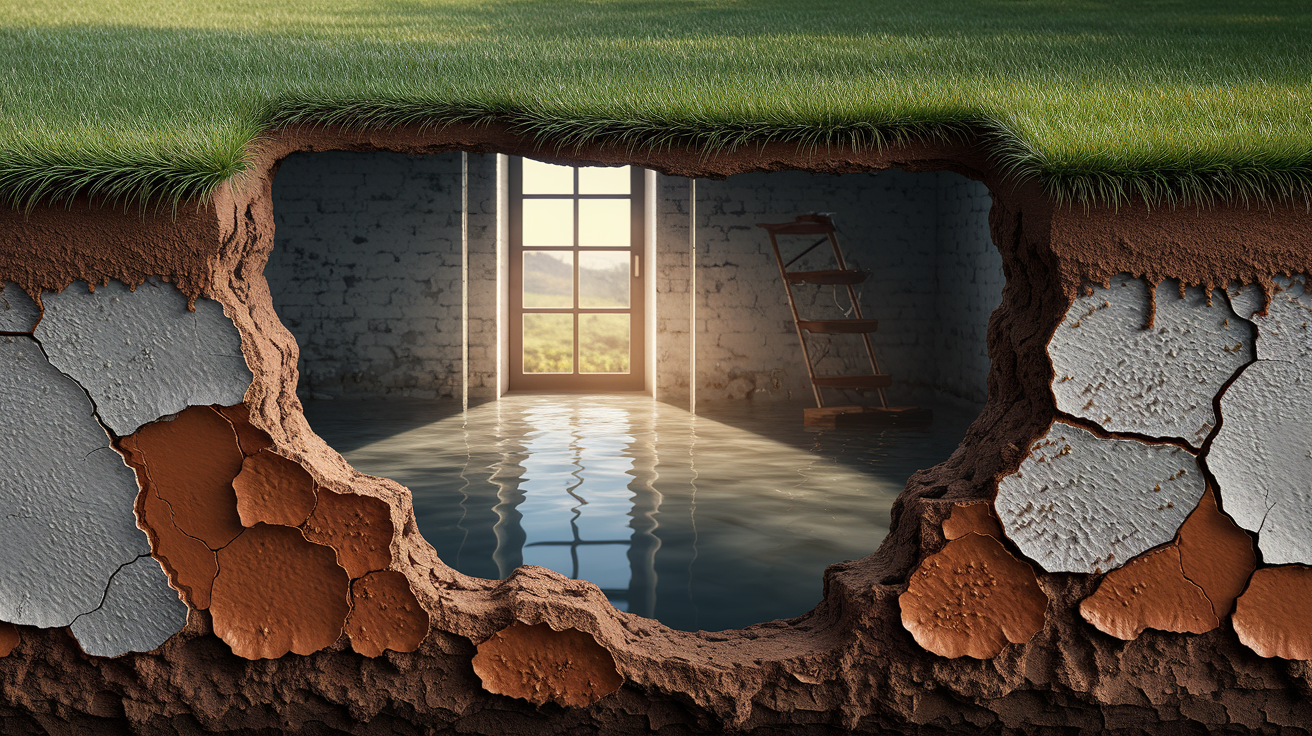
Older homes often relied on a simple tar coating or asphalt based damp proofing on the exterior foundation wall. These materials degrade over decades, cracking and peeling as the foundation shifts and soil chemistry changes. Once the waterproof layer fails, the bare concrete’s exposed to constant moisture, and seepage begins.
You won’t always see failed waterproofing from inside. Symptoms include gradual dampness, efflorescence that appears seasonally, and a baseline level of moisture that never fully dries. Outside, peeling black coating, exposed aggregate, or visible cracks in the exterior membrane are clear signs the protection’s gone.
How to identify deteriorated waterproofing from inside and outside:
- Inside, look for persistent dampness even during dry weather, efflorescence on walls, and a musty smell that cleaning doesn’t remove.
- Outside, inspect exposed foundation (if accessible) for cracked, peeling, or missing black coating.
- Check for water stains or algae growth on exterior walls near grade level, indicating moisture isn’t being repelled.
High Water Table Influences
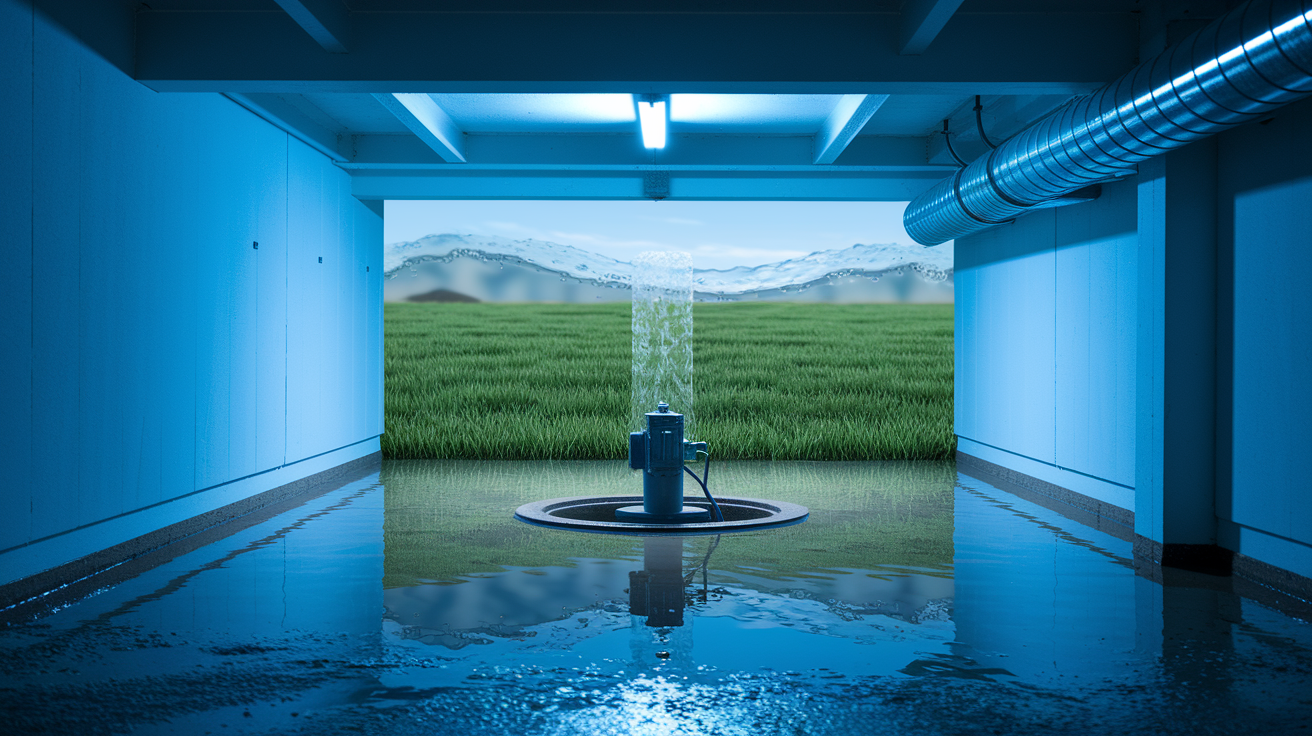
In low lying areas or regions with heavy seasonal groundwater, the water table can rise close to or above the basement slab level. When that happens, hydrostatic pressure is constant, not just a storm related spike. Water infiltrates through the floor/wall joint, through the slab itself, or through wall pores, creating seepage that persists even in dry weather.
High water table seepage often shows up as a damp perimeter at the base of the walls, standing water in the sump pit, or a sump pump that runs frequently even when it hasn’t rained. The issue’s harder to fix with exterior grading alone because the source is deep groundwater, not surface runoff.
Signs the issue is groundwater related:
- Seepage or dampness that continues weeks after the last rain
- Sump pump cycling regularly during dry periods
- Water appearing at the floor/wall joint or through floor cracks when the exterior soil isn’t visibly wet
Preventive Measures and When to Seek Professional Help

Prevention starts outside. Maintain gutters and extend downspouts at least 3 to 6 feet from the foundation. Regrade soil to slope away from the house, and fill low spots that collect water. Seal visible cracks with high strength epoxy or polyurethane injection, and confirm that drain tiles and sump pumps are functioning. For homes with known high water tables or recurring seepage, consider adding exterior drainage, a perimeter drain system, or a backup sump pump.
Most small, stable cracks and minor grading issues are manageable as homeowner projects if you have the right materials and tools. Larger problems require professional assessment. Structural cracks, wall bowing, recurring leaks after repairs, and seepage from multiple locations all point to issues that need excavation, drainage installation, or engineered solutions.
Situations indicating the need for a professional assessment:
- Visible wall bowing, horizontal cracks, or new cracks that widen over time.
- Seepage that returns after temporary sealant or caulk repairs.
- Water entering from multiple locations or through the floor/wall joint along the entire perimeter.
- A sump pump that fails, runs constantly, or can’t keep up with water volume during storms.
- Persistent musty odor, visible mold growth, or efflorescence that reappears after cleaning.
Final Words
Start by checking damp spots, efflorescence, peeling paint, and musty smells — those were the signs we walked through.
We covered the usual suspects: hydrostatic pressure, clogged drain tiles, foundation cracks, bad grading, gutter failures, failed waterproofing, and high water tables.
You also saw quick checks, when to act, and which fixes stop more damage.
Understanding basement wall seepage causes helps you prioritize repairs, document for insurance, and get your space fully restored.
You’ll be okay — act fast and you’ll limit the damage.
FAQ
Q: How to fix water seeping through basement walls?
A: Fixing water seeping through basement walls involves stopping the source, improving outside drainage, sealing cracks, installing proper exterior or interior drains, and repairing damaged drywall or trim; call a pro for structural or persistent seepage.
Q: Does homeowners insurance cover water seepage in basement?
A: Homeowners insurance usually doesn’t cover water seepage caused by long-term issues like poor drainage, rising groundwater, or lack of maintenance; it may cover sudden accidental events like burst pipes—document damage and check your policy or talk to your adjuster.
Q: How to find the source of seepage in walls?
A: Finding the source of seepage in walls means checking outside grading and gutters, inspecting foundation cracks, running a hose test to reproduce leaks, using a moisture meter, and looking for patterns during heavy rain; call pros for hidden problems.
Q: Why is my basement floor wet but no leak?
A: A wet basement floor with no obvious leak is often from groundwater seepage, condensation, a failing sump pump, or clogged drain tile; check humidity, look for damp walls or efflorescence, and test during rain or snowmelt.