


Would you notice an electrical hazard before it causes a shock or a fire?
Most hazards give visible, audible, or physical warnings—warm outlets, buzzing breakers, burning plastic smells, damp spots near panels.
About half of workplace electrical deaths involve contact with overhead power lines, and roughly 30 percent tie back to improper grounding.
We’ll show simple, fast checks you can do right now, what each warning likely means, and the immediate steps to stop further damage and get repairs started.
No fluff—just clear signs, the why behind them, and what to do next.
Key Ways to Identify Electrical Hazards Immediately

Most electrical hazards give you visible, audible, or physical warnings before they cause serious injury or fire. These signs appear in homes, commercial buildings, and construction sites. About half of workplace electrical fatalities happen when someone makes contact with overhead power lines. Another 30 percent are caused by improper grounding.
Start with a quick visual sweep of any space where electrical equipment operates. Look for damaged cords, outlets that feel warm to the touch, and signs of moisture near electrical boxes or panels. Listen for buzzing, sizzling, or crackling sounds coming from outlets, switches, or breakers. Smell for burning plastic, which means insulation is overheating somewhere. These are the immediate red flags that tell you something is wrong and damage is happening right now.
Arc flash events release sudden bursts of energy that reach temperatures up to 35,000°F. Hot enough to vaporize metal and cause catastrophic burns. You can identify arc flash risk by looking for scorched breaker panels, visible arcing light at connection points, or equipment that hums loudly under load. Wet conditions multiply shock risk because water conducts electricity straight through you if insulation fails.
Electrical Hazard Identification Checklist:
Check all visible cords and plugs for frayed insulation, exposed metal conductors, cuts, abrasions, or cracked housings. Verify grounding prongs are intact. Missing or bent ground pins mean no fault current protection. Look for warm, hot, or discolored outlets and switch covers, which signal resistive heating from loose connections or overloads. Note any burning smells, buzzing sounds, sparking, or visible smoke around outlets, panels, or equipment.
Confirm breakers aren’t tripping repeatedly. Frequent trips indicate overcurrent, short circuits, or ground faults. Inspect for water, condensation, or puddles near electrical equipment, outlets, or extension cords. Maintain a minimum 10 foot clearance from overhead power lines for people, equipment, ladders, and materials. Test GFCI outlets monthly by pressing the “Test” button. The outlet should cut power immediately.
What Electrical Warning Signs Mean Physically and Electrically
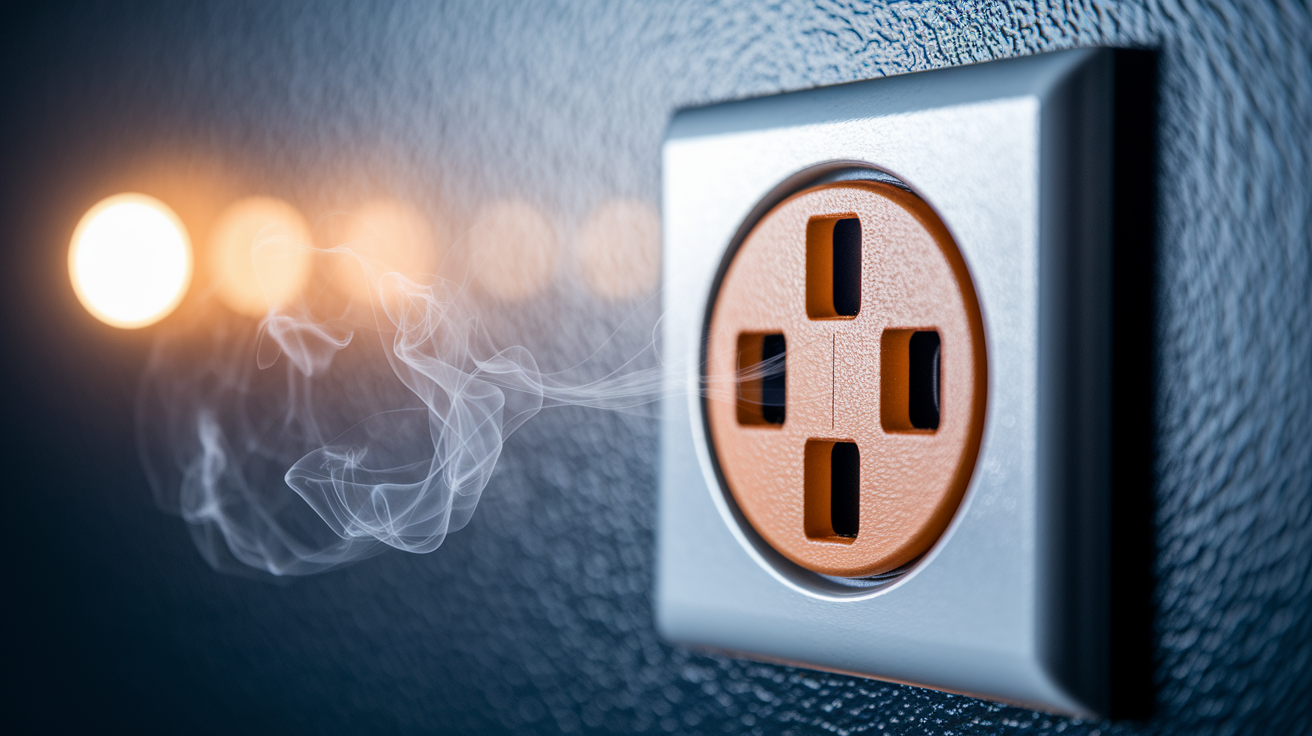
Flickering or dimming lights usually signal loose wire connections or voltage drop caused by undersized wiring that can’t carry the load. When a high draw appliance like an air conditioner starts, it pulls current through the circuit. If connections are loose or wire is too small, resistance increases and lights downstream dim. That resistance creates heat at the weak point.
Warm or discolored outlets mean resistive heating is happening inside the receptacle or at wire terminations. Electricity flowing through a poor connection generates heat, which chars plastic and metal over time. Burning or melting plastic smells come from insulation breaking down under heat. The wire jacket is literally cooking. Buzzing or sizzling sounds are caused by arcing, which is electricity jumping a gap at a loose terminal or damaged conductor. Smoke or melted plastic around an outlet means the circuit is overloaded or a short circuit is dumping current faster than the breaker can trip.
What These Signs Indicate:
Flickering lights point to loose connections, undersized wire, or failing breaker contacts creating intermittent resistance. Warm outlets or switches mean resistive heating from loose terminals, oxidized contacts, or current exceeding receptacle rating. Burning smell indicates insulation breakdown from prolonged overheating or arcing at wire junctions.
Buzzing or sizzling reveals arcing caused by loose screws, damaged conductors, or moisture bridging contacts. Frequent breaker trips suggest overcurrent from too many devices, short circuit to ground, or internal breaker wear. Discolored or scorched outlets show sustained heat from poor contact, aluminum to copper mismatch, or backstab connection failure.
Electrical Hazards Caused by Damaged or Overloaded Wiring

Overloaded circuits show up as outlets that feel warm to the touch, a faint burning odor near the breaker panel, and breakers that trip when you plug in one more device. The circuit is carrying more current than the wire and breaker are rated for, which heats the wire inside the wall. That heat degrades insulation and raises fire risk.
Damaged cords are easier to spot. Look for cracks, cuts, or abrasions in the outer jacket. If you see exposed copper conductors, the cord is unsafe. Cords running under rugs or pinched by furniture wear through faster because foot traffic and pressure break down insulation. Pet chew marks compromise the insulation layer and expose live metal. Never use electrical tape as a permanent repair. It’s an insulator, but it doesn’t restore mechanical strength or meet code. Remove damaged cords from service and replace them.
Older homes and buildings may still have outdated wiring systems that were never designed for modern electrical loads. Upgrading these systems requires a licensed electrician, but you can identify them during a visual inspection.
Indicators of Outdated or Inadequate Wiring:
Two prong outlets instead of three prong grounded receptacles. Aluminum wiring, which appears silvery where visible and expands/contracts more than copper, leading to loose connections. Knob and tube wiring, an old cloth insulated system with porcelain insulators, commonly found in homes built before 1950.
Fuse boxes instead of modern circuit breaker panels. Fuses work, but panels are often undersized for current loads. Frequent electrical problems like tripped breakers, dimming lights, or the inability to run multiple appliances simultaneously.
Identifying Grounding and Bonding Problems

Improper grounding is responsible for about 30 percent of workplace electrical fatalities, according to the National Safety Council. Grounding provides a safe path for fault current to return to the source and trip the breaker before you become the path. Without it, a damaged tool or appliance can energize its metal housing and shock you when you touch it.
The fastest way to spot grounding problems is to look at outlet faces and equipment cords. Three prong outlets should have the round grounding hole at the bottom. If you see only two slots, the outlet is ungrounded. Check power tool and appliance cords for three prong plugs. If the grounding prong is missing, bent, or broken off, the equipment has no ground fault protection.
Some tools are double insulated and safe with two prong plugs, but they must be labeled with a “double insulated” symbol (a square inside a square). Portable equipment used on construction sites or in commercial settings should always be grounded or clearly marked double insulated. If you open an electrical box and notice wires with no visible grounding conductor (bare copper or green insulated wire), bonding may be incomplete or missing.
Electrical Hazards in Wet or Damp Environments

Water is an excellent conductor, and wet skin has much lower resistance than dry skin. That combination makes even low voltage shocks dangerous when moisture is present. If electrical equipment gets wet, don’t touch it. Shut off the circuit at the breaker and contact a qualified electrician to inspect and dry the equipment before re-energizing.
Outdoor outlets, basement receptacles, bathrooms, kitchens, laundry areas, and any location within six feet of a water source should have GFCI protection. GFCIs detect tiny imbalances in current and shut off power in milliseconds, before a shock can cause injury. Inspect outdoor outlets for weatherproof covers. The spring loaded or screw down lids that keep rain out. If covers are cracked, missing, or won’t close, replace them.
Wet Area Inspection and GFCI Testing:
Check for standing water, condensation, or damp conditions near outlets, panels, extension cords, or portable equipment. Verify outdoor and wet location outlets have intact weatherproof covers. Confirm GFCI outlets are installed in bathrooms, kitchens, garages, basements, and outdoor locations.
Test GFCI outlets monthly. Plug in a small lamp, turn it on, press the “Test” button on the GFCI. Lamp should turn off, then press “Reset” to restore power. Never operate electrical equipment with wet hands, and dry hands thoroughly before plugging or unplugging cords.
Recognizing Overhead and Underground Electrical Line Hazards

Contact with overhead power lines causes roughly 50 percent of workplace electrical fatalities. These lines carry extremely high voltages, often hundreds of thousands of volts on transmission lines, and you don’t have to touch the wire directly. Electricity can arc across air gaps if you get too close with conductive materials like ladders, scaffolding, cranes, or metal pipes.
Before you start work outdoors or move tall equipment, scan the area for overhead lines. Look up. Identify the closest power line and measure or estimate the distance between your highest working point and the wire. OSHA and electrical safety standards require a minimum 10 foot clearance for people and uninsulated equipment. If you can’t maintain that distance, contact the utility company to de-energize or insulate the line, or plan the work differently.
Underground electrical cables are marked by warning signs, colored tape, or utility company markers, but the markings fade and shift over time. Before digging, trenching, or driving ground stakes, call your local utility location service (811 in the United States) and have all buried lines marked. A shovel or post hole digger can cut through an underground cable and cause electrocution or an arc flash explosion.
Overhead Line Inspection Steps:
Survey the work area and locate all overhead power lines before lifting equipment, extending ladders, or positioning scaffolding. Measure or estimate clearance and confirm it exceeds the minimum 10 foot distance for people and non insulated tools. Install physical barriers, warning signs, or high visibility flagging to mark exclusion zones around overhead lines. Inspect the site daily. Lines can sag in hot weather or after storms, reducing clearance.
Identifying Arc Flash and High Energy Electrical Hazards

Arc flash is a sudden release of energy caused by a fault or short circuit in energized equipment. Temperatures inside the arc reach up to 35,000°F, vaporizing metal and creating a pressure wave that can throw you backward, damage hearing, and cause severe burns to skin and eyes. Arc flash hazards exist wherever high energy electrical systems are operated, maintained, or opened while energized.
You can recognize arc flash risk by inspecting electrical panels and switchgear for warning labels. Equipment rated above certain voltage and available fault current thresholds must carry arc flash hazard labels that specify the boundary distance, required PPE, and incident energy level. Listen for unusual sounds. Loud humming, buzzing, or sizzling from a panel indicates arcing or loose connections under load. Panels that feel warm to the touch or emit a burning smell show signs of internal overheating. Visible scorch marks, melted plastic, or discolored breaker handles mean arcing has already occurred.
| Arc Flash Warning Sign | What It Indicates |
|---|---|
| Loud buzzing, humming, or sizzling from panel | Arcing at bus bars, breaker contacts, or loose lugs; high fault current or poor connection |
| Warm or hot panel enclosure, breaker handles | Resistive heating from overload, undersized breaker, or failing internal components |
| Visible scorch marks, melted plastic, discolored breakers | Previous arcing event; insulation failure; breaker or bus bar damage requiring immediate professional inspection |
Checklist Based Electrical Hazard Identification (Home + Workplace)

A simple monthly walkthrough catches most electrical hazards before they cause injury or fire. In homes, walk every room and check outlets, switches, and appliance cords. In commercial or construction settings, inspect portable equipment, temporary wiring, panels, and job site conditions before starting work each day. Professional inspections should happen every 3 to 5 years for newer buildings and annually for structures older than 40 years or high demand electrical environments.
Inspection Checklist for Homes and Workplaces:
Inspect all visible power cords, extension cords, and equipment cables for frayed insulation, exposed conductors, cuts, cracks, abrasions, or missing outer jackets. Verify grounding prongs are intact on three prong plugs. Bent, broken, or missing ground pins eliminate fault protection.
Check outlets and switch covers for warmth, discoloration, burning odor, melted plastic, or loose mounting. Test GFCI outlets monthly using the built in “Test” and “Reset” buttons. Confirm power cuts off and restores properly.
Look for water, condensation, damp conditions, or puddles near electrical equipment, outlets, panels, or outdoor boxes. Inspect equipment housings, junction boxes, and panel covers for cracks, missing screws, gaps, or damaged enclosures.
Confirm the presence of safety barriers, warning signs, and labeled arc flash boundaries around high voltage equipment and panels. Measure or visually confirm minimum 10 foot clearance from overhead power lines for people, equipment, ladders, scaffolding, and stored materials.
Note repeated breaker trips, flickering lights, buzzing sounds, or burning smells and document the circuit and time of occurrence. Schedule a licensed electrician for a comprehensive inspection if your building is over 40 years old, experiences frequent electrical issues, or if you’re planning major renovations or load increases.
Tools and Devices That Help Identify Electrical Hazards

Non contact voltage testers let you detect live wires without touching them. These battery powered pens or wands light up and beep when brought near energized conductors. Use them to confirm a circuit is de-energized before working on outlets, switches, or junction boxes. They’re fast and safe for general checks, but they won’t tell you exact voltage or current.
Multimeters measure voltage, current, and resistance with probe contact. They’re more precise than non contact testers, but you must follow safety protocols. Verify the meter is rated for the voltage you’re testing, use insulated test leads, wear appropriate PPE, and never measure energized circuits unless you’re trained and authorized. Always start on the highest voltage range and step down.
Thermal imaging cameras detect hot spots by measuring infrared radiation. Overloaded circuits, loose connections, and failing components generate heat before they fail completely. A thermal scan of a breaker panel or electrical enclosure reveals temperature differences that point to problem areas. Inspectors and electricians use thermal imaging to find hidden faults in walls, panels, and equipment under load.
| Tool Type | Primary Use |
|---|---|
| Non contact voltage tester | Quick detection of live wires and confirmation of de-energized circuits without physical contact |
| Digital multimeter | Accurate measurement of voltage, current, resistance, and continuity; requires direct probe contact and safety training |
| Thermal imaging camera | Identification of hot spots, overloaded circuits, loose connections, and failing components by measuring surface temperature |
| GFCI outlet tester | Plug in device that verifies proper GFCI operation, correct wiring, and ground fault trip response |
When Electrical Hazards Require Immediate Professional Assistance

If you see sparks, smoke, or smell burning plastic and can’t locate the source, shut off the main breaker and evacuate the building. Call emergency services if there’s visible fire. Once the space is safe, contact a licensed electrician for an emergency inspection. Don’t attempt to troubleshoot or repair energized equipment yourself.
Repeated breaker trips, warm or hot outlets, buzzing panels, visible arcing, wet electrical equipment, missing or damaged grounding, and any work involving overhead power lines all require professional assessment and repair. Electrical systems carry enough energy to cause fatal shocks, arc flash explosions, and structure fires. Trained electricians have the tools, PPE, and knowledge to work safely on live and de-energized systems. If you’re unsure whether a situation is dangerous, assume it is and call for help. For urgent situations involving fire, water intrusion, or electrical damage that threatens safety or property, reach out to professionals who can coordinate emergency response for fire, water, and electrical damage.
Situations Requiring Licensed Electrician or Emergency Response:
Any outlet, switch, breaker, or panel that sparks, smokes, sizzles, or emits burning odors. Outlets or switches that feel warm or hot to the touch, or show discoloration and melted plastic. Breakers that trip repeatedly after being reset, indicating overcurrent, short circuit, or ground fault.
Wet or water damaged electrical equipment, submerged outlets, flooded panels, or moisture inside enclosures. Missing, damaged, or improperly installed grounding. Ungrounded outlets in wet locations or on portable equipment.
Final Words
If you see buzzing, burning smells, warm or discolored outlets, sparking, or wet equipment, act fast. Stop using the circuit and keep people away.
This post walked you through immediate signs, wiring and grounding checks, wet-area steps, overhead and buried line risks, arc‑flash indicators, practical checklists, and the tools to confirm trouble. Do the monthly inspection and the GFCI test we described.
If you’re unsure, call a licensed electrician. Use this guide on how to identify electrical hazards to spot risks early and protect your home. You’re on the right track.
FAQ
Q: How do you identify electrical hazards?
A: You identify electrical hazards by spotting frayed insulation, exposed wires, warm or discolored outlets, smelling burning odors, hearing buzzing or sizzling, noting frequent breaker trips or wet conditions, and testing with a non-contact tester.
Q: What are the 7 types of electrical hazards?
A: The seven types of electrical hazards are overhead line contact, energized-contact, arc flash, improper grounding, overloaded circuits, damaged insulation/exposed conductors, and wet environments—overhead lines cause about 50% of workplace electrical deaths.
Q: What are the main electrical hazards and examples?
A: The main electrical hazards are overhead line contact (crane or ladder strikes), grounding failures (missing prong, ungrounded outlets), arc flash (panel arcing; temps up to 35,000°F), overloaded circuits (warm outlets, trips), and frayed cords (exposed wire).