
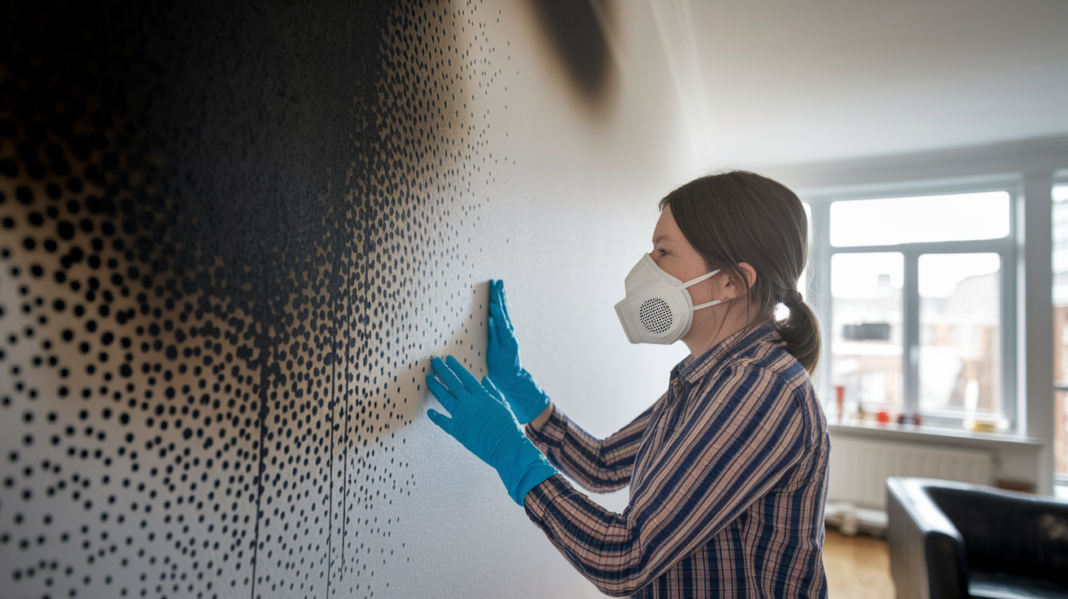

You just watched flames get knocked down, but the real fight starts now. Soot isn’t harmless dust sitting on your walls. It’s acidic residue actively corroding surfaces, releasing toxic particles, and spreading contamination through your ventilation system while you read this. Every hour soot stays on your property increases permanent damage to metal, wood, electronics, and fabrics. Here’s what you need to know about cleanup, what you can handle yourself, when professionals aren’t optional, and how to stop corrosion before it destroys what the fire didn’t.
Critical Safety Steps and Immediate Actions After Fire Soot Damage
Soot damage starts the second particles land. Acidic residue corrodes surfaces, penetrates materials, and creates health risks immediately. Not in days or weeks. Right now.
Soot contains toxic substances. Acids, chemicals, metals, dust, hazardous materials from whatever burned. Smoke particles irritate your lungs, eyes, throat. Deep inhalation causes breathing problems, worsens asthma, triggers bronchitis, and leads to serious respiratory illness that limits what you can do every day. Kids, older adults, anyone with respiratory issues faces real danger. These microscopic particles travel through ventilation, settling far from where the fire started and spreading contamination room to room.
Here’s what you need to do immediately, in order:
- Ensure the fire is completely out and it’s safe to enter – Get fire department clearance before you go inside
- Open windows and doors for ventilation, but don’t use fans – Fans spread soot particles and push them deeper into surfaces
- Shut off your HVAC system immediately – Don’t restart until a professional checks the entire system
- Identify and evacuate vulnerable persons if needed – Anyone with asthma, COPD, heart conditions, or immune problems should leave until cleanup finishes
- Document all damage with photos and videos before touching anything – Walk through every room and take wide shots plus close-ups of affected areas
- Put on full protective equipment before any contact with soot – No exceptions, even for quick looks
- Contain affected areas if possible – Close doors to heavily damaged rooms to stop particle spread
- Avoid touching or wiping contaminated surfaces yet – Wrong cleaning attempts spread soot and drive it deeper into materials
- Remove unaffected or lightly affected items from the edges of the damage zone – Move clean items away before particles settle on them
- Contact your insurance company and professional restoration services – Both calls should happen today
Documentation matters for your claim and your safety. Photograph all damaged items before disposal. Capture the full extent of contamination on walls, ceilings, floors, belongings, and any visible damage to structure or systems. Take photos from multiple angles. These images become your evidence when filing claims and figuring out what’s salvageable.
Before you touch anything in a soot contaminated area, you need this gear:
- N95 masks – Regular dust masks don’t filter microscopic soot particles
- Chemical resistant gloves – Latex or nitrile, not fabric or leather
- Safety glasses or goggles – Soot particles irritate eyes on contact
- Long sleeves – Cover all arm skin to prevent particle contact and absorption
- Long pants – Same principle. No exposed leg skin
- Closed toe shoes – Boots or sneakers you can clean thoroughly or throw out afterward
What Soot Damage Is and How It Affects Your Property
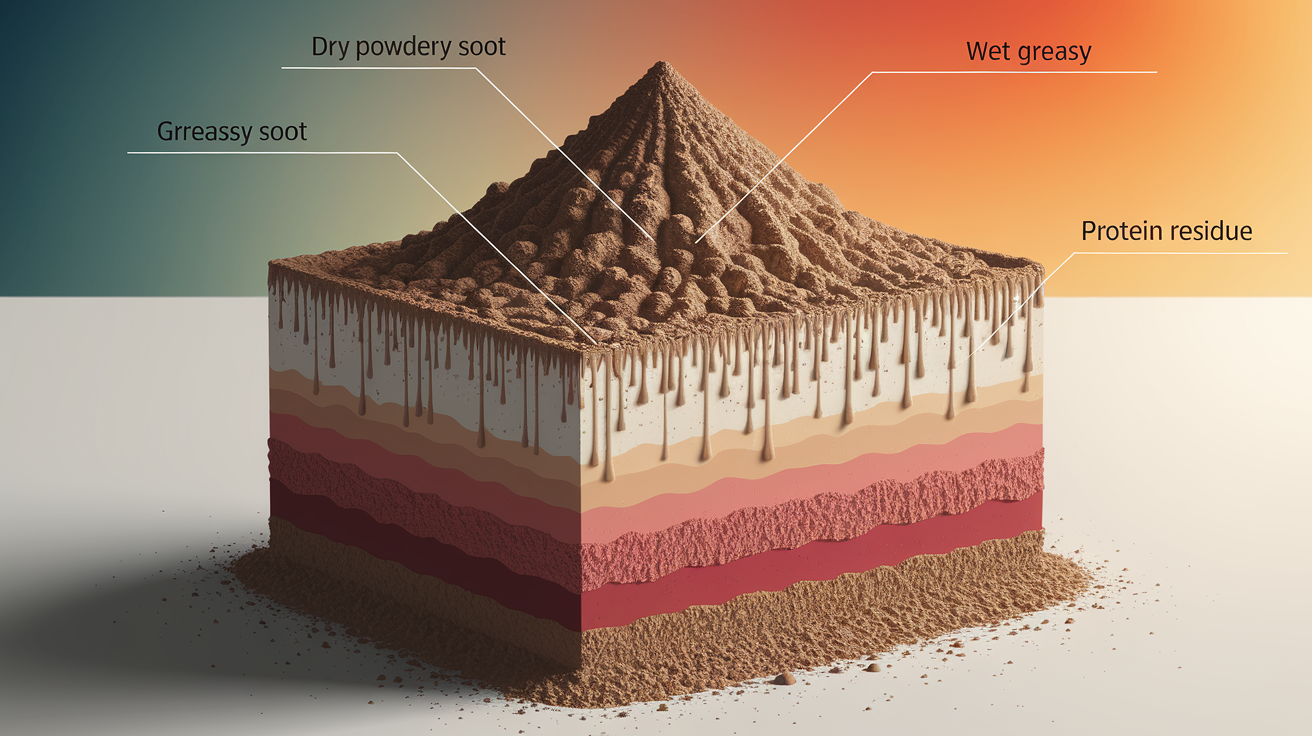
Soot is the black residue left when materials burn without enough oxygen for complete combustion. It’s mostly carbon, formed from incomplete burning of wood, coal, oil, plastics, synthetic materials. Smoke is different. It’s the gases and microscopic particles released during active burning, while soot is the solid residue that settles after.
Soot particles are nearly microscopic, smaller than typical household dust. These tiny particles don’t just fall straight down and stay put. They travel through ventilation, float on air currents, and settle far beyond where the fire started. A fire contained to one room sends soot particles through ductwork into distant bedrooms, settling on walls, ceilings, furniture, and belongings throughout your home. The particle size means soot behaves more like smoke. It moves, spreads, and gets into spaces you wouldn’t expect.
Soot is acidic. Damage starts the moment particles settle on surfaces.
The acidic and corrosive nature means it’s actively eating away at whatever it touches. Metal fixtures, wood framing, painted surfaces, electronics, fabrics. The corrosion process doesn’t pause. Every hour that passes with soot on your property increases permanent damage. Materials keep breaking down, odors set deeper, and restoration becomes more complex.
Different fires create different types of soot, each with distinct characteristics. Dry soot comes from fast burning fires fueled by paper, wood, and natural materials. It has a powdery, dusty consistency that spreads easily when disturbed. Wet soot results from slow burning, smoldering fires fed by plastics, rubber, and synthetic materials. This type is sticky, greasy, and smears when you try to wipe it. Protein residue comes from kitchen fires involving organic matter and cooking materials. It’s nearly invisible but creates intense, persistent odors that resist normal cleaning. Fuel oil soot happens during furnace malfunctions or oil burning equipment failures. Thick, greasy, and particularly difficult to remove from surfaces.
Surface type determines how deeply soot penetrates and how difficult restoration becomes. Porous materials like wood, drywall, unfinished concrete, fabrics, carpets, and insulation absorb soot particles deep into their structure, increasing the risk of permanent damage and persistent odors that resist cleaning. Non-porous surfaces like glass, metal, sealed countertops, ceramic tile, and finished hardwood keep soot on the surface where it sticks but doesn’t penetrate. These clean more successfully if you address them quickly.
Professional vs. DIY Cleanup: Making the Right Decision for Your Situation

DIY cleanup is only appropriate for very minor, surface level soot on non-porous materials in small areas where no health vulnerabilities exist. We’re talking about a small amount of visible soot on a glass tabletop or metal fixture in a single room, where the fire got put out immediately, no smoke traveled through ventilation, and no one in the household has respiratory conditions.
Most fire soot situations exceed safe DIY capabilities. The health risks from toxic particles, the complexity of damage that spreads beyond visible areas, and the real risk of spreading contamination or driving it deeper through improper cleaning techniques mean professional help isn’t optional for anything beyond the most minor surface contamination. Standard household cleaning methods don’t work against smoke and soot damage. They usually make it worse.
| Situation Factor | DIY Appropriate | Professional Required |
|---|---|---|
| Affected area size | Single item or very small surface area under 2 square feet | Multiple surfaces, entire room, or multiple rooms affected |
| Surface types involved | Only non-porous hard surfaces like glass or metal | Any porous materials, walls, ceilings, or fabrics contaminated |
| HVAC system exposure | System was off and not affected | System was running or smoke entered ducts |
| Odor presence | No noticeable smoke odor remains | Persistent smoke smell in any room |
| Health conditions of occupants | No respiratory issues, no children or elderly present | Anyone with asthma, COPD, allergies, or immune concerns |
| Insurance claim filing | Not filing a claim for this incident | Filing insurance claim requiring professional documentation |
| Visible structural involvement | No damage to walls, ceilings, or building materials | Any soot on drywall, wood, insulation, or structural surfaces |
| Time since fire occurred | Immediate cleaning within first hour | More than a few hours have passed, allowing corrosion to begin |
DIY Soot Cleanup Methods and Techniques
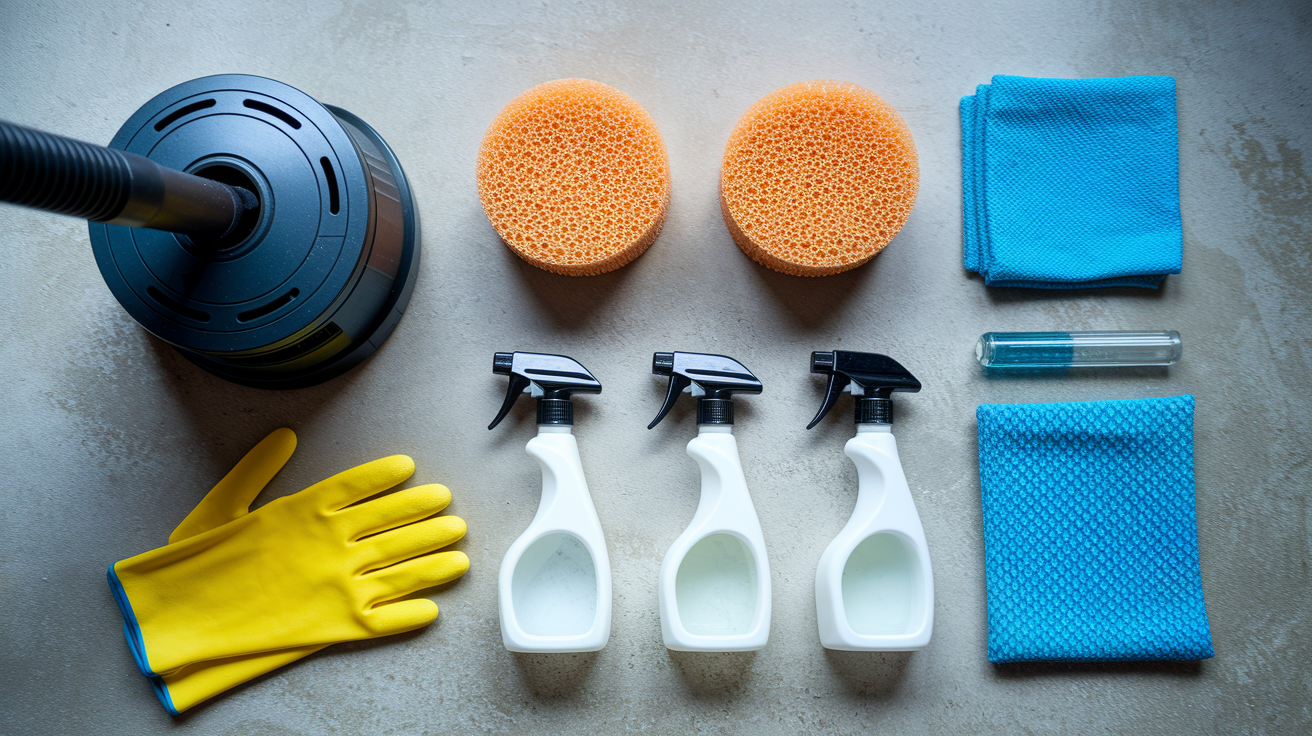
DIY methods only work for minor, localized soot damage on non-porous surfaces. If you’re looking at soot on walls, fabrics, multiple rooms, or anything involving ventilation systems, stop here and call professionals.
The first step is always dry cleaning. Never wet. Soot is oily and powdery. Using water too early causes smearing and drives particles deeper into materials, creating worse damage. Start with a HEPA filter vacuum. Work from the outside edges of the contamination toward the center. This prevents spreading particles into clean areas. Use gentle suction without pressing the nozzle hard against surfaces. Change vacuum bags or clean filters frequently because soot clogs them fast. No smearing, no rubbing, just careful lifting of loose particles.
After vacuuming, use dry chemical soot sponges for residual contamination on walls and ceilings. These specialized sponges look like large, dry erasers made of vulcanized rubber.
Wipe in one direction only, lifting the sponge completely off the surface between strokes. As the sponge surface gets saturated with soot, rotate it to expose a clean section. When the entire sponge is darkened and stops picking up residue, replace it with a new one. Don’t rinse and reuse soot sponges. That releases particles back onto surfaces.
For wet cleaning hard, non-porous surfaces, mix 1 gallon of warm water with either a few drops of dish soap or 1 cup of white vinegar. That’s it. No harsh chemicals, no specialty products needed for minor cleanup. Wring cleaning cloths nearly dry before wiping. Work in small sections about 2 feet square. Rinse cloths frequently in clean water. Change your cleaning solution often as it gets contaminated. The key is minimal moisture. Damp cleaning, not wet scrubbing.
Never attempt DIY cleaning on electronics interiors, HVAC components, extensive damage areas covering multiple walls or rooms, porous materials with deep soot penetration like drywall or unfinished wood, or anything requiring insurance documentation. Professional assessment and cleaning is required for these situations. Household methods cause additional damage and void insurance coverage in many cases.
Cleaning Soot From Fabrics, Carpets, and Upholstery

Porous textiles absorb soot particles deep into their fibers, creating unique challenges compared to hard surfaces. The microscopic particles embed between fabric threads, and the acidic, oily nature of soot means it bonds to materials and resists simple washing. Odors penetrate the entire fabric structure, not just surface fibers.
For washable fabrics like clothing, linens, and removable slipcovers, use your washing machine with hot water and regular detergent. Add 1 cup of white vinegar to the rinse cycle. Vinegar helps break down smoke particles and neutralize odors at a molecular level. Heavily affected items might need washing twice. After washing, sun dry items outdoors when possible. Sunlight provides natural deodorizing and helps break down remaining odor molecules that survived washing.
Carpets require a different approach. Start with thorough HEPA vacuuming using slow, overlapping passes to lift embedded particles. Then sprinkle baking soda liberally across the entire affected carpet area. Use a full box for a medium sized room. Let the baking soda sit for several hours, or overnight if possible, to absorb odors. Vacuum again with multiple slow passes. The baking soda helps neutralize acidic residue and pulls odor molecules out of carpet fibers.
Upholstered furniture and draperies often need professional cleaning or replacement. If persistent odor remains after treatment attempts, if visible staining won’t lift, if the fabric shows degradation or weakening, or if the items are expensive or hold sentimental value, professional content restoration gives you the best chance of successful recovery. Many upholstery fabrics and drapes can’t handle aggressive home cleaning without damage, and their construction, thick padding, multiple fabric layers, internal frames, traps soot particles where household methods can’t reach.
Soot Damage in HVAC Systems and Air Ducts

Microscopic soot particles infiltrate ductwork and travel through your entire ventilation system, spreading contamination far beyond where the fire started. Every register, every supply vent, every return air grille becomes a pathway for particle distribution. Soot settles inside ducts, on blower fan blades, throughout the furnace or air handler cabinet, and across filter surfaces.
When HVAC systems operate with soot laden ducts, they create a re-contamination cycle. Every heating or cooling cycle pulls contaminated air through the system and releases it back into living spaces. Clean rooms get re-contaminated. Freshly cleaned surfaces accumulate new particle deposits. The system becomes a distribution network for ongoing damage, making surface cleaning efforts ineffective as long as the ventilation system keeps circulating contaminated air.
Professional HVAC inspection and cleaning is mandatory before you restart the system. Certified technicians use specialized cameras to inspect ductwork interiors without tearing apart your walls. Negative air pressure cleaning systems capture particles instead of releasing them into your home. Sanitization treatments address microbial growth risks in ducts where soot and moisture create ideal conditions. Trying to clean duct interiors yourself is impossible. You can’t reach, can’t see, and can’t properly remove particles from the sheet metal surfaces and joints where contamination hides.
After professional duct cleaning, HEPA filter upgrades provide ongoing protection. Replace standard furnace filters with HEPA grade options rated MERV 13 or higher if your system can handle the airflow restriction. Change filters every 30 days during the first few months after restoration, then maintain a regular replacement schedule based on your HVAC technician’s recommendations.
Components requiring professional inspection after soot exposure:
- Ductwork interior surfaces – All supply and return ducts throughout the system
- Furnace or air handler cabinet and components – Interior surfaces where air moves through heating/cooling equipment
- Blower motor and fan blades – Moving parts that distribute air and accumulate particle buildup
- Filter housing and plenum areas – Spaces immediately before and after filter location where high particle concentration occurs
- Return vents and supply registers – All grilles and covers throughout the home where air enters and exits ductwork
Electronics and Appliance Damage From Soot Exposure

Acidic soot particles cause corrosion on circuit boards, metal contacts, and internal electronic components even when contamination isn’t visible to the eye. The residue creates conductive pathways between components that shouldn’t connect, leading to short circuits, erratic behavior, and progressive failure over weeks or months. Trapped residue continues breaking down metals and causing component degradation long after the fire.
Safe external cleaning requires complete power disconnection first. Unplug devices entirely. Don’t just turn them off. Use only dry, soft microfiber cloths for gentle exterior wiping. No pressure, no scrubbing, just light surface cleaning to remove visible particles. Never spray cleaning liquids directly onto devices. Even “electronics safe” cleaners cause damage when moisture enters cases through vents, ports, or seams.
Internal electronic cleaning requires professional restoration technicians with specialized equipment. They use ultrasonic cleaning systems that remove particles from intricate circuit board surfaces without physical contact. Controlled environment restoration facilities prevent re-contamination during cleaning. Component level assessment identifies parts requiring replacement versus successful restoration. Attempting to open electronics yourself voids warranties, risks additional damage, and often makes professional restoration impossible.
| Device Type | Visible Soot Damage Signs | Action Required |
|---|---|---|
| Computers and laptops | Dark residue on vents, keyboard, or screen; unusual fan noise; intermittent operation | Professional electronics restoration; do not power on until cleaned internally |
| Televisions and entertainment systems | Film on screen; residue around vents; display issues; audio problems | External cleaning only; professional assessment if performance issues occur |
| Kitchen appliances | Visible soot on surfaces; odor during operation; electrical smell when running | Clean non-electrical exterior surfaces; replace if soot entered motor or control areas |
| Small electronics and chargers | Coating on device surfaces; charging issues; overheating during use | External cleaning; replacement recommended for heavily contaminated items due to low cost versus restoration expense |
Professional Soot Restoration Services and What They Include

IICRC certification standards ensure restoration technicians follow proper assessment protocols, maintain contamination control, comply with safety requirements, and provide documentation that insurance companies accept. Professional training covers soot particle behavior, cross contamination prevention, proper cleaning agent selection for different materials, structural drying integration when water damage accompanies fire damage, and the testing procedures that verify successful restoration. You can read more about what to expect from professional emergency services in our guide on Emergency Water Extraction and Flood Damage Restoration: What to Expect, which covers similar response processes for different damage types.
Specialized equipment makes professional restoration effective where household methods fail. Industrial air scrubbers with HEPA filtration continuously clean airborne particles during the entire restoration process, preventing re-contamination of cleaned surfaces. Ozone generators neutralize odor molecules through oxidation, a chemical process that household products can’t replicate. Thermal foggers disperse deodorizing agents that follow the same pathways smoke traveled, reaching inside walls, ductwork, and other hidden spaces. Hydroxyl generators provide odor treatment safe for occupied spaces when ozone use isn’t appropriate. Negative air machines create controlled pressure differentials that contain contamination within work areas. Industrial HEPA vacuums provide suction power and filtration efficiency beyond consumer equipment.
The professional mitigation process follows a structured sequence designed to prevent additional damage while systematically removing contamination. Initial assessment and testing identifies all affected areas, determines soot type, measures contamination levels, and develops the scope of work. Containment establishment isolates damaged areas with physical barriers and negative air pressure to prevent particle spread. Air quality control begins immediately with scrubbers and filtration. Systematic removal tackles surface contamination using appropriate methods for each material type, working from least to most contaminated areas. Deep cleaning addresses embedded particles in porous materials using specialized techniques and solutions. Deodorization neutralizes odor molecules at their source rather than masking smells. Final restoration rebuilds or refinishes damaged structural elements, and clearance testing verifies air quality and surface cleanliness before homeowners return.
Household cleaning products and methods can’t replicate these results. You lack the proper equipment to reach hidden contamination in wall cavities, ductwork interiors, and structural spaces. Surface cleaning without addressing particles behind walls and inside systems means odors return. Standard vacuums and cleaners spread particles rather than capturing them. No verification testing means you can’t confirm whether cleaning actually succeeded or just moved contamination around. The risk of cross contamination increases when untrained individuals attempt restoration without proper containment protocols.
Odor Elimination and Deodorization After Soot Damage
Soot odors persist even after visible residue disappears because contamination operates at the molecular level. Microscopic particles penetrate deep into porous materials. Drywall, wood framing, insulation, concrete, fabrics. Particles trapped in wall cavities, ductwork, and structural spaces continue off-gassing, releasing odor molecules into your air. The smell doesn’t fade on its own. It continues as long as contaminated materials remain in your home.
DIY temporary odor absorption methods provide minor relief but don’t solve the problem. Place bowls of white vinegar throughout affected rooms. The acetic acid in vinegar absorbs some airborne odor molecules. Position activated charcoal in open containers on shelves and floors to capture airborne smells. Sprinkle baking soda liberally on carpets and fabric surfaces, let it sit several hours, then vacuum thoroughly. These methods only mask or absorb airborne odors. They don’t neutralize the source. They provide temporary improvement, maybe reducing smell intensity by 20 to 30 percent, but contamination inside materials keeps releasing new odor molecules.
Professional deodorization technologies neutralize odor molecules at the source rather than temporarily masking them. Ozone treatment uses ozone gas (O₃) to oxidize odor molecules, chemically altering them so they no longer produce smell. Ozone generators create high concentrations that penetrate the same spaces smoke traveled, inside walls, through ductwork, into cabinets and closets. The space must be unoccupied during treatment, and proper ventilation afterward clears residual ozone before re-entry. Thermal fogging disperses petroleum based or water based deodorizing particles heated to a fog state. These tiny droplets follow smoke pathways, neutralizing odors in hidden cavities and hard to reach areas. Hydroxyl generators produce hydroxyl radicals that break down odor molecules through oxidation safe for occupied spaces. No evacuation required, making it appropriate when homeowners can’t relocate during treatment.
Signs that professional deodorization is necessary rather than DIY methods:
- Persistent odor after multiple cleaning attempts – If you’ve cleaned surfaces thoroughly multiple times and smell remains unchanged
- Smell returns or intensifies when heating or cooling system runs – Indicates ductwork contamination circulating odor molecules throughout home
- Odor emanates from inside walls or cabinets – Smell coming from enclosed spaces means particles trapped in hidden areas
- Smell intensifies with humidity or temperature changes – Off-gassing increases with environmental changes, indicating deep material penetration
- Multiple rooms affected despite localized fire – Widespread odor means particles traveled through ventilation or structural pathways beyond cleaning reach
Hidden Soot Damage Behind Walls and in Structural Cavities
Visible surface damage shows you only part of the contamination. What you see on walls, ceilings, and belongings represents surface level impact.
Soot particles infiltrate wall cavities, insulation layers, and structural spaces through cracks around electrical outlets, gaps at baseboards, plumbing penetrations through floors and walls, spaces around light fixtures, and building envelope openings. Smoke follows the path of least resistance. It moves through these openings, depositing particles inside walls where you can’t see, smell, or reach with surface cleaning methods. The particles settle on wood framing, electrical wiring, insulation batts, and the back surfaces of drywall.
Long-term consequences of unaddressed hidden soot create progressive structural problems. Ongoing corrosion attacks electrical wiring insulation and copper conductors, metal fasteners like nails and screws, steel framing components, and plumbing fixtures. Wood structural members and metal components weaken as acidic residue breaks down materials over months and years. Persistent odor releases continue as temperature fluctuations cause trapped particles to off-gas. Smell intensifies during summer heat or when heating systems operate in winter. Indoor air quality degrades as HVAC systems pull contaminated air from wall cavities and distribute it through living spaces. Potential health impacts accumulate from long-term low level exposure to particles containing toxic substances.
Thermal imaging cameras reveal temperature differences that indicate hidden contamination patterns behind walls. Invasive inspection by certified professionals includes removing small sections of drywall to visually assess cavity contamination, inserting borescope cameras through small drilled holes to inspect without major demolition, and air quality testing that detects particle concentrations in areas you can’t see. Visual surface inspection can’t detect the true extent of hidden damage. Professional assessment tools reveal what’s actually happening inside your home’s structure.
Soot Removal Timeline and Restoration Process Duration
Multiple factors affect how long complete restoration takes. Damage extent and affected square footage determine work volume. A single smoke damaged room requires days while whole house contamination needs weeks. Property size and layout influence access difficulty and time required to move between areas. Soot type and combustion source affect cleaning difficulty. Dry soot from paper cleans faster than greasy wet soot from burning plastics. Structural involvement and hidden contamination add time for invasive inspection, cavity cleaning, and reconstruction. Contents quantity affected changes timeline when pack-out services remove, clean, and store belongings off-site during structural work. Availability of specialized equipment, particularly during busy seasons when multiple properties need restoration simultaneously, impacts scheduling.
The restoration process follows distinct phases, each requiring specific duration. Emergency response and assessment happens within hours of your call. Technicians evaluate damage, establish containment, and begin stabilization the same day. Mitigation and containment takes one to three days depending on affected area size, establishing barriers, setting up air scrubbers, and removing standing water if fire suppression created secondary water damage (you can learn more about this in Understanding the Types of Water Damage and How to Address Them). Cleaning and soot removal requires the longest phase duration, from several days for minor damage to two weeks or more for extensive contamination. Deodorization follows cleaning and continues for two to five days as ozone treatment, thermal fogging, or hydroxyl generation runs continuously. Final restoration and reconstruction happens last if structural repairs are needed. Timeline depends on repair scope.
Rushing cleanup causes incomplete particle removal, recurring odor problems that require retreatment, progressive corrosion damage to materials that weren’t properly cleaned, and ultimately more expensive long-term remediation when shortcuts create bigger problems down the road.
| Restoration Phase | Minor Damage Duration | Moderate Damage Duration | Extensive Damage Duration |
|---|---|---|---|
| Initial assessment and planning | 2-4 hours same day | 4-8 hours over 1 day | 1-2 days for complete evaluation |
| Emergency mitigation and containment | 1 day | 1-2 days | 2-3 days |
| Cleaning and soot removal | 2-3 days | 5-7 days | 10-14 days or longer |
| Deodorization and air quality restoration | 2-3 days | 3-5 days | 5-7 days with multiple treatments |
| Final restoration and reconstruction | Not typically required | 3-5 days for minor repairs | 1-3 weeks depending on structural scope |
Cost Factors and Insurance Coverage for Fire Soot Restoration
Restoration costs vary significantly based on multiple factors. Affected square footage and number of rooms directly impact labor hours and materials needed. A single room costs substantially less than whole house contamination. Soot type and severity of contamination determine cleaning difficulty and chemical requirements. Light dry soot removes faster and cheaper than heavy wet soot or protein residue. Structural damage requiring reconstruction adds material and labor costs beyond cleaning. Contents restoration versus replacement affects total expenses when belongings need professional cleaning or must be discarded and replaced. Deodorization needs and technology required change costs. Simple ventilation costs nothing while multi-day ozone treatment or thermal fogging adds thousands. HVAC system cleaning extent ranges from simple filter replacement to complete duct cleaning and equipment decontamination.
Typical homeowner’s insurance policies cover fire and smoke damage as standard perils. Policies usually cover structural cleaning including walls, ceilings, floors, and building materials, contents restoration or replacement of damaged belongings, temporary living expenses if your home becomes unlivable during restoration, and professional mitigation services to prevent additional damage. Common exclusions include delayed reporting when homeowners wait weeks before filing claims and damage worsens, inadequate maintenance if the fire resulted from neglected equipment, and intentional acts. Read your specific policy or contact your agent to understand your coverage details.
The claims process starts with immediate notification to your insurance company. Call within 24 hours of discovering damage. An insurance adjuster inspects the property within a few days, documenting damage and determining coverage. Scope agreement happens when your restoration contractor and the adjuster agree on necessary work and costs. Work authorization allows restoration to begin once the insurance company approves the scope. Progress documentation continues throughout the project with photos and regular updates to the adjuster.
Immediate professional intervention costs less long-term compared to delayed DIY attempts. Acidic corrosion progresses every hour soot remains on materials, turning surface damage into replacement needs. Contamination spreads through air movement and improper cleaning attempts, increasing affected square footage and costs. Odors set permanently into materials when not addressed within days, requiring more expensive remediation later. Insurance claim complications arise when DIY damage makes it difficult to separate original fire damage from homeowner caused damage during cleanup attempts, potentially reducing claim payments.
Documentation items insurance companies typically require:
- Incident date and cause description – Detailed explanation of what happened, when it occurred, and what burned
- Comprehensive photo and video evidence taken immediately – Visual documentation of all damage before any cleaning or repairs
- Professional assessment report from certified technician – Written evaluation of damage extent and required restoration scope
- Itemized repair estimate with line item breakdown – Detailed cost breakdown by task, material, and labor
- Detailed contents inventory with values – List of damaged belongings with descriptions, purchase dates, and estimated replacement values
- Receipts for emergency services and temporary housing – Proof of expenses for immediate mitigation and living arrangements during restoration
Preventing Secondary Damage and Mold Growth After Soot Exposure
Fire suppression water mixed with soot creates acidic, moisture rich conditions ideal for rapid mold colonization and accelerated material corrosion. Water from firefighting efforts soaks into drywall, insulation, flooring, and structural materials already contaminated with acidic particles. The combination creates the perfect environment for microbial growth. Moisture, organic material to feed on, and compromised building materials that can’t resist colonization.
Progressive corrosion continues as acidic soot attacks materials over time, even after initial surface cleaning. Electrical wiring experiences insulation breakdown and conductor corrosion, increasing fire risk from damaged circuits. Metal fasteners including nails, screws, and structural connectors rust and weaken, compromising structural integrity. Wood framing absorbs acidic residue that breaks down lignin and cellulose, softening load bearing members. Plumbing fixtures and connections corrode, leading to eventual leaks and water damage. The corrosion process doesn’t stop until all soot residue is completely removed and neutralized.
Trapped moisture behind walls with soot contamination accelerates both mold growth and material degradation in ways that compound each other. Drywall deterioration happens as paper facing and gypsum core absorb moisture and acidic particles, losing structural integrity and crumbling. Wood rot develops in framing members when moisture and soot create conditions fungi need to colonize and digest wood fibers. Insulation breakdown occurs as wet, contaminated batts compress, lose R-value, and become breeding grounds for mold. Ongoing odor intensification continues as moisture reactivates soot particles, releasing stronger smells than dry contamination produced.
Timeline urgency matters because damage accelerates fast. Mold can begin colonizing within 24 to 48 hours in moist, soot contaminated areas. Visible growth appears within days if conditions remain favorable. Corrosion is ongoing from the moment soot contacts materials. Irreversible pitting and material loss begins within hours on sensitive metals. Prompt professional intervention minimizes compounding damage by removing moisture, extracting soot residue, and treating materials before permanent degradation occurs.
Pack-Out Services and Content Restoration for Soot-Damaged Belongings
Pack-out services involve removing your belongings from the property for cleaning, restoration, and secure storage at an off-site facility. Restoration companies recommend pack-out when extensive on-site damage requires lengthy restoration that makes the home unlivable, when workers need access to structure behind contents for wall and cavity cleaning, when high-value items need specialized treatment in controlled environments, or when climate controlled storage prevents additional damage during multi-week reconstruction projects.
The off-site cleaning facility process begins with detailed inventory documentation that photographs each item from multiple angles before treatment. Specialized cleaning techniques vary by item type. Electronics receive ultrasonic cleaning or component level restoration, fabrics get professional laundering with smoke neutralizing treatments, hard goods undergo appropriate cleaning based on material composition. Climate controlled secure storage protects items from temperature fluctuations, humidity, and theft while your home undergoes restoration. A detailed tracking system assigns each item a unique identifier, recording its condition, treatment received, and storage location. Owner approval happens before treatment begins on valuable or sentimental items, giving you control over restoration decisions.
Contents restoration technologies address contamination that household cleaning can’t touch. Ultrasonic cleaning uses high frequency sound waves in specialized solutions to remove particles from intricate items like jewelry, figurines, and complex electronics without physical scrubbing that damages delicate components. Ozone chambers deodorize contents through controlled ozone exposure that oxidizes odor molecules embedded in materials. Specialized textile restoration equipment includes commercial washing machines with precise temperature and chemical control, extraction systems that remove maximum moisture without fabric damage, and professional pressing equipment for final finishing. Electronics restoration with component level cleaning opens devices in contamination controlled environments, cleans circuit boards with appropriate solvents, tests function, and replaces damaged components. Document and photo restoration techniques include freeze drying wet materials, specialized cleaning for smoke residue on paper, and digital scanning for reproduction when originals sustain permanent damage.
| Item Category | Restoration Success Rate | Typical Methods |
|---|---|---|
| Non-porous hard goods like glass and metal | 90-95% when addressed quickly | Ultrasonic cleaning, hand detailing, appropriate solvents for residue removal |
| Washable fabrics and linens | 75-85% with professional treatment | Specialized laundering, o
Final WordsSoot damage after fire spreads fast and corrodes surfaces immediately. Start with safety first. Shut down your HVAC, wear protective gear, and document everything before you touch anything. For minor surface damage on hard materials, careful DIY methods can work. But most situations need professional help because soot hides in places you can’t reach and keeps causing damage you can’t see. The faster you act, the more you can save and the less it costs to fix. We handle assessment, containment, deep cleaning, deodorization, and finish work as one coordinated plan so you get your home back to safe and comfortable. FAQIs it safe to breathe in soot after a fire?It is not safe to breathe in soot after a fire because soot contains toxic substances including acids, chemicals, metals, and hazardous combustion byproducts. Inhaling soot particles causes breathing issues, aggravated asthma, bronchitis, and severe respiratory illnesses, particularly dangerous for children, older adults, and those with existing respiratory conditions. How long does soot stay in the air after a fire?Soot can stay in the air after a fire for days or weeks depending on ventilation and containment efforts. Microscopic soot particles travel through HVAC systems and air currents, settling far from the original fire source and recirculating every time heating or cooling systems operate without proper filtration and duct cleaning. How to clean up soot after a fire?To clean up soot after a fire, start with HEPA vacuuming using gentle outside-in patterns, then use dry chemical sponges on walls and ceilings, followed by damp cloths with mild soap or vinegar solution on hard surfaces. Always wear N95 masks, gloves, safety glasses, and protective clothing before any contact with soot. Why is my nose black soot after a fire?Your nose shows black soot after a fire because you inhaled microscopic soot particles that stuck to nasal passages and mucous membranes. This indicates respiratory exposure to toxic combustion byproducts and means you need to wear proper N95 respiratory protection immediately and seek medical evaluation if breathing difficulty occurs. What is the difference between smoke and soot?The difference between smoke and soot is that smoke consists of gases and microscopic airborne particles released during active burning, while soot is the solid black carbon-based residue that settles on surfaces after incomplete combustion of materials like wood, oil, or plastics. Can I clean soot myself or do I need professionals?You can clean soot yourself only for very minor, surface-level damage on non-porous materials in small areas without health vulnerabilities. Professional restoration is required when odors persist, HVAC systems are contaminated, porous materials are affected, structural involvement exists, or anyone with respiratory conditions occupies the home. Will soot damage get worse over time if not cleaned?Yes, soot damage will get worse over time if not cleaned because soot is acidic and begins corroding surfaces immediately upon contact. Trapped soot residue continues causing metal corrosion, wood deterioration, persistent odors, and material breakdown inside structural cavities, increasing restoration costs and permanent damage risk. Does homeowners insurance cover soot and smoke damage?Homeowners insurance typically covers soot and smoke damage from fire events, including structural cleaning, contents restoration, professional mitigation services, and temporary living expenses. Coverage requires immediate notification, adjuster inspection, professional documentation with itemized estimates, and comprehensive photo evidence taken before cleanup begins. How do professionals remove smoke odor that keeps coming back?Professionals remove persistent smoke odor using specialized technologies including ozone treatment that oxidizes odor molecules, thermal fogging that penetrates the same pathways smoke traveled, and hydroxyl generators for occupied-space treatment. These methods neutralize odors at the molecular source rather than temporarily masking airborne smells like DIY methods. What types of soot are there from different fires?The types of soot from different fires include dry soot from fast-burning paper or wood fires with powdery characteristics, wet soot from slow-burning plastics or rubber with sticky properties, protein residue from kitchen fires that’s nearly invisible but intensely odorous, and fuel oil soot from furnace malfunctions with thick greasy characteristics. Can electronics be saved after soot exposure?Electronics can sometimes be saved after soot exposure depending on contamination severity and immediate response. Professional restoration technicians use ultrasonic cleaning and component-level assessment in controlled environments, but acidic soot causes progressive corrosion on circuit boards and metal contacts, making early professional intervention critical for successful recovery. What should I do with my HVAC system after a fire?You should turn off your HVAC system immediately after a fire and not restart it until professionally inspected and cleaned. Soot particles travel through ductwork spreading contamination throughout your entire home with every heating or cooling cycle, requiring specialized negative air pressure cleaning and HEPA filtration before safe operation. Popular Articles |