


Think a ceiling stain is just a cosmetic problem? It isn’t. Stopping the leak fast and drying right are what keep repairs short. This post gives clear timeframes: surface-level fixes usually wrap in 1-2 days, moderate leaks with wet insulation take about 3-5 days, and large or contaminated damage can stretch to a week or more. You’ll learn what pros do first, why drying takes the longest, and the simple steps that cut repair time and prevent mold.
How Long Ceiling Leak Repair Takes (Fast Breakdown of Actual Timeframes)

Surface level ceiling damage often wraps up in 1–2 days. Deeper structural stuff or electrical problems usually need 4–7 days. Minor leaks might only take a few hours to a day or two, while moderate leaks generally run 3–5 days. Severe or widespread damage can stretch into several days or even weeks.
Minor leaks with no structural impact get dried and patched quickly. Often within 24 to 48 hours if the source is stopped and the ceiling material stayed mostly dry. Moderate damage, where water soaked into insulation or the drywall started sagging, typically needs 3–5 days for controlled drying, material removal, and replacement.
Large or severe ceiling leaks can stretch to 5–7 days or longer, especially those hitting multiple rooms, structural framing, or electrical systems. Full restoration timelines range from 2 to 21 days depending on how far the water went and what needs rebuilding.
Quick reference ranges:
- Small surface leak: 1–2 days (drying, patching, repainting)
- Moderate leak with insulation damage: 3–5 days (removal, drying, repair)
- Large leak affecting structural members: 5–7 days
- Severe flooding or multi-room water intrusion: 10–21 days or more
- Emergency extraction and drying setup: within the first 24 hours
Factors That Influence Ceiling Leak Repair Time
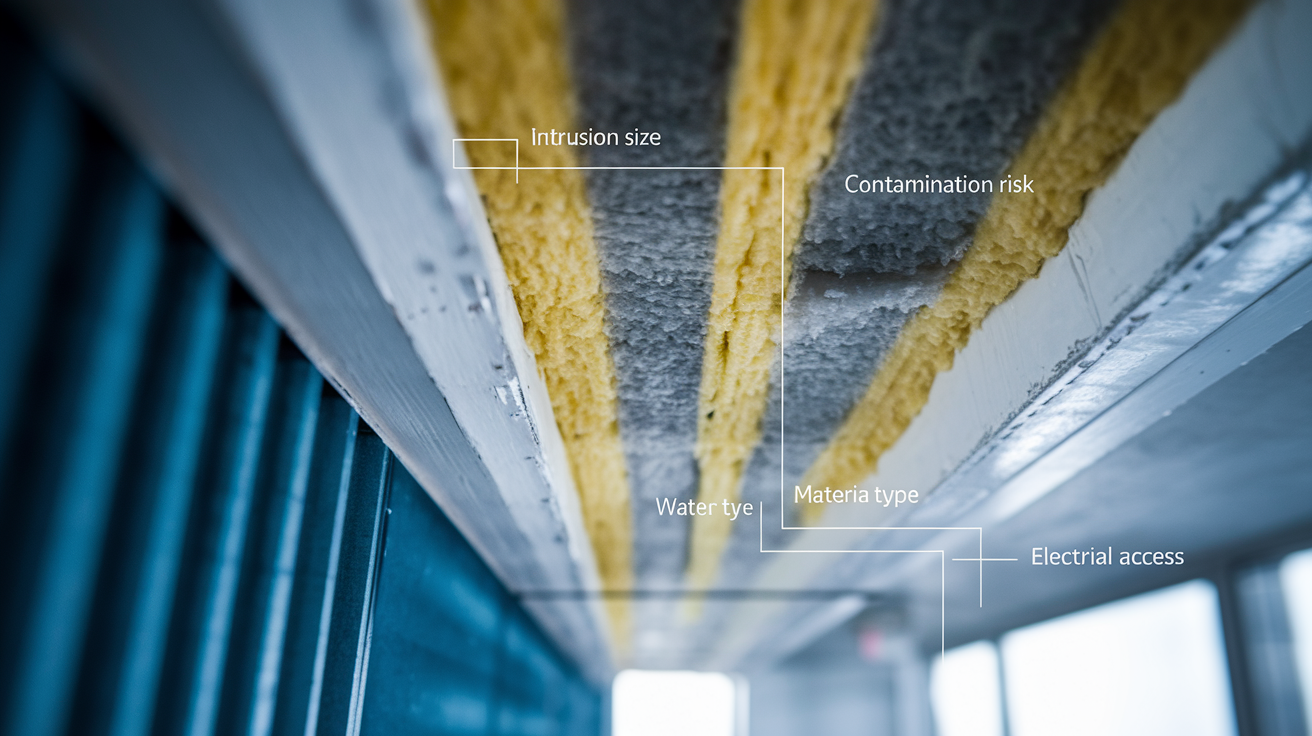
The size and category of the water intrusion have the biggest impact on how long repairs take. A small, clean water leak from a supply line can dry out in a couple of days. A large, contaminated leak from sewage or a roof failure can require weeks of extraction, containment, and staged rebuilding.
Ceiling material type also matters. Drywall absorbs water quickly and needs to be cut out and replaced when saturated. Plaster holds moisture longer and can be harder to dry without cracking. Insulation, once wet, often has to be removed entirely.
Major factors that lengthen repair time:
- Large affected areas (multiple rooms, whole ceilings)
- Greywater or blackwater contamination requiring sanitizing before reconstruction
- Porous materials like drywall, carpet, and blown in insulation
- Water inside structural members, ceiling joists, or wall cavities
- Electrical systems exposed to water (requires inspection and clearance before work continues)
- Hidden moisture pockets detected with thermal imaging or moisture meters
Step-by-Step Ceiling Leak Repair Timeline (From Leak to Full Restoration)

Standard restoration starts with stopping the leak and confirming what got wet. Inspection within 24 hours lets technicians map the saturation zone and set up containment. Immediate water extraction uses industrial vacuums and pumps to pull out standing water and surface moisture, limiting how far the damage spreads.
Drying and dehumidification follow extraction. This stage runs 3–14+ days depending on how deep the water went and what materials absorbed it. Moisture meters track progress. Once readings return to normal, cleaning and sanitizing happen before any reconstruction begins, especially after contaminated water.
Reconstruction includes replacing wet drywall, insulation, and ceiling joists if needed, then finishing with paint or texture. Electrical work, if required, gets inspected and cleared before the ceiling is closed back up.
Total timeline depends on how many stages require deep work versus surface fixes.
| Stage | Typical Duration | Key Actions |
|---|---|---|
| Inspection & Assessment | Same day or within 24 hours | Moisture mapping, thermal imaging, damage scope confirmation |
| Water Extraction | Immediate to 24 hours | Industrial vacuums, submersible pumps, surface moisture removal |
| Drying & Dehumidification | 3–14+ days | Air movers, dehumidifiers, moisture monitoring |
| Cleaning & Sanitizing | 1–2 days | Antimicrobial treatment, HEPA filtration (a filter that traps tiny particles), odor control |
| Repairs & Reconstruction | 2–10+ days | Drywall replacement, framing repairs, electrical work, painting, finishing |
Drying Time and Why It’s the Longest Part of Ceiling Leak Repair

Drying a ceiling is like drying a thick towel. The surface can feel dry while the inside is still wet. Professional drying with fans and dehumidifiers often takes 24–72 hours for surface and shallow moisture and 3–14+ days for structural or insulation saturated moisture.
Monitoring happens with moisture meters to confirm safe levels before repairs continue. If drying is rushed or skipped, moisture trapped inside drywall or framing can cause mold, warping, and odor that won’t go away even after the ceiling looks repaired.
Factors that extend drying time:
- Water soaked into ceiling joists or structural beams
- Wet insulation above the drywall (often requires removal rather than drying)
- Limited airflow or high humidity in the home
- Multiple layers of ceiling materials or thick plaster that hold moisture longer
How Different Leak Sources Impact Ceiling Leak Repair Time

The source of the leak determines what has to be fixed before drying can even start. A broken pipe needs to be capped or replaced. A roof penetration needs to be sealed and tarped. An HVAC drain line needs to be cleared and reconnected.
Plumbing & Burst Pipe Leaks
Burst pipes release a large volume of water fast, soaking ceiling cavities and insulation within minutes. Extraction and containment happen immediately to limit spread. Once the pipe is repaired or replaced, drying equipment goes up and moisture monitoring begins. If the pipe burst happened above finished ceilings, drywall removal is common to confirm structural members are dry.
Roof & Attic Related Leaks
Roof leaks often go unnoticed until water has already soaked through insulation and started dripping into the living space below. The roof penetration or damaged shingle area needs to be patched or tarped before drying starts. Attic insulation removal is often required. If the leak was active during rain, moisture may have spread across multiple ceiling joists, extending the drying timeline.
HVAC, Condensation & Miscellaneous Leaks
HVAC drain line leaks and condensation drips tend to be slow but persistent. The moisture damage is usually localized but can sit unnoticed for days or weeks, creating mold. Repair starts with clearing the line or fixing the condensation source, then confirming the extent of hidden moisture with meters. If mold appears, containment and HEPA air scrubbing add time before repairs begin.
Emergency Ceiling Leak Repair Timeframes and What Happens in the First 48 Hours

The first 24–48 hours determine mold risk. Professionals often arrive same day, set drying equipment within hours, and perform initial assessment in the first day. Mold can begin in 24–48 hours. Structural weakening can occur within 48 hours if water stays in contact with drywall or framing.
Emergency response focuses on stopping further damage. That means shutting off the leak, pulling standing water, and getting airflow moving across wet surfaces. Containment with plastic sheeting limits moisture spread to other rooms. Dehumidifiers drop the indoor humidity so drying can happen faster.
Key emergency steps in the first 48 hours:
- Stop the water source immediately (shut off main, repair pipe, tarp roof)
- Extract standing water with a wet vacuum or sump pump
- Set up air movers and dehumidifiers within 24 hours
- Perform short inspection with moisture meters and thermal imaging to map saturation zones
- Monitor moisture levels for 24–48 hours to confirm drying is progressing
DIY vs. Professional Ceiling Leak Repair Time

Small, surface only leaks can sometimes be repaired in a few hours if the leak is fully stopped, the ceiling material stayed mostly dry, and you have access to a dehumidifier and moisture meter. DIY works when the stain is small, there’s no sagging, no electrical involvement, and no signs of hidden moisture.
Larger leaks or those involving insulation, joists, or electrical systems must be handled by certified professionals. Once water gets inside wall cavities or ceiling framing, guessing at dryness creates mold and rot that shows up weeks later. Professionals use industrial equipment and monitoring tools to verify materials are safe to seal back up.
When DIY may be acceptable:
- Small, clean water leak that is fully stopped
- No sagging drywall, no electrical hazards, no musty odor
- Surface moisture only, confirmed with a moisture meter
- You can monitor moisture levels for 24–48 hours and readings drop consistently
When to call professionals immediately:
- Active dripping, standing water, or visible sagging
- Sewage or greywater contamination
- Water soaked into insulation, ceiling joists, or electrical boxes
- Mold visible or musty smell present
Insurance, Documentation, and How Claims Impact Ceiling Leak Repair Time

Early documentation with photos, timestamps, moisture readings, and technician reports helps reduce delays. Moisture monitoring typically occurs for 24–48 hours. Professional documentation strengthens claim approvals and supports supplements if hidden damage appears behind surfaces after drywall is opened up.
Insurance timelines vary by carrier, but most adjusters need a detailed damage scope before approving reconstruction work. If the scope changes, like when mold is found in the attic or a joist needs replacing, a supplement has to be written and approved before that work can proceed. Clear, early documentation speeds that process.
Contractors who work directly with adjusters can handle the supplement process without the homeowner stuck in the middle. That keeps the job moving instead of pausing every time new damage is discovered.
Required documentation to avoid claim delays:
- Photos of the leak source, ceiling stains, and any visible structural damage
- Moisture meter readings taken at multiple points over several days
- Detailed scope of work from a licensed contractor
- Receipts for emergency mitigation (extraction, drying, containment)
- Notes on any electrical or structural findings that expand the repair scope
Final Words
Most ceiling leaks are fixed in a few hours to a couple of weeks: small surface leaks often done within a day, moderate repairs 3–7 days, and severe water intrusion or reconstruction may stretch longer.
Quick actions: stop the source, extract water, and start drying. That prevents mold and speeds repairs.
Watch the first 48 hours. That’s when drying and documentation matter most.
If you’re unsure, call a pro to confirm hidden damage and handle insurance paperwork. Knowing realistic ceiling leak repair time helps you plan, and we’ll get your home back to normal.
FAQ
Q: How long does it take to fix a ceiling leak?
A: The time to fix a ceiling leak depends on severity: minor fixes often take a few hours to 1–2 days, moderate repairs 3–5 days, and major restorations can run 2–21 days including drying and rebuild.
Q: Will drywall dry out after a leak?
A: Drywall will dry out after a leak if moisture is shallow; surface drying often takes 24–72 hours, but soaked drywall or wet insulation may need professional drying and sometimes replacement after moisture checks.
Q: Does home insurance cover ceiling leaks?
A: Home insurance may cover ceiling leaks when caused by sudden, accidental events; coverage varies by policy and cause. Document damage with photos and reports, then notify your insurer promptly to support the claim.
Q: How urgent is a ceiling leak?
A: A ceiling leak is urgent because mold and structural harm can begin in 24–48 hours; stop the source if safe, call a pro, and start drying and documentation right away to limit further damage.