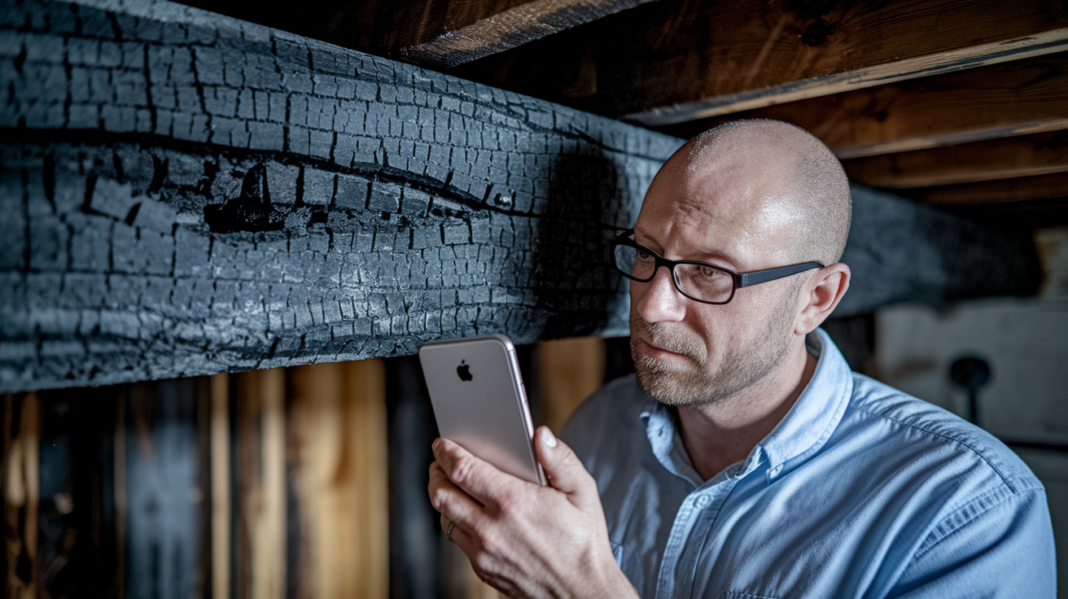

Think a blackened beam is only cosmetic? It’s not that simple.
Charred wood can look fine on the surface while losing the strength that holds your floors and roof.
A five-minute set of checks, including a visual look, gentle tapping, screwdriver probing and a moisture reading, tells you if the damage is surface-level or structural.
This post walks you through those quick checks, explains the engineer’s tests, and shows when to repair in place or replace the member.
Follow these steps to stop more damage, document the loss for insurance, and restore the structure safely.
Immediate Steps for Assessing Charred Wood Beam Damage
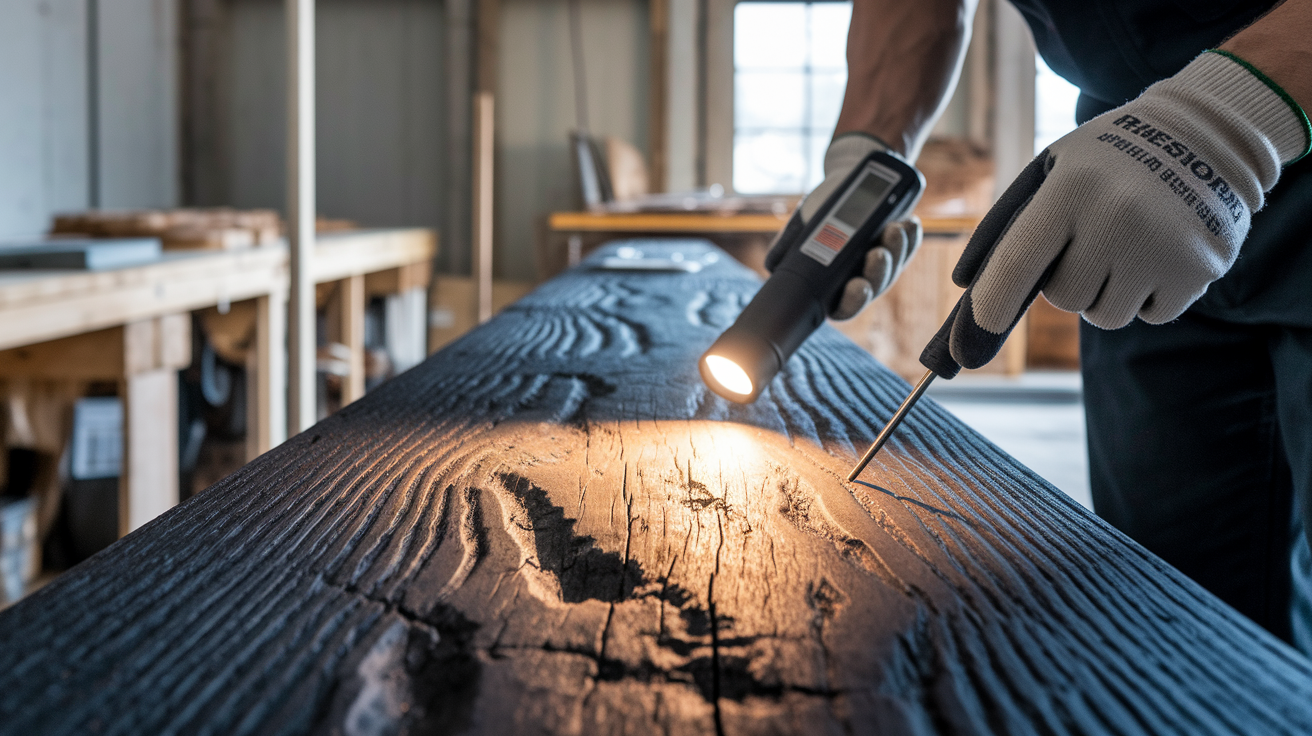
Fire marks wood beams in three ways: light soot staining from smoke that drifted up from another floor, darker smoldering from heat that stayed close to the beam, and surface char where flames actually touched. Even a small kitchen fire can send soot and heat into ceiling joists two rooms over. Your job right now is figuring out if the damage is just cosmetic or if the beam’s structure is compromised.
Look at the beam without touching it yet. Is the surface lightly discolored, or can you see cracking, peeling, or sections where the wood looks soft and spongy? Shallow, uniform char might be fixable. Deep fissures or distorted wood? You need professional help today.
Once you’ve confirmed the area is safe and utilities are off, a few careful checks will tell you whether the beam is worth saving. Tap it gently with a screwdriver handle and listen. Solid wood sounds sharp and clear, while weakened timber sounds dull or hollow. Press a screwdriver tip into the char and the wood just below it. Sound wood resists pressure, but fire-damaged fiber will feel crumbly or pierce easily. Use an inexpensive pin-type moisture meter to confirm the beam has dried out. Soggy wood that got wet during firefighting can mask hidden char deeper inside. These steps take five minutes and tell you whether you’re looking at a surface problem or something more serious.
Stop all assessment and call a structural engineer immediately if you notice:
- Deep cracks that run along the grain or across the width of the beam.
- Soft, spongy, or crumbly wood when you press it with your thumb or a tool.
- Sagging floors, ceilings, or visible gaps where joists meet walls.
- Exposed structural joints that show heavy charring or scorching.
Any of those four signs means the beam is carrying load it may no longer be strong enough to hold. Don’t attempt repairs, don’t remove debris from around it, and don’t store anything heavy nearby. Your next call should be to a licensed engineer who can run the tests that confirm whether the beam can be salvaged or must be replaced.
Structural Evaluation and Fire-Damaged Timber Restoration Requirements
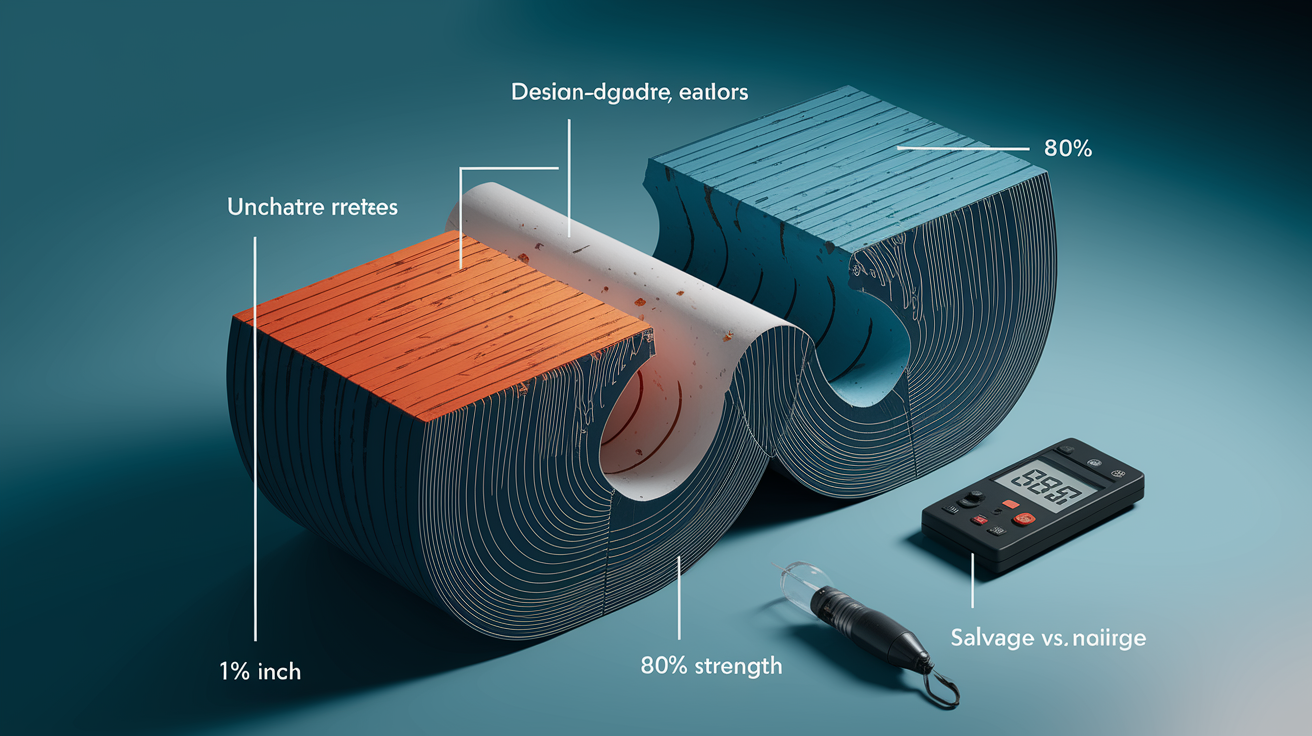
A structural engineer starts by measuring the depth of char at multiple points along the beam and comparing it to the original cross-section. If a 6×8 beam has lost ½ inch to char on two faces, the effective section is now smaller. The engineer calculates whether the remaining wood can still support the dead load of the structure above plus any expected live load.
Visual inspection continues below the surface. Probing at 12-inch intervals reveals how far the char penetrates, whether internal checks or splits have formed, and if the grain has separated from heat stress. Moisture readings confirm that all water introduced during firefighting has left the beam. Wet wood masks true damage and can harbor mold that continues to weaken the fiber.
Advanced evaluation may include allowable-stress testing, where small specimens are cut from less-critical sections of the beam and subjected to compression or bending loads in a testing frame. Results are compared to published values for the species and grade. If the fire-damaged wood retains 80 percent or more of its design strength and the remaining cross-section is adequate, the beam may be cleared for in-place restoration. Engineers also use bore-scope cameras to inspect the interior of large timber members and thermal imaging to detect smoldering pockets that may still be releasing heat days after the fire was extinguished.
Salvage vs. replacement hinges on three factors: how long the fire burned, how hot it got, and how much sound wood remains. A quick, low-temperature flash fire that chars only the outer ⅛ inch is usually repairable. A sustained blaze that held temperatures above 500°F for 30 minutes or more can cook the lignin out of the wood several inches deep, leaving fiber that looks intact but has lost its ability to resist compression. When test results show strength loss beyond acceptable limits, or when char depth exceeds the threshold where epoxy consolidation and sistering would still leave inadequate load margin, the engineer prescribes full replacement. Documentation of all measurements, test results, and the decision rationale goes into the project file for permitting, insurance, and future reference.
Final Words
First, act quickly: note soot, surface char, soft spots, and only do safe checks like light probing, tapping, and moisture spotting. Stop and call help if red flags show.
Next, leave advanced assessment to engineers. They measure char depth, test remaining strength, and decide whether to repair or replace the beam.
If this is your situation, get a qualified pro to start charred wood beam repair, document damage, and make a clear plan. You’ll get the structure secure and back to normal.
FAQ
Q: How to repair charred wood?
A: Repairing charred wood starts with removing loose char and checking soundness. Lightly probe, clean soot, sand, fill shallow char with epoxy or wood filler, then prime and seal. Call a professional for structural damage.
Q: Does torched wood need to be sealed? What kind of sealer can you use on charred wood?
A: Torched or charred wood should be sealed after cleaning and repairs to lock in soot, stop odors, and protect the surface. Use a stain-blocking primer like shellac or oil-based primer, then a clear protective sealer or epoxy for deep repairs.
Q: Will charred wood burn again?
A: Charred wood can burn again if exposed to flame; surface charcoal can ignite and underlying wood may still be combustible. Have timbers inspected, remove smoldering debris, call a structural professional for cracking, soft wood, or sagging.