
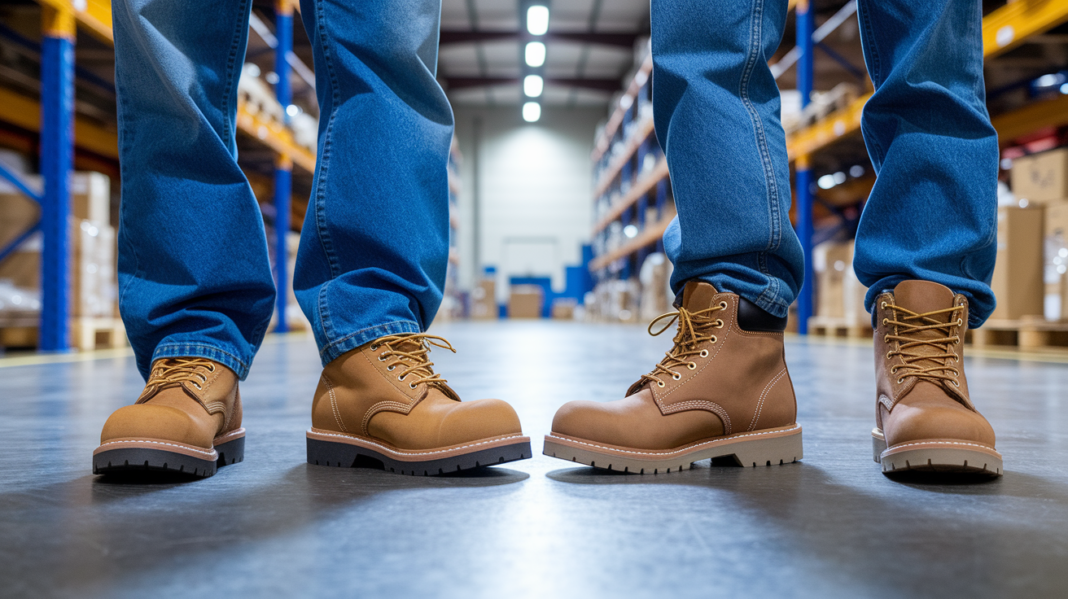

Ever stepped over an extension cord on a job site without thinking twice? That simple move puts you at risk if the cord’s damaged and you’re not wearing electrical hazard rated footwear. Construction crews, warehouse workers, electricians, and manufacturing teams all share one thing: incidental contact with live wiring or energized equipment during normal work. ASTM F2413 certified EH shoes create a non-conductive barrier between your feet and electrical shock, but only when you pick the right pair for your actual conditions and keep them dry and intact.
EH Safety Shoe Models: Brand Comparisons and Top Choices

EH rated footwear uses non-conductive materials to protect workers from electrical shock when they step on live wires or energized equipment. All electrical hazard shoes must meet or exceed ASTM F2413 certification standards, which verify the boot’s ability to resist voltage and prevent circuit completion through the wearer’s body in dry conditions.
| Brand | Collection Size | Key Models | Notable Features | Price Range Category | Purchase Availability |
|---|---|---|---|---|---|
| Reebok Work | 218 models (191 with EH protection) | Sublite Cushion (RB4051, RB4041), Rapid Response (RB8894, RB8694), BB4500 Work (RB4132, RB4166), Nano Tactical (RB7120, RB7125) | Athletic performance technology, lightweight shock absorption, multiple width options | Budget to Mid-Range | Free shipping to contiguous US, 200+ in stock |
| Rockport Works | 24 models | More Energy series (6-inch lace-to-toe), Sailing Club boat shoes, Pulse Tech Work line | Cushguard Internal Met Guard, Poron XRD technology, fashion-forward designs | Mid-Range to Premium | Free shipping to all states except Alaska and Hawaii |
| Frye Supply | 16 ASTM certified models | Chelsea, Harness, Wellington, Western, Logger, Utility Moc styles | Premium leather craftsmanship, heritage dating to 1863, traditional boot construction | Premium | Free shipping to all states except Alaska and Hawaii |
Reebok Work dominates the market with the broadest selection, targeting workers who prioritize lightweight comfort for long shifts. The Sublite Cushion Work series (RB4051, RB4041, RB4059, RB4058, RB4144) uses athletic cushioning systems originally designed for running shoes. This makes them popular in warehousing and manufacturing where workers log miles on concrete. The Rapid Response series (RB8894, RB8694, RB8850, RB8674, RB8874, RB8650) serves tactical applications including law enforcement and emergency services with quick-dry materials and aggressive tread patterns. The BB4500 Work line (RB4132, RB4166) brings basketball shoe styling to the job site, while Nano Tactical boots (RB7120, RB7125, RB7100) offer CrossFit-inspired flexibility for dynamic movements.
Rockport Works positions itself in the comfort-technology segment with the More Energy series featuring Cushguard Internal Met Guard protection built into 6-inch lace-to-toe boots. Their Sailing Club boat shoes incorporate Poron XRD Internal Met Guard technology in a casual silhouette suitable for lighter industrial work or technical roles where traditional boots aren’t required. The Pulse Tech Work line offers fashion-forward designs in Grey, Wheat, and Merlot colors for workers in customer-facing positions.
Frye Supply targets buyers who value premium leather heritage and traditional boot construction. All 16 models feature full-grain leather and Goodyear welt or cement construction methods dating back to 1863.
Price categories generally correlate with material quality and feature complexity. Budget options ($80 to $120) typically offer composite toes with basic EH protection and limited additional features. Mid-range models ($120 to $180) add slip resistance, waterproofing, or metatarsal guards alongside athletic cushioning systems. Premium boots ($180 to $300+) incorporate advanced met guard technology like Poron XRD, premium full-grain leather, or specialized applications like tactical response footwear.
Free shipping to most US states reduces total cost and makes online purchasing practical for comparing options. Warranty coverage varies by brand but typically ranges from 30-day satisfaction guarantees to one-year defect protection. When selecting retailers, prioritize those offering free returns within the contiguous United States. This allows you to order multiple sizes or styles and send back what doesn’t fit. Compare in-stock availability, since 200+ items being immediately available from one retailer means faster delivery than special-order situations.
Understanding ASTM F2413 EH Certification and Voltage Protection

Why ASTM F2413 Certification Matters When Comparing Options
ASTM F2413 certification establishes identical minimum safety thresholds across all electrical hazard footwear, regardless of brand or price. Every boot meeting this standard must pass the same voltage resistance testing and electrical insulation protocols under controlled laboratory conditions. This standardization means the $90 composite toe work shoe and the $250 premium leather boot both provide equivalent electrical shock protection when new and dry.
Certification testing requires footwear to withstand specific voltage exposure without allowing dangerous current flow to the wearer’s body. Once you confirm ASTM F2413 compliance, your comparison shifts to secondary factors like comfort features, durability expectations, additional safety certifications (slip resistance, waterproofing, met guards), and price. The certification itself doesn’t degrade by price point, so a budget option protects electrically just as well as premium alternatives on day one. Your decision then focuses on how long that protection lasts given your work conditions and whether added features justify higher cost.
Electrical resistance testing subjects footwear to 18,000 volts in an open circuit configuration while measuring any leakage current that might pass through the boot to the wearer. To earn ASTM F2413 EH certification, the footwear must limit leakage current to 1.0 milliamp or less when exposed to this voltage under dry test conditions. The test uses a conductive medium inside the boot representing the worker’s foot and measures whether dangerous current can complete a path from an energized surface through the sole, insole, and into that foot-simulating conductor.
The voltage threshold of 18,000 volts represents exposure to 600-volt circuits under worst-case fault conditions with a 3:1 safety factor built into testing. Testing occurs at room temperature with clean, dry footwear that hasn’t been subjected to wear or contamination. This baseline establishes the boot’s electrical insulation capability when properly maintained.
Open circuit requirements mean the test simulates a worker standing on energized equipment or a live wire while not simultaneously touching any grounded surface with their hands or body. Non-conductive materials in the sole, midsole, and any metal components (if present) must create complete insulation preventing current flow. Shock resistant soles use rubber compounds, polyurethane, or advanced elastomers with high dielectric strength.
Any metal shanks, hardware, or toe caps must be fully isolated from both the outsole and the interior where the foot contacts the boot. Even steel toe boots can maintain EH certification if the metal component is completely surrounded by non-conductive material creating an insulation barrier. The sole thickness, material density, and construction method all contribute to preventing circuit completion through the worker’s body when they accidentally contact energized equipment.
EH shoes serve as secondary protection, not primary safeguards against electrical work. The certification assumes you’re following lockout/tagout procedures, using insulated tools, wearing electrical gloves when required, and maintaining proper work practices. Footwear provides an extra insulation layer if something goes wrong, like stepping on a damaged extension cord or contacting exposed wiring.
Certification testing requires completely dry conditions because moisture creates conductive paths that compromise electrical resistance. Water, sweat, oil, or other liquids penetrating the boot’s materials drastically reduce insulation effectiveness. Similarly, physical damage like cracks in the sole, separated stitching, or worn-through outsoles create potential current pathways. Once footwear gets soaked or shows structural damage, it no longer provides reliable electrical hazard protection even though it may still be wearable.
Who Needs Electrical Hazard Safety Shoes in Their Workplace

Electrical hazard protection extends well beyond electricians and power line workers into nearly every industrial and construction environment. Construction sites contain temporary wiring, extension cords, and power tools creating multiple contact points with live electricity. Manufacturing facilities run machinery on 480-volt three-phase power with junction boxes, control panels, and floor-mounted disconnects presenting shock risks. Warehouse operations use electric forklifts with charging stations and damaged power cords that may contact wet floors.
Even landscaping crews encounter underground utilities, irrigation control boxes, and commercial property electrical pedestals. The common thread across these industries isn’t deliberate electrical work. It’s incidental exposure where workers might accidentally step on damaged wiring or contact energized equipment while performing their primary job duties. “I’m not an electrician” doesn’t eliminate electrical hazards from your workplace.
| Profession/Industry | Electrical Hazard Exposure | EH Footwear Necessity |
|---|---|---|
| Electricians and Electrical Contractors | Direct work on energized circuits, panel installation, troubleshooting live systems | Required – primary electrical work creates constant exposure |
| Construction Workers (General Trades) | Temporary power distribution, damaged extension cords, contact with buried utilities | Highly Recommended – frequent incidental contact with electrical systems |
| Utility Line Workers and Power Plant Operators | High-voltage transmission lines, substations, generation equipment | Required – specialized electrical environments with extreme voltage exposure |
| Manufacturing Personnel and Machine Operators | Industrial machinery controls, junction boxes, floor-mounted electrical equipment | Recommended – machinery operates on higher voltages with accessible electrical components |
| Maintenance Technicians and Facility Managers | HVAC electrical systems, lighting repairs, equipment troubleshooting | Highly Recommended – regular contact with building electrical infrastructure |
| Telecommunications and Data Center Installers | Rack-mounted power distribution, battery backup systems, overhead cable trays with power lines | Recommended – enclosed spaces with concentrated electrical infrastructure |
| Postal Service and Delivery Drivers | Loading dock electrical hazards, vehicle charging stations, damaged building wiring | Situational – depends on facility conditions and route characteristics |
| Restaurant and Hospitality Equipment Operators | Commercial kitchen equipment, walk-in cooler systems, damaged cords on wet floors | Recommended – combination of electrical equipment and wet conditions increases risk |
Proper hazard assessment determines when EH footwear transitions from optional to required personal protective equipment. OSHA requires employers to evaluate workplace electrical hazards and specify appropriate PPE based on voltage exposure, work proximity to energized equipment, and environmental conditions.
Hazard identification looks at both obvious electrical work areas and secondary exposure zones. A maintenance technician might not work on electrical panels daily, but troubleshooting a malfunctioning conveyor means accessing the motor control center. A warehouse worker doesn’t perform electrical repairs, but operates a walkie stacker that could contact damaged wiring near floor outlets.
Document your hazard assessment noting specific electrical systems present, their voltage levels, how frequently workers come within contact distance, and what conditions (wet floors, metal surfaces, confined spaces) might increase shock severity. Once you identify credible electrical contact scenarios, EH footwear becomes mandatory PPE rather than an optional upgrade.
OSHA Compliance and Personal Protective Equipment Requirements

OSHA compliance for electrical hazard PPE starts with 29 CFR 1910.137, which mandates electrical protective equipment for employees exposed to hazards from flames or electric arcs, and 29 CFR 1910.132, which requires employers to assess workplace hazards and provide appropriate PPE. When your hazard assessment identifies potential contact with energized electrical equipment or circuits, OSHA requires you to provide footwear meeting ASTM F2413 electrical hazard standards at no cost to employees.
Compliance isn’t optional when electrical exposure exists. The regulation covers voltage levels from standard 120-volt circuits through industrial 480-volt systems and higher transmission voltages, scaling protection requirements to match exposure severity. Electrical safety protocols must include written PPE selection criteria, documentation of hazard assessments, and records showing which job classifications require EH footwear.
Employer responsibilities extend beyond just purchasing boots. Hazard identification requires evaluating each work area and task for electrical shock potential, documenting findings, and updating assessments when conditions change or new equipment arrives. You must provide adequate quantities so workers aren’t sharing footwear or wearing damaged boots because replacements aren’t available.
Training requirements for EH footwear cover three critical areas: when to wear electrical hazard boots, how the protection works, and what limitations exist. Workers must understand that EH shoes serve as secondary protection, not a substitute for de-energizing circuits or using insulated tools. Training includes recognizing conditions that compromise protection such as wet environments, damaged soles, or worn-through outsoles.
Employees need clear instruction that electrical hazard certification only applies in dry conditions and that boots soaked from rain, spills, or sweat lose insulation effectiveness. Annual refresher training reinforces proper use and connects foot injury prevention to broader electrical safety protocols and regulatory standards. Documentation of training dates, attendees, and topics covered protects both workers and employers by demonstrating compliance with OSHA’s PPE training mandates under 29 CFR 1910.132(f).
Fit and Comfort Considerations for All-Day EH Footwear Performance

Proper fit is essential for both safety effectiveness and comfort during 10 to 12-hour shifts where poor-fitting boots cause blisters, fatigue, and pressure points that make you want to take them off mid-shift. Sizing ranges from 3 through 16 across the EH footwear market, accommodating nearly all foot lengths.
Width availability matters just as much as length, with extensive options including medium (216 models available), wide (213 models), extra wide or EW (5 models), 4E (6 models), and 6E (2 models). Many workers default to medium width when they actually need wide, leading to pinched toes, rubbing along the sides, and premature sole breakdown from uneven pressure distribution.
If you typically buy wide-width dress shoes or athletic shoes, start your EH boot search with wide options rather than assuming medium will stretch. The internal volume of a safety toe boot is already reduced by the protective cap, so sizing up in width prevents your foot from fighting the toe box all day.
Modern athletic-shoe science integration has transformed EH footwear from heavy, stiff work boots into comfortable all-day wear. Cushioning systems borrowed from running shoes include EVA midsoles, polyurethane foam, and gel heel inserts that compress with each step and return energy rather than transmitting impact shock straight to your joints. Arch support options range from flat profiles for workers with neutral arches to structured supports for those with high arches or plantar fasciitis.
Lightweight design has become standard, with many models weighing under 2 pounds per boot compared to traditional 3 to 4-pound leather work boots. Fatigue reduction technologies focus on the cumulative effect of thousands of steps per shift. A warehouse worker might log 12,000 to 15,000 steps daily, so even small improvements in shock absorption multiply across those repetitions. Long shift comfort depends on breathable linings that wick moisture away from your foot, preventing the sweat buildup that causes hot spots and blisters.
Ankle support varies significantly between low-cut work shoes and 6-inch or 8-inch boots. Higher boots provide lateral stability preventing ankle rolls on uneven surfaces, debris, or when stepping off loading docks.
Break-in period expectations for leather work boots typically span one to two weeks of gradually increasing wear time. Start with half-shifts if possible, letting your feet adapt to pressure points while the leather softens and conforms to your foot shape. Comfort features like breathable lining and moisture wicking reduce break-in friction by keeping your skin dry where it contacts seams and edges.
Assess fit during your first few wears by checking for heel slippage (your heel should stay planted when walking), toe room (you should have thumb-width space between your longest toe and the boot end when standing), and any pressure points across the top of your foot or along the sides. Synthetic and mesh materials break in faster, often becoming comfortable within two to three days, but may not provide the same long-term durability as leather.
Online purchasing considerations include retailer return policies, with free returns within the contiguous United States allowing you to order two or three sizes or widths simultaneously. Try them on at home with the socks you’ll actually wear at work, walking on hard surfaces rather than carpet to feel how the sole flexes and where pressure points develop. Order early in the week so boots arrive with time to test them and still return within the policy window if needed.
Style Categories and Boot Height Options for EH Footwear

EH protection is available across a surprisingly broad style range from traditional 8-inch leather work boots to athletic work shoes that look more like running shoes than safety footwear. This variety lets you match footwear style to your specific work environment, dress code, and comfort preferences rather than forcing everyone into the same heavy boot design.
Athletic work shoes (122 models available) dominate the market because they deliver electrical hazard protection in lightweight, breathable designs that feel like the athletic shoes workers already wear off the job. These low-cut styles work well in warehouses, light manufacturing, delivery driving, and any environment where ankle support isn’t critical but comfort over long distances matters. Expect mesh panels, synthetic uppers, and cushioned midsoles.
Traditional work boots (33 models available) provide 6-inch or 8-inch ankle coverage with leather uppers and rugged outsoles suited to construction sites, utility work, and outdoor environments. These boots offer maximum ankle support, protection from debris, and durability in harsh conditions but weigh more and require break-in time.
Work booties and Chelsea styles split the difference with 4-inch to 5-inch heights and elastic side panels or pull-on construction for quick on-off convenience. Popular in maintenance roles and light construction where you’re frequently moving between indoor and outdoor areas.
Boat shoes for lighter-duty environments (4 models available) bring electrical hazard protection to technical roles, facility management, and indoor industrial settings where traditional work boots feel excessive but electrical exposure still exists around control panels and machinery.
Casual work oxfords (3 models available) offer professional appearance for electricians and technicians making service calls in occupied buildings, retail spaces, or healthcare facilities where heavy boots look out of place.
Work sneakers (2 models available) specifically target younger workers and those transitioning from pure athletic footwear, easing the adjustment to safety footwear by maintaining familiar sneaker styling.
Hiking styles (1 model available) suit utility line workers, telecommunications installers, and outdoor maintenance crews who need trail-capable traction and weather protection alongside electrical hazard certification.
Slip-on options (1 model available) prioritize convenience for workers who frequently need to remove footwear for clean rooms, residential service calls, or facility access requirements while maintaining ASTM F2413 protection.
Closure systems affect both ease of use and security throughout your shift. Lace-up systems provide the most adjustable fit, letting you tighten or loosen specific zones across your foot and accommodate swelling that develops during long days on your feet. Zipper closures speed up the process of getting boots on and off, valuable when you’re changing between indoor and outdoor work areas multiple times per day. Pull-on styles like Chelsea boots or Wellington work boots eliminate laces entirely for maximum convenience but offer less fit customization.
Gender-specific designs now include 147 men’s models and 71 women’s models with anatomical differences beyond simple size scaling. Women’s work boots feature narrower heels, different arch placement, and adjusted toe box proportions matching female foot shapes.
Professional appearance requirements vary significantly by industry. An electrician working residential service calls may prefer casual work oxfords or boat shoes that won’t alarm homeowners, while a power plant operator needs rugged 8-inch boots capable of handling industrial environments. Law enforcement and emergency services often specify tactical boot styling with quick-dry materials and aggressive tread, while food service electrical hazard shoes must meet slip resistance standards for kitchen environments. Match your style selection to both the physical demands of your work and any dress code expectations from customers or management.
Safety Features and Toe Protection Options in EH Work Boots

EH footwear combines electrical hazard protection with multiple safety certifications addressing the range of hazards present in industrial environments. Most boots pair ASTM F2413 EH rating with at least one additional feature like safety toes, slip resistance, or waterproofing, creating comprehensive protection rather than addressing electrical shock alone.
Composite Toe Caps
Composite toe protection dominates the market with approximately 135 models available across major brands, representing roughly 60 percent of all EH-rated footwear options. These non-metallic caps use carbon fiber, fiberglass, Kevlar, or plastic polymers engineered to meet the same ASTM F2413 impact (75 foot-pounds) and compression (2,500 pounds) standards as steel toes.
Lightweight construction is the primary advantage, with composite toes weighing 30 to 50 percent less than steel equivalents and reducing overall boot weight by half a pound or more. Non-conductive properties make composite toes ideal for electrical work since there’s no metal component requiring insulation from foot contact. Metal detector friendliness matters in secured facilities, airports, and sites where you’d otherwise trigger screening equipment and face delays removing boots for inspection.
Composite toes also don’t conduct temperature extremes the way steel does, staying warmer in freezing conditions and cooler in hot environments. The wider toe box shape of composite caps (required because the materials are less dense than steel) actually provides more room for foot splay and accommodates wider feet better than the tapered shape of steel toes.
Steel Toe Protection
Traditional steel toe durability remains relevant for workers in heavy industrial environments where maximum impact resistance and compression protection matter more than weight considerations. Approximately 12 to 17 models across brands still use steel toe construction.
Steel toes are noticeably thinner than composite caps because the material density allows engineers to achieve ASTM standards with less volume, creating a lower-profile toe box that fits into tighter spaces under machinery or equipment. The narrow shape suits people with naturally narrow feet who find composite toe boxes too roomy.
Steel provides “peace of mind” durability where there’s no question the toe cap will hold up to repeated impacts, dropped materials, and compression hazards over years of use. Workers in scrap yards, demolition, heavy equipment operation, and metalworking often prefer steel because the work environment destroys footwear quickly regardless of material, so the lower replacement cost of steel toe boots makes economic sense.
Alloy Toe Construction
Alloy toe construction serves as the middle-ground option with approximately 21 models featuring aluminum alloy, titanium alloy, or other metallic blends lighter than steel but still metallic. These caps weigh 30 to 40 percent less than steel toes while maintaining a thinner profile than composite options.
Alloy toes appeal to workers transitioning from steel who want reduced weight without fully committing to composite materials. The metallic composition provides similar impact feel and compression resistance to steel, just at lower weight. Alloy toes still conduct electricity and temperature, requiring the same insulation considerations as steel, and will trigger metal detectors. Price points usually fall between steel (least expensive) and premium composite options.
Carbon Fiber and Specialty Materials
Emerging carbon fiber toe technology and advanced composite materials offer premium protection with minimal weight penalty but currently appear in limited availability (approximately 1 model featuring carbon toe caps). Carbon fiber provides exceptional strength-to-weight ratios, creating safety toes as thin as steel but as light as standard composite materials.
These specialty toes target workers willing to pay premium prices for maximum comfort and minimum bulk. Other advanced composites include fiberglass-resin blends and engineered thermoplastics developed specifically for safety footwear rather than adapted from other industries.
Each toe material performs equally well in combination with electrical hazard protection because ASTM F2413 testing evaluates the complete boot assembly, not individual components. A steel toe boot maintains EH certification as long as the metal cap is fully isolated from both the outsole and the interior foot contact surfaces by non-conductive materials. Composite toes simplify this requirement since the cap itself is non-conductive.
Impact and compression testing (75 foot-pounds and 2,500 pounds respectively) remains identical across all toe types, meaning a composite toe provides the same crush protection as steel when both meet ASTM F2413 standards. Your choice comes down to weight preference, temperature considerations, metal detector requirements, and whether you prioritize thin toe profiles or roomier toe boxes.
Additional safety features commonly paired with EH protection include:
Slip resistant outsoles (137 models available) using rubber compounds and tread patterns tested for traction on wet, oily, or contaminated surfaces. These outsoles maintain grip on smooth concrete, tile, and metal surfaces where standard tread patterns would slip. Particularly important in food service, healthcare, manufacturing with coolant or hydraulic fluids, and any environment where liquid spills are common.
Waterproof construction (29 models available) featuring sealed seams, waterproof membranes, and treated leathers that prevent water penetration during wet conditions. Essential for outdoor utility work, construction in rain, or environments with regular washdowns. Remember that waterproof boots still lose EH protection effectiveness if water enters through the top opening and saturates the interior.
Metatarsal guards (26 models available) protect the top of your foot between the ankle and toes from falling objects, dropped tools, or compression from heavy materials. Internal met guards use foam padding or rigid plastic shields built into the boot’s upper. External met guards attach to the outside of the boot with adjustable straps.
Puncture resistant midsoles prevent nails, screws, metal shards, or other sharp objects from penetrating through the outsole and into your foot. These midsoles use steel plates, flexible Kevlar fabric, or composite materials rated to ASTM F2413 puncture resistance standards.
Oil resistant soles are formulated to resist degradation from petroleum products, hydraulic fluids, and industrial chemicals that break down standard rubber compounds. Extended contact with oils softens and swells non-resistant materials, reducing traction and shortening sole life.
Heat resistance matters in foundries, welding operations, asphalt work, and roofing where hot surfaces or materials contact the sole. Heat-resistant outsoles maintain structural integrity and prevent melting when exposed to temperatures that would damage standard rubber.
Chemical resistance protects against corrosive substances, solvents, and aggressive cleaners in industrial settings. Chemical-resistant materials prevent breakdown of boot components when exposed to acids, bases, or organic solvents present in manufacturing and maintenance environments.
Select boots matching your specific multi-hazard workplace profile by identifying all applicable risks, not just electrical exposure. A power plant maintenance technician working outdoors in winter needs waterproof construction and insulation alongside EH protection. A food service equipment installer requires both EH certification and slip resistance for kitchen environments. An industrial electrician benefits from combining EH protection with metatarsal guards and puncture resistance when working around heavy machinery and metal debris.
Static Dissipative vs. Electrical Hazard Shoes: Understanding the Difference

Static dissipative (ESD) and electrical hazard (EH) footwear serve opposite electrical purposes, and confusing them creates serious safety risks in both directions.
| Footwear Type | Purpose | Electrical Property | Typical Work Environment |
|---|---|---|---|
| Electrical Hazard (EH) | Prevent electrical shock to worker | Insulating – blocks current flow from energized surface through body | Construction sites, utility work, electrical contracting, maintenance near energized equipment |
| Static Dissipative (ESD) | Protect sensitive electronics from static discharge | Conductive – allows controlled grounding of static electricity | Electronics manufacturing, clean rooms, explosive atmospheres, semiconductor facilities |
| Conductive | Rapidly dissipate static charges and prevent spark ignition | Highly conductive – provides direct path to ground | Explosive material handling, munitions, areas with flammable vapors or dust |
ESD shoes are designed to safely dissipate static electricity by creating a controlled electrical path from your body through the footwear to the ground, preventing the buildup of static charges that could damage microelectronics or ignite explosive atmospheres. Static dissipative footwear typically maintains electrical resistance between 1 megohm and 100 megohms, allowing enough conductivity to bleed off static without creating a shock hazard path for normal electrical currents.
Conductive footwear provides even lower resistance (less than 500,000 ohms) for rapid static dissipation in highly sensitive environments. Both ESD and conductive shoes intentionally create grounding paths, the exact opposite of what EH shoes do.
Wearing EH boots in an ESD-required environment leaves you ungrounded, allowing static buildup that can destroy circuit boards, computer chips, and precision electronics costing thousands of dollars. Wearing ESD shoes where EH protection is required eliminates your electrical shock protection, creating a direct path for electrical current to flow through your body if you contact energized equipment.
Six styles in one major collection offer static dissipative properties for electrostatic discharge environments, but these models would be completely inappropriate for electrical maintenance work.
The wrong footwear type creates immediate hazards. An electronics technician wearing EH-rated insulating boots while servicing circuit boards becomes a walking static generator, potentially destroying components with every touch. An electrician wearing ESD-rated conductive shoes while troubleshooting a 480-volt panel removes their secondary shock protection, gambling that they’ll never accidentally contact energized parts.
Some workers mistakenly believe combining both properties is ideal, but the fundamental electrical characteristics conflict. You can’t simultaneously insulate against shock and provide grounding for static dissipation. Read your company’s electrical safety program to confirm which hazard you’re protecting against. When in doubt, your safety manager or industrial hygienist determines appropriate footwear based on formal hazard assessment.
Workplaces that require different footwear for different tasks or zones must establish clear policies about where each type is appropriate and provide separate storage or changing areas. A semiconductor manufacturing facility might require ESD footwear in clean rooms and production areas but allow EH boots in maintenance shops where technicians service electrical panels and motor controls.
Workers moving between zones need to change footwear rather than wearing a compromise that fails to protect in either area. Color-coding, labeling, or storing different footwear types in designated areas prevents mix-ups. The importance of proper hazard assessment becomes obvious when you recognize that the same boot providing critical protection in one environment creates danger in another based entirely on the electrical properties needed for that specific work.
Material Quality, Durability, and Maintenance of EH Safety Footwear
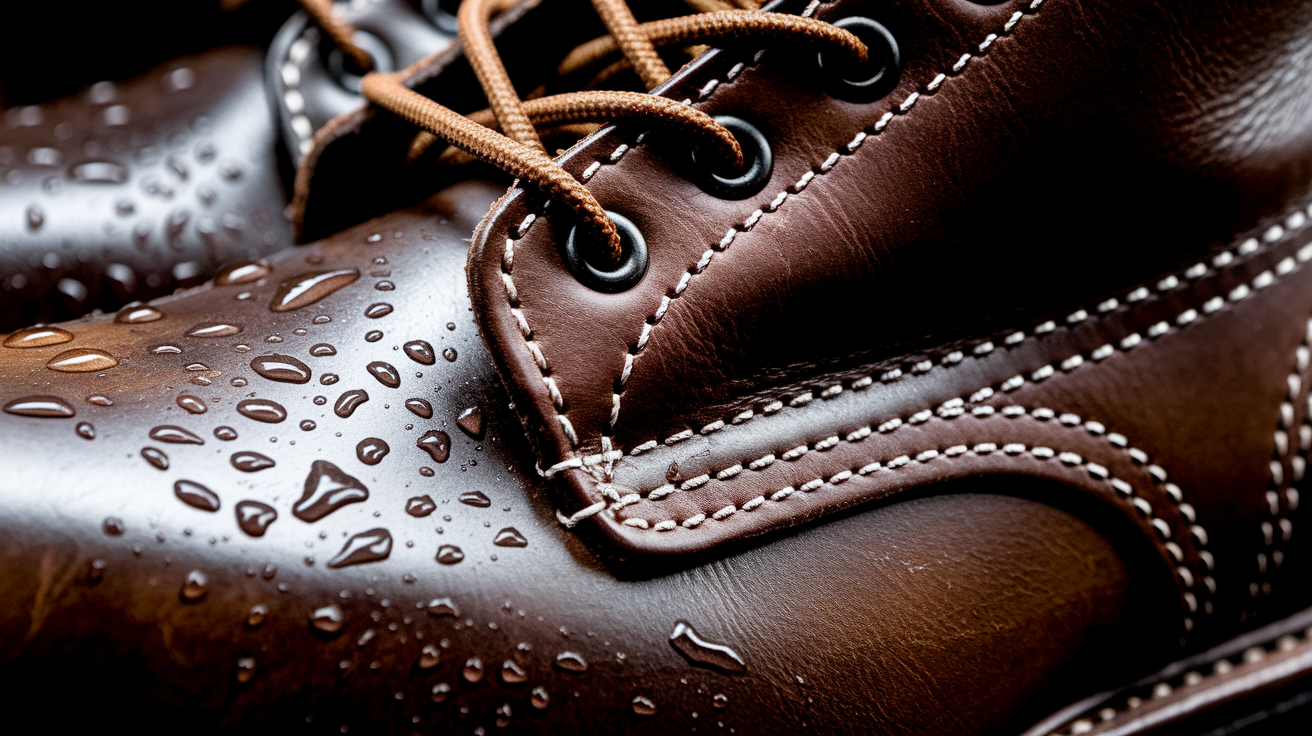
Leather uppers dominate electrical hazard footwear because the material provides proven durability, breathability, and resistance to workplace abuse that synthetic materials struggle to match. Full-grain leather work boots have served industrial workers for over a century, with premium leather construction heritage dating back to 1863 in established safety footwear brands.
All boots are safety-crafted to exceed industry standards while maintaining durability for demanding work environments where boots face daily exposure to abrasion, impacts, chemicals, and weather extremes. Leather naturally resists tearing and punctures better than synthetic mesh or textile uppers, important when you’re working around sharp metal, rough lumber, or jagged concrete.
The material breathes, allowing moisture vapor from your feet to escape while blocking liquid water penetration (especially in treated or waterproof leathers). Leather also breaks in rather than breaks down, conforming to your foot shape over the first few weeks and becoming more comfortable with wear instead of degrading. Expect to pay more for full-grain leather compared to split leather or synthetic alternatives, but factor in replacement intervals when calculating real cost.
Sole construction determines both electrical insulation effectiveness and long-term durability under the mechanical stresses of walking, climbing, and standing. Sole thickness in EH-rated boots typically ranges from 10mm to 20mm, providing enough non-conductive material to maintain electrical resistance while still allowing adequate flexibility for walking comfort. Thicker isn’t always better. Excessive sole thickness reduces ground feel and makes precise foot placement difficult on uneven surfaces or ladders.
Tread patterns balance slip resistance with wear characteristics. Aggressive lugs provide maximum traction on loose surfaces and shed mud or debris but wear faster on smooth concrete. Shallow, densely packed tread patterns last longer on pavement and indoor floors while still maintaining wet traction through rubber compound formulation.
Sole attachment methods affect water intrusion potential: cement construction (sole glued directly to upper) creates clean lines and flexibility but may separate under extreme stress, direct-attach polyurethane (sole chemically bonded during molding) provides waterproof integrity and durability, and Goodyear welt construction (sole stitched to a welt strip) allows resoling but creates more seams where water might enter.
Insulated work boots for cold weather layer additional materials between the outer upper and interior lining to trap warm air and slow heat loss from your feet. Winter insulation ratings typically range from 200 grams (light insulation for moderate cold) through 400 grams (standard winter work) to 600 or 800 grams (extreme cold or minimal activity). Insulation layers must maintain electrical hazard protection by using non-conductive materials like Thinsulate, PrimaLoft, or foam that don’t create moisture-wicking paths compromising electrical resistance.
Heat dissipation matters in war
Final Words
Choosing electrical hazard safety shoes starts with ASTM F2413 certification, then moves to fit, style, and the specific hazards you face daily.
Composite toes dominate the market with 135 models because they’re lightweight and metal-free. Reebok, Rockport, and Frye offer hundreds of certified options across athletic styles, traditional boots, and specialty designs.
Remember, EH shoes insulate. They’re the opposite of static dissipative footwear.
Inspect your boots regularly. Replace them when soles crack, leather deteriorates, or water soaks through. Proper care keeps the protection working shift after shift.
FAQ
What does “electrical hazard” mean on work shoes?
Electrical hazard (EH) on work shoes means the footwear provides secondary protection against electrical shock when you accidentally step on live wires or charged equipment. The shoes use non-conductive materials and shock-resistant soles to prevent electrical current from completing a circuit through your body.
What is the OSHA standard for electrical safety shoes?
The OSHA standard for electrical safety shoes requires appropriate personal protective equipment based on workplace hazard assessments. Employers must provide EH-rated footwear meeting ASTM F2413 certification when workers face electrical hazards, and training on proper use and limitations of this secondary protection.
What are the requirements for electrical safety shoes?
Electrical safety shoes must meet or exceed ASTM F2413 certification standards, which requires specific voltage resistance testing and dielectric properties in dry conditions. The footwear must use non-conductive materials and shock-resistant soles that prevent circuit completion through the worker’s body during accidental contact with energized equipment.
What are electrical safety shoes?
Electrical safety shoes are certified footwear designed to protect workers from electrical shock when accidentally stepping on live wires or charged equipment. They meet ASTM F2413 standards and serve as secondary electrical insulation, reducing the risk of circuit completion through the body when working near energized systems.
Who needs to wear electrical hazard safety shoes at work?
Workers who need electrical hazard safety shoes include electricians, construction workers, utility line workers, manufacturing personnel, maintenance technicians, telecommunications installers, power plant operators, and facilities managers. Any profession with potential live wire exposure or contact with charged equipment requires this protection.
Can electrical hazard shoes get wet?
Electrical hazard shoes lose protection effectiveness when wet because the certification requires dry conditions for proper insulation. Moisture compromises the non-conductive properties that prevent electrical current flow. Replace boots showing water damage or excessive wet environment exposure to maintain reliable electrical shock protection.
What’s the difference between EH shoes and static dissipative shoes?
EH shoes insulate against electrical shock by preventing current flow through the body, while static dissipative (ESD) shoes do the opposite by safely grounding static electricity. Wearing the wrong type creates serious hazards. EH shoes protect against energized equipment, while ESD shoes prevent static buildup in electronics manufacturing.
How do composite toe EH boots compare to steel toe options?
Composite toe EH boots are lighter, non-conductive, and metal-detector friendly, representing the majority with approximately 135 models available. Steel toe options offer maximum impact resistance and compression protection with 12-17 models available. Both toe types meet ASTM standards while maintaining electrical hazard certification.
How long do electrical hazard work boots last?
Electrical hazard work boots typically last 6-12 months in harsh environments before performance degradation compromises protection effectiveness. Regular inspection for sole cracks, water damage, stitching integrity, and insulation breakdown determines actual replacement intervals. Proper cleaning, storage, and maintenance extend functional life.
What brands make the best EH rated work boots?
Top EH rated work boot brands include Reebok Work with 191 EH styles across 218 models, Rockport Works offering 24 models with Cushguard and Poron XRD technology, and Frye Supply with 16 ASTM certified models. Each brand offers different technologies, price ranges, and style options from athletic work shoes to traditional boots.
Do EH safety shoes come in wide widths?
EH safety shoes come in extensive width options including medium (216 models), wide (213 models), extra wide (5 models), 4E (6 models), and 6E (2 models). Sizing ranges from size 3 through 16 depending on style and gender, with 147 men’s models and 71 women’s models featuring gender-specific designs.
What safety features come with electrical hazard boots besides EH protection?
Electrical hazard boots commonly include slip-resistant outsoles (137 models), waterproof construction (29 models), metatarsal guards (26 models), puncture-resistant midsoles, and oil-resistant soles. Additional features include composite, steel, or alloy toe caps for impact and compression protection, creating comprehensive multi-hazard workplace protection.