
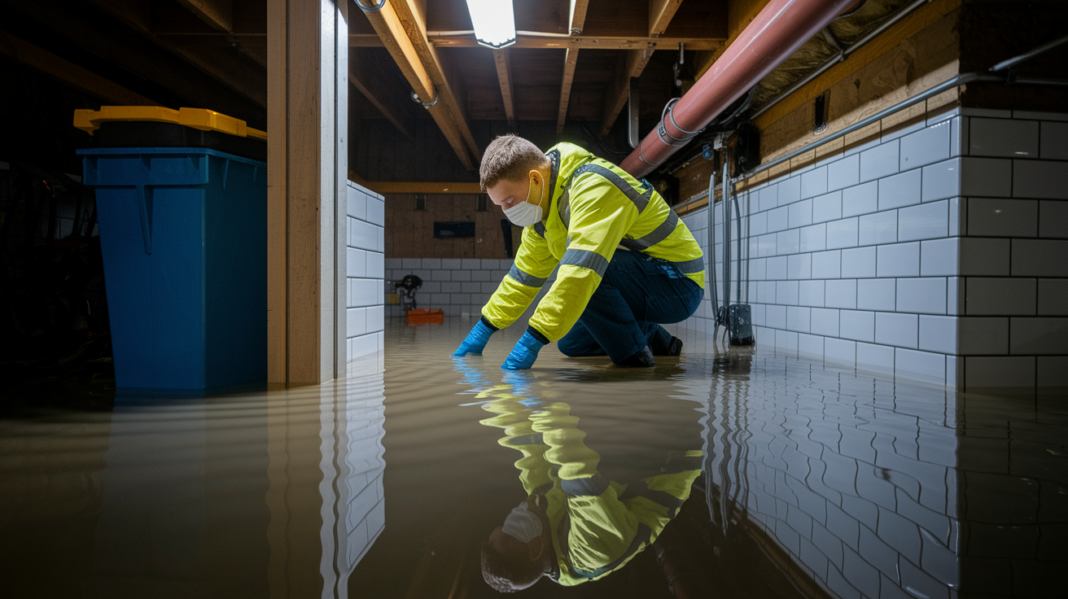

Think a shop vac will save a flooded basement? Think again.
Flood water extraction isn’t one trick or tool. It’s a timed sequence of safety checks, the right pump or vacuum, and drying gear that pulls water from materials, not just the surface.
In this post we’ll walk you through proven methods for deep pumps, trash pumps, portable extractors, air movers, and dehumidifiers, and explain when each one is the right choice.
You’ll learn what to do first, how fast action prevents mold and warped floors, and how pros confirm areas are truly dry before repairs start.
High-Level Overview of the Flood Water Extraction Process
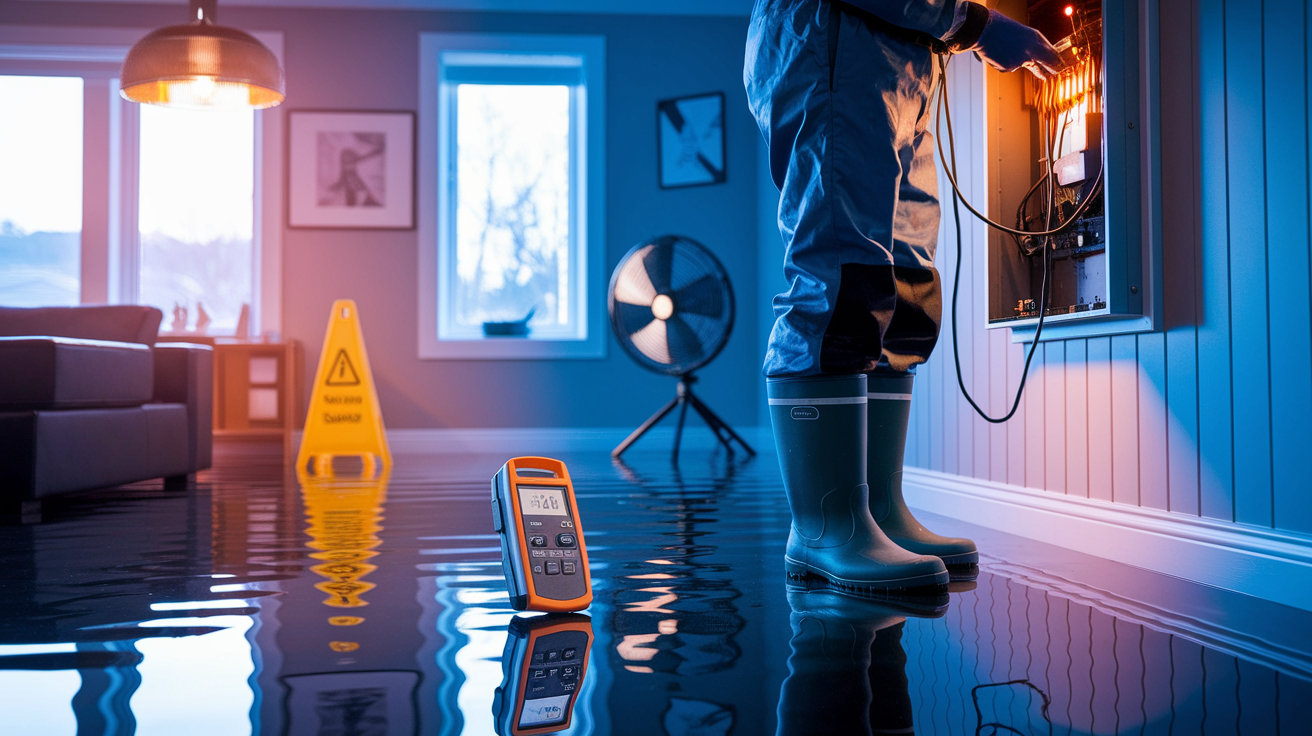
Flood water extraction isn’t just one decision or one tool. It’s a chain of urgent steps that starts the second you spot water on your floor. Safety comes first. Cut the power if you can do it safely, check for structural damage, and don’t walk into water that’s touching outlets or submerged wiring. Once the area’s safe to enter, professionals figure out how deep the water is, what type of contamination they’re dealing with, and how far it’s spread. That assessment drives which extraction tools get used, how quickly the water needs to come out, and what drying equipment follows.
Getting rid of standing water is just the beginning. Water soaks into drywall, wood framing, subfloors, insulation. Drying equipment pulls moisture out of the air and the materials themselves. Moisture meters tell you when the structure is dry enough to close up. How long it takes depends on how deep the water was, how long it sat there, and what got wet. Small floods might clear in a few hours. Large scale flooding can take days to extract and another week to dry completely.
The overall sequence looks like this:
- Safety check to make sure the space is safe to enter and work in
- Category assessment to figure out if water is clean, gray, or contaminated
- Extraction method selection based on depth, volume, and access
- Standing water removal using pumps or vacuums until floors are clear
- Controlled drying with air movers and dehumidifiers to pull moisture from materials
- Verification using moisture meters to confirm dryness before repairs start
Mechanical Flood Water Extraction Tools and Pump-Based Removal Options
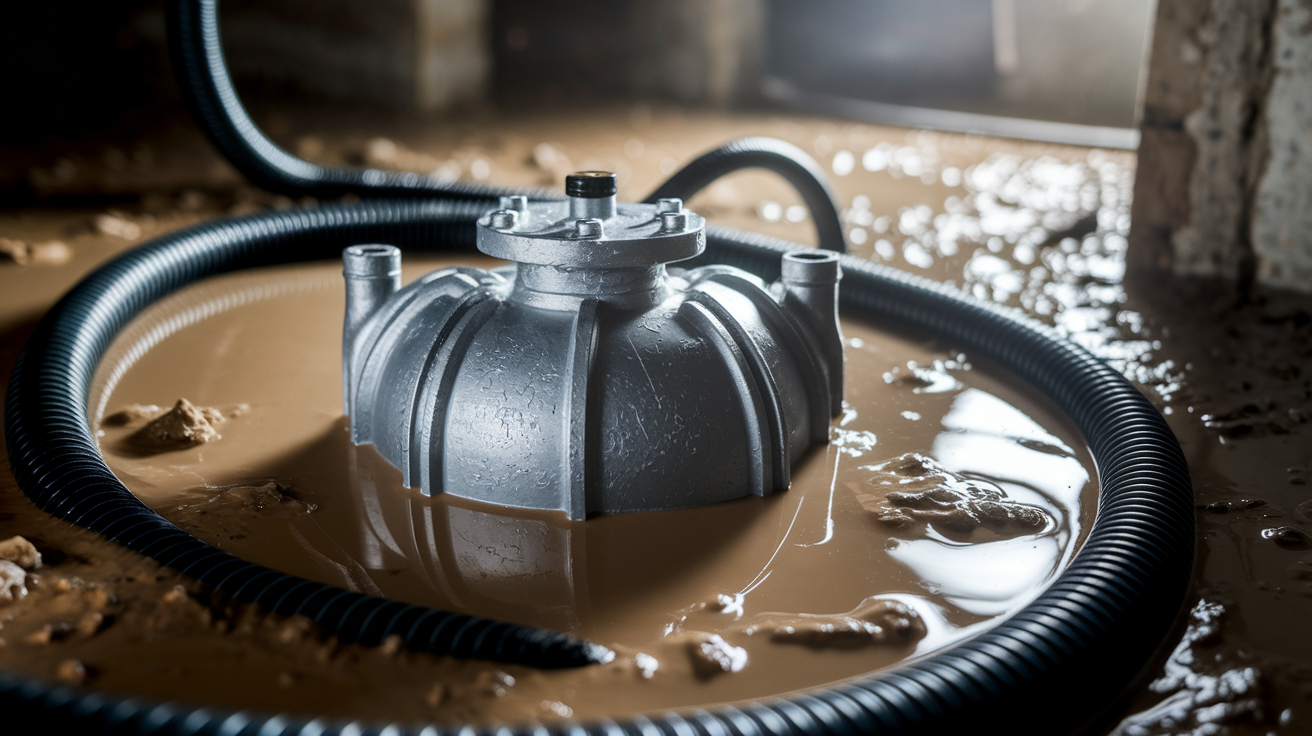
Mechanical pumps are what you need when there’s too much water for portable vacuums to handle. Submersible pumps sit right in the water and push it out through a discharge hose. They’re built for deep basements, flooded crawl spaces, garage floods where water’s pooled several inches or more. Choosing the right one comes down to two numbers: flow rate (gallons per minute) and head height (how high the pump can push water upward to reach a drain or exit point). Residential submersible pumps typically move 1,500 to 3,000 gallons per hour. Heavy duty construction models push way more.
Trash pumps and diaphragm pumps handle debris laden water. If the flood brought mud, leaves, gravel, or sewage solids, a standard pump’s going to clog. Trash pumps use larger impellers and wider inlets so debris passes through without jamming the system. Centrifugal pumps work well when the water’s relatively clean and you need to move high volumes fast. They’re common in storm response and irrigation emergencies.
Truck mounted extraction units bring together pump power and portability. The equipment stays in the vehicle, hoses extend into the building. Suction’s stronger than handheld units, extraction’s faster, and the tank capacity is big enough to handle full basements without constant emptying. Heating elements in some truck mounted systems warm the extracted water, which speeds evaporation when you pair it with air movers. These units are standard for commercial jobs and large residential floods where speed prevents more damage from happening.
| Pump Type | Best Use Case | Advantages | Limitations |
|---|---|---|---|
| Submersible Pump | Deep standing water in basements or confined spaces | High flow rate, works underwater, reliable for large volumes | Requires discharge point; clogs easily if debris is present |
| Trash / Diaphragm Pump | Water mixed with mud, leaves, or sewage solids | Handles debris without clogging; designed for dirty water | Slower flow rate than centrifugal pumps |
| Centrifugal Pump | High volume clean or lightly contaminated water | Very fast extraction; efficient for large areas | Cannot handle solids or heavy debris |
| Truck Mounted Extractor | Commercial properties and large residential floods | Strongest suction, large tank capacity, minimal interruption | Requires vehicle access; higher service cost |
Portable Flood Water Extraction Methods for Homes and Small Businesses
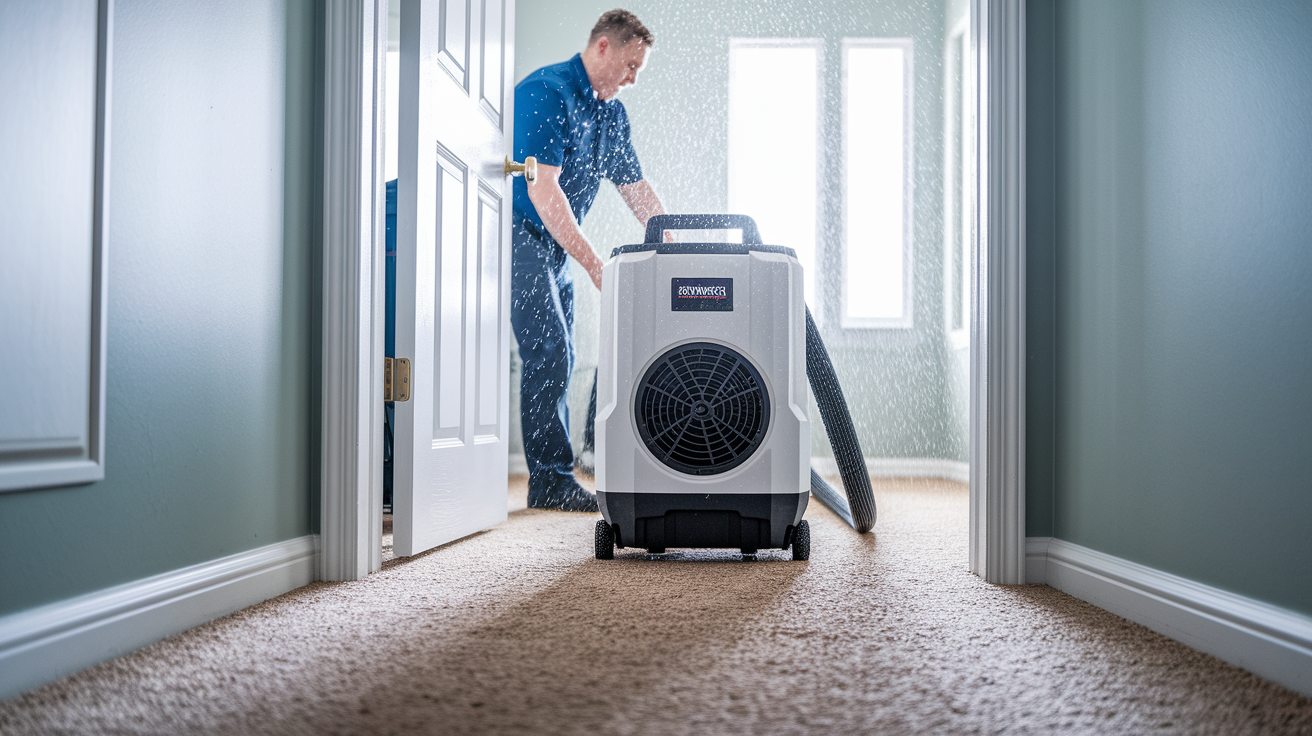
Portable extractors and wet/dry vacuums are what you reach for on smaller floods, tight spaces, and residential jobs where a truck can’t get close enough. Portable extractors combine suction with adjustable pump rates, compact design, and filtration that traps fine particles. Most units weigh under 50 pounds and fit through doorways, down basement stairs, into closets. They pull water from carpet, tile, hard floors without leaving heavy equipment in the middle of the room. Filters are often HEPA rated to reduce airborne dust and contaminants during extraction.
Wet/dry vacuums vary widely in tank capacity and motor power. Small shop vacs handle minor spills and surface water in bathrooms or laundry rooms. Industrial wet/dry units hold 15 to 20 gallons and deliver stronger suction for larger areas. Battery powered models work in spaces where electrical outlets aren’t safe or available. After each use, empty the tank, rinse it out, and inspect the filter. Mold and bacteria grow fast in damp tanks left sealed between jobs.
Getting good results comes down to technique and monitoring:
- Place the unit as close to the water source as possible to reduce suction loss through long hoses
- Use overlapping extraction strokes on carpet and upholstery to pull water from padding and fibers
- Check the tank level frequently and empty before it reaches capacity to keep suction strong
- Inspect hoses for kinks or clogs that reduce flow and slow extraction
- Clean the tank and filter right after finishing to prevent odors and microbial growth
Drying and Dehumidification Techniques After Flood Water Extraction

Getting rid of standing water is step one. Drying the materials that absorbed it is step two. Air movers create directed airflow across wet surfaces to speed evaporation. Think of them as industrial fans, but designed to push air in focused streams rather than scatter it everywhere. Placement matters a lot. Set them to blow along walls, under cabinets, across wet floors in overlapping patterns. Cross ventilation, where air movers face each other from opposite corners, pulls moisture out faster than a single unit blowing into dead air.
Dehumidifiers pull moisture from the air so materials can keep releasing water instead of reabsorbing humidity. Without dehumidifiers, evaporation slows and the air becomes saturated. Two types dominate the restoration industry: refrigerant units and desiccant units. Refrigerant dehumidifiers work like air conditioners. They cool air to condense moisture, then reheat and recirculate it. They perform best in warm environments above 60°F. Desiccant dehumidifiers use moisture absorbing materials to pull water from the air chemically. They work great in colder spaces, unheated basements, and during winter months when refrigerant units lose efficiency.
Drying times depend on the materials, the volume of water, and ambient temperature. Drywall may take three to five days. Hardwood floors can take a week or more if water reached the subfloor. Professionals monitor progress daily with moisture meters and adjust equipment as readings drop. If drying stalls, mold can begin forming within 24 to 48 hours, even if surfaces look dry.
Comparing Dehumidifier Types
Refrigerant dehumidifiers are the workhorse for most residential floods. They remove water efficiently when the temperature’s stable and moderate. Desiccant units shine in cold, damp environments where refrigerant coils would freeze. They also handle very low humidity targets, which is why they’re common in commercial drying and climate controlled restoration projects. Refrigerant units cost less to rent and run. Desiccant units cost more but deliver results when temperature or target moisture level makes refrigerant models impractical.
Moisture Detection and Monitoring Techniques for Flood Damaged Structures

Dry to the touch doesn’t mean dry enough to close the wall. Moisture meters measure water content inside materials, not just on the surface. Pin type meters insert two metal probes into drywall, wood, or insulation and measure electrical resistance. The wetter the material, the lower the resistance. Pinless meters use radio frequency sensors to scan a surface without puncturing it. They’re faster for sweeps of large areas but less precise for specific readings.
Thermal imaging cameras detect temperature differences caused by evaporation and moisture. Wet areas appear cooler on the screen because water evaporates and cools the surface. Infrared scanning reveals hidden saturation behind walls, under flooring, in ceiling cavities where visual inspection and standard meters can’t reach. Moisture mapping combines meter readings and thermal images into a floor plan that tracks wet zones over time. It confirms where drying’s complete and where equipment needs to stay longer.
| Tool Type | What It Detects | Best Use Case |
|---|---|---|
| Pin Type Moisture Meter | Moisture content inside drywall, wood, insulation via electrical resistance | Spot checking specific materials; confirming dryness before reconstruction |
| Pinless Moisture Meter | Subsurface moisture via radio frequency scan | Fast surveys of large wall or floor areas without damaging surfaces |
| Thermal Imaging Camera | Temperature differences caused by evaporation and trapped moisture | Locating hidden moisture behind walls, ceilings, and under flooring |
Safety Procedures and Contaminated Water Handling During Flood Extraction

Water and electricity are a dangerous combination. Before entering a flooded space, shut off power at the breaker panel if you can reach it safely. If the panel’s underwater or you’re unsure, call an electrician or your utility company. Look for exposed wiring, damaged outlets, submerged appliances. Use insulated tools and wear rubber soled waterproof boots to reduce shock risk.
Not all floodwater is the same. Clean water from a broken supply line is category 1. Gray water from washing machines, dishwashers, or sump pump backups is category 2. It contains contaminants but not raw sewage. Black water from toilets, sewers, or outdoor flooding is category 3 and carries bacteria, viruses, chemicals. Black water requires full PPE: waterproof gloves, face masks or respirators, eye protection, coveralls. Never use standard household gloves or cloth masks for sewage cleanup.
Structural damage is common after severe flooding. Check for sagging ceilings, cracked foundation walls, soft or spongy floors before walking through the space. If the floor feels unstable or you see visible bowing in walls, stay out and call a structural engineer. Mold spores spread fast in damp air. If you smell musty odors or see discoloration on walls, assume mold’s present and use a respirator rated for mold exposure.
Essential safety steps during extraction:
- Turn off electrical power and avoid standing water near outlets or appliances
- Wear waterproof boots, heavy duty gloves, and eye protection at minimum
- Use N95 or P100 respirators when working in moldy or contaminated environments
- Ventilate the space with open windows and exhaust fans to reduce airborne contaminants
- Keep a first aid kit, flashlight, and phone nearby in case conditions worsen
- Don’t enter spaces with visible structural damage until a professional assesses stability
Insurance Documentation and Reporting Techniques for Flood Water Extraction Projects

Insurance adjusters need proof. Take photos of the water level, damaged materials, affected rooms before you start extraction. Photograph wet carpet, soaked drywall, standing water in the basement, any visible mold or staining. Date stamp the images if your phone allows it. Wide shots show the scope. Close ups show detail. Both matter.
Moisture meter readings become part of the claim file. Record initial readings when water’s still present, daily readings during drying, final readings when equipment’s removed. Print or screenshot the data. If hidden damage appears, like wet insulation inside a wall or soaked subfloor under tile, document it immediately and notify your adjuster. Supplements to the original estimate are common, but they require proof that the damage wasn’t visible during the first inspection.
Professional restoration companies generate detailed reports that include extraction methods, equipment used, drying logs, before and after moisture readings. These reports support your claim and speed approval. If you’re handling extraction yourself, keep a simple log: date, time, equipment used, areas worked, observations. It doesn’t need to be formal. It needs to be accurate.
Steps for good insurance documentation:
- Photograph all water damage before starting extraction or cleanup
- Record moisture meter readings at the start, during drying, and at completion
- Save receipts for rental equipment, cleaning supplies, disposal fees
- Notify your insurance company immediately and follow their documentation requirements
Mold Prevention Strategies After Using Flood Water Extraction Methods

Mold doesn’t wait. Spores are already in the air. When materials stay wet for 24 to 48 hours, those spores land, take hold, begin growing. The goal is to dry everything before that window closes. Air movers and dehumidifiers aren’t optional. They’re the primary defense. Keep them running until moisture readings drop to safe levels, even if surfaces feel dry.
Ventilation pushes humid air out and brings drier air in. Open windows when outdoor humidity’s lower than indoor humidity. Use exhaust fans in bathrooms and kitchens. If the air outside is saturated, common after storms, rely on dehumidifiers instead. HEPA air scrubbers filter mold spores, dust, bacteria from the air during drying. They’re especially important when working with contaminated water or when mold’s already visible.
Odor is a warning sign. Musty smells mean microbial growth is happening, even if you don’t see it yet. Don’t mask odors with air fresheners. Find the source, confirm moisture with a meter, increase drying in that area. Some jobs require antimicrobial treatments or odor neutralizers after extraction, particularly if sewage or long standing water was involved. Verify dryness with meters before you seal walls, replace flooring, or reinstall baseboards. Closing up a space that’s still damp traps moisture and guarantees mold.
Steps for mold prevention after flood water extraction:
- Run air movers and dehumidifiers continuously until all materials reach target moisture content
- Use HEPA air filtration to capture airborne mold spores during and after drying
- Ventilate the space with exhaust fans or open windows when outdoor conditions allow
- Monitor humidity levels and keep indoor relative humidity below 60 percent
- Verify dryness with moisture meters before closing walls or installing new materials
Final Words
We started by stopping hazards and removing standing water, then chose the right equipment and pumps based on depth and contamination.
Extraction moves to drying with air movers and dehumidifiers, then moisture mapping confirms it’s safe. We documented every step for insurance and followed PPE and contaminated-water procedures to protect you. These flood water extraction methods are about stopping damage fast and rebuilding properly. You’re on the right path. Fast action, clear checks, and steady repair will get your home back to normal.
FAQ
Q: How do they remove water from floods? What are the methods of extracting water? What is the best way to get water out of a flooded basement?
A: Water from floods and flooded basements is removed by a fast sequence: stop the source, pump or vacuum out standing water, then controlled drying and moisture checks. Choice depends on depth, contamination, and access.
Q: How quickly does mold grow after a flood?
A: Mold can begin growing 24 to 48 hours after a flood. Rapid drying, dehumidifiers, air movers, removing soaked materials, and moisture readings stop growth and limit odors and damage.