


Controversial. Sealing a few visible cracks won’t stop most basement leaks.
Hydrostatic pressure, groundwater and saturated soil pushing against your foundation, does the real work.
It forces water through concrete pores, mortar joints, and the cove where floor meets wall.
If you keep seeing water after heavy rain, that’s the likely cause.
This post explains what creates hydrostatic pressure, the signs to watch for, and clear repairs that actually work, from surface drainage and interior perimeter drains with a sump to full exterior waterproofing and wall stabilization.
Read on to learn the next steps and what to expect.
What Is Hydrostatic Pressure and How It Causes Basement Leaks

Hydrostatic pressure is the force groundwater and saturated soil push against your basement walls and floor. Water weighs about 62.4 pounds per cubic foot. For every foot of water height above a surface, the pressure jumps roughly 0.433 pounds per square inch. When soil around your foundation gets soaked after heavy rain, snowmelt, or a rising water table, that water pushes sideways against basement walls and upward against floor slabs. Ten feet of saturated soil against your wall? That’s more than 4 psi trying to force water through concrete.
Concrete handles compression well, but it’s porous. Block walls have mortar joints. Poured walls have construction joints and small shrinkage cracks. Hydrostatic pressure drives water through those weak points, through the tiny pores in the concrete itself, and along the cove joint where floor meets wall. Lateral pressure against walls forces water inward through cracks and seams. Upward pressure beneath slabs lifts water through floor cracks, along footing interfaces, and up into the basement. Both forces work together when soil is saturated.
The result? Basement water pressure that doesn’t stop until the water finds a path inside or the external pressure gets relieved by drainage. You can’t stop the physics. The water will move. The only choice is whether it moves into your basement or into a drain system designed to carry it away. That’s why hydrostatic pressure basement leaks are persistent, predictable, and tied directly to groundwater levels outside your foundation.
Common Signs of Hydrostatic Pressure Problems
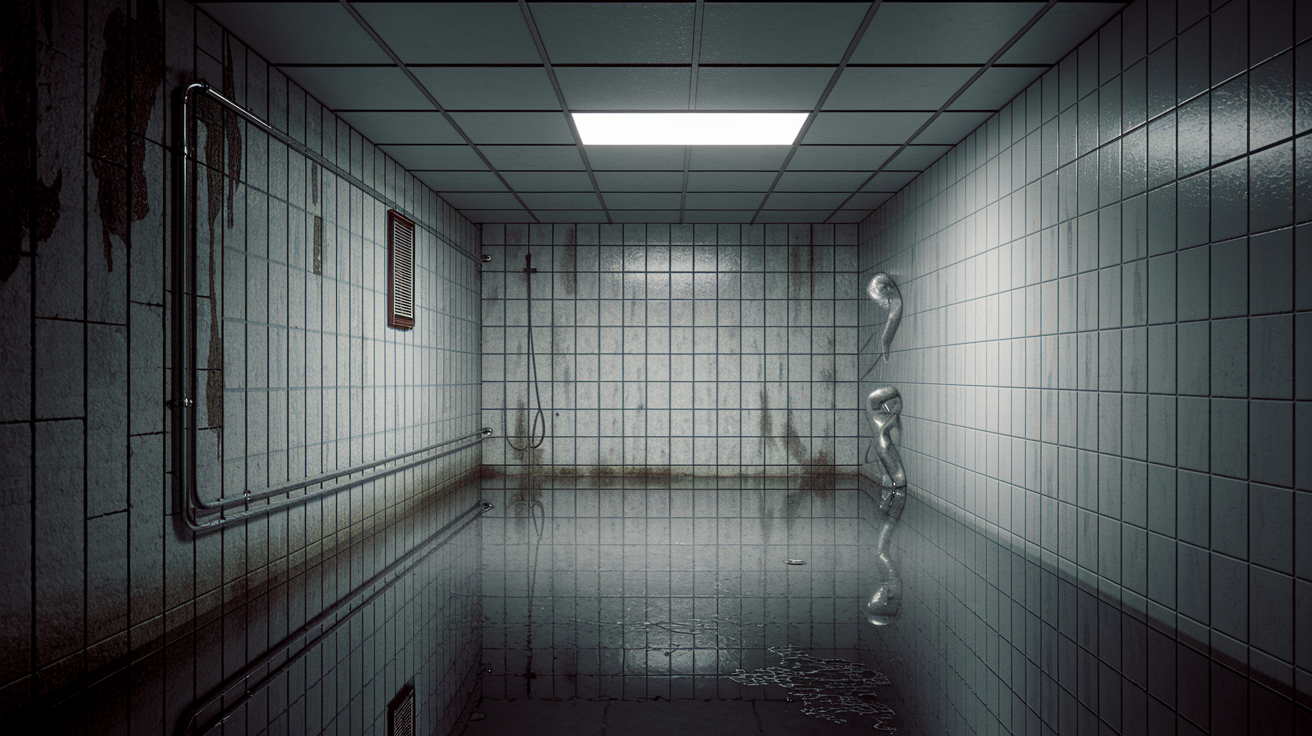
Hydrostatic pressure leaves specific clues. If you’re seeing water after every heavy rain, if the same spots stay damp, or if you notice staining and odors that won’t go away, hydrostatic pressure is likely the cause. These aren’t random leaks. They follow patterns tied to soil saturation and groundwater movement.
The warning signs show up on walls, floors, and in the air. You may see some or many of these at once:
Cove joint seepage. Water appears where the basement floor meets the wall, especially during or after storms.
Efflorescence. White, chalky mineral deposits on concrete surfaces where water has evaporated and left minerals behind.
Damp or discolored walls. Persistent moisture, dark staining, or cold, wet spots on foundation walls.
Musty or moldy smell. Damp air and organic odors that come back even after cleaning.
Bowing or horizontal cracks in walls. Outward wall movement or horizontal cracking caused by sustained lateral pressure.
Pooling water on the floor. Wet patches, puddles, or standing water that reappear each time it rains hard.
If you see these signs during heavy rain or spring thaw, the pattern points to hydrostatic pressure. The water is being pushed in from outside, not dripping from above or condensing inside.
Causes of Hydrostatic Pressure Around Basements
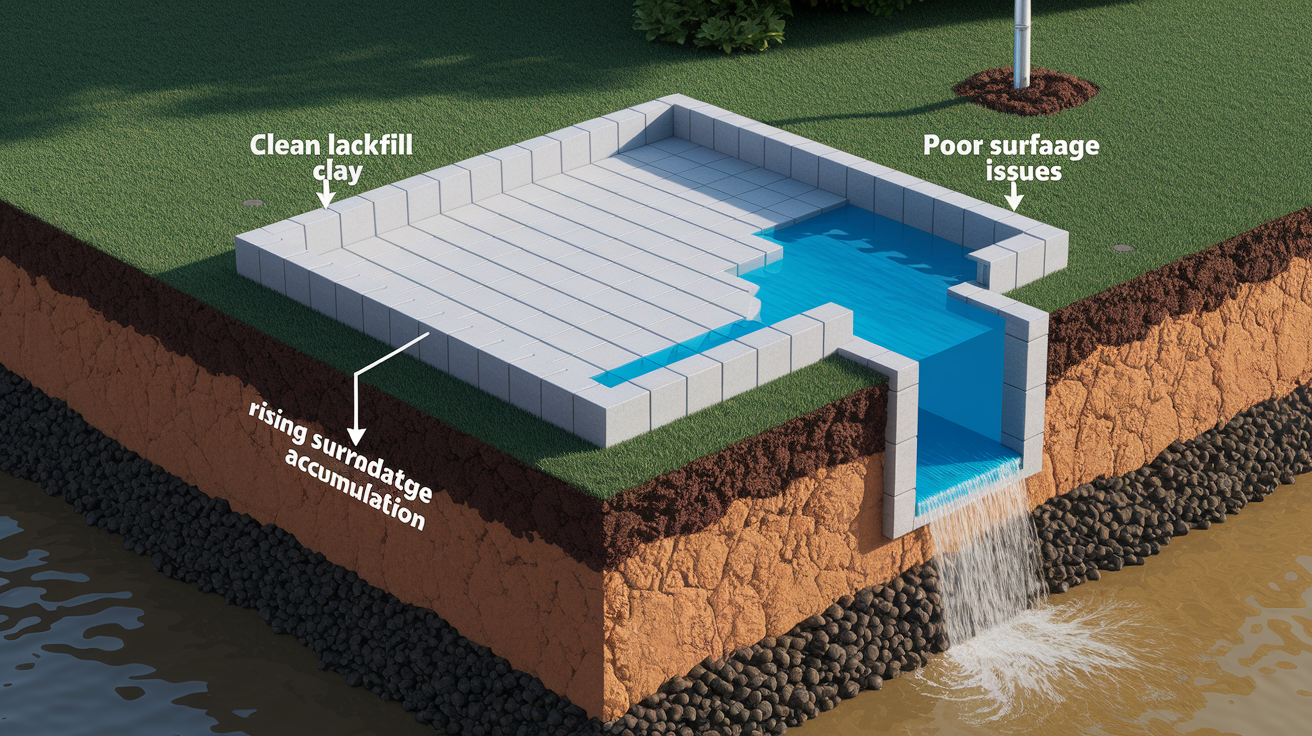
Hydrostatic pressure builds when water accumulates in the soil around your foundation and has nowhere to go. The most common cause is poor surface drainage. If your yard slopes toward the house, or if the soil has settled and created low spots next to the foundation, rainwater and snowmelt flow straight into the ground at the base of your walls. That water saturates the soil, raises the local water table, and increases pressure.
Soil type matters. Clay soils hold water like a sponge and drain slowly. When saturated, clay creates high hydrostatic pressure because the water stays trapped against the foundation. Sandy or gravelly soils drain faster and generate less sustained pressure. If your home was built with clay backfill around the foundation, you’re more likely to have hydrostatic issues. Clogged gutters and short downspouts make it worse. When roof water dumps right next to the foundation instead of being carried away, you’re recharging the soil with thousands of gallons every storm.
Heavy seasonal rainfall, rapid snowmelt, and high groundwater tables all contribute. In areas with shallow bedrock or high water tables, basements sit in saturated zones for part of the year. Frozen ground in winter can block normal drainage paths, forcing water to build up against walls. Missing or failed footing drains compound the problem because there’s no controlled outlet for groundwater, so pressure continues to rise until water finds a way in.
Prevention Methods to Reduce Hydrostatic Pressure

The goal is to lower the water table around your foundation and give groundwater a controlled path away from the house. Surface drainage is the first line of defense. If you can keep water from soaking into the soil near your walls, you reduce the source of the pressure before it starts.
Yard grading should slope away from the foundation at least 6 inches over the first 10 feet. Check the grade annually and add soil if settling has created low spots. Extend downspouts at least 6 to 10 feet from the foundation using rigid or flexible extensions or underground discharge lines. Clean gutters twice a year so roof water doesn’t overflow and saturate the soil below. If you have clay soil or poor natural drainage, consider amending the backfill zone with free draining topsoil or installing shallow swales to redirect surface runoff.
Here are the core prevention measures:
- Grade soil to slope away from the foundation. Maintain at least 6 inches of drop in the first 10 feet.
- Extend downspouts and keep gutters clear. Discharge roof water at least 6 to 10 feet away, inspect gutters spring and fall.
- Install or verify exterior footing drains. 4 inch perforated pipe at footing level, surrounded by gravel, draining to daylight or sump.
- Apply exterior waterproofing membrane. Protects walls and reduces water infiltration when excavation is feasible.
- Add an interior perimeter drain and sump pump. Collects groundwater that enters beneath the slab and pumps it out before it can pool.
Each measure reduces hydrostatic pressure by either preventing water accumulation or providing a relief path. Combined, they create a layered defense that keeps basements dry even during heavy rain.
Repair Options for Hydrostatic Pressure Basement Leaks
When prevention isn’t enough or when you’re dealing with an existing leak, you need a repair solution that either stops water before it reaches the foundation or manages it after entry. The choice depends on access, budget, the severity of the problem, and whether structural damage has occurred.
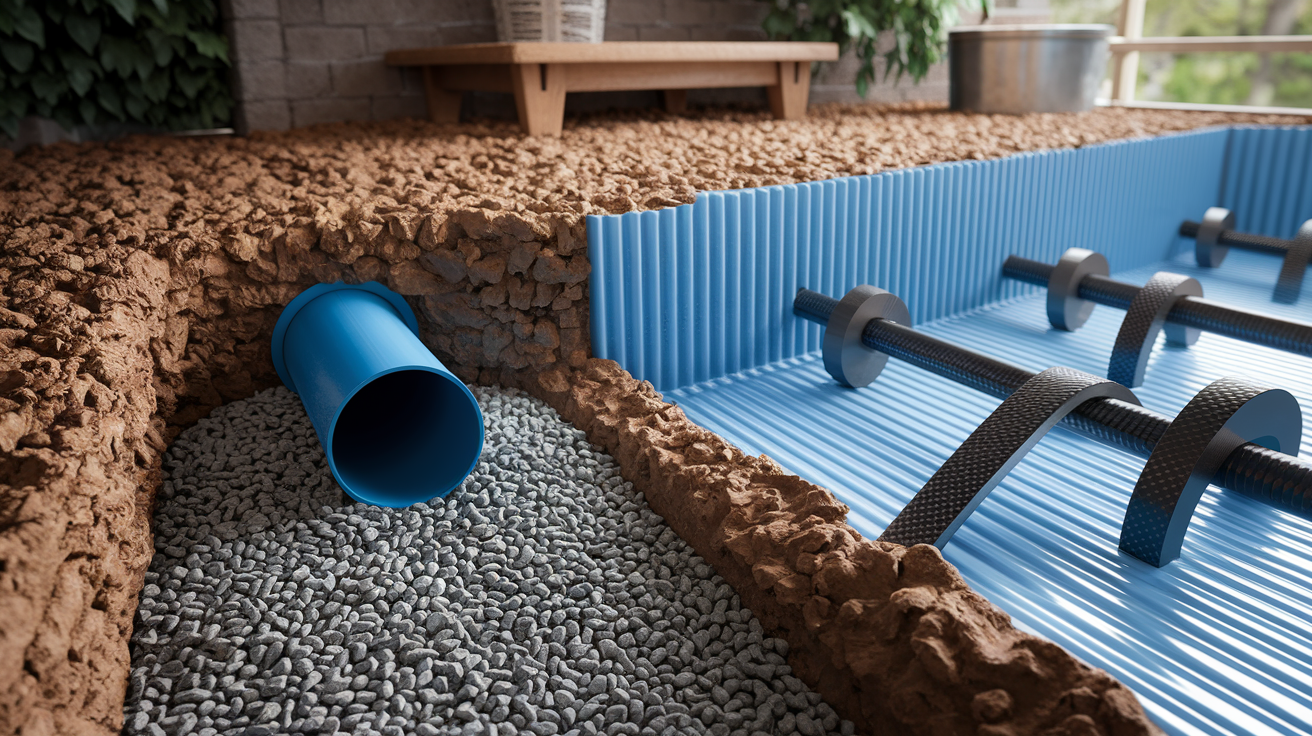
Interior perimeter drain systems are the most common repair for hydrostatic pressure basement leaks. A trench is cut along the inside edge of the basement floor, a 4 inch perforated drain pipe is installed in gravel, and the pipe slopes to a sump pit. Groundwater that seeps under the slab or through the cove joint flows into the drain and is pumped out by a sump pump. This method doesn’t stop water from contacting the exterior wall, but it intercepts and removes it before it can flood the basement. It’s less disruptive than exterior work and can be completed in a few days.
Exterior excavation and waterproofing is the most permanent solution. The soil is dug away from the foundation down to the footing, the wall is cleaned, a waterproof membrane or coating is applied, and a new footing drain is installed or repaired. This approach stops water before it contacts the foundation and relieves hydrostatic pressure at the source. It’s more expensive and disruptive but protects the structure long term and is often necessary when walls show structural stress or when interior solutions have failed.
| Method | What It Fixes | Typical Application |
|---|---|---|
| Interior perimeter drain + sump pump | Manages water after it enters beneath slab, prevents basement flooding | Recurring seepage at cove joint, wet floors, minor to moderate hydrostatic intrusion |
| Exterior excavation + membrane + footing drain | Stops water before it contacts foundation, relieves pressure at source | Structural wall issues, high water table, persistent leaks, new construction waterproofing |
| Crack injection (epoxy or polyurethane) | Seals individual cracks to stop active leaks | Isolated cracks with visible water entry, does not address underlying pressure |
| Wall reinforcement (carbon fiber, anchors, tie backs) | Stabilizes bowed or cracked walls caused by lateral pressure | Horizontal cracks, inward bowing, structural movement from sustained hydrostatic force |
Crack injection is effective for stopping leaks through individual cracks but does not lower hydrostatic pressure. Polyurethane foam is flexible and works well for active leaks. Epoxy is rigid and used for structural repairs. Wall reinforcement is required when hydrostatic pressure has caused bowing, horizontal cracking, or movement. Carbon fiber straps, helical anchors, or steel tie backs stabilize the wall, but pressure relief through drainage is still necessary to prevent future damage.
Cost Expectations for Hydrostatic Pressure Repairs

Repair costs vary widely based on the method, the size of your basement, soil conditions, and how much structural work is needed. Interior perimeter drain systems with a sump pump typically run between $2,000 and $7,000 for an average basement. That includes trenching, pipe, gravel, sump pit, pump installation, and concrete patching. Costs rise if you need battery backup for the sump, if access is difficult, or if the basement is large with a long perimeter.
Exterior excavation and waterproofing is more expensive because it involves digging, disposal of soil, membrane application, footing drain installation, and backfill. Expect $8,000 to $20,000 or more depending on how deep the footing is, how long the perimeter run is, and whether landscaping, driveways, or utilities complicate access. Crack injection runs $300 to $800 per crack for polyurethane foam, more for epoxy or long cracks. Sump pump installations alone, including pit and discharge line, range from $1,200 to $3,000. Wall reinforcement with carbon fiber or anchors can add $3,000 to $10,000 depending on the length of wall and severity of movement.
Cost drivers include soil type (clay and rock are harder to excavate), depth of the foundation, accessibility (tight spaces or finished landscaping add labor), and whether structural repairs are required. Homes with high water tables or repeated flooding often need more robust systems, which push costs higher. Always get two to three quotes and ask contractors to specify what is included, what equipment they’ll use, and what warranty or guarantee they offer on the work.
When to Call a Professional

Call a professional when you see recurring leaks, structural cracks, wall movement, or when your own efforts to control water haven’t worked. If water appears every time it rains, if you’ve regraded and extended downspouts but still have seepage, or if you see horizontal cracks or bowing in foundation walls, the problem is beyond simple fixes. Hydrostatic pressure that’s strong enough to move walls or flood basements repeatedly needs professional assessment and engineered solutions.
Professionals use moisture meters, thermal imaging, and visual inspections to trace water entry points and measure wall movement. They can determine whether you need drainage work, structural reinforcement, or both. If your sump pump runs constantly during storms or if you’re seeing efflorescence and mold growth that won’t stop, a waterproofing contractor or structural engineer can diagnose the root cause and design a repair that addresses hydrostatic pressure at the source. Don’t wait if walls are bowing, if cracks are widening, or if flooding is affecting mechanical systems or finished spaces. Early intervention prevents expensive structural damage and protects your home’s foundation long term.
Final Words
Water in the soil is pushing on your foundation right now, finding any weak spot. That force, hydrostatic pressure, forces water through walls, cove joints, and floor cracks.
This post explained what that pressure is, the common signs to watch for, why it builds up, practical prevention steps, repair options, cost expectations, and when to call a professional.
If you spot damp walls or pooling after rain, act fast: make simple temporary stops and get a pro to test and repair. Quick action makes hydrostatic pressure basement leaks manageable and gets your home back to normal.
FAQ
Q: Does homeowners insurance cover hydrostatic pressure or water seeping into the basement?
A: Homeowners insurance usually doesn’t cover hydrostatic pressure or slow water seepage into basements. Policies often exclude groundwater; you might get coverage only for sudden accidental discharge—document damage and check your policy with your insurer.
Q: How much does it cost to fix hydrostatic pressure?
A: Fixing hydrostatic pressure ranges widely: crack injections $300–$800, sump pumps $1,200–$3,000, interior drains $2,000–$7,000, exterior waterproofing $8,000–$20,000. Final cost depends on soil, access, and severity.
Q: What is the #1 cause of basement flooding?
A: The #1 cause of basement flooding is groundwater buildup and hydrostatic pressure from saturated soil, often worsened by poor grading, clogged gutters, or heavy rain pushing water through walls, cove joints, and floor cracks.